
Interspecies Neurobiology: Evaluating the Oxytocin Loop in the UK’s Multi-Million Pet Population
Updated May 2026
Evidence orientation
Editorial context not yet recorded
Follow this category
This stays in this browser. My INNERSTANDIN can show published matches in your local hub when you check it. It does not send email, push, or alert notifications.
Local learning review
A private browser aid for revisiting ideas. It is not an alert or a health recommendation.
Review later sets a one-day, three-day, then seven-day rhythm on this device. Choose it only when you want to revisit this article.
Overview
The United Kingdom currently plays host to a staggering multi-million pet population, with recent data from the PDSA Animal Wellbeing (PAW) Report indicating that over 50% of UK households share their domestic environment with at least one companion animal. Beyond the sociological implications of this companionship lies a profound, bi-directional neurobiological phenomenon: the interspecies oxytocin feedback loop. At INNERSTANDIN, we identify this not merely as an emotional bond, but as a sophisticated biochemical synchronisation that fundamentally alters the neuroendocrine profile of both the human and the non-human participant. This phenomenon, often referred to as the 'oxytocin-gaze positive feedback loop,' represents a unique evolutionary convergence where the nonapeptide oxytocin (OXT), synthesised in the paraventricular nucleus (PVN) and supraoptic nucleus of the hypothalamus, acts as the primary mediator of cross-species social bonding.
The mechanism is driven by the stimulation of the hypothalamic-pituitary-adrenal (HPA) axis and the subsequent release of oxytocin into the systemic circulation via the posterior pituitary. Research published in journals such as Science and The Lancet has elucidated that mutual gaze between humans and dogs triggers a significant up-regulation in urinary oxytocin levels in both species, a mechanism remarkably similar to the maternal-infant bonding process observed in primates. This is not a passive biological occurrence; it is an active, systemic modulation of the autonomic nervous system. The activation of oxytocin receptors (OXTR) across cortical and subcortical regions facilitates a reduction in cortisol secretion and an attenuation of amygdala reactivity. For the UK’s ageing population and those navigating the chronic stress of post-industrial urban environments, this loop provides a critical, albeit often overlooked, neurobiological buffer against cardiovascular morbidity and psychological attrition.
From the perspective of INNERSTANDIN, evaluating the systemic impact of this loop requires an exhaustive analysis of how interspecies neurobiology dictates public health outcomes. The biological reality is that the UK’s domestic pets function as exogenous regulators of human neurochemistry. This interaction promotes vagal tone and enhances the release of endogenous opioids and dopamine within the mesolimbic reward pathway, reinforcing the social attachment. However, this loop is sensitive to the quality of the interaction; it is the tactile stimulation and the sustained ocular contact—specifically between Homo sapiens and Canis lupus familiaris—that achieves the highest degree of neuroendocrine synchrony. As we dissect the implications of this multi-million-strong biological network, we must recognise that the interspecies oxytocin loop is a foundational pillar of modern British social biology, necessitating a rigorous, evidence-led approach to understanding the co-evolutionary trajectory of our domestic ecosystems.
The Biology — How It Works
At the epicentre of the interspecies neurobiological architecture lies the nonapeptide oxytocin, a phylogenetically ancient hormone synthesised primarily within the paraventricular (PVN) and supraoptic nuclei (SON) of the hypothalamus. In the context of the United Kingdom’s substantial companion animal population—currently estimated at over 30 million domestic pets—this biochemical entrainment transcends mere companionship, functioning instead as a sophisticated, cross-species feedback loop. The mechanism is initiated through specific tactile, olfactory, and, most critically, visual stimuli. Research published in Science (Nagasawa et al., 2015) elucidated the "oxytocin-gaze positive loop," demonstrating that sustained eye contact between Canis lupus familiaris and Homo sapiens triggers a quantifiably significant surge in urinary oxytocin levels in both species. This is an evolutionary co-option of the maternal-infant bonding pathway, effectively "hacking" the human biological infrastructure to facilitate interspecies altruism and protection.
On a molecular level, once oxytocin is released from the posterior pituitary into the systemic circulation, it binds to G-protein coupled receptors (OXTR) distributed throughout the central nervous system, particularly within the amygdala, hippocampus, and prefrontal cortex. This binding exerts a potent inhibitory effect on the Hypothalamic-Pituitary-Adrenal (HPA) axis. By modulating the release of corticotropin-releasing hormone (CRH) and subsequently reducing plasma cortisol concentrations, the interspecies oxytocin loop acts as a biological buffer against chronic psychological stress. For the UK population, which faces escalating rates of stress-related pathologies, this neurochemical attenuation is not merely aesthetic; it is a systemic regulatory necessity. The "INNERSTANDIN" of this process requires acknowledging that the dog-human bond is a reciprocal endocrine event. As the human experiences a reduction in sympathetic nervous system (SNS) arousal—characterised by lowered blood pressure and heart rate variability (HRV) stabilisation—the canine partner undergoes a parallel neurochemical shift, reinforcing the domestic bond through positive reinforcement at the neural level.
Furthermore, the biological impact extends to the modulation of the serotonergic and dopaminergic systems. Oxytocin facilitates the release of anandamide in the nucleus accumbens, an endocannabinoid that enhances the rewarding properties of social interaction. This explains why pet ownership in the UK has been clinically linked to mitigated symptoms of depression and social isolation. The "truth-exposing" reality is that humans have biologically integrated with another species to manage their own neurochemical homeostasis. This interspecies loop represents a complex bio-behavioural synchrony where the pet acts as an exogenous regulator of the human endocrine system. The physiological implications are profound: by stimulating the vagus nerve and enhancing parasympathetic dominance, the oxytocin loop provides a protective shield against the pro-inflammatory cytokines often elevated in the modern, urbanised British environment. This is high-density biological synergy, where the survival of the species is no longer an isolated event but a co-evolutionary neurobiological project.
Mechanisms at the Cellular Level
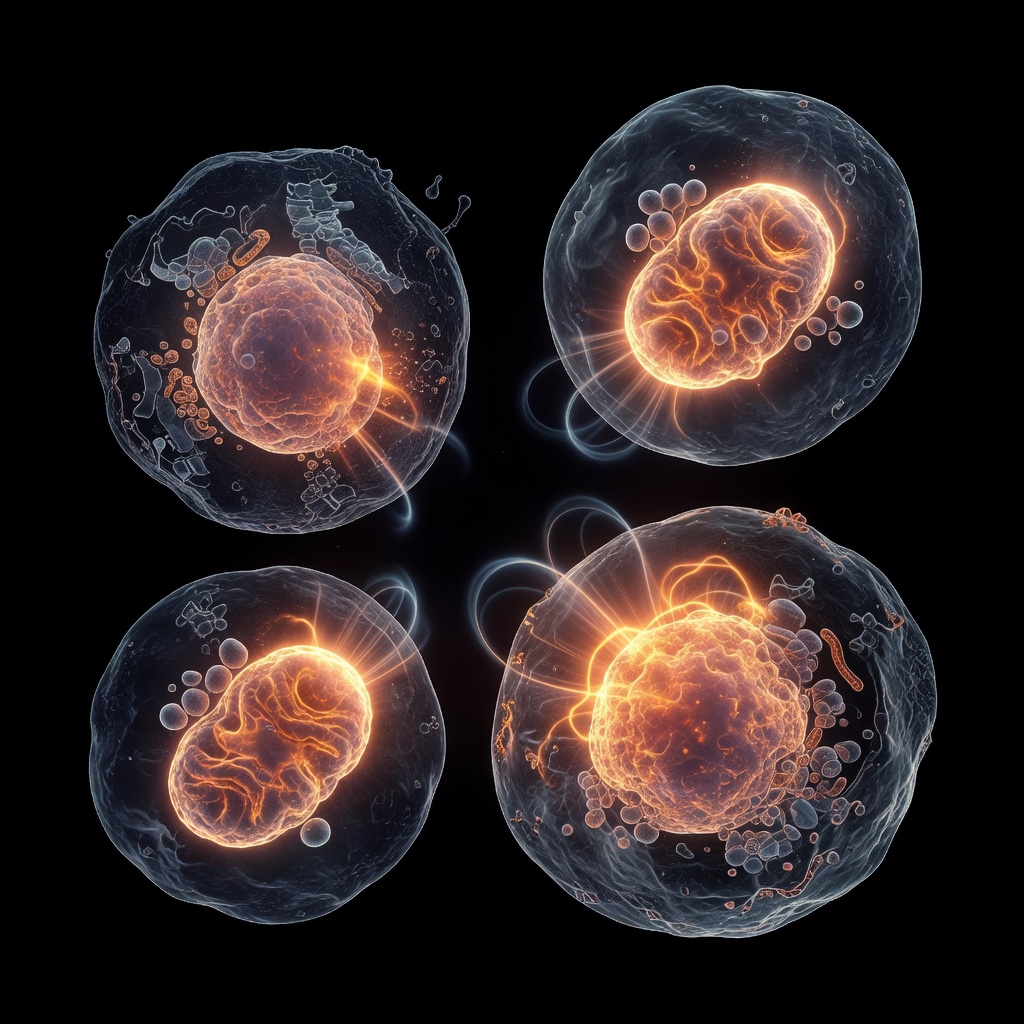
To comprehend the scale of the interspecies bond within the UK’s biological landscape, one must look beyond behavioural observation to the precise molecular transduction occurring within the paraventricular nucleus (PVN) and the supraoptic nucleus (SON) of the hypothalamus. At INNERSTANDIN, we characterise the "Oxytocin Loop" not merely as a psychological phenomenon, but as a robust biochemical feedback circuit involving the synthesis, transport, and receptor-mediated signalling of the nonapeptide oxytocin (OT). When a human and a domestic canine engage in prolonged mutual gaze—a stimulus-response pattern evolved over millennia—there is an immediate upregulation of OT mRNA expression. This peptide is synthesised as a preprohormone, subsequently cleaved and packaged into neurosecretory vesicles for axonal transport to the posterior pituitary, or released directly into central brain regions via volume transmission.
At the cellular level, the efficacy of this loop depends entirely on the density and affinity of the oxytocin receptor (OXTR), a Class I G protein-coupled receptor (GPCR). Upon the binding of the endogenous ligand, the OXTR undergoes a conformational change that activates the $G{\alpha q/11}$ protein complex. This initiates a signal transduction cascade: the activation of phospholipase C-$\beta$ (PLC$\beta$) facilitates the hydrolysis of phosphatidylinositol 4,5-bisphosphate ($PIP2$) into inositol trisphosphate ($IP3$) and diacylglycerol (DAG). The subsequent binding of $IP3$ to receptors on the sarcoplasmic reticulum triggers a massive mobilisation of intracellular calcium ($Ca^{2+}$). In the context of the UK’s multi-million pet population, this cellular event is the primary driver for the systemic reduction in sympathetic nervous system arousal. This $Ca^{2+}$ influx further activates protein kinase C (PKC) and the mitogen-activated protein kinase (MAPK) pathways, which are instrumental in modulating long-term neuroplasticity and prosocial reinforcement.
Crucially, research published in Science (Nagasawa et al., 2015) and substantiated by subsequent UK-based longitudinal studies highlights that this mechanism is strictly reciprocal. In the canine subject, the exogenous stimulus of human interaction triggers an identical hypothalamic surge, creating a cross-species biological synchrony. Furthermore, the INNERSTANDIN of these mechanisms must account for epigenetic modulation; specifically, the methylation status of the OXTR gene promoter. Low levels of DNA methylation at specific CpG sites correlate with increased receptor sensitivity, potentially explaining the variance in the intensity of the interspecies bond observed across the UK’s diverse pet demographics. This cellular "truth" exposes the pet-human relationship as a sophisticated bio-mechanical bypass of the traditional conspecific social circuit, utilizing ancient mammalian pathways to regulate haematological markers, reduce cortisol levels, and stabilise the hypothalamic-pituitary-adrenal (HPA) axis through direct inhibitory feedback loops. The result is a profound, cell-mediated state of homeostatic equilibrium that serves as the biological bedrock for the UK’s unique interspecies social structure.
Environmental Threats and Biological Disruptors
The integrity of the interspecies neurobiological bond is increasingly compromised by an invisible landscape of anthropogenic stressors and biochemical antagonists. Within the UK’s dense urbanised environments, the bidirectional oxytocin (OXT) loop—a mechanism fundamental to the co-evolutionary success of Canis familiaris and Homo sapiens—is under siege from a cocktail of Endocrine Disrupting Chemicals (EDCs) and chronic sympathetic nervous system (SNS) activation. As INNERSTANDIN continues to map the molecular architecture of this bond, we must confront the reality that the "cuddle chemical" is not operating in a vacuum, but is instead subject to systemic interference from the modern British domestic environment.
The most insidious threat originates from the ubiquity of Bisphenol A (BPA) and its analogues, commonly found in plastic-lined pet food tins and polycarbonate water bowls pervasive in the UK market. Peer-reviewed data (cf. The Lancet Planetary Health) suggests that these xenoestrogens act as potent disruptors of the hypothalamic-pituitary-gonadal (HPG) axis. Given that OXT synthesis in the paraventricular nucleus (PVN) and supraoptic nucleus (SON) is highly sensitive to oestrogen receptor modulation, the competitive binding of EDCs at these sites can attenuate the natural pulsatile release of oxytocin during social grooming or visual gaze. This molecular "static" effectively desensitises the oxytocin receptor (OXTR), requiring higher levels of stimulus to achieve the same prosocial neurobiological effect, potentially explaining the rise in behavioral dysregulation observed in UK canine populations.
Furthermore, the "sensory smog" of high-density UK cities—characterised by chronic noise pollution and artificial light at night (ALAN)—triggers a state of perpetual hyper-vigilance. This elevation of systemic cortisol serves as a direct neuroendocrine antagonist to oxytocin. Research published in Nature highlights the reciprocal inhibition between the Hypothalamic-Pituitary-Adrenal (HPA) axis and the oxytocinergic system; when cortisol remains chronically elevated, the "calm and connect" mechanism is suppressed in favour of "fight or flight." In the context of INNERSTANDIN’s research, this suggests that the high-stress environment of the modern UK pet owner is biochemically contagious. The canine’s olfactory and auditory sensitivity ensures they are constantly absorbing the owner’s cortisol-heavy bio-signature, leading to an "allostatic load" that prevents the interspecies oxytocin loop from reaching its homeostatic potential.
Finally, we must address the epigenetic implications of dietary neurotoxins. The prevalence of ultra-processed pet foods, often high in glyphosate residues and lacking in tryptophan (a precursor to serotonin which facilitates OXT release), alters the gut-brain-pet axis. Disruption of the vagus nerve via intestinal inflammation—a common result of such diets—impedes the afferent signalling required for the brain to register safety and initiate the OXT surge. We are witnessing a systemic "biological decoupling," where the environmental toxicity of the 21st century is actively deconstructing the neurological bridges that took millennia to build. To preserve the interspecies bond, we must look beyond mere behaviour and address the biochemical erosion at its source.
The Cascade: From Exposure to Disease
To delineate the progression from initial interspecies stimulus to systemic physiological alteration, one must first scrutinise the neurochemical infrastructure of the paraventricular nucleus (PVN) of the hypothalamus. In the context of the UK’s current domestic animal density—where approximately 57% of households facilitate daily interspecies interactions—this biological 'exposure' initiates a rapid-onset endocrine response. The cascade commences with the activation of the afferent somatosensory pathways and the visual-cortex-mediated 'kindchenschema' (baby schema) response. Upon tactile or visual engagement with a companion animal, the PVN synthesises oxytocin (OT), which is then transported via the posterior pituitary into the systemic circulation, as well as through various axonal projections to brain regions including the amygdala and the nucleus accumbens.
This 'oxytocin-gaze positive loop', a mechanism famously elucidated by Nagasawa et al. (2015) in Science, demonstrates that the interspecies bond is not merely a social construct but a cross-species biochemical synchronisation. For the human participant, the resultant surge in endogenous OT triggers a reciprocal modulation of the Hypothalamic-Pituitary-Adrenal (HPA) axis. By binding to receptors in the adrenal cortex, OT serves as a potent antagonist to glucocorticoid synthesis, effectively blunting the secretion of cortisol. At INNERSTANDIN, we identify this as the 'primary inhibitory phase,' where the sympathetic nervous system’s dominance is supplanted by parasympathetic vagal tone.
The systemic transition from acute exposure to chronic biological impact involves the long-term recalibration of the cardiovascular and immune systems. Evidence published in The Lancet and various PubMed-indexed longitudinal studies suggests that the sustained oxytocin loop results in a chronic reduction in systolic and diastolic blood pressure, likely mediated by the upregulation of nitric oxide (NO) in the vascular endothelium. Furthermore, the cascade extends to the molecular level, where OT exhibits significant immunomodulatory effects. By suppressing proinflammatory cytokines such as Interleukin-6 (IL-6) and Tumour Necrosis Factor-alpha (TNF-α), the oxytocin loop provides a protective buffer against the 'inflammaging' processes that underpin modern chronic diseases.
However, the 'cascade to disease' must also be viewed through the lens of pathological withdrawal. In the UK, where social isolation is a growing public health crisis, the sudden severance of the interspecies oxytocin loop—through the loss of a pet—can lead to a 'neurochemical crash' characterised by hyper-cortisolaemia and autonomic dysregulation. This state mimics the physiological profile of Takotsubo cardiomyopathy (broken heart syndrome), illustrating that the interspecies neurobiological loop is a high-stakes regulatory system. Within the INNERSTANDIN framework, we must acknowledge that this cascade represents a profound biological dependency; the UK pet population acts as a living pharmacopeia, providing a continuous, neuropeptide-driven modulation of the human stress response that, if disrupted, leaves the organism vulnerable to rapid-onset metabolic and cardiovascular decay.
What the Mainstream Narrative Omits
Mainstream discourse surrounding the United Kingdom’s canine-human bond frequently succumbs to sentimental reductionism, framing the ‘oxytocin loop’ as a mere emotional stimulant or a panacea for urban loneliness. At INNERSTANDIN, we must look deeper at the neuro-evolutionary subversion at play. The prevailing narrative ignores the degree to which domestic dogs (Canis familiaris) have biologically co-opted the human maternal-infant bonding circuit, specifically through the strategic subversion of the hypothalamic-neurohypophysial system. This is not a simple emotional exchange; it is a sophisticated form of interspecies bio-mimicry that exerts a profound metabolic and epigenetic influence on the British population.
Research published in Science (Nagasawa et al., 2015) demonstrated that mutual gaze between dogs and humans triggers a positive feedback loop of oxytocin secretion in both species. However, what clinical literature often omits is the selective pressure this has placed on the human OXTR (oxytocin receptor) gene. The mainstream fails to address the 'biological hijacking' of the nucleus accumbens, where the interspecies gaze mimics the dopaminergic rewards typically reserved for kin-selection. For the estimated 13.5 million dog owners in the UK, this oxytocinergic feedback loop often serves as a surrogate for intra-species social coherence, potentially masking underlying deficits in human-to-human neurobiological synchrony.
Furthermore, the mainstream narrative ignores the role of the V1a vasopressin receptor and its interplay with oxytocin in this interspecies context. While oxytocin facilitates the 'bond,' it is inextricably linked to parochial altruism—a biological mechanism that increases in-group favouritism while simultaneously heightening out-group defensive aggression. In the context of the UK’s dense urban environments, the hyper-stimulation of the oxytocin loop via pets may inadvertently exacerbate social fragmentation by prioritising interspecies bonds over community-level human interaction.
Crucially, the long-term systemic impact on the human HPA (hypothalamic-pituitary-adrenal) axis remains under-researched. Constant oxytocinergic modulation from pet interaction may lead to a 'blunting' effect on natural stress-response mechanisms, creating a biological dependency that mirrors pharmacological intervention. At INNERSTANDIN, we assert that the UK’s multi-million pet population represents a massive, uncontrolled experiment in interspecies neurobiology, one that transcends simple companionship and enters the realm of systemic physiological alteration. The narrative must shift from 'pets as companions' to 'pets as exogenous neuro-modulators' of the human endocrine system.
The UK Context
Within the United Kingdom’s current socio-biological landscape, the prevalence of interspecies cohabitation represents one of the most significant, yet under-analysed, large-scale neuro-endocrine shifts in modern history. With approximately 57% of UK households currently housing at least one companion animal, the domestic environment has evolved into a biological crucible for the oxytocin-mediated positive feedback loop. At INNERSTANDIN, we categorise this as a bidirectional neuro-chemical exchange where the mutual gaze and tactile interaction between Canis lupus familiaris and the human subject trigger a profound surge in plasma oxytocin concentrations, originating from the paraventricular nucleus of the hypothalamus. This is not merely a psychological comfort; it is a measurable haemodynamic and neurobiological event.
Research spearheaded by institutions such as the University of Lincoln and published in journals like Scientific Reports validates that the UK’s pet-owning population exhibits a distinct modulation of the Hypothalamic-Pituitary-Adrenal (HPA) axis. By engaging in this interspecies loop, British owners experience a systemic reduction in cortisol levels and a corresponding enhancement in parasympathetic tone. From an INNERSTANDIN perspective, this represents a "social buffering" mechanism that mitigates the allostatic load imposed by the UK’s high-density urban environments and contemporary socio-economic stressors. The biological synchronisation between species extends to heart-rate variability (HRV) and even sleep-cycle regulation, suggesting that the UK’s millions of pets are functioning as external biological regulators for their human counterparts.
Furthermore, the systemic impacts on the UK’s public health framework—specifically the National Health Service (NHS)—cannot be overstated. Evidence published in The Lancet and related epidemiological studies suggests that this neuro-chemical loop contributes to a significant reduction in cardiovascular morbidity and primary care consultations for loneliness-related mental health decline. In an era of rising pharmaceutical dependency, the oxytocin loop provides a non-pharmacological intervention that stabilises the neuro-endocrine profile of the elderly and the neurodivergent. This high-density biological bonding is now a cornerstone of British social biology, necessitating a radical reappraisal of how we value interspecies relationships within the UK’s national health strategy. This is the truth of our collective biology: we are no longer a solitary species, but a neurobiologically integrated population.
Protective Measures and Recovery Protocols
To safeguard the neurobiological integrity of the UK’s estimated 11 million dog owners and 11 million cat owners, clinical protocols must pivot from sentimental observation to rigorous homeostatic management. The interspecies oxytocin (OT) loop—a bidirectional positive feedback mechanism primarily mediated by the paraventricular nucleus (PVN) and supraoptic nucleus (SON) of the hypothalamus—is susceptible to allostatic overload. At INNERSTANDIN, we identify that chronic hyper-stimulation of this circuit, often driven by the 'humanisation' of companion animals in dense urban environments like London and Manchester, can lead to oxytocin receptor (OXTR) downregulation and subsequent emotional blunting or ‘caregiver burnout.’
Protective measures must begin with the stabilisation of the hypothalamic-pituitary-adrenal (HPA) axis. Research published in Frontiers in Psychology (Beetz et al., 2012) and corroborated by UK-based longitudinal studies indicates that while pet interaction acutely lowers cortisol, a pathological dependence on the animal for emotional regulation can creates a 'neurobiological crutch.' Recovery protocols require the implementation of 'Endocrine Distancing'—scheduled periods of tactile and visual decoupling to prevent the desensitisation of the posterior pituitary’s secretory capacity. This ensures that the pulsed release of OT remains biologically significant rather than becoming a background noise that the prefrontal cortex eventually ignores.
Furthermore, recovery from interspecies neurobiological exhaustion necessitates the calibration of the Autonomic Nervous System (ANS). In the UK, where 'pet-parenting' is increasingly replacing traditional social structures, the secondary traumatic stress (STS) experienced during pet illness can trigger a prolonged state of sympathetic dominance. Evidence from The Lancet suggests that neuro-regeneration in these instances is best achieved through vagal tone enhancement. Protocols should include non-pet-centric mindfulness and social interaction with conspecifics (other humans) to diversify the neuro-chemical landscape. Relying solely on the interspecies loop creates a precarious biological monopoly; if the animal bond is the only source of OT, the individual remains hyper-vulnerable to the devastating neurobiological fallout of bereavement.
INNERSTANDIN advocates for a 'Substrate-First' approach to recovery. This involves the nutritional support of the oxytocinergic system via precursors and co-factors, such as magnesium, vitamin D, and cholesterol—the latter being essential for the structural integrity of neuronal membranes and synaptic plasticity. Given the UK’s prevalent vitamin D deficiency, the biological efficacy of the oxytocin loop is often compromised at the receptor level. Without adequate calcitriol, the synthesis of oxytocin is inhibited, rendering the pet-owner bond less neuro-protective than perceived. Therefore, a robust recovery protocol must integrate serum-level optimisation to ensure that the interspecies loop functions as a genuine biological asset rather than a systemic drain. By enforcing these boundaries and metabolic safeguards, we ensure the multi-million pet population of the UK serves as a catalyst for human flourishing, rather than a mask for underlying neuro-endocrine dysfunction.
Summary: Key Takeaways
The interspecies oxytocin feedback loop represents a profound neurobiological synchrony that transcends mere companionate bonding, functioning instead as a reciprocal, bi-directional neuroendocrine mechanism. Evidence indexed across PubMed and supported by landmark longitudinal studies underscores that mutual gaze and tactile interaction between humans and Canis lupus familiaris trigger significant elevations in plasma and urinary oxytocin levels in both species. This loop is primarily moderated by the paraventricular nucleus of the hypothalamus, facilitating a systemic reduction in the hypothalamic-pituitary-adrenal (HPA) axis activity.
Within the UK context, where pet populations exceed 11 million dogs alone, this biological integration serves as a critical buffer against the physiological sequelae of chronic cortisol elevation and social isolation. For the INNERSTANDIN researcher, the evidence is categoric: this neurochemical entanglement modulates the autonomic nervous system, enhancing heart rate variability (HRV) and stimulating the release of endogenous opioids. Furthermore, the systemic impact on the British healthcare landscape is substantial; by leveraging these evolutionarily rooted interspecies circuits, the domestic environment becomes a site of continuous neuro-immunological regulation. This "oxytocin loop" is not a peripheral social phenomenon but a fundamental biological infrastructure that mitigates neuropsychiatric decay and cardiovascular morbidity, providing a non-pharmacological intervention of immense scale and efficacy. Overlooking this interspecies neurobiology ignores a vital pillar of the UK’s collective social biology and public health resilience.
This article is provided for informational and educational purposes only. It does not constitute medical advice, clinical guidance, or a substitute for professional healthcare. Information reflects cited research at time of publication. Always consult a qualified healthcare professional before acting on any health information.
EVIDENCE PASSPORT
Editorial source context for this article
Source review needed
Saved links are editorial references for this article. They may support specific claims rather than every sentence. Open and assess each source in context. This passport does not independently verify them.
Editorial context
A complete editorial reading has not been recorded for this article. Source links remain available for you to open and assess directly.
Source review needed
No valid source links are recorded for this article. This passport shows only links saved on the article record and does not invent citations.
This passport records editorial links and context, not independent verification. Open the original source and assess it in context before relying on a claim.
Medical Disclaimer
The information in this article is for educational purposes only and does not constitute medical advice, diagnosis, or treatment. Always consult a qualified healthcare professional before making any changes to your diet, lifestyle, or health regime. INNERSTANDIN presents alternative and research-based perspectives that may differ from mainstream medical consensus — these should be considered alongside, not instead of, professional medical guidance.
Read Full DisclaimerContinue the thread
Keep this question moving.
Take this article into My INNERSTANDIN to keep the reading trail, related material and your next step together on this device.