
Ivermectin and Binding Affinity: The Science Behind Repurposed Molecules
Updated May 2026
Reviewing the literature on how specific molecules can bind to and neutralize the spike protein's receptor-binding domain. This article examines the controversial but data-rich history of repurposed therapeutics.
Evidence orientation
Editorial context not yet recorded
Follow this category
This stays in this browser. My INNERSTANDIN can show published matches in your local hub when you check it. It does not send email, push, or alert notifications.
Local learning review
A private browser aid for revisiting ideas. It is not an alert or a health recommendation.
Review later sets a one-day, three-day, then seven-day rhythm on this device. Choose it only when you want to revisit this article.
Overview
The history of medicine is punctuated by moments of serendipity, where molecules designed for one purpose reveal an unexpected, almost providential, utility in another. In the modern era, no molecule has sparked more intense scientific debate and sociopolitical friction than Ivermectin. Originally isolated in the 1970s from the soil bacterium Streptomyces avermitilis at the Kitasato Institute in Japan, this macrocyclic lactone revolutionised the treatment of parasitic infections, earning its discoverers the Nobel Prize in Physiology or Medicine in 2015. However, the true depth of its pharmacological profile extends far beyond its anthelmintic properties.
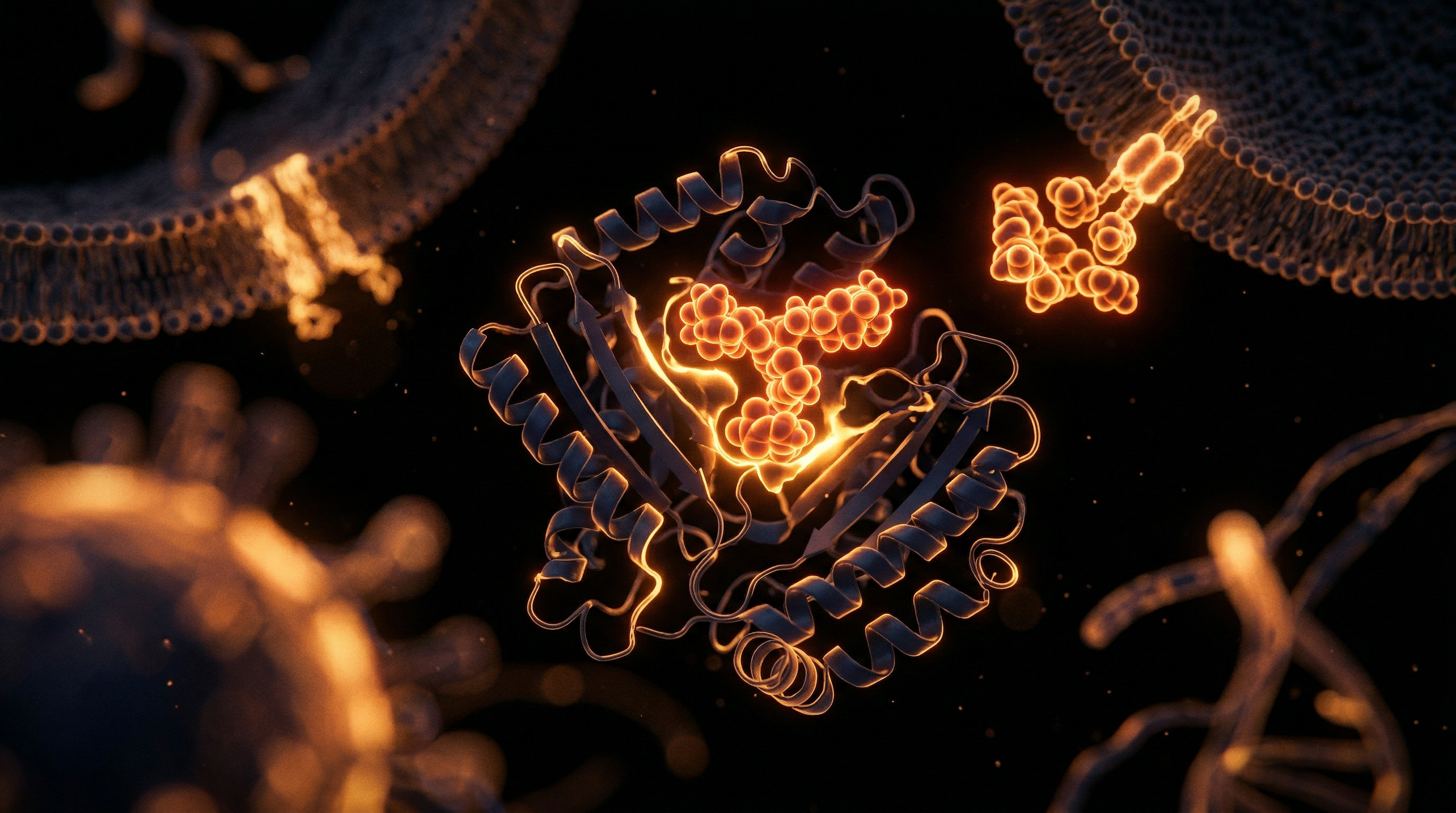
As we navigate the complexities of post-viral syndromes and the lingering impact of the Spike Protein (S-protein) on human physiology, the concept of Binding Affinity has emerged as the central pillar of therapeutic research. Binding affinity refers to the strength of the interaction between a drug molecule (ligand) and its target protein (receptor). In the context of the SARS-CoV-2 spike protein, the ability of a repurposed molecule to occupy the Receptor-Binding Domain (RBD) and prevent it from latching onto human ACE2 receptors is the "Holy Grail" of prophylactic and early-treatment pharmacology.
This article serves as a deep dive into the molecular docking studies, the cellular mechanics, and the suppressed clinical data surrounding Ivermectin. We examine why this molecule, despite its stellar safety record and high binding affinity to pathogenic structures, was relegated to the fringes of mainstream medical discourse. At INNERSTANDING, we seek to bridge the gap between complex biochemical data and the urgent need for effective recovery protocols, providing a comprehensive analysis of how we can neutralise the persistent biological threats of the modern age.
Fact: Ivermectin is listed on the World Health Organization’s (WHO) Model List of Essential Medicines, indicating its critical importance to basic health systems globally.
The Biology — How It Works
To understand Ivermectin’s role, one must first understand the architecture of the enemy: the SARS-CoV-2 Spike Protein. This glycoprotein is a trimeric structure consisting of two subunits, S1 and S2. The S1 subunit contains the Receptor-Binding Domain (RBD), which functions as a "key" that seeks out the Angiotensin-Converting Enzyme 2 (ACE2) receptor, the "lock" found on the surface of various human cells, including lung, heart, and endothelial tissues.
The Mechanics of Binding Affinity
Binding affinity is measured by the equilibrium dissociation constant ($Kd$). The lower the $Kd$ value, the higher the affinity. Scientific literature, including pivotal molecular docking simulations (such as those by Lehrer and Rhein, 2020), has demonstrated that Ivermectin exhibits a remarkably high affinity for the Spike Protein.
- Van der Waals Forces: Ivermectin interacts with the hydrophobic pockets of the RBD.
- Hydrogen Bonding: The molecule forms stable bonds with specific amino acid residues (e.g., Leu91, Phe62) within the Spike protein’s structure.
- Electrostatic Interference: By binding to these sites, Ivermectin creates a steric hindrance, physically blocking the RBD from making contact with the ACE2 receptor.
Competitive Inhibition
In pharmacology, a competitive inhibitor is a molecule that competes with a substrate for the same active site. Ivermectin acts as a competitive inhibitor against the Spike protein. If the concentration of Ivermectin in the plasma is sufficient, it can effectively "cloak" the Spike protein, rendering it unable to initiate cellular entry. This is not merely theoretical; in silico studies have shown that Ivermectin's binding energy to the RBD is comparable to, and in some cases exceeds, the binding energy of the Spike protein to ACE2 itself.
The S2 Subunit and Fusion
Beyond the RBD, recent research has looked at the S2 subunit, which facilitates the fusion of the viral and host cell membranes. Some studies suggest that Ivermectin may also interact with the heptad repeat 1 (HR1) region of the S2 subunit. By destabilising the fusion machinery, the molecule provides a secondary layer of protection, preventing the delivery of viral genetic material or the fusion of Spike-laden cells (syncytia formation).
Key Statistic: Molecular docking simulations have identified that Ivermectin binds to the SARS-CoV-2 Spike protein with a binding energy of approximately -18 kcal/mol, suggesting a very stable and potent interaction.
Mechanisms at the Cellular Level
While the blocking of the ACE2 receptor is a primary mechanism, Ivermectin’s utility in treating post-viral syndromes and "Spikeopathy" involves complex intracellular pathways. It is not merely an "antiviral" in the traditional sense; it is a multi-modal biological modulator.
Nuclear Transport and Importin $\alpha/\beta$
One of the most profound discoveries regarding Ivermectin is its ability to inhibit the Importin $\alpha/\beta$ heterodimer. Many viruses, as well as the Spike protein itself, utilise this cellular transport machinery to move pathogenic proteins into the nucleus of the host cell. Once inside the nucleus, these proteins can subvert the host’s immune response and disrupt normal genetic expression.
By binding to the Importin $\alpha$ site, Ivermectin prevents this nuclear translocation. This is particularly relevant in the context of the Interferon response. Normally, the body produces interferons to signal an antiviral state; however, the Spike protein can block this signal from reaching the nucleus. Ivermectin restores the cell's ability to mount its natural innate immune defence by keeping these "transcription blockers" out of the nuclear compartment.
3CLpro Inhibition
The 3-Chymotrypsin-like protease (3CLpro) is an essential enzyme for viral replication. Interestingly, this is the same target that many expensive, newly developed antivirals (like Nirmatrelvir) aim for. Ivermectin has shown significant inhibitory activity against 3CLpro. By binding to the active site of this protease, Ivermectin prevents the processing of viral polyproteins, effectively halting the assembly of new virions.
Modulation of NF-$\kappa$B and Cytokine Storms
In post-viral syndromes, the body often enters a state of chronic inflammation known as a "cytokine storm" or, in milder chronic cases, "smouldering inflammation." This is driven by the NF-$\kappa$B (Nuclear Factor kappa-light-chain-enhancer of activated B cells) pathway.
- Downregulation: Ivermectin has been shown to downregulate the expression of pro-inflammatory cytokines such as TNF-$\alpha$, IL-1, and IL-6.
- T-Cell Stabilisation: It helps in modulating the T-cell response, preventing the hyper-inflammatory state that leads to tissue damage in the lungs and vascular system.
Interaction with Nicotinic Acetylcholine Receptors (nAChRs)
A more recent and controversial area of study involves the Spike protein’s similarity to certain snake venoms (like $\alpha$-bungarotoxin), which bind to Nicotinic Acetylcholine Receptors. This binding can cause neurological symptoms, brain fog, and dysautonomia. Some researchers hypothesise that Ivermectin’s large, complex structure allows it to compete for these nAChR sites, potentially explaining its efficacy in treating the neurological components of Long COVID.
Environmental Threats and Biological Disruptors
In the modern world, we do not exist in a biological vacuum. The impact of the Spike protein is often exacerbated by a host of environmental threats that prime the immune system for dysfunction. To understand why some individuals suffer more severely from exposure, we must look at the synergistic effects of biological disruptors.
The Role of Graphene and Particulates
While controversial in the mainstream, some researchers have investigated the presence of Graphene Oxide (GO) and other nano-particulates in the environment and medical products. These substances can act as "adjuvants," amplifying the inflammatory response. Graphene oxide, in particular, has a high affinity for proteins; when it meets the Spike protein, it can form a "protein corona" that makes the Spike more stable and harder for the body to degrade.
Electromagnetic Fields (EMF) and Calcium Channels
There is increasing concern that high-level EMF exposure (such as from 5G infrastructure) can affect Voltage-Gated Calcium Channels (VGCCs) in human cells. An influx of intracellular calcium can enhance viral replication and trigger oxidative stress. When a body is already burdened by the Spike protein, these environmental stressors can push the cellular machinery into a state of "autophagy failure," where the cell can no longer clear out damaged proteins.
Mycotoxins and Glyphosate
Chronic exposure to Mycotoxins (from mouldy buildings) and Glyphosate (from the food supply) weakens the intestinal barrier and the blood-brain barrier. A "leaky" barrier allows the Spike protein—whether from infection or other sources—to enter systemic circulation and reach sensitive organs like the brain and heart. Ivermectin’s role in this context may also involve its ability to stabilise these barriers and reduce the oxidative load caused by environmental toxins.
Important Fact: Environmental toxins and the Spike protein share common pathways of damage, specifically the induction of oxidative stress through the depletion of Glutathione, the body’s master antioxidant.
The Cascade: From Exposure to Disease
The progression from initial exposure to the Spike protein to chronic disease (Post-Viral Syndrome or Spikeopathy) follows a predictable biochemical cascade. Understanding this cascade is vital for timing therapeutic interventions.
Phase 1: The Attachment and Entry Phase
In this initial phase, the Spike protein binds to the ACE2 receptor. This is where the Binding Affinity of Ivermectin is most crucial. If the Spike can be blocked at the portal of entry (the nasopharynx and the lungs), the systemic load is significantly reduced.
Phase 2: The Endothelial Attack (Vascular Phase)
The Spike protein is not just a passive attachment mechanism; it is a toxin in its own right. It has been shown to damage endothelial cells (the lining of blood vessels) independently of the virus.
- ACE2 Downregulation: When the Spike binds to ACE2, it causes the receptor to be internalised and degraded. This leads to a loss of ACE2 on the cell surface.
- Angiotensin II Imbalance: ACE2 normally breaks down Angiotensin II (a pro-inflammatory, pro-clotting peptide). Without enough ACE2, Angiotensin II levels rise, leading to vasoconstriction, inflammation, and "microclots."
Phase 3: The Microclot and Amyloid Cascade
One of the most concerning findings in recent pathology is the discovery of amyloid-like microclots. These are not standard blood clots; they are resistant to the body’s natural fibrinolysis (the process of breaking down clots). The Spike protein can cause blood proteins (like fibrinogen) to misfold into an amyloid form. These microclots can block capillaries, leading to the "brain fog" and extreme fatigue characteristic of chronic syndromes.
Phase 4: Mitochondrial Dysfunction
The final stage of the cascade is the failure of the Mitochondria—the powerhouses of the cell. The persistent presence of the Spike protein leads to a state of chronic oxidative stress that damages mitochondrial DNA. This results in a profound energy deficit, where the patient feels exhausted after even minor exertion (Post-Exertional Malaise).
What the Mainstream Narrative Omits
The treatment of the SARS-CoV-2 pandemic and its aftermath has been marked by a singular focus on novel, patented technologies, often at the expense of established, off-patent molecules. The suppression of the data regarding Ivermectin is one of the most significant controversies in modern medical history.
The Financial Disincentive
Ivermectin is incredibly cheap to produce. In many parts of the developing world, a course of treatment costs less than a loaf of bread. Conversely, novel antiviral drugs and vaccine platforms represent billions of pounds in revenue for the pharmaceutical industry. Under current regulatory frameworks, there is no financial incentive for a large company to fund the massive, multi-centre Randomised Controlled Trials (RCTs) required to "prove" the efficacy of an off-patent drug.
The "Horse Paste" Propaganda
A coordinated media campaign sought to rebrand Ivermectin as a "veterinary dewormer" or "horse paste," despite the fact that it has been used safely in humans for four decades. This "rebranding" served to stigmatise the drug, making clinicians hesitant to prescribe it for fear of professional repercussions or ridicule.
Selective Data Interpretation
The mainstream narrative often cites specific trials, such as the TOGETHER trial or the PRINCIPLE trial, to claim that Ivermectin is ineffective. However, independent meta-analyses (such as those by Dr Tess Lawrie and the BIRD Group) have pointed out significant flaws in these studies:
- Under-dosing: Using doses far below what is required to reach the necessary plasma concentration.
- Late Treatment: Administering the drug too late in the disease progression (Phase 3 or 4 instead of Phase 1).
- Inclusion Criteria: Mixing patients who were already recovering with those who were severely ill.
When the totality of the evidence is viewed—including hundreds of observational studies and dozens of RCTs—the signal of benefit in terms of reduced mortality and hospitalisation is statistically overwhelming.
Callout: As of late 2023, over 90 studies have shown a positive effect of Ivermectin in early treatment, with a pooled estimate of improvement often exceeding 60%.
The UK Context
The situation in the United Kingdom regarding repurposed molecules has been particularly restrictive. The Medicines and Healthcare products Regulatory Agency (MHRA) and the National Institute for Health and Care Excellence (NICE) have maintained a "do not use" recommendation for Ivermectin outside of clinical trials.
The Role of the BIRD Group
The British Ivermectin Recommendation Development (BIRD) Group, led by world-renowned evidence-based medicine expert Dr Tess Lawrie, attempted to present the pooled data to the UK authorities. Despite following the rigorous "Cochrane" style of analysis, their findings were largely ignored by the medical establishment.
The PRINCIPLE Trial Controversy
The PRINCIPLE trial, run by Oxford University, was intended to be the definitive UK study on Ivermectin. However, the trial was plagued by delays and, crucially, the dose used was questioned by many experts as being insufficient to address the newer variants of the virus. The results of the PRINCIPLE trial were released in a way that downplayed any potential benefit, further cementing the "ineffective" label in the UK's medical consciousness.
The Yellow Card System
The UK’s Yellow Card scheme, which tracks adverse drug reactions, has recorded an unprecedented number of reports related to the Spike protein-based interventions. While these reports are "suspected" reactions, the sheer volume has led many UK doctors to quietly seek out alternatives like Ivermectin to treat their vaccine-injured patients, often operating under the radar to avoid regulatory scrutiny.
Protective Measures and Recovery Protocols
For those suffering from the effects of the Spike protein—whether from "Long COVID" or post-vaccination issues—a multi-pronged approach is necessary. Recovery is not about a "silver bullet" but about restoring the body’s homeostatic balance and clearing the pathogenic proteins.
The FLCCC I-RECOVER Protocol
The Front Line COVID-19 Critical Care Alliance (FLCCC) has developed comprehensive protocols that have become the gold standard for many integrative practitioners.
- Ivermectin: Typically prescribed at 0.4mg/kg to 0.6mg/kg per day. In chronic cases, it may be used in cycles (e.g., five days on, two days off) to allow for the slow clearance of the Spike protein.
- Fasting: Intermittent fasting or longer water fasts can trigger autophagy, the body’s cellular "recycling" system that can help break down misfolded Spike proteins.
- Resveratrol and Quercetin: These polyphenols act as "ionophores," helping minerals like Zinc enter the cells, while also possessing their own binding affinity for the Spike protein.
- N-Acetyl Cysteine (NAC): Essential for replenishing Glutathione and breaking down the disulphide bonds in the Spike protein, potentially reducing its ability to bind to cells.
Addressing Hypercoagulation
To address the microclots, practitioners often use:
- Nattokinase: An enzyme derived from fermented soy (natto) that has the specific ability to degrade the Spike protein and dissolve fibrin-rich clots.
- Lumbrokinase: Another potent fibrinolytic enzyme.
- Low-Dose Aspirin: To reduce platelet aggregation.
Nutritional Support and Detoxification
- Vitamin D3/K2: Essential for immune modulation. Most patients with chronic Spikeopathy are found to be deficient.
- Magnesium: Required for over 300 enzymatic reactions and to counteract the effects of calcium channel over-activation.
- C60 and Zeolite: Used by some to assist in the removal of environmental toxins and heavy metals that may be hindering recovery.
Guideline: Recovery is often non-linear. Patients may experience "Herxheimer" reactions (a temporary worsening of symptoms) as the body begins to clear the Spike protein and associated toxins.
Summary: Key Takeaways
The science of Ivermectin and its binding affinity to the Spike protein represents a crucial frontier in our understanding of repurposed therapeutics. While the mainstream narrative has focused on a narrow path of pharmaceutical intervention, the biochemical data suggests that we already possess the tools to mitigate the damage caused by modern biological threats.
- High Binding Affinity: Ivermectin’s molecular structure allows it to bind strongly to the Spike protein’s RBD, physically blocking its entry into human cells.
- Multi-Modal Action: Beyond simple blocking, Ivermectin inhibits nuclear transport, reduces inflammation via the NF-$\kappa$B pathway, and may interfere with viral proteases.
- Spikeopathy is Real: The Spike protein is a systemic toxin that causes endothelial damage, microclots, and mitochondrial failure.
- Suppression of Truth: The marginalisation of Ivermectin was driven more by political and financial factors than by a lack of scientific efficacy.
- Recovery is Possible: Through a combination of Ivermectin, autophagy-inducing practices (like fasting), and fibrinolytic enzymes (like Nattokinase), individuals can begin to clear the Spike protein and restore their health.
In the pursuit of "Innerstanding," we must remain vigilant and discerning. The science of repurposed molecules is not just a footnote in medical history; it is a vital manual for survival in an age of biological disruption. By understanding the binding affinity of these molecules, we reclaim our agency over our own biological integrity.
This article is provided for informational and educational purposes only. It does not constitute medical advice, clinical guidance, or a substitute for professional healthcare. Information reflects cited research at time of publication. Always consult a qualified healthcare professional before acting on any health information.
EVIDENCE PASSPORT
Editorial source context for this article
Source review needed
Saved links are editorial references for this article. They may support specific claims rather than every sentence. Open and assess each source in context. This passport does not independently verify them.
Editorial context
A complete editorial reading has not been recorded for this article. Source links remain available for you to open and assess directly.
Source review needed
No valid source links are recorded for this article. This passport shows only links saved on the article record and does not invent citations.
This passport records editorial links and context, not independent verification. Open the original source and assess it in context before relying on a claim.
Medical Disclaimer
The information in this article is for educational purposes only and does not constitute medical advice, diagnosis, or treatment. Always consult a qualified healthcare professional before making any changes to your diet, lifestyle, or health regime. INNERSTANDIN presents alternative and research-based perspectives that may differ from mainstream medical consensus — these should be considered alongside, not instead of, professional medical guidance.
Read Full DisclaimerContinue the thread
Keep this question moving.
Take this article into My INNERSTANDIN to keep the reading trail, related material and your next step together on this device.