
Kefir’s Bioactive Peptides: Cardioprotection Mechanisms
Updated May 2026
Traditional kefir fermentation releases specific peptides that inhibit ACE activity, directly lowering blood pressure. We examine the biochemical pathways that make this fermented dairy a superior cardiovascular intervention.
Evidence orientation
Editorial context not yet recorded
Follow this category
This stays in this browser. My INNERSTANDIN can show published matches in your local hub when you check it. It does not send email, push, or alert notifications.
Local learning review
A private browser aid for revisiting ideas. It is not an alert or a health recommendation.
Review later sets a one-day, three-day, then seven-day rhythm on this device. Choose it only when you want to revisit this article.
Overview
In the modern landscape of cardiovascular medicine, the prevailing paradigm has long been dominated by the pharmacological management of symptoms—specifically the use of synthetic ACE inhibitors, beta-blockers, and statins. However, as we delve into the sophisticated realm of nutri-epigenetics and functional fermentation, a far more profound biological reality emerges. Traditional kefir, a complex symbiotic matrix of yeast and bacteria, is not merely a "probiotic drink"; it is a biological laboratory that synthesises potent, cardio-active molecules capable of modulating human physiology at the genomic and enzymatic levels.
The cardiovascular crisis facing the Western world is not merely a result of "ageing" or "genetics," but a profound decoupling from the co-evolutionary signals provided by fermented foods. Central to this discussion is the kefir peptidome. During the fermentation process, the proteolytic activity of the kefir "SCOBY" (Symbiotic Culture of Bacteria and Yeast) breaks down the complex proteins in milk—casein and whey—into shorter chains of amino acids known as bioactive peptides. These peptides possess specific sequences that the human body recognises as signals to down-regulate inflammation, inhibit hypertensive enzymes, and repair the vascular endothelium.
At INNERSTANDING, we recognise that the degradation of the modern diet has resulted in a "peptide deficiency" that leaves the heart vulnerable to environmental stressors. This article provides an exhaustive examination of how kefir-derived peptides, specifically those targeting the Renin-Angiotensin-Aldosterone System (RAAS), serve as a superior, side-effect-free intervention for hypertension and heart disease. We will expose why these natural biochemical pathways are often ignored in favour of patentable synthetic alternatives and how the reclamation of traditional fermentation is a radical act of biological sovereignty.
The Biology — How It Works
The magic of kefir lies in its unique fermentation kinetics. Unlike yogurt, which typically relies on two or three bacterial strains (usually Lactobacillus bulgaricus and Streptococcus thermophilus), kefir is a multi-kingdom consortium containing upwards of 50 to 60 species of bacteria and yeasts, held together by a polysaccharide matrix known as kefiran.
Proteolysis: The Birth of the Peptidome
The primary biological mechanism of interest is extracellular proteolysis. Milk proteins, in their raw state, are essentially "locked" storage molecules. While they contain the building blocks of life, their cardioprotective potential is latent. During the 24-to-48-hour fermentation cycle, the lactic acid bacteria (LAB) within the kefir grains secrete various proteases. These enzymes act like molecular scissors, cleaving the large, globular proteins (primarily α-casein, β-casein, and κ-casein) into smaller fragments.
- Tripeptides: Fragments consisting of three amino acids, such as Valine-Proline-Proline (VPP) and Isoleucine-Proline-Proline (IPP), are the most critical.
- Hexapeptides and larger chains: These contribute to immunomodulation and opioid-like calming effects on the nervous system.
The Survival of the Peptides
Crucially, these bioactive peptides are remarkably resilient. Unlike the parent proteins, which are often denatured or completely broken down by stomach acid and pepsin, these specific sequences—particularly those with a high proline content—are resistant to digestive degradation. They reach the small intestine intact, where they are absorbed into the bloodstream via the peptide transporter 1 (PEPT1) system. Once in systemic circulation, they travel to the vascular tissues, where they begin their work of enzymatic inhibition.
Callout Fact: Traditional kefir contains over 250 distinct peptides formed during fermentation, many of which have no known synthetic equivalent in modern pharmacology.
Mechanisms at the Cellular Level
To understand how kefir protects the heart, we must look at the Renin-Angiotensin-Aldosterone System (RAAS), the body’s primary regulator of blood pressure and fluid balance.
ACE Inhibition: The Primary Pathway
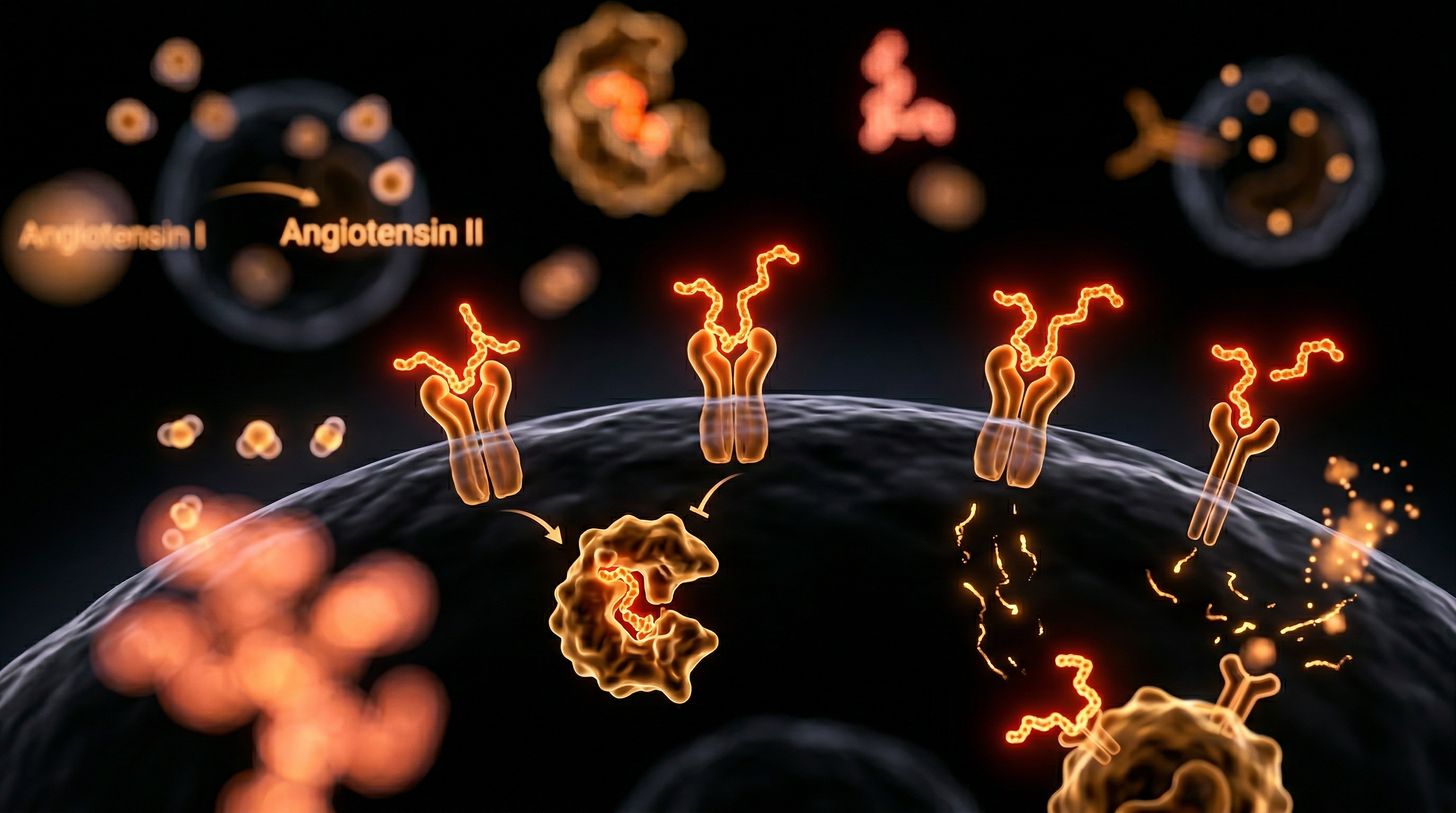
The most well-documented mechanism of kefir’s cardioprotection is the inhibition of the Angiotensin-Converting Enzyme (ACE). In a healthy state, ACE converts Angiotensin I into Angiotensin II, a potent vasoconstrictor that narrows blood vessels and increases pressure. However, in the context of modern stress and toxicity, this system becomes overactive, leading to chronic hypertension and cardiac hypertrophy (thickening of the heart muscle).
Kefir-derived peptides, specifically VPP and IPP, act as competitive inhibitors of ACE. They bind to the active site of the enzyme, preventing it from producing Angiotensin II. This results in:
- Vasodilation: Blood vessels relax and widen.
- Reduced Aldosterone: Lower levels of this hormone lead to decreased sodium retention and lower blood volume.
- Bradykinin Preservation: ACE is also responsible for breaking down bradykinin, a natural vasodilator. By inhibiting ACE, kefir peptides allow bradykinin levels to rise, further protecting the vascular lining.
Endothelial Nitric Oxide Synthase (eNOS) Activation
Beyond ACE inhibition, kefir peptides stimulate the production of Nitric Oxide (NO) within the vascular endothelium. NO is the "miracle molecule" of the cardiovascular system; it signals the smooth muscle cells of the arteries to relax. Bioactive peptides from fermented dairy have been shown to upregulate the expression of the eNOS gene, ensuring that the "inner skin" of our arteries remains flexible and resistant to plaque formation.
The Nrf2 Pathway and Oxidative Stress
The cellular mechanisms are not limited to pressure regulation. Kefir peptides also activate the Nrf2 (Nuclear factor erythroid 2-related factor 2) pathway, the body's master antioxidant switch. By stimulating the production of endogenous antioxidants like glutathione and superoxide dismutase (SOD), kefir protects the mitochondria of cardiac myocytes (heart cells) from the oxidative damage caused by heavy metals and metabolic waste.
Environmental Threats and Biological Disruptors
The necessity for kefir’s bioactive intervention is heightened by the unprecedented level of environmental toxicity in the 21st century. Our cardiovascular systems are currently under siege from "biological disruptors" that were non-existent a century ago.
The Glyphosate Connection
Glyphosate, the ubiquitous herbicide found in the modern food supply (particularly in wheat, soy, and corn used as cattle feed), is a catastrophic disruptor of the cardiovascular system. It acts as a chelator, stripping the body of essential minerals like magnesium and manganese, which are cofactors for heart function. More insidiously, glyphosate destroys the very gut bacteria required to process milk proteins into bioactive peptides. When we consume "industrial dairy" from cows fed on glyphosate-sprayed grain, we are consuming a product devoid of its natural protective potential.
Industrial Seed Oils and Lipid Peroxidation
The shift from animal fats to highly processed seed oils (canola, sunflower, soybean) has led to an epidemic of "oxidised LDL." These oils are unstable and prone to lipid peroxidation. When they integrate into the cell membranes of the heart and blood vessels, they create a state of chronic "stiffness" and inflammation. Kefir’s peptides help counteract this by repairing the lipid bilayer and providing the antioxidant defence necessary to prevent the oxidation of cholesterol.
Microplastics and Nanoparticles
Recent studies have identified microplastics within the human heart and arterial plaques. These foreign particles trigger a persistent immune response, leading to chronic low-grade vasculitis (inflammation of the blood vessels). The immunomodulatory peptides in kefir help "calm" the immune system’s overreaction to these environmental particles, preventing the cytokine storms that lead to sudden cardiac events.
The Cascade: From Exposure to Disease
Without the protective intervention of bioactive peptides, the body enters a "pro-hypertensive cascade." This is not a sudden event but a slow degradation of biological integrity.
- Stage 1: Microbial Dysbiosis: The loss of fermentative bacteria in the gut (due to antibiotics, UPFs, and chlorine in water) reduces the body’s internal production of peptides.
- Stage 2: Endothelial Dysfunction: The lack of ACE-inhibiting signals and Nitric Oxide results in the "stiffening" of the arteries. The endothelium becomes "sticky," allowing calcium and oxidised fats to adhere to the vessel walls.
- Stage 3: RAAS Overdrive: The kidneys, sensing lower blood flow due to stiff arteries, secrete more renin, further driving up blood pressure in a vicious cycle of compensation.
- Stage 4: Mitochondrial Failure: Cardiac cells, starved of clean energy and bombarded by oxidative stress, begin to lose mitochondrial efficiency. This manifests as fatigue, palpitations, and eventually, heart failure.
This cascade is perfectly managed by the pharmaceutical industry, which provides a pill for each stage of the decline without ever addressing the underlying peptide-microbiome deficiency.
What the Mainstream Narrative Omits
The mainstream medical establishment, heavily influenced by the pharmaceutical-industrial complex, continues to push several dangerous myths regarding heart health and dairy consumption.
The "Saturated Fat" Fallacy
For decades, the public has been told that dairy fat is the enemy of the heart. This reductionist view ignores the food matrix effect. When saturated fats are consumed within the matrix of fermented kefir, they are metabolised differently. The bioactive peptides and the Vitamin K2 (menaquinone) produced by kefir bacteria ensure that calcium is directed into the bones and away from the arteries. Mainstream advice to consume "low-fat" dairy is actually counterproductive, as the removal of fat often involves high-heat processing that destroys the very enzymes and peptides we require.
The Suppression of "Food-as-Medicine"
Why is kefir not prescribed by cardiologists? The answer is simple: Kefir cannot be patented. You cannot own a traditional SCOBY that has been passed down through generations. Therefore, there is no financial incentive for large-scale clinical trials that would validate kefir as a primary treatment for hypertension. Instead, the narrative focuses on "lifestyle changes" (which are vaguely defined) and "compliance" with medication.
The Industrial "Kefir" Deception
Most "kefir" sold in supermarkets is a fraudulent representation of the real thing. To ensure shelf-stability and "flavour consistency," industrial manufacturers use a "direct-set" method. They add a few laboratory-grown bacterial strains to pasteurised milk and ferment it for a few hours. This process does not allow for the complex proteolysis required to create a full spectrum of bioactive peptides. Consumers believe they are getting the benefits of a 2000-year-old healing tradition, but they are actually drinking a "ghost food"—a hollow imitation that lacks the enzymatic depth of traditional grain-fermented kefir.
Callout Fact: Laboratory analysis shows that traditional, grain-fermented kefir has up to 10 times the concentration of ACE-inhibiting peptides compared to industrial "probiotic" drinks.
The UK Context
The United Kingdom is currently in the grip of a cardiovascular crisis that the NHS is struggling to contain. With over 14 million people in the UK living with high blood pressure, and cardiovascular disease (CVD) accounting for a quarter of all deaths, the "Standard British Diet" is proving fatal.
The Decline of British Dairying
The UK once had a thriving culture of raw milk and local creameries. However, aggressive pasteurisation laws and the consolidation of the dairy industry have turned milk into a "commodity" rather than a nutrient-dense food. The British public is largely unaware that the "High-Temperature Short-Time" (HTST) pasteurisation used by major supermarkets denatures the very proteins needed for peptide liberation.
The NHS Burden
The cost of treating hypertension-related illnesses costs the NHS billions of pounds annually. Yet, the nutritional guidelines provided to patients are often decades out of date, still focusing on "low salt" and "low fat" while ignoring the role of the microbiome and fermented peptides. There is a profound opportunity for a public health revolution in the UK through the reintroduction of traditional kefir fermentation in local communities.
The "Post-Antibiotic" Era in the UK
As antibiotic resistance grows, the role of fermented foods in maintaining the "British Microbiome" becomes even more critical. Each course of antibiotics prescribed in UK GP surgeries further decimates the internal capacity to produce cardioprotective metabolites. Kefir represents a vital "recovery protocol" for a population that has been over-medicated and under-nourished.
Protective Measures and Recovery Protocols
To truly harness the cardioprotective power of kefir, one must move beyond the supermarket shelf and adopt a protocol of Biological Sovereignty.
1. The Home Fermentation Standard
To ensure the maximum concentration of VPP and IPP peptides, you must ferment your own kefir using live grains.
- Source: Obtain "live" kefir grains (not powdered starter) from a reputable source.
- The Milk: Use the highest quality milk available. In the UK, seek out "Gold Top" (Channel Island) milk or, ideally, raw (unpasteurised) milk from a local farm. The higher protein and fat content provides a better substrate for peptide production.
- Fermentation Time: A 24-hour ferment at room temperature is standard, but a 48-hour secondary ferment (after removing the grains) significantly increases the peptide concentration and reduces the lactose content to near zero.
2. Dosing for Cardioprotection
For those using kefir as an intervention for hypertension, "micro-dosing" is not enough.
- Therapeutic Dose: Aim for 250ml to 500ml of traditional kefir daily.
- Timing: Consume on an empty stomach or before a meal to allow the peptides to interact with the intestinal receptors without competition from other proteins.
3. Synergistic Ingredients
Enhance the cardioprotective effect by adding specific functional foods to your kefir:
- Ceylon Cinnamon: Improves insulin sensitivity and works synergistically with peptides to lower blood pressure.
- Magnesium Bicarbonate: Helps offset the mineral-depleting effects of the modern environment.
- Hibiscus tea (as a secondary ferment): Contains its own set of anthocyanins that further inhibit ACE activity.
4. Avoiding the "Peptide Blockers"
To allow kefir’s peptides to work, one must eliminate the factors that cause vascular inflammation:
- Eliminate Seed Oils: Replace with tallow, ghee, or extra virgin olive oil.
- Filter Your Water: Use a high-quality filter (like a Berkey or reverse osmosis) to remove fluoride and chlorine, which damage the gut lining and inhibit peptide absorption.
- Reduce UPFs: Ultra-processed foods contain emulsifiers (like carboxymethylcellulose) that "wash away" the protective mucus layer of the gut where peptides are absorbed.
Summary: Key Takeaways
The cardiovascular benefits of kefir are not a matter of folk-lore but are grounded in the rigorous biochemistry of bioactive peptides. By understanding the mechanisms of ACE inhibition and the threats of the modern environment, we can reclaim our health from an extractive medical system.
- Kefir is a Postbiotic Powerhouse: Its primary value lies not just in the live bacteria, but in the peptides created during fermentation.
- ACE Inhibition is Natural: Peptides like VPP and IPP offer a natural pathway to lower blood pressure without the side effects of synthetic drugs.
- Quality is Non-Negotiable: Supermarket kefir is a biological shadow; only traditional grain-fermentation provides the full therapeutic peptidome.
- Environmental Awareness: We must protect our internal "fermentation vat" from disruptors like glyphosate and industrial oils to allow these peptides to function.
- The UK Opportunity: A return to traditional dairy practices could alleviate the chronic disease burden on the NHS and restore the nation’s cardiovascular resilience.
In an age of systemic biological disruption, the simple act of fermenting kefir is a profound tool for survival. It is the bridge between ancient wisdom and modern molecular biology—a true "INNERSTANDING" of what it means to nourish the human heart.
"References for further study:"
- Minervini, F., et al. (2003). "ACE-inhibitory peptides yields in milk fermented by kefir grains." Journal of Dairy Science.
- Fathi, B., et al. (2017). "Antihypertensive effect of kefir-derived peptides: A systematic review." Journal of Functional Foods.
- Ebner, J., et al. (2015). "Peptide profiling of bovine kefir reveals 236 unique peptides released from milk proteins." Journal of Proteomics.
This article is provided for informational and educational purposes only. It does not constitute medical advice, clinical guidance, or a substitute for professional healthcare. Information reflects cited research at time of publication. Always consult a qualified healthcare professional before acting on any health information.
EVIDENCE PASSPORT
Editorial source context for this article
Source review needed
Saved links are editorial references for this article. They may support specific claims rather than every sentence. Open and assess each source in context. This passport does not independently verify them.
Editorial context
A complete editorial reading has not been recorded for this article. Source links remain available for you to open and assess directly.
Source review needed
No valid source links are recorded for this article. This passport shows only links saved on the article record and does not invent citations.
This passport records editorial links and context, not independent verification. Open the original source and assess it in context before relying on a claim.
Medical Disclaimer
The information in this article is for educational purposes only and does not constitute medical advice, diagnosis, or treatment. Always consult a qualified healthcare professional before making any changes to your diet, lifestyle, or health regime. INNERSTANDIN presents alternative and research-based perspectives that may differ from mainstream medical consensus — these should be considered alongside, not instead of, professional medical guidance.
Read Full DisclaimerContinue the thread
Keep this question moving.
Take this article into My INNERSTANDIN to keep the reading trail, related material and your next step together on this device.
Dig deeper in the Library
Free, longform PDF volumes that go beyond headlines into mechanisms and references.