
Urban Glare and Glandular Health: The Hidden Link Between LEDs and Hormone-Driven Cancers
Published April 2026
Investigating the link between municipal LED lighting and hormone-driven cancers through the mechanism of chronic melatonin suppression.
Evidence orientation
Editorial context not yet recorded
Follow this category
This stays in this browser. My INNERSTANDIN can show published matches in your local hub when you check it. It does not send email, push, or alert notifications.
Local learning review
A private browser aid for revisiting ideas. It is not an alert or a health recommendation.
Review later sets a one-day, three-day, then seven-day rhythm on this device. Choose it only when you want to revisit this article.
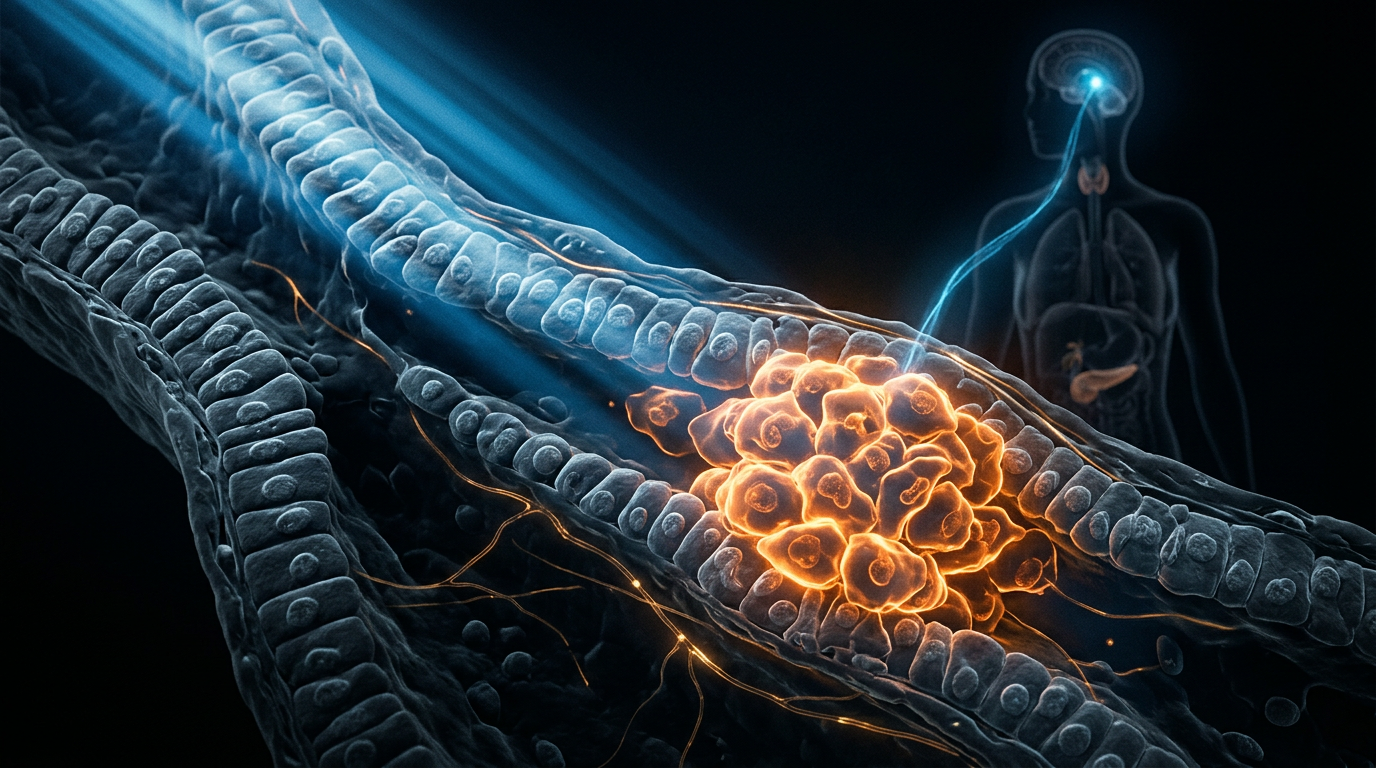
As our cities transition from yellow sodium-vapour streetlights to high-intensity white LEDs, we are witnessing an unprecedented global experiment on the human endocrine system. Light pollution is no longer just an issue for astronomers; it is a significant public health concern. The phenomenon of 'sky glow' and the intrusion of artificial light into bedrooms at night are now being linked by epidemiologists to rising rates of hormone-sensitive cancers, specifically breast and prostate cancer. While mainstream oncology focuses heavily on genetics and diet, the role of the nocturnal photic environment as an endocrine disruptor is often relegated to the sidelines. MELATONIN SUPPRESSION AND ONCOGENESIS.
The mechanism linking light pollution to cancer is centered on the suppression of melatonin. Beyond its role in sleep, melatonin is a potent oncostatic agent. It inhibits the proliferation of many types of cancer cells and regulates the sensitivity of receptors to hormones like estrogen. When streetlights or indoor 'light leak' suppress melatonin levels during the night, the body loses one of its most effective natural defences against tumor growth. Studies have shown that women living in areas with high levels of nocturnal outdoor light have a significantly higher risk of developing breast cancer.
This is not merely a correlation; it is a direct consequence of how light at night alters the signaling of the HPA (Hypothalamic-Pituitary-Adrenal) axis. THE MISUSE OF COLOUR TEMPERATURE IN CITIES. Municipalities often choose LED streetlights based on 'lumen output' and 'visual clarity,' which usually results in the installation of 4000K or 5000K lamps. These bulbs emit a high proportion of blue light, which scatters more easily in the atmosphere and penetrates window glass more effectively than the older, amber-hued lights. This high-energy blue light is the most effective at suppressing melatonin.
The shift toward these 'colder' lights has effectively eliminated the 'biological night' for urban dwellers. Even low levels of light—as little as 5 to 10 lux—have been shown to elicit a neuroendocrine response if the spectral composition is rich in blue wavelengths. CREATING A BIOLOGICAL SANCTUARY. Protecting oneself from urban light pollution requires a defensive approach to the home environment. Blackout curtains are no longer a luxury but a biological necessity for those in urban centers.
Furthermore, the use of amber or red nightlights for evening navigation can prevent the midnight 'melatonin crash' that occurs when one turns on a standard bathroom light. On a broader scale, advocacy for 'Dark Sky' compliant lighting in local councils is essential. We must demand lighting that respects human physiology by using low-Kelvin, shielded fixtures that direct light only where it is needed, preserving the darkness that our endocrine system requires for homeostasis.
This article is provided for informational and educational purposes only. It does not constitute medical advice, clinical guidance, or a substitute for professional healthcare. Information reflects cited research at time of publication. Always consult a qualified healthcare professional before acting on any health information.
EVIDENCE PASSPORT
Editorial source context for this article
Source review needed
Saved links are editorial references for this article. They may support specific claims rather than every sentence. Open and assess each source in context. This passport does not independently verify them.
Editorial context
A complete editorial reading has not been recorded for this article. Source links remain available for you to open and assess directly.
Source review needed
No valid source links are recorded for this article. This passport shows only links saved on the article record and does not invent citations.
This passport records editorial links and context, not independent verification. Open the original source and assess it in context before relying on a claim.
Medical Disclaimer
The information in this article is for educational purposes only and does not constitute medical advice, diagnosis, or treatment. Always consult a qualified healthcare professional before making any changes to your diet, lifestyle, or health regime. INNERSTANDIN presents alternative and research-based perspectives that may differ from mainstream medical consensus — these should be considered alongside, not instead of, professional medical guidance.
Read Full DisclaimerContinue the thread
Keep this question moving.
Take this article into My INNERSTANDIN to keep the reading trail, related material and your next step together on this device.
Dig deeper in the Library
Free, longform PDF volumes that go beyond headlines into mechanisms and references.