
Lipid Peroxidation: The Silent Engine of Cellular Damage
Updated May 2026
The spontaneous breakdown of unstable fats within the body creates free radicals that damage DNA and proteins. This scientific breakdown explains why stability is the most important metric for dietary fats.
Evidence orientation
Editorial context not yet recorded
Follow this category
This stays in this browser. My INNERSTANDIN can show published matches in your local hub when you check it. It does not send email, push, or alert notifications.
Local learning review
A private browser aid for revisiting ideas. It is not an alert or a health recommendation.
Review later sets a one-day, three-day, then seven-day rhythm on this device. Choose it only when you want to revisit this article.
Overview
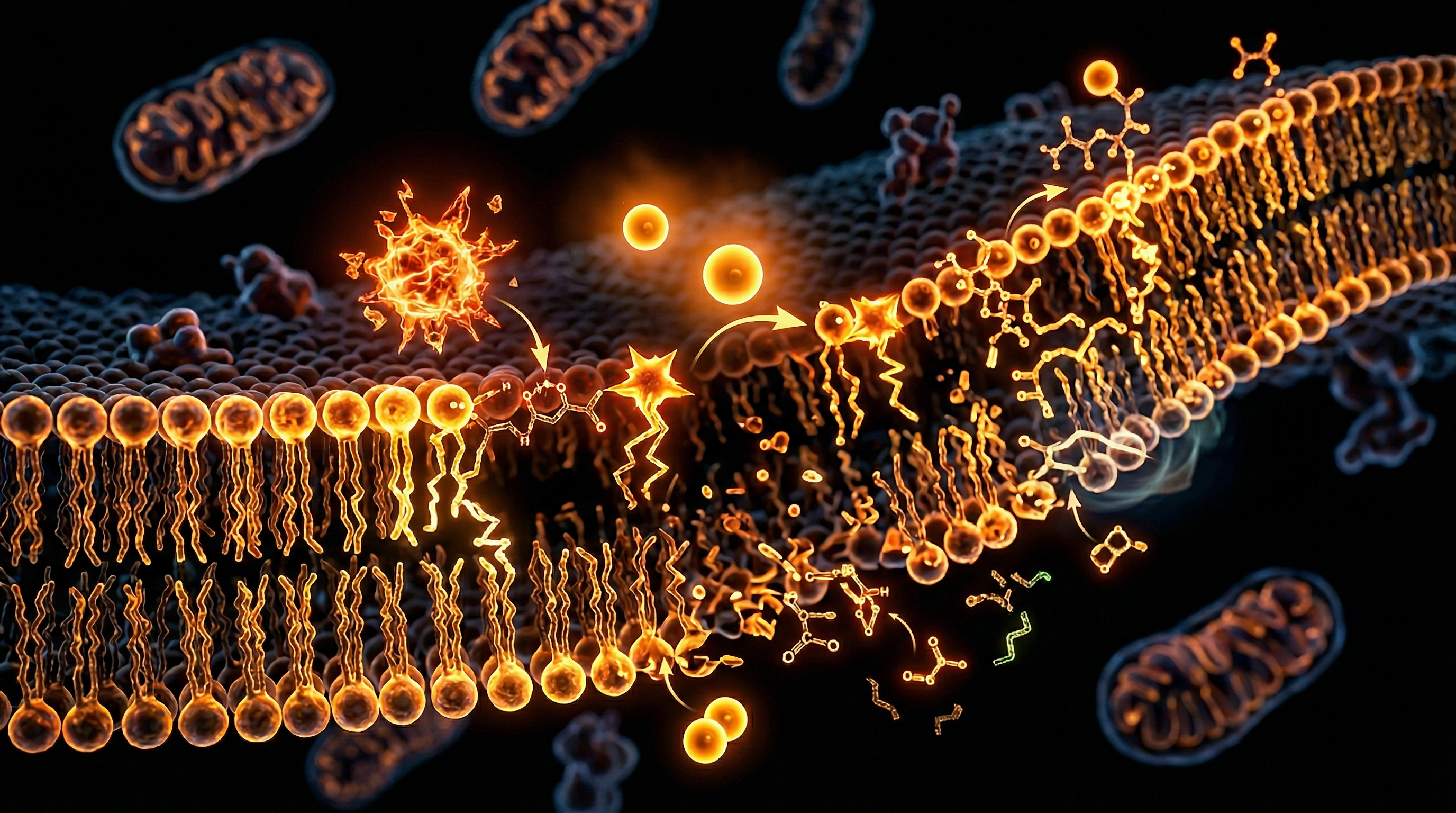
In the realm of modern biochemistry, we are witnessing a silent, microscopic conflagration. While the public discourse on health remains fixated on macronutrient ratios and caloric deficits, a far more insidious process is occurring within the very membranes of our cells. This process is lipid peroxidation—the oxidative degradation of lipids. It is, quite literally, the biological equivalent of "rusting" from the inside out.
For decades, the dietary spotlight has been wrongly shone upon saturated fats, casting them as the primary villains in the saga of cardiovascular disease and metabolic decline. However, a rigorous examination of cellular biology and lipid chemistry reveals a different antagonist. The true threat to human longevity and structural integrity is the instability of polyunsaturated fatty acids (PUFAs), specifically those derived from industrial seed oils.
Lipid peroxidation is not merely a side effect of aging; it is a primary driver of it. It is a self-propagating chain reaction that targets the fatty acid tails of the phospholipids that comprise our cell membranes. When these fats are unstable—possessing multiple double bonds that are vulnerable to oxygen—they break down into toxic byproducts. These byproducts, such as 4-Hydroxynonenal (4-HNE) and Malondialdehyde (MDA), are highly reactive electrophiles that migrate throughout the cell, distorting DNA, cross-linking proteins, and crippling the mitochondria.
This article serves as a comprehensive forensic analysis of lipid peroxidation. We will explore why molecular stability is the most critical metric for any dietary fat, how industrial processing has compromised our internal biochemistry, and why the "heart-healthy" narrative regarding vegetable oils may be the most significant public health error in modern history.
Callout Fact: Lipid peroxidation is a "chain reaction" mechanism. A single free radical can initiate the oxidation of hundreds of fatty acid molecules in a cell membrane before the cycle is terminated, leading to massive structural failure.
The Biology — How It Works
To understand lipid peroxidation, one must first understand the fundamental chemistry of fatty acids. Fats are classified based on the presence and number of double bonds between carbon atoms in their hydrocarbon chains.
Saturated vs. Unsaturated: A Question of Stability
Saturated fatty acids (SFAs) have no double bonds. Every carbon atom is "saturated" with hydrogen. This results in a straight, rigid structure that is thermally stable and resistant to oxygen. This is why butter or tallow is solid at room temperature and does not go rancid easily.
Monounsaturated fatty acids (MUFAs), like those in olive oil, have one double bond. This introduces a slight "kink" in the chain and a minor point of vulnerability, but they remain relatively stable.
Polyunsaturated fatty acids (PUFAs), found in high concentrations in seed oils (soya, sunflower, rapeseed, corn), have two or more double bonds. The spaces between these double bonds—known as methylene bridges—possess hydrogen atoms that are exceptionally easy to remove.
The Methylene Bridge: The Achilles' Heel
The chemical vulnerability of PUFAs lies in these methylene groups. Because the electrons in the double bonds are in constant motion, they exert a "pull" on the hydrogen atoms located between them. This makes the hydrogen-carbon bond weak.
When a reactive oxygen species (ROS) or a free radical encounters a PUFA, it easily "steals" a hydrogen atom from the methylene bridge. This leaves the fat molecule itself as a radical, seeking to stabilise itself by stealing an electron from its neighbour.
The Role of Light, Heat, and Oxygen
Outside the body, lipid peroxidation is known as rancidity. Three factors accelerate this process:
- Heat: Increases molecular kinetic energy, making bonds easier to break.
- Oxygen: The primary oxidant that feeds the chain reaction.
- Light (UV): Provides the energy to initiate the radical formation.
The industrial manufacturing of seed oils involves all three. These oils are heated to extreme temperatures, treated with chemical solvents like hexane, and bleached. By the time they reach the supermarket shelf, they are often already in a state of partial oxidative decay, masked only by chemical deodorisation.
Mechanisms at the Cellular Level
Once these unstable fats are incorporated into the human body, they do not remain inert. They become the building blocks of our cellular architecture. This is where the true damage begins.
The Three Stages of Peroxidation
The process of lipid peroxidation occurs in three distinct phases:
- Initiation: A free radical (such as a hydroxyl radical) attacks a vulnerable PUFA in the cell membrane, abstracting a hydrogen atom and creating a lipid radical.
- Propagation: The lipid radical reacts with dissolved oxygen to form a lipid peroxyl radical. This peroxyl radical then attacks an adjacent fatty acid, creating a new lipid radical and a lipid hydroperoxide. This cycle repeats thousands of times.
- Termination: The reaction only stops when two radicals collide with each other to form a stable non-radical species, or when an antioxidant (like Vitamin E) intervenes to donate an electron and neutralise the threat.
The Toxic End-Products
The primary danger of lipid peroxidation is not the loss of the fat itself, but the creation of "secondary oxidation products." As the lipid hydroperoxides break down, they fragment into highly reactive aldehydes.
- 4-Hydroxynonenal (4-HNE): Perhaps the most dangerous byproduct. It is a potent signalling molecule that, in high concentrations, triggers apoptosis (cell death) and inhibits DNA repair.
- Malondialdehyde (MDA): Frequently used as a clinical marker for oxidative stress. MDA reacts with the bases in DNA (adenine, cytosine, and guanine) to form DNA adducts, which are precursors to carcinogenic mutations.
- Acrolein: Also found in cigarette smoke, this byproduct causes massive damage to proteins and is a known neurotoxin.
Mitochondrial Dysfunction: The Cardiolipin Crisis
The mitochondria, the powerhouses of our cells, are particularly susceptible. The inner mitochondrial membrane contains a unique phospholipid called cardiolipin.
Cardiolipin is essential for the function of the Electron Transport Chain (the process that creates ATP). Critically, cardiolipin is highly enriched with linoleic acid (an omega-6 PUFA). If a person's diet is high in seed oils, their cardiolipin becomes increasingly unstable. When cardiolipin oxidises, the mitochondria "leak" electrons, leading to a drop in energy production and a massive increase in systemic inflammation.
Environmental Threats and Biological Disruptors
While the internal production of free radicals is a natural part of metabolism, our modern environment has introduced "biological disruptors" that accelerate lipid peroxidation to levels the human body was never designed to handle.
The Seed Oil Proliferation
The primary driver of the lipid peroxidation epidemic is the sheer volume of linoleic acid in the modern diet. Since the early 1900s, human consumption of linoleic acid has increased by nearly 1,000%.
Important Statistic: In 1900, linoleic acid made up roughly 1-2% of total calories. Today, in the average Western diet, it accounts for 8-12%.
Common sources include:
- Soya bean oil
- Sunflower oil
- Corn oil
- Rapeseed (Canola) oil
- Cottonseed oil
- Grapeseed oil
Fried Foods and "The Fryer Effect"
When restaurants use seed oils in deep fryers, the oils are kept at high temperatures for days or even weeks. Each time the oil is heated and exposed to the air, the level of lipid oxidation products increases exponentially. Consuming fries or fried chicken from these sources is essentially an "aldehyde bomb" for the vascular system.
Iron Overload
Iron is a powerful catalyst for lipid peroxidation via the Fenton Reaction. Excess free iron in the blood reacts with lipid hydroperoxides to create even more aggressive radicals. This is why individuals with high ferritin levels are at a significantly higher risk for the complications associated with PUFA consumption.
Blue Light and UV Radiation
Emerging research suggests that PUFAs in the skin and the retina are highly sensitive to high-energy visible light. When the skin is loaded with linoleic acid, UV exposure triggers lipid peroxidation much faster than in those with a diet high in saturated fats. This may explain the rising rates of both melanoma and macular degeneration.
The Cascade: From Exposure to Disease
Lipid peroxidation is not a localised event; it is a systemic cascade. The breakdown products (aldehydes) are relatively long-lived and can travel through the bloodstream to damage distant organs.
1. Cardiovascular Disease: The oxLDL Hypothesis
The mainstream narrative suggests that high LDL cholesterol causes heart disease. This is a half-truth. "Clean," unoxidised LDL is generally harmless. The danger arises when the PUFAs within the LDL particle undergo lipid peroxidation.
This oxidised LDL (oxLDL) is not recognised by standard LDL receptors. Instead, it is engulfed by macrophages, which turn into "foam cells." These foam cells lodge themselves in the arterial walls, creating the foundation of atherosclerotic plaque. Without lipid peroxidation, LDL would likely never become atherogenic.
2. Insulin Resistance and Type 2 Diabetes
Lipid peroxidation products like 4-HNE damage the insulin receptors on the cell surface. Furthermore, when the mitochondria are forced to burn unstable PUFAs, they generate excessive superoxide, which signals the cell to "shut down" insulin sensitivity to prevent further oxidative damage. This is a protective mechanism that inadvertently leads to chronic metabolic disease.
3. Neurodegeneration: The Brain on Fire
The brain is the most lipid-dense organ in the body. It requires stability to function. Accumulation of 4-HNE and MDA in neurons is a hallmark of Alzheimer’s and Parkinson’s disease. These aldehydes cause protein misfolding, leading to the amyloid plaques and tau tangles that characterise cognitive decline.
4. Cancer and DNA Damage
The mutagenic potential of lipid peroxidation cannot be overstated. When MDA reacts with DNA, it causes structural damage that can bypass cellular checkpoints. If these mutations occur in tumour-suppressor genes (like p53), the stage is set for oncogenesis.
What the Mainstream Narrative Omits
The suppression of the dangers of lipid peroxidation is one of the most glaring omissions in public health history. To understand why this has been ignored, we must look at the intersection of industry and "science."
The "Saturated Fat" Diversion
In the mid-20th century, researchers like Ancel Keys promoted the "Diet-Heart Hypothesis," which vilified saturated fats. This provided a perfect opening for the industrial vegetable oil industry. Companies like Procter & Gamble (the creators of Crisco) funded the American Heart Association (AHA), which then began recommending "heart-healthy" polyunsaturated oils as a replacement for animal fats.
The "Essential" Fatty Acid Myth
While linoleic acid is technically an "essential" fatty acid because the body cannot produce it, the requirement is vanishingly small—likely less than 0.5% of calories. The narrative that "more is better" for heart health is a fundamental misinterpretation of biochemistry. High intake of omega-6 PUFAs creates a pro-inflammatory environment that overrides any "essential" benefit.
The Stability Metric
Standard nutrition labels tell you about calories, grams of fat, and vitamins. They never tell you about the stability of the fat. In a biological system, the stability of a molecule is more important than its caloric content. A calorie from a stable saturated fat provides energy without collateral damage. A calorie from an unstable seed oil provides energy but leaves a trail of oxidative "shrapnel" in its wake.
The UK Context
In the United Kingdom, the lipid peroxidation crisis is particularly acute due to specific dietary habits and government guidelines.
The Rapeseed Revolution
Across the UK, the yellow fields of flowering rapeseed have become a staple of the landscape. Marketed as "Cold Pressed Rapeseed Oil" or simply "Vegetable Oil," it is pushed by the NHS and the British Heart Foundation as a "healthier" alternative to butter. Despite being slightly lower in linoleic acid than soya oil, it is still highly susceptible to peroxidation, especially when used for the "Great British Fry-Up."
The Public Health England Bias
The Eatwell Guide—the official dietary recommendation of the UK government—explicitly encourages the consumption of "unsaturated oils and spreads." This policy has led to the replacement of lard and beef dripping in traditional British cooking with margarines and seed oils.
Callout Fact: Since the 1970s, the UK has seen a dramatic decrease in animal fat consumption alongside a massive spike in obesity, Type 2 diabetes, and inflammatory bowel disease—conditions all linked to lipid peroxidation.
The "Chippy" Problem
The traditional British fish and chip shop is a focal point for lipid peroxidation exposure. To save costs, many establishments have switched from traditional beef dripping to "high-stability" vegetable oil blends. However, these oils are often used for days, reaching astronomical levels of polar compounds and oxidative byproducts by the end of a shift.
Protective Measures and Recovery Protocols
If lipid peroxidation is the "silent engine" of damage, how do we dismantle it? Recovery involves a two-pronged approach: removing the source of the fire and bolstering the body's internal fire extinguishers.
1. The Immediate Oil Swap
The most effective action is to eliminate all industrial seed oils from the diet. Replace them with stable fats:
- Tallow and Lard: Exceptionally stable and rich in fat-soluble vitamins.
- Butter and Ghee: Contains butyrate, which supports gut health.
- Coconut Oil: Almost entirely saturated, making it the most heat-stable oil available.
- Olive Oil (Cold-Use Only): Best for salads; avoid high-heat cooking with it.
2. Addressing the "Tissue Half-Life"
It is important to note that the fatty acids in your cell membranes have a half-life of approximately 600 to 700 days. This means it can take several years of a low-PUFA diet to fully "purge" the unstable fats from your system. Patience is key.
3. Boosting Antioxidant Defences
To neutralise the radicals currently circulating, specific nutrients are essential:
- Vitamin E (α-tocopherol): The primary lipid-soluble antioxidant that terminates peroxidation chains in the cell membrane. Seek "mixed tocopherols" rather than synthetic versions.
- Selenium: A necessary cofactor for Glutathione Peroxidase, the enzyme that detoxifies lipid hydroperoxides.
- Vitamin C: Helps "recycle" Vitamin E, allowing it to continue working.
- Glycine: Found in collagen and bone broth; it is a precursor to glutathione and helps stabilise membranes.
4. Avoiding "Metabolic Catalysts"
Reduce intake of high-fructose corn syrup and refined sugars. Fructose accelerates the production of free radicals in the liver, which provides the "spark" that ignites the "fuel" (the PUFAs stored in the liver).
Summary: Key Takeaways
Lipid peroxidation is the bridge between poor dietary choices and chronic disease. By understanding this mechanism, we move beyond the simplistic "calories in, calories out" model and into the realm of biological integrity.
- Stability is Paramount: The health of a fat is determined by its resistance to oxidation, not its source (plant vs. animal). Saturated fats are structurally superior for human biology.
- The Methylene Bridge Vulnerability: Polyunsaturated fats have weak chemical bonds that "shatter" in the presence of heat and oxygen, creating toxic aldehydes.
- 4-HNE and MDA: These are the real culprits behind DNA damage, arterial plaque, and the "plaques and tangles" of dementia.
- The Mitochondrial Target: Seed oils infiltrate the inner mitochondrial membrane, damaging cardiolipin and causing cellular energy failure.
- Industrial Influence: The promotion of vegetable oils was driven by economic interests and flawed science, disregarding the fundamental principles of lipid chemistry.
- The Path Forward: Recovery requires a radical shift back to ancestral fats, the replenishment of key antioxidants like Vitamin E, and the recognition that what we cook with is just as important as what we cook.
In the final analysis, lipid peroxidation is the "silent engine" because it operates beneath the level of perception, slowly eroding the structural foundations of our health. To stop the engine, we must refuse the fuel. We must choose stability over convenience, and biological truth over industrial narrative. The integrity of your cells—and your future health—depends on it.
This article is provided for informational and educational purposes only. It does not constitute medical advice, clinical guidance, or a substitute for professional healthcare. Information reflects cited research at time of publication. Always consult a qualified healthcare professional before acting on any health information.
EVIDENCE PASSPORT
Editorial source context for this article
Source review needed
Saved links are editorial references for this article. They may support specific claims rather than every sentence. Open and assess each source in context. This passport does not independently verify them.
Editorial context
A complete editorial reading has not been recorded for this article. Source links remain available for you to open and assess directly.
Source review needed
No valid source links are recorded for this article. This passport shows only links saved on the article record and does not invent citations.
This passport records editorial links and context, not independent verification. Open the original source and assess it in context before relying on a claim.
Medical Disclaimer
The information in this article is for educational purposes only and does not constitute medical advice, diagnosis, or treatment. Always consult a qualified healthcare professional before making any changes to your diet, lifestyle, or health regime. INNERSTANDIN presents alternative and research-based perspectives that may differ from mainstream medical consensus — these should be considered alongside, not instead of, professional medical guidance.
Read Full DisclaimerContinue the thread
Keep this question moving.
Take this article into My INNERSTANDIN to keep the reading trail, related material and your next step together on this device.