
LL-37: The Body's Natural Defense Against Antibiotic Resistance
Updated May 2026
As antibiotic resistance rises in UK hospitals, LL-37 offers a biological mechanism for direct microbial destruction. This antimicrobial peptide is the first line of defense against multidrug-resistant pathogens.
Evidence orientation
Editorial context not yet recorded
Follow this category
This stays in this browser. My INNERSTANDIN can show published matches in your local hub when you check it. It does not send email, push, or alert notifications.
Local learning review
A private browser aid for revisiting ideas. It is not an alert or a health recommendation.
Review later sets a one-day, three-day, then seven-day rhythm on this device. Choose it only when you want to revisit this article.
Overview
As the global medical establishment grapples with the precipice of the "post-antibiotic era," a silent crisis is unfolding within the wards of the United Kingdom’s National Health Service. Antimicrobial Resistance (AMR) is no longer a theoretical projection; it is a present-day catastrophe. By 2050, it is estimated that drug-resistant infections will kill 10 million people annually, eclipsing cancer as a leading cause of death. However, while the pharmaceutical industry scrambles to develop synthetic compounds that pathogens inevitably learn to circumvent, a more profound solution resides within the human genome itself.
LL-37 is the only member of the cathelicidin family of antimicrobial peptides (AMPs) found in humans. It represents an ancient, highly evolved biological weapon—a multi-functional effector molecule of the innate immune system. Unlike traditional antibiotics, which typically target a single enzymatic pathway within a bacterium, LL-37 operates through a sophisticated array of biophysical and immunomodulatory mechanisms. It does not merely "kill" bacteria; it orchestrates a holistic defensive response.
This article serves as a technical deep-dive into the biochemistry of LL-37, the environmental factors currently crippling our natural production of this peptide, and the reasons why this crucial component of human health has been largely sidelined in mainstream clinical discourse. As a senior researcher for INNERSTANDING, I present the case for LL-37 not just as a molecule, but as the cornerstone of our biological sovereignty against the rising tide of multidrug-resistant (MDR) pathogens.
Fact: The UK government's 2016 O'Neill Report warned that failing to address AMR could result in a cumulative loss of $100 trillion to the global economy. LL-37 is one of the few endogenous molecules capable of neutralising the "ESKAPE" pathogens that drive this crisis.
The Biology — How It Works
To understand the potency of LL-37, one must first understand its origins. It is encoded by the CAMP gene (Cathelicidin Antimicrobial Peptide gene) located on chromosome 3. However, LL-37 does not exist in its active form within the cell’s storage vesicles. Instead, it is synthesised as a precursor pro-protein known as hCAP-18 (human Cationic Antimicrobial Protein, 18 kDa).
Synthesis and Activation
The hCAP-18 precursor consists of three distinct domains: a signal peptide, a highly conserved "cathelin" domain, and the C-terminal antimicrobial domain. For LL-37 to be "born," hCAP-18 must undergo proteolytic cleavage. In neutrophils, this is primarily achieved by the enzyme proteinase 3. In the skin, different enzymes like kallikreins (specifically KLK5 and KLK7) perform the cleavage.
The result is a 37-amino acid peptide starting with two leucine residues—hence the name LL-37. This peptide is amphipathic, meaning it possesses both hydrophobic and hydrophilic regions, a structural feature that allows it to interact seamlessly with lipid membranes.
Tissue Distribution
LL-37 is not confined to the blood. It is expressed ubiquitously in areas that serve as the interface between the body and the external environment:
- Respiratory Epithelium: Protecting the lungs from inhaled pathogens.
- Gastrointestinal Tract: Maintaining the delicate balance of the gut microbiome.
- Epidermis: Acting as a primary barrier against skin infections.
- Urogenital Tract: Defending against urinary tract infections (UTIs).
The Cationic Advantage
Bacterial membranes are typically rich in acidic phospholipids (like phosphatidylglycerol), giving them a strong negative (anionic) charge. LL-37, conversely, carries a strong positive (cationic) charge (+6 at physiological pH). This creates a powerful electrostatic attraction. While human cells are protected by cholesterol and neutral lipids, bacterial cells are essentially "magnets" for LL-37.
Mechanisms at the Cellular Level
The brilliance of LL-37 lies in its "hit-them-everywhere" strategy. While a bacterium might evolve to change the shape of a single protein targeted by an antibiotic, it is much harder to fundamentally re-engineer the entire physics of its cellular membrane.
Membrane Disruption Models
Researchers have identified several models for how LL-37 destroys bacterial integrity:
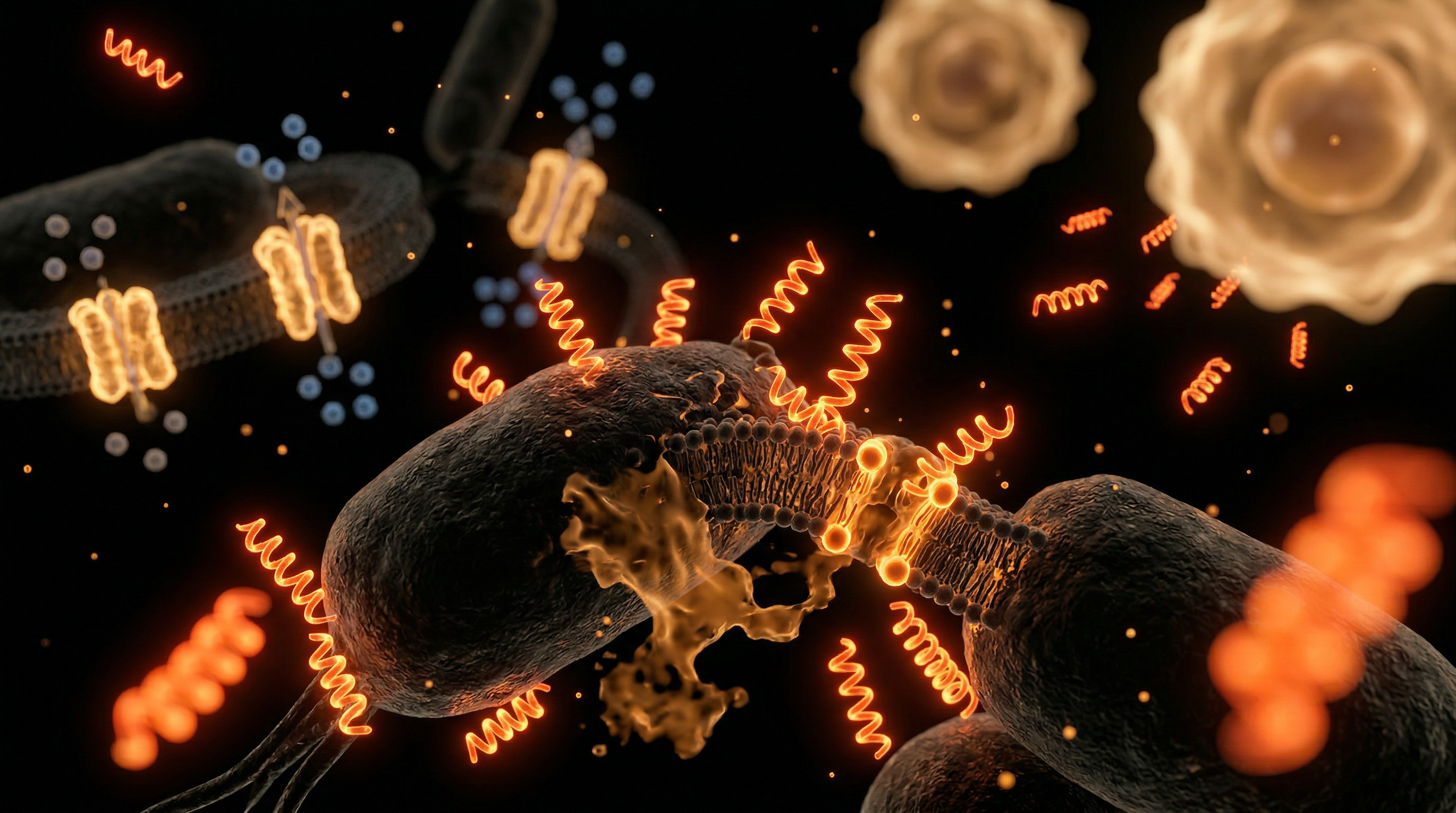
- The Toroidal Pore Model: LL-37 molecules insert themselves vertically into the bacterial membrane, causing the lipid bilayers to fold inward and form a pore. This leads to the immediate leakage of essential ions (like potassium) and the collapse of the membrane potential.
- The Carpet Model: At higher concentrations, LL-37 coats the surface of the bacteria like a carpet, acting like a detergent that dissolves the membrane into small fragments (micelles).
- The Barrel-Stave Model: The peptides align parallel to the membrane lipids, forming a "stave" that creates a permanent hole, leading to osmotic lysis (the cell literally explodes).
Beyond the Kill: Biofilm Inhibition
One of the most dangerous aspects of modern infections is the biofilm. This is a protective "slime" that bacteria secrete, which acts as a physical shield against both antibiotics and the immune system. LL-37 is uniquely effective at sub-lethal concentrations in preventing biofilm formation. It forces bacteria to remain in a "planktonic" (individual) state, where they are far more vulnerable to elimination.
Neutralisation of Endotoxins
When Gram-negative bacteria die, they release Lipopolysaccharides (LPS), also known as endotoxins. These molecules can trigger a massive, often fatal, inflammatory response known as sepsis or cytokine storm. LL-37 has the remarkable ability to bind directly to LPS, neutralising its toxicity and preventing the over-activation of the immune system. It is both an executioner of bacteria and a pacifier of the resulting inflammation.
Key Statistic: In vitro studies have shown that LL-37 can reduce the formation of Pseudomonas aeruginosa biofilms by up to 80% at concentrations far below those required to kill the bacteria outright.
Environmental Threats and Biological Disruptors
If LL-37 is so effective, why are we seeing a surge in resistant infections? The answer lies in the systemic degradation of our biological capacity to produce this peptide. LL-37 production is not a static process; it is highly dependent on environmental inputs.
The Vitamin D Connection: The "Master Switch"
The most significant disruptor of LL-37 is the global deficiency in Vitamin D3. The CAMP gene contains a Vitamin D Response Element (VDRE) in its promoter region. This means that the body cannot transcribe the code to make LL-37 unless it has sufficient levels of the Vitamin D receptor (VDR) bound to its ligand, 1,25-dihydroxyvitamin D3.
In the UK, where sunlight (UVB) is insufficient for Vitamin D synthesis for six months of the year, a significant portion of the population lives in a state of "innate immune winter." Without D3, the "factory" for LL-37 essentially shuts down, leaving the respiratory and cutaneous barriers wide open to invasion.
Glyphosate and Gut Barrier Integrity
Modern agricultural chemicals, specifically glyphosate, have been shown to disrupt the tight junctions of the gut lining. This "leaky gut" state leads to chronic low-grade inflammation, which exhausts the supply of LL-37 and diverts neutrophils away from peripheral sites of potential infection. Furthermore, glyphosate may interfere with the manganese and zinc pathways required for the enzymatic activation of cathelicidins.
The Impact of Microplastics and Endocrine Disruptors
Emerging research suggests that endocrine-disrupting chemicals (EDCs), such as phthalates and bisphenols (BPA/BPS), can interfere with the signalling of the VDR. Even if an individual has adequate Vitamin D levels, these chemical pollutants can "clog" the receptors, preventing the activation of the CAMP gene. We are effectively being chemically de-armed.
The Cascade: From Exposure to Disease
When the LL-37 system is compromised, a predictable and devastating biological cascade begins. This is not merely a "bad luck" infection; it is a systematic failure of the primary defense perimeter.
Phase 1: Colonisation
Pathogens that would normally be neutralised upon contact—such as Staphylococcus aureus or Streptococcus pneumoniae—are allowed to gain a foothold. Without the "cleansing" effect of LL-37 on the skin and mucosal surfaces, these bacteria begin to multiply rapidly.
Phase 2: The Biofilm Fortress
As mentioned, LL-37 is the primary deterrent against biofilms. In its absence, bacteria begin to secrete extracellular polymeric substances (EPS). Within hours, they are encased in a fortress that is 1,000 times more resistant to antibiotics than individual cells. This is the stage where "routine" infections become chronic.
Phase 3: The Neutrophil Paradox
As the infection progresses, the body sends more neutrophils to the site. However, if these neutrophils are "malnourished" or inhibited by environmental toxins, they fail to release active LL-37. Instead, they may release excessive reactive oxygen species (ROS), causing "collateral damage" to the host's own tissues while failing to clear the pathogen.
Phase 4: Systemic Dissemination and Sepsis
Finally, the bacteria break through the local barriers and enter the bloodstream. Because the blood levels of LL-37 are too low to neutralise the circulating LPS/endotoxins, the body enters a state of hyper-inflammation. This is the cytokine storm that leads to multi-organ failure. The "superbug" isn't just strong; the "human host" has been rendered weak through the suppression of its primary peptide defense.
What the Mainstream Narrative Omits
The silence regarding LL-37 in the mainstream media and standard clinical practice is not an accident of ignorance; it is a symptom of the current pharmaceutical paradigm.
The Patentability Problem
Pharmaceutical companies are driven by Return on Investment (ROI). LL-37 is a natural human peptide. While synthetic analogues can be patented, the fundamental biological pathway—optimising the body's own production of LL-37—is not a profitable venture. You cannot "own" the CAMP gene, and you certainly cannot patent sunlight or high-dose Vitamin D3. Therefore, the research funding flows toward new "last-resort" antibiotics rather than endogenous immune enhancement.
The Myth of the "Magic Bullet"
Mainstream medicine is still wedded to the Ehrlichian "Magic Bullet" theory—the idea that we need a specific drug for a specific germ. LL-37 threatens this paradigm because it is "promiscuous"; it kills bacteria, fungi, and enveloped viruses while simultaneously modulating the immune response. It is a "Systemic Shield," not a "Magic Bullet." This level of complexity is difficult to fit into the simplified double-blind, placebo-controlled trials designed for single-target drugs.
Suppressing the Role of Nutrition
There is a concerted effort to downplay the role of nutrition in infectious disease. To admit that LL-37 levels—and thus our resistance to MRSA or pneumonia—are directly tied to Vitamin D, Zinc, and Magnesium levels would be to hand the power back to the individual. It would shift the focus from "waiting for a cure" to "maintaining a defense."
Callout: Modern clinical guidelines often recommend Vitamin D levels of 20-30 ng/mL. However, peer-reviewed literature suggests that for optimal CAMP gene expression and LL-37 production, levels should ideally be between 60-80 ng/mL.
The UK Context
The United Kingdom is a specific "hotspot" for the failure of LL-37 and the subsequent rise of AMR for several geographic and socio-political reasons.
The "Northern Latitude" Crisis
The UK’s latitude (50°N to 60°N) means that from October to April, the sun's rays hit the atmosphere at such an angle that UVB radiation is absorbed by the ozone layer. This "Vitamin D Winter" coincides perfectly with the peak season for respiratory infections and hospital admissions. The failure to implement mandatory, high-dose Vitamin D fortification in the UK is a direct contributor to the vulnerability of the NHS to seasonal bacterial surges.
NHS Over-Prescription and Selection Pressure
Historically, the NHS has been a massive consumer of broad-spectrum antibiotics. This has created an intense selection pressure within UK hospitals. When we use antibiotics without simultaneously supporting the patient's LL-37 levels, we are essentially killing off the weak bacteria and leaving the field open for the "Superbugs."
The Rise of MRSA and C. Difficile
In the UK, Methicillin-resistant Staphylococcus aureus (MRSA) and Clostridioides difficile have become endemic in many clinical settings. Studies have shown that patients with the lowest serum levels of Vitamin D (and therefore the lowest potential for LL-37 production) are significantly more likely to carry MRSA and suffer from recurrent C. diff infections.
Protective Measures and Recovery Protocols
Given the environmental and systemic threats to our LL-37 levels, how does one fortify their "biological shield"? The following protocols are based on current peptide science and nutritional immunology.
1. Optimising the Vitamin D / VDR Axis
This is the single most important step.
- Testing: Aim for blood serum levels of 125–175 nmol/L (50–70 ng/mL).
- Cofactors: Vitamin D cannot function without Magnesium. Magnesium is required for the enzymes that convert Vitamin D into its active form and for the VDR to bind to DNA.
- Vitamin K2 (MK-7): Essential for ensuring that the increased calcium absorption (facilitated by Vitamin D) is directed to the bones and not the soft tissues.
2. Zinc and Proteinase Activity
The cleavage of hCAP-18 into active LL-37 is a process that can be influenced by mineral status. Zinc is a crucial cofactor for many of the proteases involved in immune function. A deficiency in zinc can lead to a "bottleneck" where the precursor protein is present, but the active peptide is never released.
3. Gut Microbiome Restoration
The gut is a major site of LL-37 production. To protect the "CAMP" expression in the colon:
- Eliminate Glyphosate: Choose organic produce whenever possible to protect the gut lining.
- Butyrate Production: Consuming resistant starches and fermented foods increases the production of butyrate, a short-chain fatty acid. Butyrate has been shown to directly upregulate the CAMP gene in colonic epithelial cells.
4. Avoiding "Peptide Killers"
Certain lifestyle factors directly inhibit LL-37:
- High Sugar Intake: Hyperglycaemia (high blood sugar) has been shown to glycate LL-37, rendering it inactive. This is why diabetics are so prone to skin and foot infections.
- Chronic Stress: Elevated cortisol levels suppress the overall innate immune response, including the secretion of AMPs.
5. Emerging Peptide Therapeutics
For those already facing resistant infections, the use of exogenous (synthetic) LL-37 is an emerging field. While still in the "grey market" or clinical trial phases for most applications, LL-37 sprays for wound healing and nebulised versions for cystic fibrosis have shown incredible promise. However, the first line of defense should always be the optimisation of endogenous production.
Summary: Key Takeaways
- LL-37 is our primal defense: It is the only human cathelicidin and acts as a direct-kill agent against bacteria, fungi, and viruses, while also neutralising toxic endotoxins.
- Physico-chemical killing: Unlike antibiotics, LL-37 uses electrostatic attraction to shatter bacterial membranes, making it much harder for pathogens to develop resistance.
- The Vitamin D Master Switch: Without adequate Vitamin D and Magnesium, the CAMP gene remains dormant, and LL-37 production drops to dangerously low levels.
- Environmental Sabotage: Pollution, microplastics, and agricultural chemicals like glyphosate are actively dismantling our innate immune capacity.
- The Profit Motive: The lack of focus on LL-37 in mainstream medicine is largely due to its lack of patentability and the industry's reliance on high-cost synthetic drugs.
- UK Vulnerability: The UK’s climate and healthcare practices make LL-37 optimisation a matter of national security and individual survival.
In an age where the "miracle drugs" of the 20th century are failing, we must return to the biological wisdom encoded in our DNA. LL-37 is more than a peptide; it is the physical manifestation of our body's will to survive in a microbial world. By understanding and supporting this mechanism, we move from a state of fear and pharmaceutical dependency to one of informed, biological resilience.
"The resistance starts within."
This article is provided for informational and educational purposes only. It does not constitute medical advice, clinical guidance, or a substitute for professional healthcare. Information reflects cited research at time of publication. Always consult a qualified healthcare professional before acting on any health information.
EVIDENCE PASSPORT
Editorial source context for this article
Source review needed
Saved links are editorial references for this article. They may support specific claims rather than every sentence. Open and assess each source in context. This passport does not independently verify them.
Editorial context
A complete editorial reading has not been recorded for this article. Source links remain available for you to open and assess directly.
Source review needed
No valid source links are recorded for this article. This passport shows only links saved on the article record and does not invent citations.
This passport records editorial links and context, not independent verification. Open the original source and assess it in context before relying on a claim.
Medical Disclaimer
The information in this article is for educational purposes only and does not constitute medical advice, diagnosis, or treatment. Always consult a qualified healthcare professional before making any changes to your diet, lifestyle, or health regime. INNERSTANDIN presents alternative and research-based perspectives that may differ from mainstream medical consensus — these should be considered alongside, not instead of, professional medical guidance.
Read Full DisclaimerContinue the thread
Keep this question moving.
Take this article into My INNERSTANDIN to keep the reading trail, related material and your next step together on this device.