
Longevity and the Liquid Biopsy: Monitoring Cellular Ageing via Exosomal Profiling
Updated April 2026
Evidence orientation
Editorial context not yet recorded
Follow this category
This stays in this browser. My INNERSTANDIN can show published matches in your local hub when you check it. It does not send email, push, or alert notifications.
Local learning review
A private browser aid for revisiting ideas. It is not an alert or a health recommendation.
Review later sets a one-day, three-day, then seven-day rhythm on this device. Choose it only when you want to revisit this article.
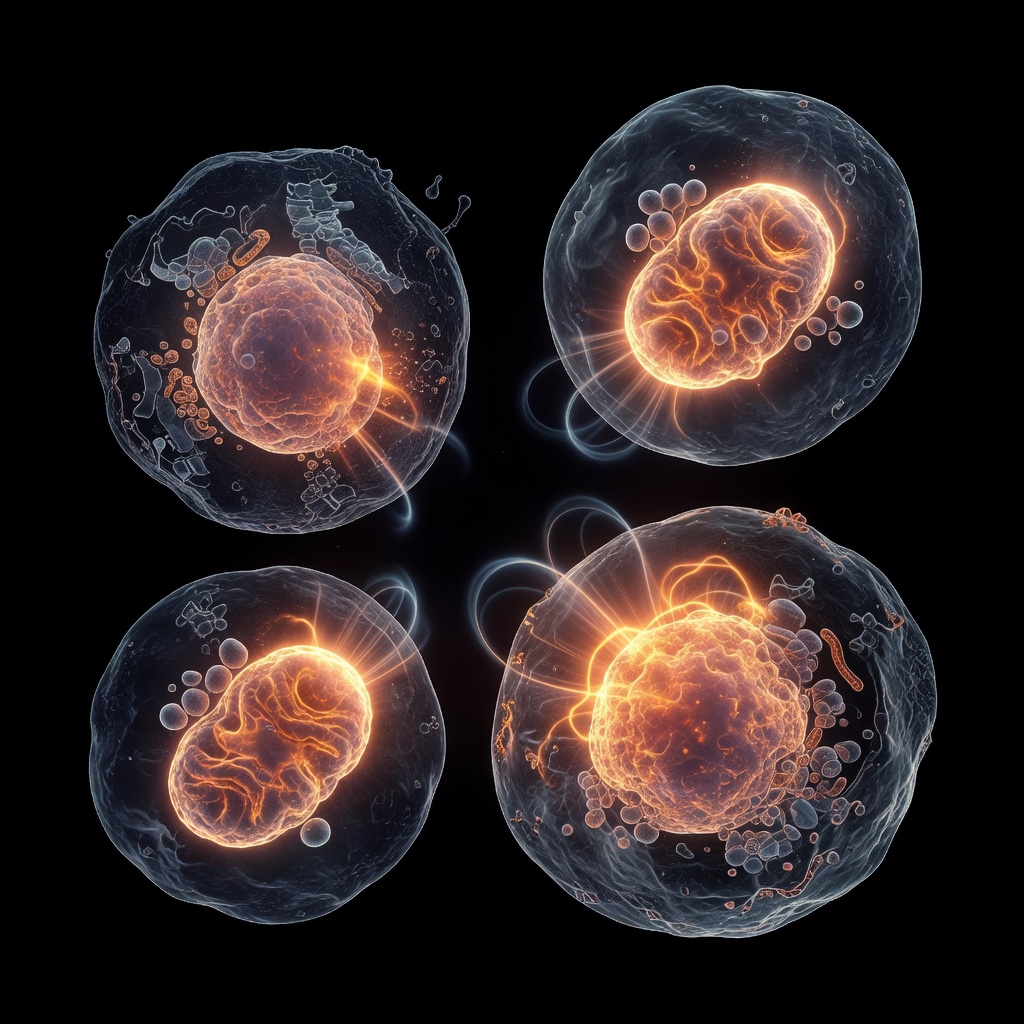
In the pursuit of human longevity, we have long been tethered to a reactive model of healthcare—one that identifies disease only once structural damage has manifested. However, a profound shift is occurring within the vanguard of regenerative medicine. We are moving beyond the crude metrics of blood pressure and cholesterol toward an innerstanding of the body’s most intimate communication network. At the heart of this revolution lies the liquid biopsy, specifically the analysis of exosomes. These microscopic vesicles are no longer viewed as cellular "garbage bags" but as high-fidelity biological telegrams that dictate the rate at which we age.
The Silent Language of Cells: An Overview
For decades, the medical establishment viewed the space between cells as an inert void. We now know this is false. Our bodies are in a constant state of "chatter," mediated by extracellular vesicles (EVs), of which exosomes (measuring 30–150 nanometres) are the most significant. These nano-shuttles are secreted by almost every cell type and carry a cargo of microRNA (miRNA), proteins, lipids, and genomic material.
The liquid biopsy—a non-invasive method of sampling these vesicles from blood, saliva, or urine—allows us to intercept these messages. By profiling exosomal cargo, scientists can now determine a person's biological age with startling precision, often revealing a stark disparity between the years on one’s passport and the functional state of one’s tissues. This is the "truth-exposing" power of exosomal profiling: it strips away the veil of outward appearance to reveal the molecular decay or vitality occurring in real-time.
Key Fact: Unlike DNA, which provides a static blueprint of your genetic potential, exosomal profiling offers a dynamic, real-time "transcript" of how your genes are currently being expressed in response to your environment and lifestyle.
The Biological Mechanisms: How Exosomes Drive the Ageing Process
Ageing is not merely the passage of time; it is the accumulation of cellular errors. To understand how exosomes influence longevity, we must look at three critical mechanisms: cellular senescence, inflammageing, and epigenetic signaling.
1. The Senescence-Associated Secretory Phenotype (SASP)
As cells age, they eventually enter a state known as senescence. These "zombie cells" refuse to die but cease to function. Crucially, they begin to secrete a toxic cocktail of pro-inflammatory cytokines and enzymes. Recent research confirms that exosomes are a primary delivery vehicle for these senescence signals. When a healthy cell absorbs an "aged" exosome, it can be "infected" by the senescent state, leading to a cascade of tissue degradation.
2. Inflammageing and Exosomal Cargo
The term "inflammageing" refers to the chronic, low-grade inflammation that characterizes the elderly. Exosomes from older individuals have been found to contain higher levels of pro-inflammatory proteins and lower levels of protective factors. By profiling these vesicles, a liquid biopsy can detect the earliest flickers of systemic inflammation long before it manifests as arthritis, heart disease, or cognitive decline.
3. MicroRNA: The Master Switches
The most potent cargo within an exosome is microRNA. These small non-coding RNA molecules act as "silencers" or "activators" for specific genes. In the context of longevity:
- miR-21 is often elevated in "inflammageing" and is linked to cardiovascular fibrosis.
- miR-34a is associated with cellular decline and is a known marker of ageing in the liver and brain.
- miR-126 is vital for vascular integrity; its decline in exosomes is a hallmark of biological ageing.
The UK Context: A Pioneering Frontier for Personalised Longevity
The United Kingdom is currently a global hub for life sciences, and the shift toward precision medicine is gaining momentum within both the NHS framework and the private sector. With an ageing population—where one in four people will be over 65 by 2050—the economic and social imperative to monitor biological age has never been higher.
In the UK, institutions like the Oxford Centre for Personalised Medicine and various "Biohacking" clinics in London’s Harley Street are increasingly exploring liquid biopsy technology. While the NHS currently uses liquid biopsies primarily for early cancer detection (tracking Circulating Tumour DNA), the "longevity" application is the next logical step.
The British public is also becoming more "health-literate," moving away from the "doctor knows best" paradigm toward a model of biological sovereignty. The demand for at-home biological age testing—using epigenetic clocks and, increasingly, exosomal markers—is surging among the UK's proactive health communities.
Environmental Factors: The External Drivers of Internal Decay
Our exosomes do not exist in a vacuum. They are highly sensitive to the exposome—the sum total of environmental exposures over a lifetime. For those living in the UK, several specific factors influence the "health" of our exosomal profiles:
- Air Pollution: Research in urban centres like London and Manchester has shown that Particulate Matter (PM2.5) can alter the cargo of circulating exosomes, increasing the delivery of stress signals to the lungs and heart.
- The Modern British Diet: Diets high in ultra-processed foods (UPFs) trigger the release of "metabolic stress" exosomes. These vesicles carry markers of insulin resistance, even in individuals who appear lean.
- Circadian Disruption: The UK’s high latitude and seasonal light shifts, combined with excessive blue light exposure, disrupt the glymphatic system. This system relies on exosomes to clear metabolic waste from the brain during sleep. Chronic disruption leads to "neuro-exosomes" laden with amyloid-beta and tau proteins.
- Psychosocial Stress: The "grind culture" of modern Britain elevates cortisol, which in turn modifies exosomal miRNAs, potentially accelerating the ageing of the immune system (immunosenescence).
Fact: Exosomes are capable of crossing the blood-brain barrier. This means a simple blood-based liquid biopsy can potentially reveal the health of your brain cells without the need for invasive neuroimaging.
Protective Strategies: Optimising Your Exosomal Profile
While the liquid biopsy provides the data, the true "Innerstanding" comes from the actions we take to refine our cellular communication. We can effectively "re-programme" our exosomes through specific interventions.
1. Autophagy Induction
Autophagy is the body’s cellular recycling programme. Practising intermittent fasting or using "caloric restriction mimetics" like Spermidine or Resveratrol helps the body clear out "junk-laden" exosomes. This ensures that the messages being sent between cells are "clean" and constructive.
2. Targeted Supplementation (Senolytics)
Senolytics are a class of compounds designed to selectively eliminate senescent cells. Natural senolytics such as Quercetin (found in onions and apples) and Fisetin (found in strawberries) have shown promise in reducing the "senescence load" in the body, which is reflected in a healthier exosomal profile.
3. Exercise and "Exerkines"
Physical activity triggers the release of beneficial exosomes known as "exerkines." These vesicles travel to the liver, brain, and adipose tissue, carrying signals that promote fat burning, neuroplasticity, and antioxidant defence. High-intensity interval training (HIIT) has been shown to be particularly effective in refreshing the exosomal pool.
4. Sleep Hygiene and Glymphatic Clearance
Prioritising deep sleep is essential for the "exosomal detox" of the central nervous system. Using magnesium glycinate or limiting evening light exposure helps maintain the integrity of the exosomes that manage neural repair.
The Truth Exposed: Why This Matters Now
The conventional medical model is focused on lifespan—the number of years you are alive. The new paradigm, fueled by exosome science, is focused on healthspan—the number of years you remain functional and vibrant.
The "truth" that is often suppressed or ignored is that chronic disease does not happen overnight. It is the result of decades of "biological misinformation" being spread via exosomes. By the time a standard blood test shows elevated glucose or a scan shows a plaque, the "exosomal conversation" has been dysfunctional for years.
Exosomal profiling via liquid biopsy represents the ultimate tool for accountability. It removes the guesswork. It tells you whether your expensive supplements are actually working at a cellular level, or whether your high-stress job is literally "ageing" your blood.
Key Fact: Future longevity clinics will likely use "Exosome Replacement Therapy," where exosomes from young, healthy donors (or lab-grown "designer" exosomes) are infused to rejuvenate an older person's tissues.
Key Takeaways: The Path to Innerstanding
To navigate the future of your health, keep these points at the forefront of your strategy:
- Exosomes are the Body's Software: If your DNA is the hardware, exosomes are the software updates. They dictate how your body responds to the world.
- Biology is Non-Linear: You can be 40 chronologically but 50 biologically. Exosomal profiling is the most accurate way to detect this "ageing gap."
- The Liquid Biopsy is the Future: Moving away from tissue biopsies to blood-based exosomal analysis will allow for monthly or quarterly "check-ins" on your cellular health.
- Actionable Intelligence: Monitoring your exosomal profile allows you to pivot your lifestyle—adjusting diet, exercise, and stress management—before "dis-ease" becomes a diagnosis.
- UK Leadership: Keep an eye on UK biotech firms specializing in extracellular vesicles; the next decade will see these tests move from elite labs to high-street accessibility.
In conclusion, the quest for longevity is no longer a matter of vanity or folklore. It is a rigorous, data-driven science of cellular communication. By "innerstanding" the messages carried in our exosomes, we gain the power to rewrite our biological destiny, ensuring that our final years are defined by vitality rather than infirmity. The liquid biopsy is not just a test; it is a mirror reflecting the deepest truths of our living existence.
This article is provided for informational and educational purposes only. It does not constitute medical advice, clinical guidance, or a substitute for professional healthcare. Information reflects cited research at time of publication. Always consult a qualified healthcare professional before acting on any health information.
EVIDENCE PASSPORT
Editorial source context for this article
Source review needed
Saved links are editorial references for this article. They may support specific claims rather than every sentence. Open and assess each source in context. This passport does not independently verify them.
Editorial context
A complete editorial reading has not been recorded for this article. Source links remain available for you to open and assess directly.
Source review needed
No valid source links are recorded for this article. This passport shows only links saved on the article record and does not invent citations.
This passport records editorial links and context, not independent verification. Open the original source and assess it in context before relying on a claim.
Medical Disclaimer
The information in this article is for educational purposes only and does not constitute medical advice, diagnosis, or treatment. Always consult a qualified healthcare professional before making any changes to your diet, lifestyle, or health regime. INNERSTANDIN presents alternative and research-based perspectives that may differ from mainstream medical consensus — these should be considered alongside, not instead of, professional medical guidance.
Read Full DisclaimerContinue the thread
Keep this question moving.
Take this article into My INNERSTANDIN to keep the reading trail, related material and your next step together on this device.