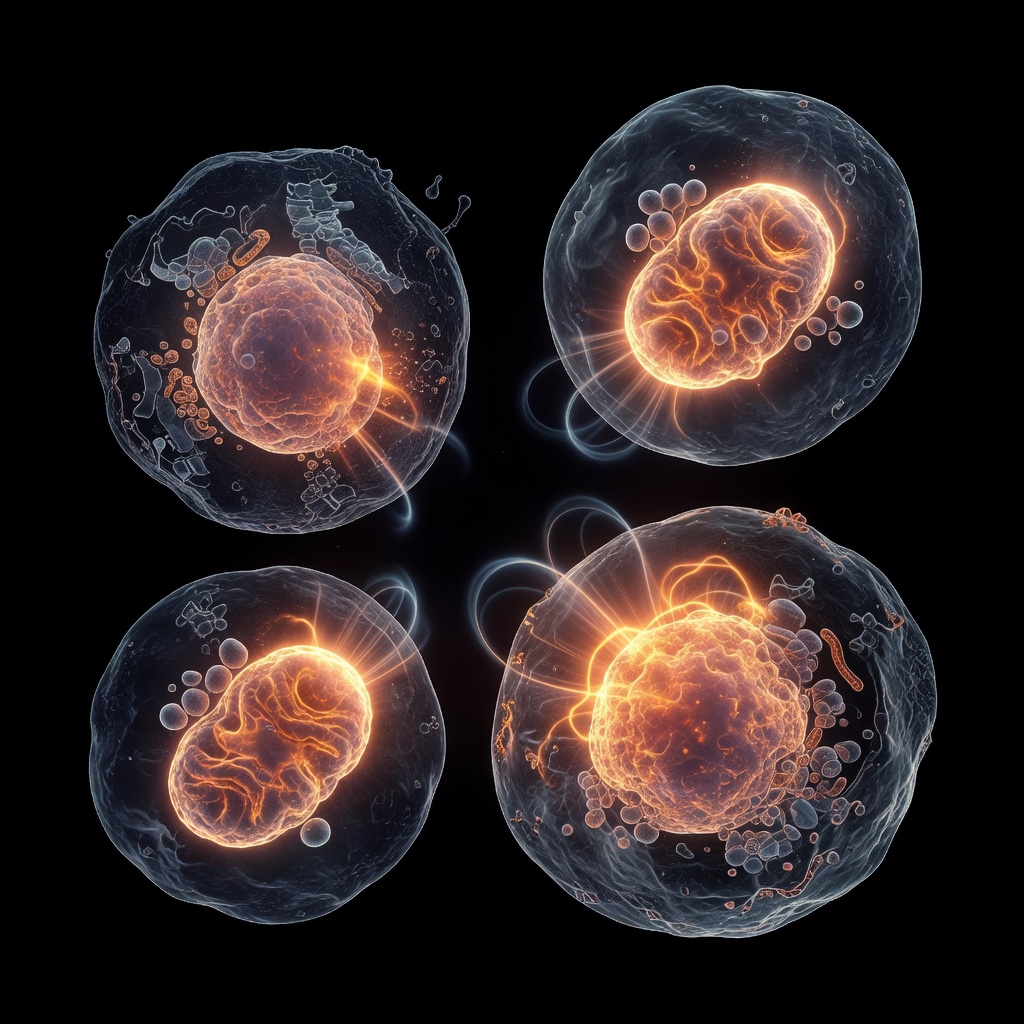
M-Cell Mediated Antigen Sampling: The Molecular Gateways of the Oropharyngeal Immune Response
A comprehensive exploration of the specialized Microfold (M) cells within the tonsils and adenoids, detailing their morphological unique properties, the RANKL-mediated signaling pathways of their differentiation, and their pivotal role in mucosal immunosurveillance and systemic health.

# M-Cell Mediated Antigen Sampling: The Molecular Gateways of the Oropharyngeal Immune Response\n\n## Introduction\nThe human oropharynx serves as the primary gateway for both life-sustaining nutrients and potentially hazardous environmental stimuli. At this vital crossroads lies the Waldeyer’s lymphatic ring—a collective of lymphoid tissues including the palatine tonsils, adenoids, and lingual tonsils. While historically viewed through the lens of recurrent childhood infections, modern immunology recognizes these structures as sophisticated sensors. Central to this sensing capability is a specialized population of epithelial cells known as Microfold cells, or M-cells. These cells act as molecular gateways, sampling the luminal environment to initiate and calibrate the mucosal immune response.
Understanding the M-cell is fundamental to grasping the root causes of immune dysregulation and the transition from health to chronic inflammatory states.\n\n## The Unique Morphology of the M-Cell\nUnlike the standard epithelial cells that line the respiratory and digestive tracts, M-cells possess a distinct architecture optimized for surveillance rather than absorption or protection. Most mucosal surfaces are protected by a thick glycocalyx and a dense layer of mucus secreted by goblet cells, which serves to keep pathogens at a distance. M-cells, however, lack these traditional microvilli and the associated brush border. Instead, their apical surface is characterized by broad, irregular folds—the 'microfolds' from which they derive their name.\n\nThis structural modification allows for direct physical contact between the M-cell and the luminal contents. Furthermore, the basal membrane of the M-cell is deeply invaginated to form a 'subepithelial pocket.' This pocket is a dynamic microenvironment that houses a variety of immune cells, including dendritic cells, B-lymphocytes, and T-lymphocytes.
This 'pocket' architecture significantly reduces the distance an antigen must travel to reach an immune cell, facilitating an almost instantaneous transfer of information from the external environment to the internal immune system.\n\n## Molecular Drivers of M-Cell Differentiation\nThe presence of M-cells in the tonsillar epithelium is not static but is governed by specific molecular signaling pathways. The primary driver of M-cell differentiation is the cytokine Receptor Activator of Nuclear Factor Kappa-B Ligand (RANKL). In the context of the tonsils, RANKL is typically produced by underlying mesenchymal cells or specialized lymphoid organizer cells. When RANKL binds to the RANK receptor on undifferentiated epithelial cells, it triggers the expression of the transcription factor Spi-B.\n\nSpi-B acts as a master regulator, committing the epithelial progenitor to the M-cell lineage. This differentiation process is a critical point of potential failure.
In states of chronic inflammation or nutrient deficiency (particularly Vitamin A/Retinoic Acid), the RANKL-Spi-B axis can be compromised. A reduction in M-cell density leads to 'immune blindness,' where the Waldeyer’s ring fails to sample pathogens effectively, allowing biofilms to establish in the deep tonsillar crypts without triggering an adequate systemic response.\n\n## Transcytosis: The Gateway Mechanism\nThe functional hallmark of the M-cell is transcytosis—the active transport of macromolecules and microorganisms across the cell. This is a highly regulated, receptor-mediated process. One of the most studied receptors is Glycoprotein 2 (GP2), which is specifically expressed on the apical surface of M-cells. GP2 acts as a specialized cargo receptor for FimH, a component of the fimbriae of various Gram-negative bacteria, including *Escherichia coli* and *Salmonella*.\n\nUpon binding, the pathogen is internalized into endocytic vesicles, transported through the cytoplasm, and released into the subepithelial pocket.
Here, the dendritic cells process the antigen and migrate to the interfollicular regions of the tonsil to initiate the adaptive immune response. This ensures that the body is primed to produce secretory Immunoglobulin A (sIgA), which provides a first line of defense not just in the throat, but throughout the entire Common Mucosal Immune System (CMIS), including the gut and lungs.\n\n## Pathogenic Exploitation: The Trojan Horse Effect\nWhile M-cells are essential for health, their role as a gateway can be exploited. Certain pathogens have evolved to use the M-cell as a 'Trojan Horse' to gain entry into the body while bypassing the broader epithelial barrier. Viruses such as Poliovirus and Reovirus, as well as certain bacteria like *Streptococcus pyogenes*, can hijack the transcytotic pathway to gain direct access to the lymphoid tissue. In these cases, the M-cell serves as the entry point for infection rather than the trigger for protection.
This highlights the delicate balance required in the oropharyngeal environment; the gateway must be open for sampling but must remain part of an integrated defense system that can neutralize threats the moment they cross the threshold.\n\n## Root Causes of Dysfunction: Crypt Stagnation and Biofilms\nThe tonsillar crypts—deep invaginations that increase the surface area for antigen sampling—can become a liability if the M-cell system fails. In healthy individuals, the flow of material and the active sampling by M-cells prevent the accumulation of debris. However, when M-cell activity is sluggish or the microbiome is dysbiotic, these crypts can accumulate 'tonsilloliths' (tonsil stones) and facilitate the growth of pathogenic biofilms. These biofilms create a physical shield that prevents M-cells from contacting new antigens, leading to a state of chronic, low-grade inflammation that is often the root cause of recurrent tonsillitis and systemic immune fatigue. Supporting M-cell health involves maintaining the RANKL signaling environment and ensuring the mucosal barrier is robust yet permeable to the right signals.\n\n## Conclusion\nM-cell mediated antigen sampling represents one of the most sophisticated examples of biological surveillance in the human body.
By serving as the molecular gateways of the Waldeyer’s ring, these cells ensure that our immune system is constantly updated on the state of the external environment. From the morphology of the microfold to the molecular precision of the GP2 receptor, every aspect of the M-cell is designed for connectivity. By focusing on the health of these cellular gateways, we move toward a root-cause understanding of mucosal immunity, shifting our focus from merely treating inflammation to supporting the primary sensors of our immune resilience.","tags":["Immunology","Mucosal Immunity","Tonsils","M-Cells","Waldeyer's Ring","Innate Immunity","Molecular Biology"],"reading_time":6}
This article is provided for informational and educational purposes only. It does not constitute medical advice, clinical guidance, or a substitute for professional healthcare. Information reflects cited research at time of publication. Always consult a qualified healthcare professional before acting on any health information.
RESEARCH FOUNDATIONS
Biological Credibility Archive
Citations provided for educational reference. Verify via PubMed or institutional databases.
Medical Disclaimer
The information in this article is for educational purposes only and does not constitute medical advice, diagnosis, or treatment. Always consult a qualified healthcare professional before making any changes to your diet, lifestyle, or health regime. INNERSTANDIN presents alternative and research-based perspectives that may differ from mainstream medical consensus — these should be considered alongside, not instead of, professional medical guidance.
Read Full DisclaimerReady to learn more?
Continue your journey through our classified biological research.
DISCUSSION ROOM
Members of THE COLLECTIVE discussing "M-Cell Mediated Antigen Sampling: The Molecular Gateways of the Oropharyngeal Immune Response"
SILENT CHANNEL
Be the first to discuss this article. Your insight could help others understand these biological concepts deeper.
THE ARSENAL
Based on Tonsils, Adenoids & Innate Immunity — products curated by our research team for educational relevance and biological support.

Panaceum – Prebiotic Oligosaccharide Complex
INNERSTANDING may earn a commission on purchases made through these links. All products are selected based on rigorous educational relevance to our biological research.
RABBIT HOLE
Follow the biological thread deeper