Mechanistic Insights into Formaldehyde-Mediated DNA-Protein Crosslinks: Evaluating Chronic Exposure from Urea-Formaldehyde Resins
A comprehensive investigation into the molecular toxicology of formaldehyde off-gassing from building materials, focusing on the formation of DNA-protein crosslinks (DPCs) and their impact on genomic stability and long-term health.
# Mechanistic Insights into Formaldehyde-Mediated DNA-Protein Crosslinks: Evaluating Chronic Exposure from Urea-Formaldehyde Resins\n\nIn the landscape of modern British architecture and interior design, the ubiquity of engineered wood products has introduced a silent, invisible protagonist into our domestic and occupational environments: Formaldehyde. As a primary component of Urea-Formaldehyde (UF) resins, this volatile organic compound (VOC) serves as a highly effective and economical adhesive for particleboard, medium-density fibreboard (MDF), and hardwood plywood. However, at the molecular level, formaldehyde is far more than a simple building block; it is a potent electrophile capable of fundamental biochemical interference. For those seeking to 'innerstand' the relationship between our built environment and long-term health, we must look beyond the immediate respiratory irritation and delve into the complex mechanistic pathways of DNA-protein crosslinks (DPCs).\n\n## The Chemistry of Urea-Formaldehyde (UF) Resins\n\nUrea-formaldehyde resins are thermosetting polymers produced through the polycondensation of urea and formaldehyde. Their popularity in the UK construction industry stems from their high reactivity, low cost, and excellent bonding properties.
However, the chemical bond within the UF polymer is inherently susceptible to environmental factors. Unlike phenol-formaldehyde resins, which are more stable, UF resins are prone to hydrolysis.\n\nWhen indoor humidity rises or temperatures fluctuate, the water vapour in the air reacts with the UF polymer, breaking the methylene ether linkages and regenerating free formaldehyde gas. This process, known as 'off-gassing', is not a brief event but a chronic phenomenon that can persist for several years after the installation of new flooring, cabinetry, or insulation. This persistent release creates a baseline level of exposure that the human body must constantly mitigate.\n\n## Formaldehyde as an Electrophilic Threat\n\nFormaldehyde (CH2O) is a highly reactive carbonyl compound. Its toxicity is fundamentally rooted in its electrophilic nature; it seeks out nucleophilic sites on biological macromolecules, such as the amino groups in proteins and the nitrogenous bases in DNA.
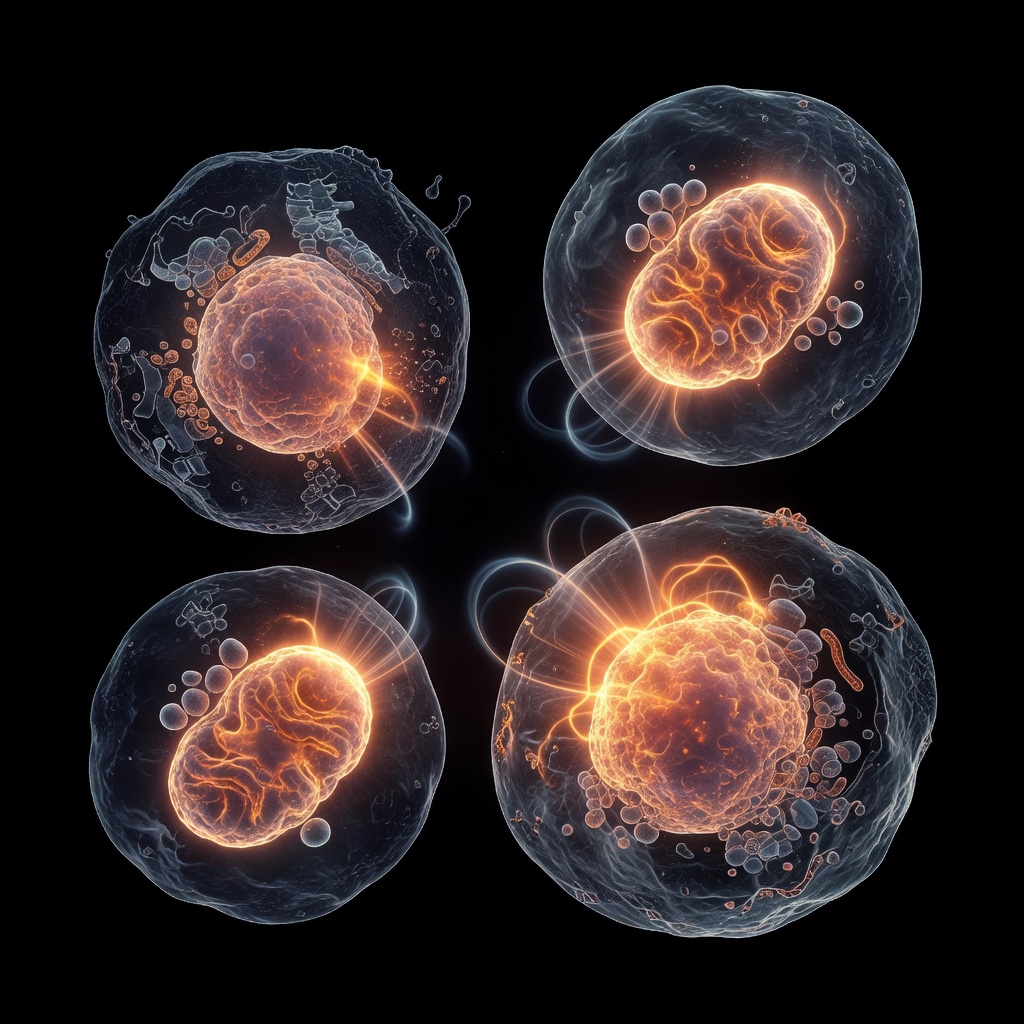
When formaldehyde enters the cellular environment, it facilitates a rapid, non-enzymatic reaction that results in the formation of a methylene bridge between a protein and a DNA strand. This lesion is known as a DNA-protein crosslink (DPC).\n\nWhile many types of DNA damage (such as single-strand breaks or oxidative modifications) involve small chemical changes, DPCs are uniquely hazardous due to their physical bulk. Imagine the DNA as a high-speed railway line and the polymerases (enzymes that read and replicate DNA) as the trains. A DPC is essentially a massive boulder fused to the tracks. It does not simply alter the genetic code; it physically halts the machinery of life.\n\n## The Mechanism of DPC Formation and Persistence\n\nForming a DPC occurs in a two-step process.
First, formaldehyde reacts with an amino group on a protein or a DNA base to form a highly reactive methylol intermediate. Second, this intermediate reacts with another nucleophile on the opposing molecule, creating a stable covalent linkage. These crosslinks frequently involve abundant nuclear proteins such as histones, which are responsible for DNA packaging, or topoisomerases, which assist in DNA unwinding.\n\nIn a healthy cellular state, the body employs specific repair mechanisms to handle these bulky lesions. The primary line of defence in humans involves the SPRTN (Spartan) protease, an enzyme specifically evolved to 'digest' the protein component of a DPC, leaving behind a smaller peptide fragment that can then be bypassed or removed by other DNA repair pathways, such as the Fanconi Anemia (FA) pathway or nucleotide excision repair (NER). However, chronic exposure to formaldehyde from building materials can saturate these repair systems.
When the rate of DPC formation exceeds the rate of repair, genomic instability ensues.\n\n## Genomic Consequences: Replication Stress and Transcription Blockage\n\nChronic exposure to formaldehyde-mediated DPCs creates two major cellular crises: replication stress and transcriptional interference. During the S-phase of the cell cycle, the DNA must be replicated. When the replication fork encounters a DPC, it stalls. Persistent stalling can lead to fork collapse, resulting in double-strand breaks—the most lethal form of DNA damage. If these breaks are repaired incorrectly, they lead to chromosomal translocations and deletions, which are hallmarks of carcinogenesis.\n\nFurthermore, DPCs block RNA polymerase II, the enzyme responsible for transcribing genes into messenger RNA.
This interference disrupts protein synthesis and cellular signalling, leading to cellular senescence or apoptosis (programmed cell death). In the context of the respiratory epithelium—the first point of contact for inhaled formaldehyde—this manifests as chronic inflammation and tissue remodelling. However, recent research suggests that the systemic effects of formaldehyde may extend to the bone marrow, where DPCs in haematopoietic stem cells could contribute to the development of myeloid leukaemia, a risk factor identified by the International Agency for Research on Cancer (IARC).\n\n## Evaluating the Risk in the UK Context\n\nIn the United Kingdom, building regulations (such as Approved Document F) emphasize ventilation as the primary solution for indoor air quality. While increasing air exchange rates significantly reduces the concentration of airborne formaldehyde, it does not address the root cause: the chemical instability of UF resins. Modern 'E1' or 'E0' standard materials have reduced the initial levels of formaldehyde, but the cumulative effect of multiple sources in a confined space—such as a modern, airtight flat—can still lead to concentrations that exceed the WHO guidelines of 0.1 mg/m3.\n\nFor the health-conscious occupant, the 'innerstanding' of this issue requires a shift from mitigation to prevention.
This involves selecting materials with alternative binders, such as Soy-based resins, MDI (Methylene Diphenyl Diisocyanate), or Phenol-Formaldehyde (which, while still containing formaldehyde, off-gasses at significantly lower rates due to its chemical stability).\n\n## Conclusion: Toward Molecularly Conscious Interiors\n\nFormaldehyde-mediated DNA-protein crosslinks represent a profound intersection between our external environment and our internal biology. By understanding that off-gassing is a dynamic chemical process and that the resulting DPCs are a direct threat to genomic integrity, we can make more informed decisions about the materials we bring into our homes. At INNERSTANDING, we believe that true health education empowers individuals to address root causes. In the case of VOCs, that means advocating for building materials that respect the delicate machinery of our DNA, ensuring that the sanctuaries we build for ourselves do not become the silent architects of cellular distress.","tags":["Formaldehyde","VOCs","DNA Damage","Building Materials","Genomics","Environmental Health","UK Construction"],"reading_time":7}
This article is provided for informational and educational purposes only. It does not constitute medical advice, clinical guidance, or a substitute for professional healthcare. Information reflects cited research at time of publication. Always consult a qualified healthcare professional before acting on any health information.
RESEARCH FOUNDATIONS
Biological Credibility Archive
Citations provided for educational reference. Verify via PubMed or institutional databases.
Medical Disclaimer
The information in this article is for educational purposes only and does not constitute medical advice, diagnosis, or treatment. Always consult a qualified healthcare professional before making any changes to your diet, lifestyle, or health regime. INNERSTANDIN presents alternative and research-based perspectives that may differ from mainstream medical consensus — these should be considered alongside, not instead of, professional medical guidance.
Read Full DisclaimerReady to learn more?
Continue your journey through our classified biological research.
RABBIT HOLE
Follow the biological thread deeper