
Metabolic Sovereignty: Mitochondrial Heteroplasmy and the Failure of Caloric Theory
Published May 2026
Exploring the complexities of mitochondrial bioenergetics and why caloric counting fails to account for cellular energy dynamics and metabolic flexibility.
Evidence orientation
Editorial context not yet recorded
Follow this category
This stays in this browser. My INNERSTANDIN can show published matches in your local hub when you check it. It does not send email, push, or alert notifications.
Local learning review
A private browser aid for revisiting ideas. It is not an alert or a health recommendation.
Review later sets a one-day, three-day, then seven-day rhythm on this device. Choose it only when you want to revisit this article.
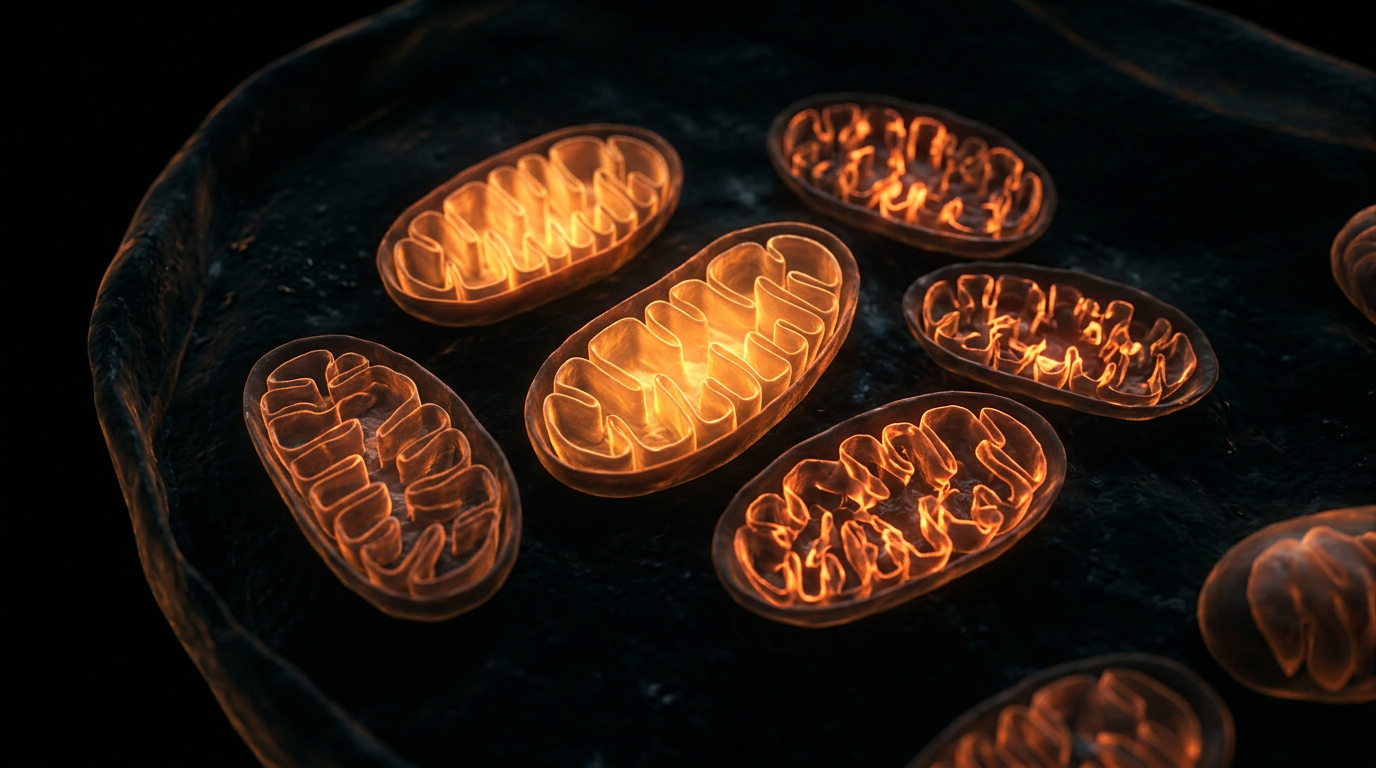
Metabolic Sovereignty: Mitochondrial Heteroplasmy and the Failure of Caloric Theory. The prevailing narrative of 'calories in versus calories out' is a physiological oversimplification that has failed millions in the struggle against metabolic syndrome. This reductionist view treats the human body like a steam engine, ignoring the complex bioenergetics of the mitochondria. True metabolic health is governed by mitochondrial heteroplasmy—the ratio of healthy to mutated mitochondrial DNA—and the efficiency of the Electron Transport Chain (ETC). Section 1: The ETC as a Biological Filter.
Within the inner mitochondrial membrane, electrons derived from our food are passed through a series of complexes to create ATP. This is not a seamless process. At complex I and III, electrons can 'leak,' creating reactive oxygen species (ROS). While mainstream medicine views ROS as purely damaging, they are actually critical signaling molecules. The problem arises when the ETC becomes congested due to over-nutrition or lack of 'metabolic flexibility.' When the body loses the ability to switch between glucose and fatty acids as primary fuel sources, the resulting 'metabolic gridlock' leads to systemic insulin resistance and cellular aging.
Section 2: Mitochondrial Dynamics and Fission-Fusion Cycles. Mitochondria are not static beans; they are a dynamic network that undergoes constant fusion (merging) and fission (splitting). Fusion allows mitochondria to share resources and dilute the effects of damaged DNA, while fission allows the cell to sequester and remove dysfunctional mitochondria through mitophagy. Investigative physiology suggests that many chronic diseases are characterized by 'stuck' mitochondrial dynamics. For instance, sedentary behavior promotes excessive fission, leading to fragmented, inefficient mitochondria that cannot support the energetic demands of high-level physiological function.
Section 3: Reclaiming Metabolic Flexibility. To restore mitochondrial health, we must look at the cues that trigger biogenesis. Hormetic stressors such as cold exposure, intermittent fasting, and high-intensity interval training (HIIT) force the mitochondria to adapt. These stressors upregulate the PGC-1alpha pathway, the master regulator of mitochondrial biogenesis. Furthermore, the role of NAD+ as a coenzyme in the ETC cannot be overstated.
As we age, our NAD+ levels decline, slowing the entire metabolic engine. By focusing on mitochondrial quality over caloric quantity, we can achieve a state of metabolic sovereignty where the body is capable of generating high levels of energy without the byproduct of excessive oxidative stress.
This article is provided for informational and educational purposes only. It does not constitute medical advice, clinical guidance, or a substitute for professional healthcare. Information reflects cited research at time of publication. Always consult a qualified healthcare professional before acting on any health information.
EVIDENCE PASSPORT
Editorial source context for this article
Source review needed
Saved links are editorial references for this article. They may support specific claims rather than every sentence. Open and assess each source in context. This passport does not independently verify them.
Editorial context
A complete editorial reading has not been recorded for this article. Source links remain available for you to open and assess directly.
Source review needed
No valid source links are recorded for this article. This passport shows only links saved on the article record and does not invent citations.
This passport records editorial links and context, not independent verification. Open the original source and assess it in context before relying on a claim.
Medical Disclaimer
The information in this article is for educational purposes only and does not constitute medical advice, diagnosis, or treatment. Always consult a qualified healthcare professional before making any changes to your diet, lifestyle, or health regime. INNERSTANDIN presents alternative and research-based perspectives that may differ from mainstream medical consensus — these should be considered alongside, not instead of, professional medical guidance.
Read Full DisclaimerContinue the thread
Keep this question moving.
Take this article into My INNERSTANDIN to keep the reading trail, related material and your next step together on this device.
Explore this in the Body Map
See where this hits your biology. Interactive anatomy, threats, and protective protocols.
Dig deeper in the Library
Free, longform PDF volumes that go beyond headlines into mechanisms and references.