
Metabolic Syndrome: How Insulin Resistance Erodes the Thymus
Updated May 2026
High blood glucose and hyperinsulinemia are shown to accelerate the fatty infiltration of the thymus. This report links the UK's obesity crisis directly to impaired immune maturation.
Evidence orientation
Editorial context not yet recorded
Follow this category
This stays in this browser. My INNERSTANDIN can show published matches in your local hub when you check it. It does not send email, push, or alert notifications.
Local learning review
A private browser aid for revisiting ideas. It is not an alert or a health recommendation.
Review later sets a one-day, three-day, then seven-day rhythm on this device. Choose it only when you want to revisit this article.
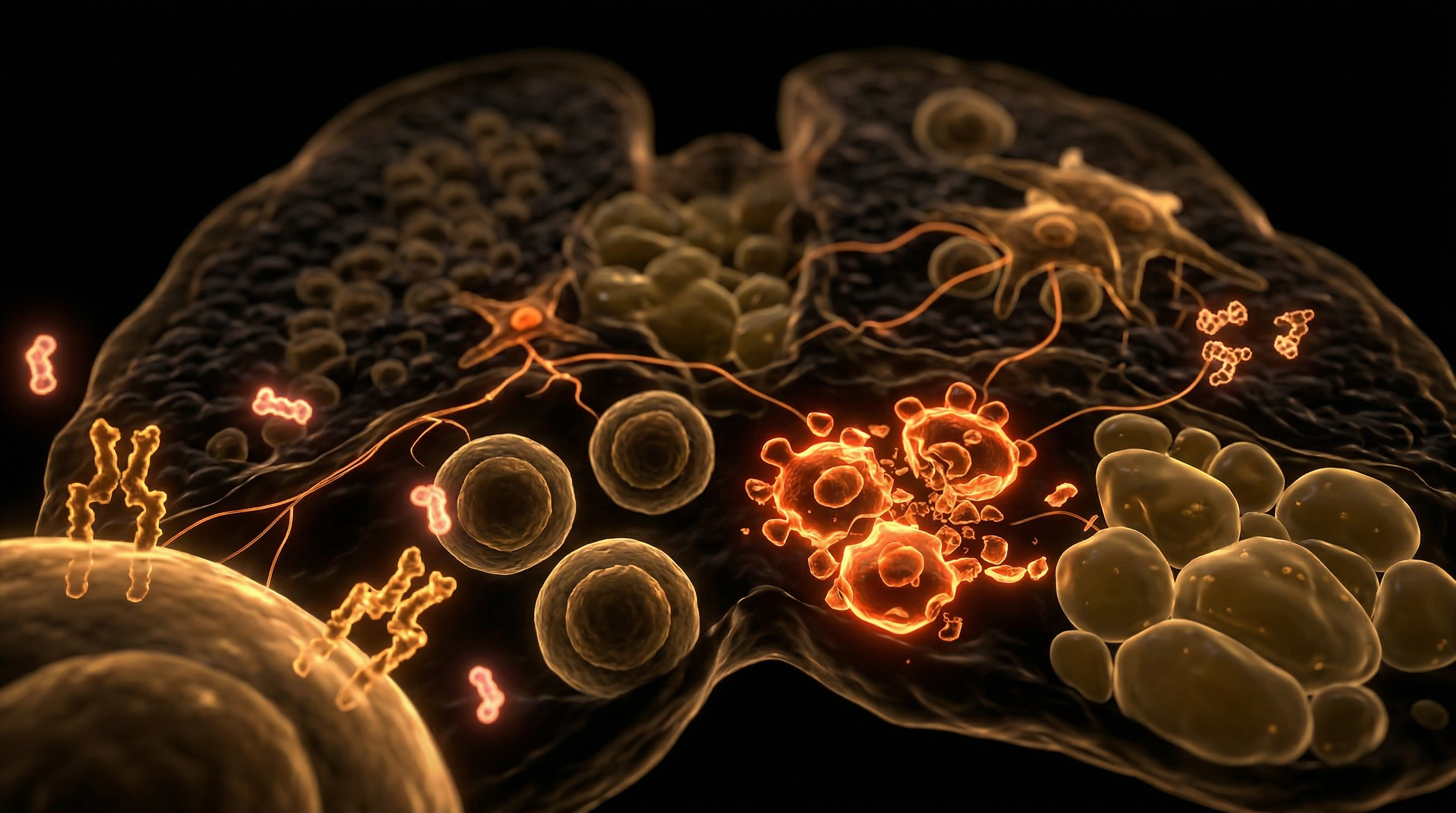
The modern medical establishment has long treated the endocrine system and the immune system as discrete, walled-off provinces of the human body. We are taught that diabetes is a disease of "blood sugar" and that immunodeficiency is a matter of "genetics" or "viral insult." However, as we peel back the layers of emerging immunometabolic research at INNERSTANDING, a more sinister reality emerges.
The thymus gland—the primary lymphoid organ responsible for the "education" of T-lymphocytes—is under direct assault by the metabolic environment of the 21st century. High blood glucose and chronic hyperinsulinaemia are not merely markers of a poor diet; they are the primary drivers of Thymic Involution, the premature fatty infiltration and shrivelling of the body’s immune engine. This report exposes how the UK’s escalating metabolic crisis is effectively "ageing" the immune systems of the population, leaving millions vulnerable to pathogens and cancers that a metabolically healthy body would effortlessly neutralise.
Overview
The thymus is arguably the most neglected organ in adult clinical medicine. Located in the upper chest, behind the sternum, its function is to produce T-cells—the specialised "special forces" of the immune system that identify and destroy infected cells and malignant growths. Under "normal" evolutionary conditions, the thymus begins a slow decline after puberty, a process known as age-associated involution.
However, we are currently witnessing a biological catastrophe: Accelerated Thymic Involution.
The metabolic syndrome (MetS)—defined by insulin resistance, central obesity, hypertension, and dyslipidaemia—acts as a systemic catalyst for thymic decay. In individuals with chronic insulin resistance, the functional tissue of the thymus (the parenchyma) is rapidly replaced by non-functional adipose tissue (fat). This "fatty infiltration" doesn't just reduce the quantity of T-cells; it compromises the quality of immune education.
Important Fact: Research indicates that individuals with Type 2 Diabetes and high visceral fat show a T-cell profile equivalent to individuals 20 to 30 years their senior. This is "Immune Ageing" in real-time.
The implications are profound. When the thymus fails, the body loses its ability to distinguish "self" from "non-self." This leads to a double-edged sword of immune failure: an inability to fight external infections (like seasonal influenza or emerging viruses) and a catastrophic rise in internal errors (autoimmunity and cancer).
The Biology — How It Works
To understand how insulin resistance destroys the thymus, we must first understand the delicate environment required for T-cell maturation. The thymus is a biological schoolhouse. Immature progenitor cells (thymocytes) migrate from the bone marrow to the thymus, where they undergo a rigorous two-stage testing process:
- Positive Selection: Can the T-cell recognise the body’s Major Histocompatibility Complex (MHC)? If not, it is deleted.
- Negative Selection: Does the T-cell attack the body’s own healthy tissues? If it does, it is deleted.
This process is mediated by Thymic Epithelial Cells (TECs). These cells are the "teachers." For the thymus to function, these TECs must maintain a highly specific architectural structure.
The Impact of Hyperinsulinaemia
Insulin is a growth hormone. In a healthy state, it facilitates glucose uptake and protein synthesis. However, in the state of Hyperinsulinaemia (the hallmark of metabolic syndrome), the body is flooded with insulin to compensate for cellular resistance.
High levels of circulating insulin stimulate the IGF-1 (Insulin-like Growth Factor 1) receptors within the thymus. While small amounts of IGF-1 are necessary for thymic health, chronic overstimulation leads to a paradoxical exhaustion of the thymic progenitor niche. Essentially, the "teachers" (TECs) are forced into a state of hyper-proliferation, leading to early senescence (cellular retirement) and death.
The Rise of Ectopic Fat
In metabolic syndrome, the body loses its ability to store fat safely in subcutaneous depots. Instead, fat begins to accumulate in organs where it doesn't belong—the liver (NAFLD), the heart, and crucially, the thymus. As the thymic stroma becomes "marbled" with lipid droplets, the physical space required for T-cell education is lost. The thymus becomes a graveyard of fatty deposits rather than a cradle of immune life.
Mechanisms at the Cellular Level
The erosion of the thymus by metabolic syndrome is not a vague occurrence; it is driven by specific, identifiable biochemical pathways that the mainstream narrative frequently overlooks.
1. Oxidative Stress and the FOXN1 Gene
The master regulator of thymic development and maintenance is a transcription factor called FOXN1. Without FOXN1, the thymus simply does not form (as seen in "nude" mice). Metabolic syndrome generates a high volume of Reactive Oxygen Species (ROS) through mitochondrial dysfunction. High blood glucose triggers the "Polyol Pathway," which depletes the body’s primary antioxidant, glutathione. This oxidative environment directly suppresses FOXN1 expression. When FOXN1 drops, the thymic epithelial cells lose their identity and transform into fibroblasts (scar tissue) or adipocytes (fat cells).
2. Advanced Glycation End-products (AGEs)
When blood sugar is chronically elevated, glucose molecules bond haphazardly to proteins and lipids, forming Advanced Glycation End-products (AGEs). These "sticky" molecules act like biological "caramel," cross-linking the delicate connective tissue of the thymus.
- AGEs bind to the RAGE (Receptor for AGEs) on thymic cells.
- This triggers a pro-inflammatory cascade (NF-kB pathway).
- The result is chronic "low-grade" inflammation within the gland, preventing the migration of T-cell progenitors.
3. Lipotoxicity and Ceramide Accumulation
It isn't just "fat" that kills the thymus; it is the specific types of lipids that accumulate during insulin resistance. Ceramides—toxic lipid metabolites—accumulate in the thymic stroma of the obese. Ceramides are known to induce apoptosis (programmed cell death) in the very cells meant to train our immune system.
Statistic: Clinical imaging has shown that the volume of "true" thymic tissue in obese adults is often less than 15% of that found in lean counterparts of the same age.
Environmental Threats and Biological Disruptors
The degradation of the thymus is not happening in a vacuum. The UK's modern environment is perfectly calibrated to accelerate this metabolic erosion.
The Ultra-Processed Food (UPF) Trap
The UK is currently the "UPF capital" of Europe, with over 50% of the average diet consisting of ultra-processed substances. These foods are designed to bypass satiety signals, leading to rapid insulin spikes.
- Refined Seed Oils (PUFAs): Found in almost all processed snacks, these oils integrate into the membranes of thymic cells, making them highly susceptible to lipid peroxidation (rancidity within the cell).
- High Fructose Corn Syrup / Isoglucose: Fructose is a direct toxin to the liver and the thymus. Unlike glucose, it can only be processed by the liver, leading to immediate fat production (De Novo Lipogenesis), which then spills over into the thymic cavity.
Endocrine Disrupting Chemicals (EDCs)
Our environment is saturated with chemicals that mimic hormones. Phthalates and Bisphenols (BPA/BPS), ubiquitous in plastic packaging and UK tap water, have been shown to interfere with PPAR-gamma receptors. These receptors control how the body stores fat. EDCs "program" the body to store fat inside the thymus, even in individuals who may appear "thin on the outside" (the TOFI phenotype).
The Blue Light and Melatonin Connection
Melatonin is not just a sleep hormone; it is a potent thymic protector. The thymus has specific receptors for melatonin, which stimulate T-cell production. The UK's "always-on" culture, combined with excessive blue light exposure from screens, suppresses nocturnal melatonin. This removes the nightly "repair" signal for the thymus, leaving it vulnerable to the metabolic damage sustained during the day.
The Cascade: From Exposure to Disease
The journey from a high-sugar meal to a compromised immune system follows a predictable, yet devastating, cascade.
- Stage 1: Postprandial Hyperinsulinaemia. The individual consumes a diet high in refined carbohydrates and sugars. The pancreas overproduces insulin to keep blood glucose within a "normal" range.
- Stage 2: Systemic Insulin Resistance. Cells begin to "deafen" themselves to the insulin signal. The liver begins creating fat.
- Stage 3: The Thymic "Fat Switch." As visceral fat expands, it releases inflammatory cytokines (IL-1, IL-6, TNF-alpha). These cytokines travel to the thymus and signal the FOXN1 gene to down-regulate.
- Stage 4: Adipose Replacement. The thymic "scaffold" begins to fill with fat. The production of "Naive T-cells" (fresh cells that can learn new threats) drops to near zero.
- Stage 5: Immune Exhaustion. The body relies on "Memory T-cells"—cells that already know old threats but cannot adapt to new ones. This is why the metabolically unhealthy are the first to suffer during new viral outbreaks.
Important Fact: The loss of the "Naive T-cell" pool is a primary reason why vaccines often fail in the elderly and the obese. There are no "fresh" cells available to learn the information provided by the vaccine.
What the Mainstream Narrative Omits
Why is the link between insulin resistance and the thymus not front-page news? The answer lies in the structure of the pharmaceutical-industrial complex.
The Symptom Management Model
The medical establishment is built on the management of chronic disease, not the restoration of biological "youth" or "function." There is no "blockbuster drug" currently marketed for "Thymic Regeneration." Instead, the focus remains on treating the symptoms of a failed thymus—prescribing antibiotics for recurring infections, steroids for autoimmunity, or chemotherapy for cancer.
The Failure of "Calorie In, Calorie Out"
Public health advice in the UK continues to focus on the flawed "Calories In vs. Calories Out" (CICO) model. This ignores the Quality of the calorie. 100 calories of broccoli and 100 calories of white bread have identical caloric values but diametrically opposed effects on the thymus. The white bread triggers the insulin cascade that erodes the gland; the broccoli provides the sulforaphane and fibre that protect it.
The "Normalisation" of Decline
We have been conditioned to believe that a failing immune system is an inevitable part of ageing. This is a scientific fallacy. While the thymus does involute with age, the rate is variable. By calling accelerated involution "normal," the mainstream narrative abdicates responsibility for the lifestyle and environmental factors that are driving it.
The UK Context
The United Kingdom represents a unique "perfect storm" for metabolic-driven immune decay.
The NHS Crisis and "Sick-Span"
While life expectancy in the UK has stalled, "health-span" (the years we live in good health) is actively declining. We are keeping people "alive" longer with pharmaceuticals, but their biological systems—specifically the thymus—are failing decades before they die. The NHS is currently bucking under the weight of "multi-morbidity," almost all of which can be traced back to the metabolic-immune axis.
The British Diet and the "Postcode Lottery"
In the UK, the cheapest food is the most damaging to the thymus. In lower-income areas, access to fresh, nutrient-dense "thymus-protective" foods is limited. This has created a "Postcode Lottery" of immune resilience. Data from the Office for National Statistics (ONS) reveals a stark gap in "healthy life expectancy" between the North and South of England, a gap that mirrors the prevalence of metabolic syndrome and Type 2 Diabetes.
The Sedentary Climate
The UK's temperate, often grey climate, combined with an increasingly indoor lifestyle, has led to a national Vitamin D deficiency. Vitamin D is a prerequisite for thymic function. Without it, the "Positive Selection" process of T-cells becomes sloppy, leading to the release of "uneducated" immune cells into the bloodstream.
Protective Measures and Recovery Protocols
The good news, which is often suppressed in favour of lifelong medication, is that the thymus is plastic. It can show signs of regeneration, and the metabolic erosion can be halted. At INNERSTANDING, we advocate for a protocol-driven approach to restoring the metabolic-immune axis.
1. The Restoration of Insulin Sensitivity
The absolute priority is to lower circulating insulin. This "starves" the fatty infiltration process.
- Intermittent Fasting (Time-Restricted Feeding): Fasting triggers autophagy—the body's "self-cleaning" mechanism. Research suggests that prolonged fasting (48–72 hours) can trigger a "reboot" of the hematopoietic stem cell system, leading to the generation of new thymic tissue.
- Ketogenic or Low-Glycaemic Nutrition: By removing the glucose stimulus, we reduce the formation of AGEs and allow the FOXN1 gene to re-assert itself.
2. Targeted Micronutrient Support
- Zinc: The "sovereign" mineral for the thymus. Zinc is a cofactor for thymulin, a hormone produced by the thymus that governs T-cell maturation. Most individuals with metabolic syndrome are chronically zinc-deficient.
- Vitamin D3 + K2: Aim for "optimal" levels (100–150 nmol/L) rather than "sufficient" levels. Vitamin D3 acts as a pro-hormone that signals the thymus to maintain its epithelial structure.
- Vitamin C and Quercetin: These act as "senolytics"—compounds that help clear out the "zombie" (senescent) cells that accumulate in a fatty thymus.
3. Hormetic Stress
The thymus responds to "good" stress.
- Cold Exposure: Cold-water immersion or cryotherapy increases the production of "brown fat," which is metabolically active and helps clear the lipids that would otherwise clog the thymus.
- Heat Stress: Saunas induce "Heat Shock Proteins" (HSPs), which help re-fold the proteins damaged by glycation (AGEs).
4. Circadian Hygiene
- Melatonin Preservation: View natural sunlight within 30 minutes of waking. Block blue light after sunset using amber-tinted glasses. This restores the nocturnal melatonin surge necessary for thymic repair.
Callout: A 2019 study (the TRIIM trial) suggested that a combination of DHEA, Metformin, and Growth Hormone could actually reverse thymic ageing. However, we believe the same (and better) results can be achieved through deep metabolic repair without the side effects of synthetic hormones.
Summary: Key Takeaways
The erosion of the thymus gland is the "silent" component of the metabolic syndrome crisis. It is the bridge between a poor diet and a shortened, disease-ridden life.
- The Problem: Insulin resistance and high glucose drive "Thymic Involution," replacing vital immune tissue with toxic fat.
- The Mechanism: Hyperinsulinaemia suppresses the FOXN1 gene, while AGEs and Ceramides destroy the cellular architecture of the gland.
- The Consequences: A lack of "Naive T-cells" leads to a heightened risk of viral infection, autoimmune disease, and cancer.
- The UK Reality: The UK’s reliance on ultra-processed foods and the subsequent obesity crisis is a direct threat to the nation’s "Immune Sovereignty."
- The Solution: Thymic health can be restored by aggressively addressing insulin resistance through fasting, low-carb nutrition, circadian alignment, and targeted supplementation.
The medical establishment may continue to ignore the thymus, but your biology does not. To protect the thymus is to protect the very essence of your vitality. It is time to move beyond "disease management" and toward "biological restoration." The future of UK public health depends on it.
"References & Further Reading:"
- Journal of Clinical Investigation: "Lipotoxicity and Thymic Atrophy"
- Nature Reviews Immunology: "The ageing of the immune system and the role of the thymus"
- Public Health England: "Obesity and its impact on the immune system"
- The TRIIM Trial (Thymus Regeneration, Immunorestoration, and Insulin Mitigation)
This article is provided for informational and educational purposes only. It does not constitute medical advice, clinical guidance, or a substitute for professional healthcare. Information reflects cited research at time of publication. Always consult a qualified healthcare professional before acting on any health information.
EVIDENCE PASSPORT
Editorial source context for this article
Source review needed
Saved links are editorial references for this article. They may support specific claims rather than every sentence. Open and assess each source in context. This passport does not independently verify them.
Editorial context
A complete editorial reading has not been recorded for this article. Source links remain available for you to open and assess directly.
Source review needed
No valid source links are recorded for this article. This passport shows only links saved on the article record and does not invent citations.
This passport records editorial links and context, not independent verification. Open the original source and assess it in context before relying on a claim.
Medical Disclaimer
The information in this article is for educational purposes only and does not constitute medical advice, diagnosis, or treatment. Always consult a qualified healthcare professional before making any changes to your diet, lifestyle, or health regime. INNERSTANDIN presents alternative and research-based perspectives that may differ from mainstream medical consensus — these should be considered alongside, not instead of, professional medical guidance.
Read Full DisclaimerContinue the thread
Keep this question moving.
Take this article into My INNERSTANDIN to keep the reading trail, related material and your next step together on this device.
Explore this in the Body Map
See where this hits your biology. Interactive anatomy, threats, and protective protocols.
Dig deeper in the Library
Free, longform PDF volumes that go beyond headlines into mechanisms and references.