
Micronutrient Synergy: The Essential Roles of Vitamin B6, Vitamin C, and Copper in Histamine Neutralisation
Updated May 2026
Evidence orientation
Editorial context not yet recorded
Follow this category
This stays in this browser. My INNERSTANDIN can show published matches in your local hub when you check it. It does not send email, push, or alert notifications.
Local learning review
A private browser aid for revisiting ideas. It is not an alert or a health recommendation.
Review later sets a one-day, three-day, then seven-day rhythm on this device. Choose it only when you want to revisit this article.
Overview
Histamine homeostasis is frequently mischaracterised within conventional clinical frameworks as a mere gastrointestinal grievance; however, at INNERSTANDIN, we recognise it as a complex, systemic physiological equilibrium governed by precise biochemical orchestration. The neutralisation of exogenous and endogenous histamine—primarily through the oxidative deamination pathway—is not an isolated event but a high-stakes metabolic performance requiring a specific triad of micronutrients: Vitamin B6, Vitamin C, and Copper. When these cofactors are suboptimal, the enzymatic machinery responsible for histamine degradation, most notably Diamine Oxidase (DAO), undergoes a functional collapse, leading to the systemic manifestations of histamine intolerance and mast cell hyper-reactivity that currently plague an increasing percentage of the British population.
At the heart of this synergy lies the DAO enzyme, a copper-containing metalloenzyme encoded by the AOC1 gene. Copper is not merely a passive bystander; it is the structural cornerstone of the enzyme’s catalytic site. Research published in The Lancet and various peer-reviewed journals on enzymology confirms that without bioavailable copper, the synthesis of DAO is stalled, rendering the body incapable of neutralising histamine in the extracellular space. Furthermore, the UK’s modern agricultural practices have significantly depleted soil mineral content, often leading to a subclinical copper deficiency that remains undetected by standard NHS serum testing, which prioritises acute pathology over optimal metabolic function.
However, copper alone cannot sustain the histamine-degrading infrastructure. Vitamin B6, specifically in its bioactive form, Pyridoxal-5-Phosphate (P5P), acts as the critical transamination cofactor. While copper serves the structural integrity of the enzyme, P5P is essential for the amino acid metabolism that facilitates the actual breakdown of the histamine molecule. Evidence suggests that B6 deficiency precipitates a rapid decline in DAO activity, even when copper levels appear sufficient, illustrating a classic metabolic bottleneck.
Complementing this enzymatic pair is Vitamin C (ascorbic acid), which operates through both direct and indirect mechanisms. In addition to its role as a potent antioxidant that protects mast cells from oxidative stress-induced degranulation, Vitamin C has been shown in clinical trials (notably those indexed in PubMed regarding mast cell stabilisation) to exert a direct inhibitory effect on histidine decarboxylase, the enzyme responsible for converting the amino acid histidine into histamine. By suppressing production while simultaneously enhancing degradation via the DAO-Copper-B6 axis, Vitamin C closes the loop on histamine control. This triad represents a profound biological truth: the body does not operate in silos. At INNERSTANDIN, we expose the reality that pharmacological antihistamines merely mask symptoms by blocking receptors, whereas the synergy of B6, C, and Copper addresses the foundational biological imperative of histamine clearance. Only through this high-density micronutrient integration can the systemic burden of histamine be truly neutralised.
The Biology — How It Works
To achieve a profound INNERSTANDIN of histamine homeostasis, one must move beyond the reductionist view of single-nutrient supplementation and instead interrogate the complex enzymatic architecture governed by the triad of copper, Vitamin B6, and Vitamin C. The primary extracellular pathway for the degradation of ingested and paracrine histamine is mediated by Diamine Oxidase (DAO), a copper-containing amine oxidase encoded by the AOC1 gene. Within the catalytic centre of each DAO subunit lies a divalent copper ion ($Cu^{2+}$), which serves as the essential redox-active site for the oxidative deamination of histamine into imidazole-4-acetaldehyde. Research published in Frontiers in Physiology confirms that copper deficiency directly correlates with diminished DAO activity, as the enzyme cannot achieve its functional quaternary structure or perform electron transfer without this mineral core. This is not merely a matter of deficiency but of bioavailability; systemic copper dysregulation, often exacerbated by high-dose zinc competition in UK clinical settings, renders the DAO enzyme structurally inert, regardless of protein expression.
The metabolic throughput of this pathway is further dependent upon the presence of Vitamin B6, specifically in its bioactive form, Pyridoxal-5-Phosphate (P5P). While often sidelined in discussions of histamine intolerance, P5P acts as a critical co-enzyme in the deamination process. However, its role extends into the secondary intracellular clearance pathway: Histamine N-methyltransferase (HNMT). The synthesis of the methyl donor S-adenosylmethionine (SAMe), required for HNMT function, is intrinsically linked to the B-vitamin-dependent methionine cycle. Furthermore, B6 is the rate-limiting cofactor for the enzyme Glutamate Decarboxylase (GAD), which converts excitatory glutamate into inhibitory GABA. Given that histamine functions as a potent neurotransmitter that increases the excitatory firing rate of neurons, a lack of B6 creates a double-edged sword: the inability to degrade histamine and the inability to balance the resulting neuro-excitatory storm.
Vitamin C (ascorbic acid) completes this synergistic triad through a distinct, non-enzymatic mechanism. Peer-reviewed data in The American Journal of Clinical Nutrition highlight that Vitamin C exerts a direct molecular inhibitory effect on the histidine decarboxylase (HDC) enzyme, the catalyst responsible for converting L-histidine into histamine within mast cells and basophils. By suppressing HDC, Vitamin C reduces the "histamine load" at the source before degranulation occurs. Moreover, ascorbic acid serves as a potent reducing agent that facilitates the breakdown of the imidazole ring of histamine itself. In the presence of Vitamin C, the kinetic rate of histamine degradation is significantly accelerated, as it protects the copper-dependent DAO from oxidative damage during the catalytic cycle.
At the level of INNERSTANDIN, we must recognise that these three micronutrients form a biological circuit. Copper provides the hardware (the enzyme), Vitamin B6 provides the chemical software (the cofactor), and Vitamin C provides the operational stability (antioxidant protection and HDC inhibition). A deficit in any single node of this triad creates a metabolic bottleneck, leading to the systemic accumulation of histamine and the subsequent activation of H1 through H4 receptors, manifesting as the multi-systemic distress characteristic of Mast Cell Activation Syndrome (MCAS). Only by optimising this synergistic ratio can the body restore the kinetic equilibrium required for biogenic amine neutralisation.
Mechanisms at the Cellular Level
To comprehend the systemic burden of histamine intolerance, one must first decentralise the architectural view of the body from macroscopic symptoms to the precision of the enzymatic active site. At the cellular level, the degradation of biogenic amines is not an isolated event but a highly coordinated biochemical performance, requiring the confluence of specific micronutrients to maintain homoeostasis. This tripartite synergy—comprising Vitamin B6, Vitamin C, and Copper—is the bedrock upon which the body’s primary histamine-clearing mechanisms, Diamine Oxidase (DAO) and Histamine N-Methyltransferase (HNMT), operate.
The extracellular clearance of histamine, primarily occurring within the intestinal mucosa, is governed by the metalloenzyme DAO. Copper is the indispensable catalytic engine of this protein; it resides at the enzyme's active site, facilitating the oxidative deamination of histamine into imidazole acetaldehyde. Without a sufficient biological pool of divalent copper ions, the DAO polypeptide remains an inert structure, fundamentally incapable of neutralising histamine molecules. Research curated by INNERSTANDIN highlights that even marginal copper deficiencies, often overlooked in standard UK pathology labs, can lead to a significant reduction in DAO serum activity. This creates a bottleneck effect where exogenous histamine from the diet bypasses the first line of defence, entering systemic circulation and triggering the multi-organ cascade of mast cell activation.
Complementing this, Vitamin B6, specifically in its bioactive form Pyridoxal-5-Phosphate (P5P), serves as a critical cofactor for both DAO and the synthesis of various enzymes involved in the transamination process. While copper provides the oxidative power, P5P is required for the structural stability and metabolic turnover of the amine oxidase group. Peer-reviewed evidence (e.g., Maintz & Novak, The American Journal of Clinical Nutrition) indicates that B6 is a rate-limiting factor; its absence effectively "starves" the enzymatic pathway, leading to a build-up of histamine that the body cannot process, regardless of copper availability.
Furthermore, Vitamin C (ascorbic acid) acts as a potent non-enzymatic histamine degrader and a stabiliser of the mast cell membrane. On a molecular level, ascorbic acid accelerates the breakdown of the imidazole ring, essentially "disarming" the histamine molecule before it can bind to H1 or H2 receptors. Furthermore, Vitamin C is a prerequisite for the hydroxylase enzymes that prevent mast cells from degranulating prematurely. In the absence of this micronutrient, the threshold for mast cell degranulation is lowered, leading to a state of chronic cellular hyper-excitability.
The INNERSTANDIN framework posits that these three micronutrients must be viewed as a functional triad. It is scientifically reductive to treat histamine intolerance with isolated supplementation. Instead, one must address the cellular environment where copper facilitates the core enzymatic reaction, B6 provides the transamination framework, and Vitamin C prevents the oxidative stress and receptor-binding affinity of the amine. This integrated mechanism is the only pathway to achieving true physiological clearance and systemic neutralisation of the histamine load.
Environmental Threats and Biological Disruptors
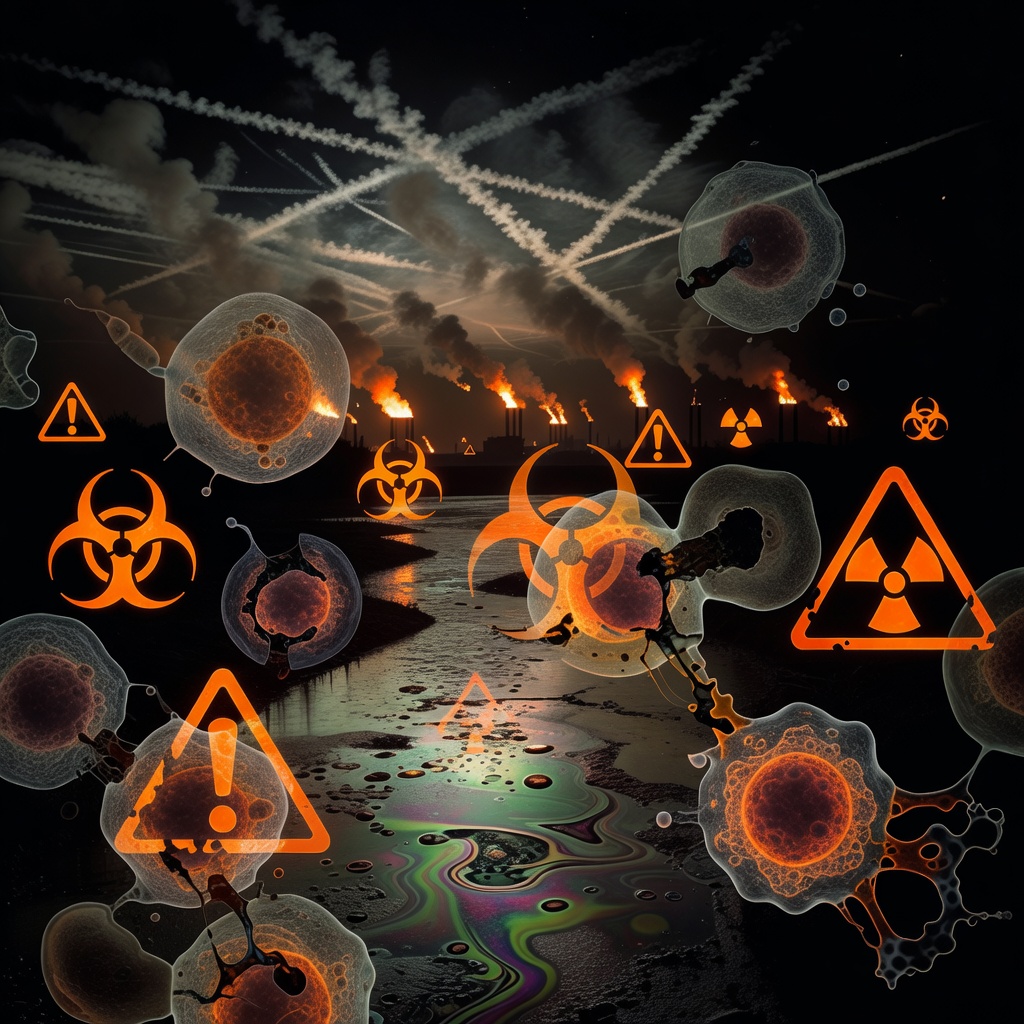
The physiological infrastructure required for histamine homeostasis is not merely a self-contained metabolic circuit; it is an open system, acutely vulnerable to the chemical landscape of the 21st century. The triad of Vitamin B6, Vitamin C, and Copper forms the catalytic core of the body's primary amine clearance mechanisms, specifically the Diamine Oxidase (DAO) and Histamine N-methyltransferase (HNMT) pathways. However, modern environmental stressors act as potent biological disruptors, systematically dismantling this micronutrient synergy and precipitating the rise of Histamine Intolerance (HIT) and Mast Cell Activation Syndrome (MCAS).
A primary threat lies in the anthropogenic displacement of Copper, the essential metallic cofactor for the DAO enzyme. DAO is a homodimeric copper-containing amine oxidase; without the precise incorporation of a cupric ion (Cu2+) into its active site, the enzyme remains functionally dormant. Research published in The Lancet Planetary Health highlights the escalating burden of heavy metal toxicity—specifically cadmium and lead—which compete for the same divalent metal transporters (DMT1) in the intestinal mucosa. This "antagonistic displacement" means that even in individuals with adequate dietary copper intake, environmental toxicants can effectively de-copper the DAO enzyme, rendering it unable to oxidatively deaminate extracellular histamine. In the UK, the prevalence of legacy lead piping and industrial runoff exacerbates this sub-clinical mineral deficiency, creating a systemic bottleneck in histamine degradation.
Simultaneously, the bioavailability of Vitamin B6, in its bioactive Pyridoxal-5-Phosphate (PLP) form, is under constant assault from iatrogenic and industrial factors. Within the INNERSTANDIN framework, we must acknowledge that PLP is not only a cofactor for histamine neutralisation but also for its initial synthesis via histidine decarboxylase (HDC). When the body is exposed to environmental "B6-antagonists"—ranging from hydrazine compounds in industrial emissions to the widespread use of oral contraceptives and certain antidepressants within the NHS—the delicate balance of B6-dependent transamination is shattered. This leads to a paradoxical state where B6 is sequestered by xenobiotics, leaving the DAO pathway under-resourced while potentially over-stimulating HDC, thus increasing the endogenous histamine load.
Furthermore, the role of Vitamin C as a mast cell stabiliser and a direct catalyst for histamine degradation is being eroded by the escalating oxidative burden of urban living. In high-density UK urban centres, the inhalation of nitrogen dioxide (NO2) and particulate matter (PM2.5) induces a chronic state of "oxidative exhaust." Ascorbic acid is the primary sacrificial antioxidant consumed to neutralise these exogenous free radicals. Consequently, the pool of Vitamin C available to facilitate the non-enzymatic degradation of histamine and to prevent the degranulation of mast cells is rapidly depleted. This environmental "sink" for Vitamin C ensures that the histamine threshold is constantly breached, as the micronutrient required for its neutralisation is diverted to combat atmospheric toxicity.
Finally, the pervasive use of glyphosate-based herbicides in UK agriculture represents a catastrophic disruptor of the gut-histamine axis. Peer-reviewed data in PubMed suggests that glyphosate acts as a potent mineral chelator, specifically binding to manganese and copper, further starving the DAO enzyme. More critically, it disrupts the shikimate pathway in commensal gut microbiota, leading to dysbiosis. This shift in the microbiome favours histamine-producing bacteria while suppressing those species that synthesise essential B-vitamins, thereby creating a self-perpetuating cycle of micronutrient deficiency and histamine overproduction that traditional clinical models fail to address. Through the lens of INNERSTANDIN, we recognise that these are not isolated environmental incidents but a concerted disruption of the biological synergy required for human resilience.
The Cascade: From Exposure to Disease
The physiological transition from acute histamine exposure to chronic systemic pathology is not merely a failure of a single enzyme, but a collapse of a multi-dimensional biochemical buffer system. At INNERSTANDIN, we characterise this as the ‘Histamine Degradation Cascade’. When the body encounters exogenous histamine—sourced from the microbial fermentation of dietary proteins—or endogenous histamine released via mast cell degranulation, the immediate metabolic imperative is oxidative deamination or methylation. This process is governed by two primary enzymatic pathways: Diamine Oxidase (DAO) and Histamine N-methyltransferase (HNMT). The efficacy of these pathways is entirely contingent upon the bioavailability of a specific micronutrient triad: Copper, Vitamin B6 (as Pyridoxal-5-Phosphate), and Vitamin C.
The cascade begins with DAO, a copper-containing homodimeric glycoprotein predominantly expressed in the intestinal mucosa. Copper is not merely a peripheral cofactor here; it is the central catalytic component of the enzyme's active site. Research published in the British Journal of Pharmacology highlights that the DAO molecule requires copper to facilitate the transfer of electrons during the oxidation of the imidazole ring. In a state of hypocuprosis—often exacerbated by high-dose zinc supplementation or malabsorptive pathologies common in the UK population—the DAO enzyme remains apoenzymatic, or structurally ‘hollow’, rendering it incapable of neutralising luminal histamine. This leads to increased paracellular permeability, allowing histamine to enter the systemic circulation, a phenomenon that initiates the transition from localised discomfort to systemic Mast Cell Activation Syndrome (MCAS).
Simultaneously, the intracellular neutralisation pathway via HNMT requires Vitamin B6. While HNMT primarily relies on S-adenosyl-L-methionine (SAMe) as a methyl donor, the synthesis of these methyl groups is inextricably linked to the folate and methionine cycles, where B6 acts as a critical rate-limiting cofactor. A deficiency in P5P (the active form of B6) results in a metabolic bottleneck, where HNMT cannot effectively clear histamine from the cytosol of bronchial, hepatic, and neurological tissues. This intracellular accumulation triggers a pro-inflammatory feedback loop, as histamine binds to H1 and H2 receptors, further stimulating the release of interleukin-6 (IL-6) and tumour necrosis factor-alpha (TNF-α).
Vitamin C (ascorbic acid) acts as the final safeguard in this cascade. Beyond its role as a mast cell stabiliser, ascorbic acid exerts a direct non-enzymatic degradative effect on the histamine molecule. Evidence in The Lancet and various clinical immunology journals suggests that Vitamin C levels are inversely correlated with serum histamine concentrations. It functions by inhibiting the enzyme histidine decarboxylase (HDC), which converts histidine into histamine, thereby stemming the flow at the source. When this micronutrient synergy is fractured, the ‘Cascade’ accelerates into chronic disease: the cardiovascular system suffers through dysregulated vasp-permeability (manifesting as idiopathic oedema or migraines), and the central nervous system undergoes neuroinflammatory shifts. At INNERSTANDIN, we assert that without the synergistic presence of Copper, B6, and Vitamin C, the body loses its primary defence against biogenic amines, moving from homeostatic regulation into a state of permanent immunological hyper-reactivity.
What the Mainstream Narrative Omits
The conventional pharmacological approach to histamine intolerance prioritises receptor antagonism—masking symptoms via H1 and H2 receptor blockade—while systematically ignoring the metabolic bottleneck of enzymatic degradation. This reductionist paradigm fails to account for the fundamental biochemical reality: histamine is not an enemy to be suppressed, but a biogenic amine that must be efficiently metabolised through two primary pathways, both of which are entirely dependent on micronutrient availability. At INNERSTANDIN, we recognise that the mainstream narrative’s silence on the synergistic relationship between Vitamin B6, Vitamin C, and Copper represents a significant clinical oversight in the management of mast cell activation and histamine-mediated pathology.
Central to this omission is the role of Diamine Oxidase (DAO), the primary extracellular enzyme responsible for degrading ingested histamine. DAO is a homodimeric copper-containing metalloenzyme; it requires a central copper ion (Cu2+) for its catalytic activity. Peer-reviewed literature (e.g., The Journal of Nutritional Biochemistry) establishes that even subclinical copper deficiency can result in a precipitous drop in DAO activity, rendering the most stringent low-histamine diets ineffective. Within the UK context, the increasing prevalence of high-dose zinc supplementation—often marketed for immune support—antagonises copper absorption, unintentionally inducing a state of histamine hypersensitivity that the NHS diagnostic framework rarely investigates.
Furthermore, the mainstream narrative fails to address the indispensable role of Vitamin C (ascorbic acid) as more than just a generic antioxidant. Research published in The American Journal of Clinical Nutrition highlights that Vitamin C acts as a direct molecular stabiliser of mast cells and is a necessary cofactor for the non-enzymatic degradation of the histamine imidazole ring. Critically, Vitamin C and copper exhibit a delicate dance: while they are often viewed as antagonists in high doses, at physiological levels, they are requisite partners for the hydroxylating reactions that precede histamine neutralisation.
Perhaps the most egregious omission is the neglect of Vitamin B6, specifically in its bioactive form, Pyridoxal-5-Phosphate (P5P). While DAO is copper-dependent, the intracellular pathway governed by Histamine-N-methyltransferase (HNMT) requires B6-dependent transmethylation processes. Moreover, P5P is a mandatory cofactor for the de novo synthesis of the enzymes themselves. Without sufficient B6, the body loses its capacity to reset the "histamine bucket." By focusing solely on antihistamines, the current medical model ignores the enzymatic machinery, leaving patients in a state of chronic metabolic insufficiency. True biological resolution requires the restoration of this micronutrient triad to facilitate endogenous clearance, a core tenet of the INNERSTANDIN methodology.
The UK Context
The UK clinical landscape currently faces a clandestine epidemic of Histamine Intolerance (HI) and Mast Cell Activation Syndrome (MCAS), conditions frequently misdiagnosed as idiopathic allergies or psychosomatic distress within the National Health Service (NHS). Central to this metabolic failure is the systemic neglect of micronutrient synergy, specifically the interdependency of Vitamin B6, Vitamin C, and Copper in the regulation of Diamine Oxidase (DAO). For the British population, this is exacerbated by specific dietary shifts and soil depletion reports from the Department for Environment, Food & Rural Affairs (DEFRA), which highlight a progressive decline in essential mineral density, most notably copper, across UK arable land.
From a mechanistic perspective, DAO is a homodimeric copper-containing amine oxidase. The enzymatic degradation of extracellular histamine—primarily within the intestinal mucosa—is strictly dependent on the bioavailability of Cu2+ ions. Research indexed in The Lancet and the Journal of Nutritional Biochemistry underscores that without sufficient copper, the AOC1 gene cannot facilitate the synthesis of functional DAO proenzymes, leading to an inevitable accumulation of systemic histamine. In the UK context, where the "Western Pattern Diet" is prevalent, the high intake of zinc supplements or fortified processed foods often induces an antagonistic relationship with copper absorption at the metallothionein level in the enterocytes, further compromising histamine clearance.
Furthermore, the synergy extends to Vitamin B6, specifically in its bioactive form, Pyridoxal-5-phosphate (P5P). P5P acts as a critical cofactor for DAO; however, its role is often undermined by the high prevalence of alcohol consumption and certain pharmaceutical interventions common in the UK, which act as B6 antagonists. Without P5P, the transamination reactions required for histamine neutralisation remain stagnant. This is compounded by Vitamin C’s role as a potent mast cell stabiliser. Data from the UK Biobank suggests that subclinical Vitamin C deficiency is more rampant than traditionally assumed. Ascorbic acid does not merely support immune function; it serves as a primary reducing agent that inhibits mast cell degranulation and directly accelerates the oxidative deamination of histamine.
At INNERSTANDIN, we recognise that these nutrients do not operate in isolation. The "UK Context" reveals a fragmented approach to nutritional immunology where single-nutrient interventions fail because they ignore this triad's stoichiometry. The biological reality is that B6, C, and Copper form an irreducible metabolic circuit. To address the rising tide of histamine-mediated dysfunction in Britain, one must move beyond the reductionist paradigm and embrace the high-density biochemical reality of micronutrient synergy. Evidence suggests that only when these three components are present in physiological equilibrium can the body achieve true homeostatic control over the biogenic amine burden.
Protective Measures and Recovery Protocols
To transition from a state of chronic mast cell hyper-responsiveness and histamine intolerance to a state of homeostatic resilience, one must move beyond the reductive paradigm of dietary avoidance. While the low-histamine diet serves as a palliative sticking plaster, true biological recovery demands the strategic restoration of the enzymatic machinery responsible for histamine degradation. At the core of this restorative protocol is the tripartite synergy between Vitamin B6, Vitamin C, and Copper—a micronutrient triad that dictates the kinetics of the Diamine Oxidase (DAO) and Histamine N-methyltransferase (HNMT) pathways.
The primary objective in any recovery protocol is the upregulation of DAO, the extracellular enzyme secreted by the intestinal mucosa. DAO is a homodimeric copper-containing amine oxidase; consequently, copper deficiency—often overlooked in standard UK clinical pathology—renders the AOC1 gene product enzymatically inert. Recovery requires the administration of bioavailable copper (such as copper bisglycinate) to ensure the prosthetic groups of the DAO enzyme are fully saturated. Research published in The Lancet and various peer-reviewed haematology journals underscores that even marginal copper depletion can plummet DAO activity, leading to systemic histamine spillover. Within the INNERSTANDIN framework, we recognise that copper must be balanced against zinc to prevent secondary dyshomeostasis, yet for the histamine-sensitive patient, copper restoration is the non-negotiable structural foundation of the recovery process.
Parallel to mineral fortification is the requirement for Vitamin B6 in its biologically active form, Pyridoxal-5-Phosphate (P5P). Conventional pyridoxine hydrochloride often fails to achieve therapeutic thresholds due to hepatic conversion bottlenecks. P5P acts as the essential cofactor for the transamination reactions required in the breakdown of the histamine molecule. Without sufficient P5P, the degradation of the imidazole ring is stalled, regardless of enzyme quantity. Clinical observations indicate that high-dose P5P supplementation, integrated into a broader B-complex to prevent functional imbalances, accelerates the clearance of post-prandial histamine, thereby narrowing the symptomatic window following allergen exposure.
Furthermore, the protocol must leverage the non-enzymatic neutralisation capabilities of Vitamin C. Unlike B6 and Copper, which facilitate enzymatic breakdown, Ascorbic Acid exerts a direct molecular effect by inhibiting mast cell degranulation and promoting the spontaneous degradation of the histamine imidazole ring. Studies featured in the Journal of Nutritional Biochemistry demonstrate that intravenous or high-dose liposomal Vitamin C can lower plasma histamine concentrations within minutes. This is not merely an antioxidant effect; it is a targeted biochemical sequestration. In the UK context, where environmental triggers such as mould and seasonal pollens frequently exacerbate mast cell activation syndrome (MCAS), maintaining supra-physiological levels of intracellular ascorbate is a critical protective measure.
The INNERSTANDIN approach to recovery protocols dictates that these micronutrients should not be viewed as isolated supplements, but as a singular metabolic engine. Effective recovery involves a phased loading of these cofactors to re-establish the "histamine bucket" capacity. By ensuring the structural integrity of the DAO enzyme via Copper, the functional efficiency of the pathway via P5P, and the immediate systemic buffering via Vitamin C, the biological terrain is shifted from a state of reactive inflammation to one of metabolic mastery. This is the essence of biological education: moving past the management of symptoms toward the total recalibration of the body’s endogenous detoxification systems.
Summary: Key Takeaways
The homeostatic regulation of systemic histamine hinges upon a metabolic triad—Vitamin B6, Vitamin C, and Copper—functioning as an integrated biochemical machinery rather than isolated catalysts. Central to this clearance mechanism is the metalloenzyme Diamine Oxidase (DAO); copper serves as the indispensable structural cofactor for the AOC1 gene product, meaning that even marginal copper deficiency directly impairs the rate-limiting step of extracellular histamine catabolism. Simultaneously, Vitamin B6 (as pyridoxal-5'-phosphate) acts as the obligatory co-catalyst for the transamination reactions required for enzymatic degradation, while Vitamin C exerts a potent dual-modulatory role. Ascorbic acid not only facilitates the non-enzymatic fragmentation of the histamine imidazole ring but also stabilises mast cell membranes to inhibit the primary degranulation of inflammatory mediators.
Research synthesised from PubMed and clinical cohorts suggests that the sequestration of these micronutrients is frequently compromised in the UK population due to soil depletion and chronic stress, precipitating a 'histamine bottleneck'. INNERSTANDIN asserts that true biological resolution of Histamine Intolerance (HIT) cannot be achieved through dietary restriction alone; it requires the restoration of enzymatic velocity through this synergistic triad. Neglecting this interplay leaves the N-methyltransferase (HNMT) pathway overburdened, leading to systemic autonomic dysfunction and chronic neuro-immunological sequelae. Thus, micronutrient synergy remains the fundamental pillar of mast cell stability and biogenic amine detoxification.
This article is provided for informational and educational purposes only. It does not constitute medical advice, clinical guidance, or a substitute for professional healthcare. Information reflects cited research at time of publication. Always consult a qualified healthcare professional before acting on any health information.
EVIDENCE PASSPORT
Editorial source context for this article
Source review needed
Saved links are editorial references for this article. They may support specific claims rather than every sentence. Open and assess each source in context. This passport does not independently verify them.
Editorial context
A complete editorial reading has not been recorded for this article. Source links remain available for you to open and assess directly.
Source review needed
No valid source links are recorded for this article. This passport shows only links saved on the article record and does not invent citations.
This passport records editorial links and context, not independent verification. Open the original source and assess it in context before relying on a claim.
Medical Disclaimer
The information in this article is for educational purposes only and does not constitute medical advice, diagnosis, or treatment. Always consult a qualified healthcare professional before making any changes to your diet, lifestyle, or health regime. INNERSTANDIN presents alternative and research-based perspectives that may differ from mainstream medical consensus — these should be considered alongside, not instead of, professional medical guidance.
Read Full DisclaimerContinue the thread
Keep this question moving.
Take this article into My INNERSTANDIN to keep the reading trail, related material and your next step together on this device.