
Microplastic Accumulation as Somatic Trauma
Updated May 2026
The presence of microplastics in the UK food chain acts as a chronic biological stressor that triggers somatic inflammatory responses. We discuss how these synthetic particles interfere with cellular signaling and body homeostasis.
Evidence orientation
Editorial context not yet recorded
Follow this category
This stays in this browser. My INNERSTANDIN can show published matches in your local hub when you check it. It does not send email, push, or alert notifications.
Local learning review
A private browser aid for revisiting ideas. It is not an alert or a health recommendation.
Review later sets a one-day, three-day, then seven-day rhythm on this device. Choose it only when you want to revisit this article.
Overview
In the contemporary epoch, the definition of trauma has undergone a necessary and radical expansion. While the psychological sciences have long explored the impact of emotional and situational trauma on the human psyche, the biological sciences are now uncovering a more insidious, silent form of injury: Somatic Trauma via synthetic infiltration. We are currently witnessing a global biological event—the systematic penetration of human physiology by microplastics (MPs) and nanoplastics (NPs).
This is not merely an "environmental issue" or a matter of "waste management." For the biological researcher, the presence of microplastics in the human body represents a chronic, unrelenting mechanical and chemical stressor. These particles, ranging from 5 millimetres down to 1 nanometre, have breached the final frontiers of our biological integrity. They have been detected in human blood, lung tissue, the placenta, and the deepest recesses of the gastrointestinal tract.
At INNERSTANDING, we view this accumulation as a form of "Body Memory." The body remembers the synthetic intrusion not through cognitive recall, but through sustained pro-inflammatory signalling, cellular exhaustion, and the disruption of homeostatic rhythms. This article explores the phenomenon of microplastic accumulation not just as a toxicological burden, but as a chronic somatic trauma that fundamentally alters the human biological landscape.
According to recent meta-analyses, the average individual may be ingesting upwards of 5 grams of plastic every week—the equivalent weight of a credit card—primarily through contaminated water, salt, and the food chain.
The biological reality is that we are no longer purely organic entities. We are becoming "bio-synthetic" hybrids against our will, and the physiological cost of this transition is what we term the Somatic Plasticity Crisis.
The Biology — How It Works
To understand microplastic accumulation as trauma, one must first understand the pathways of invasion. The human body is equipped with sophisticated barrier systems designed to filter out pathogens and inorganic debris. However, microplastics, particularly nanoplastics, possess a "stealth" quality that allows them to bypass these evolutionary defences.
Pathways of Entry and Translocation
The primary vectors for microplastic entry into the human soma are ingestion, inhalation, and, to a lesser extent, dermal absorption.
- Ingestion: This is the most prevalent route. Microplastics enter the gastrointestinal (GI) tract via contaminated seafood, bottled water, and even agricultural products where plastic mulch has been used. Once in the gut, particles smaller than 130 micrometres can translocate through the intestinal epithelium.
- Inhalation: Urban air is saturated with synthetic fibres from textiles and tyre wear. These particles bypass the ciliary escalators of the upper respiratory tract, reaching the alveoli where they can enter the bloodstream.
- Translocation: Once a particle enters the circulatory or lymphatic system, it undergoes translocation—the movement from the site of entry to distant organs. Research has confirmed the presence of these particles in the liver, spleen, and kidneys.
The Breach of Protected Sanctuaries
The most alarming aspect of microplastic biology is the breach of highly protected biological barriers. The Blood-Brain Barrier (BBB) and the Placental Barrier were evolved over millions of years to protect the most sensitive aspects of human life: our consciousness and our offspring.
Recent studies using fluorescently labelled polystyrene particles have demonstrated that nanoplastics can cross the BBB within hours of ingestion, triggering neuroinflammation. Similarly, the detection of microplastics on both the maternal and foetal sides of the placenta suggests that the "somatic trauma" begins before birth, embedding synthetic stressors into the very blueprint of the developing human.
Mechanisms at the Cellular Level
Once microplastics have successfully translocated into the interstitial spaces and intracellular environments, the "trauma" becomes a molecular reality. The cellular response to an inorganic, non-biodegradable invader is one of perpetual conflict.
Shape-Induced Physical Trauma
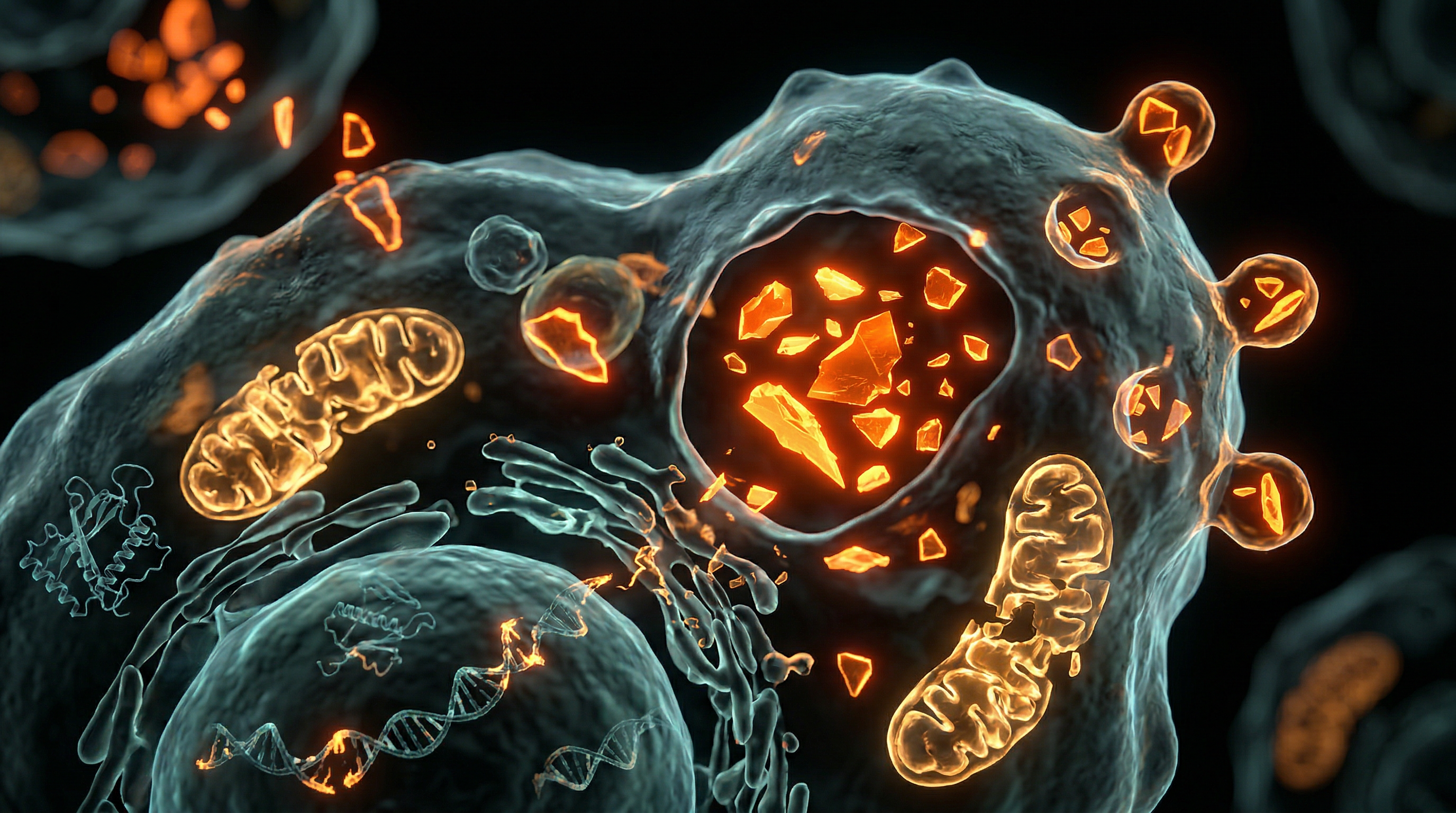
Microplastics are not uniform spheres; they are jagged fragments, fibres, and films. At the cellular level, these shapes matter. When a macrophage (an immune cell) attempts to engulf a jagged plastic fragment, it often undergoes "Frustrated Phagocytosis." The cell is unable to digest the synthetic material, leading to the continuous release of lysosomal enzymes and pro-inflammatory cytokines into the surrounding tissue. This results in localised tissue scarring and chronic inflammation.
The Protein Corona Effect
Upon entering a biological fluid (blood, lymph, or interstitial fluid), a microplastic particle is immediately coated with proteins, lipids, and carbohydrates. This is known as the Protein Corona. This "biological cloak" allows the particle to "masquerade" as a natural entity, such as a lipoprotein or a signalling molecule.
This molecular mimicry allows microplastics to:
- Bind to cellular receptors they should have no access to.
- Facilitate the "Trojan Horse" entry of environmental toxins (heavy metals, PAHs) into the cell.
- Disrupt the Glycocalyx, the delicate sugary coating of our cells that governs communication and protection.
Oxidative Stress and Mitochondrial Dysfunction
The presence of microplastics within the cytosol triggers the overproduction of Reactive Oxygen Species (ROS). The mitochondria, our cellular powerhouses, are particularly sensitive to this oxidative burden. Microplastics interfere with the Electron Transport Chain, leading to reduced ATP (energy) production and mitochondrial DNA damage.
Key Term: Mitophagy – The process by which the cell recycles damaged mitochondria. Excessive microplastic accumulation can overwhelm the mitophagy pathway, leading to a build-up of dysfunctional mitochondria and cellular senescence (biological ageing).
Environmental Threats and Biological Disruptors
Microplastics are not inert carriers of physical trauma; they are chemical delivery systems. The "plastic" itself is a complex mixture of polymers and additives designed for durability, flexibility, or flame retardancy.
The Additive Menace
Plastics contain a cocktail of Endocrine Disrupting Chemicals (EDCs). When these particles lodge in human tissue, they begin to leach these chemicals directly into the surrounding environment.
- Bisphenols (BPA, BPS, BPF): Known to mimic oestrogen, these chemicals bind to hormone receptors, disrupting reproductive health and metabolic function.
- Phthalates: Often used as plasticisers, these are linked to "anti-androgenic" effects, potentially lowering testosterone and affecting male fertility.
- Organotin Compounds: These act as "obesogens," interfering with lipid metabolism and promoting the expansion of adipose (fat) tissue.
The "Plastisphere" and Pathogen Transport
In the environment, microplastics act as "rafts" for microbial life. This is known as the Plastisphere. In the UK food chain, microplastics can carry antibiotic-resistant bacteria and pathogenic fungi into the human gut. This introduces a dual trauma: the physical presence of the plastic and a biological challenge from foreign pathogens that would otherwise be unable to survive the journey through the digestive system.
Adsorption of Environmental Toxins
Because plastics are hydrophobic, they act like sponges for other persistent organic pollutants (POPs) in the environment.
- Polychlorinated Biphenyls (PCBs)
- Dichlorodiphenyltrichloroethane (DDT)
- Heavy Metals (Lead, Mercury, Cadmium)
When we ingest a microplastic particle, we are not just ingesting a polymer; we are ingesting a concentrated dose of the world’s most dangerous environmental poisons. This creates a "bio-accumulation" effect where the body becomes a reservoir for global industrial waste.
The Cascade: From Exposure to Disease
The progression from "exposure" to "clinical disease" is what we define as the Somatic Trauma Cascade. It is a multi-stage process where the body's attempts to maintain homeostasis are gradually defeated by the sheer volume of synthetic intrusion.
Stage 1: The Alarm Phase (Acute Inflammation)
The immune system recognises the plastic as "non-self." Neutrophils and macrophages migrate to the site of the particles. Cytokines like TNF-alpha and IL-6 are released. In a healthy scenario, the "threat" would be neutralised and the inflammation would subside. With microplastics, the threat never leaves.
Stage 2: The Resistance Phase (Chronic Low-Grade Inflammation)
As the body fails to clear the particles, the inflammation becomes chronic. This is the "Somatic Trauma" taking root. The body remains in a state of high alert, diverting energy away from repair and towards constant surveillance. This state is highly correlated with the development of Autoimmune Conditions, as the immune system, frustrated and overstimulated, begins to lose the ability to distinguish between the "synthetic invader" and the body's own tissues.
Stage 3: The Exhaustion Phase (Degenerative Disease)
Years of chronic inflammation and oxidative stress culminate in tissue dysfunction.
- Neurodegeneration: The accumulation of nanoplastics in the brain is linked to the aggregation of alpha-synuclein and amyloid-beta proteins, the hallmarks of Parkinson’s and Alzheimer’s diseases.
- Cardiovascular Disease: Microplastics have been found in carotid artery plaques. Patients with these particles in their plaques have a significantly higher risk of stroke and heart attack.
- Metabolic Syndrome: By disrupting endocrine signalling, microplastics contribute to insulin resistance and type 2 diabetes.
A landmark 2024 study published in the New England Journal of Medicine found that individuals with microplastics in their arterial plaque were 4.5 times more likely to experience a major cardiovascular event compared to those who were "plastic-free."
What the Mainstream Narrative Omits
The mainstream media and regulatory bodies often frame microplastics as an "emerging concern" with "uncertain health effects." At INNERSTANDING, we recognise this as a form of institutional gaslighting. The evidence is not just emerging; it is overwhelming.
The Myth of "Safe Levels"
Toxicology has historically relied on the "dose makes the poison" maxim. However, microplastics follow a non-monotonic dose-response curve. Very small amounts of nanoplastics can be more damaging than larger amounts because they can penetrate cellular nuclei and interfere with DNA transcription. There is no "safe" level of a non-biodegradable synthetic polymer in the human heart or brain.
Regulatory Capture and the "Plastic Lobby"
The global plastic industry is intrinsically linked to the petrochemical industry. Moving away from plastic requires a fundamental shift in global energy and manufacturing. Consequently, research funding is often directed toward "clean-up" technologies rather than "human health impact" studies, which might necessitate a total ban on certain polymers.
The "Body Memory" of Synthetic Stress
Mainstream science rarely discusses the concept of Epigenetic Trauma related to plastics. Microplastics can cause methylation changes in our DNA. This means the "trauma" of plastic exposure is written into the genetic code and can be passed down to the next generation. We are potentially creating an epigenetic legacy of synthetic vulnerability.
The UK Context
The United Kingdom presents a unique and harrowing case study in microplastic accumulation. As an island nation with a high population density and a legacy of Victorian-era sewage systems, the UK’s environmental plastic burden is acute.
The British Water Crisis
The UK’s waterways are currently a focal point of environmental scandal. The frequent discharge of untreated sewage into rivers like the Thames, the Severn, and the Wye carries not just biological waste, but massive quantities of microplastics from domestic washing machines (synthetic fibres) and road run-off.
- Tyre Wear: The UK’s heavy reliance on road haulage and private vehicles contributes significantly to tyre-wear particles—a particularly toxic form of microplastic containing the chemical 6PPD-quinone, which has been linked to mass die-offs in aquatic life and potential vascular toxicity in humans.
- Tap Water: Studies have shown that UK tap water is widely contaminated with microplastic fibres. While the UK government maintains that the risks are low, the cumulative effect of lifetime exposure is rarely calculated.
The "Ultra-Processed" Diet
The UK has one of the highest rates of Ultra-Processed Food (UPF) consumption in Europe. UPFs are almost exclusively packaged in plastic, often undergo high-heat processing while in contact with plastic, and contain additives that increase the permeability of the gut lining ("Leaky Gut"). This creates a "perfect storm" for microplastic translocation in the British population.
Regulatory Lags post-Brexit
Following the UK's departure from the European Union, there are concerns that the UK may lag behind the EU's REACH (Registration, Evaluation, Authorisation and Restriction of Chemicals) standards. The "UK REACH" framework has been criticised for being slower to ban hazardous chemicals used in plastic production, potentially leaving the UK population more exposed than their continental neighbours.
Protective Measures and Recovery Protocols
While the systemic presence of microplastics is a daunting reality, biological research suggests that we can mitigate the damage and support the body's "unloading" of these synthetic stressors. Recovering from somatic trauma requires a multi-pronged approach: reducing intake, supporting detoxification, and dampening inflammation.
1. Source Reduction (The "Plastic Fast")
The first step is to stop the influx.
- Water Filtration: Invest in high-quality Reverse Osmosis (RO) or high-end carbon block filters that are certified to remove particles down to 0.1 microns.
- Natural Fibres: Switch to wool, cotton, or linen clothing. Synthetic fleeces are one of the largest contributors to microplastic inhalation in the home.
- Avoid Heat + Plastic: Never microwave food in plastic containers. Heat accelerates the leaching of monomers and additives into the food.
2. Enhancing Biological Resilience
We can prime our cellular "defence suites" to handle the oxidative stress caused by MPs.
- Sulforaphane: Found in broccoli sprouts, sulforaphane activates the Nrf2 pathway, the body’s master antioxidant switch. This helps the cell neutralise the ROS generated by plastic particles.
- Sweat Therapy: While microplastics themselves are difficult to "sweat out," the EDCs they carry (like phthalates and BPA) are excreted through the skin. Regular sauna use can reduce the chemical burden of the plastic "Trojan Horse."
- Autophagy Induction: Periodic fasting or time-restricted feeding stimulates autophagy, the cellular "housekeeping" process that can help break down the protein-corona-coated debris and recycle damaged mitochondria.
3. Gut Barrier Protection
A robust gut barrier is the primary defence against translocation.
- Polyphenols: Compounds in berries, green tea, and dark chocolate strengthen the "Tight Junctions" of the gut lining.
- Fibre Diversity: A diverse microbiome can help degrade some of the chemical additives associated with plastics.
4. Public Advocacy
Individual action is insufficient for a systemic crisis.
- Support legislation for Extended Producer Responsibility (EPR), forcing companies to account for the entire lifecycle of their packaging.
- Advocate for the mandatory installation of microfibre filters on all new washing machines in the UK.
Summary: Key Takeaways
The accumulation of microplastics in the human body is not a passive environmental accident; it is a chronic somatic trauma. The biological evidence points to a future where human health is increasingly defined by our ability to navigate a synthetic world.
- Microplastics are everywhere: They have breached the Blood-Brain Barrier and the Placenta, making them a foundational stressor for modern humanity.
- Physical and Chemical Injury: MPs cause trauma through mechanical "frustrated phagocytosis" and by leaching endocrine-disrupting chemicals.
- The UK is at High Risk: Due to sewage issues, tyre wear, and a high-UPF diet, the British population faces a significant synthetic burden.
- Cellular Memory: The body "remembers" this trauma through chronic inflammation, mitochondrial decay, and epigenetic shifts.
- Resilience is Possible: Through aggressive filtration, metabolic support (Nrf2 activation), and systemic advocacy, we can begin the process of somatic recovery.
The era of "purely organic" humanity may be over, but our capacity for adaptation is not. By recognising microplastic accumulation as a form of trauma, we can move beyond mere "pollution" talk and begin the serious work of biological preservation and somatic healing. The mission of INNERSTANDING is to expose these hidden biological realities, providing the knowledge necessary to protect the integrity of the human temple in a synthetic age.
This article is provided for informational and educational purposes only. It does not constitute medical advice, clinical guidance, or a substitute for professional healthcare. Information reflects cited research at time of publication. Always consult a qualified healthcare professional before acting on any health information.
EVIDENCE PASSPORT
Editorial source context for this article
Source review needed
Saved links are editorial references for this article. They may support specific claims rather than every sentence. Open and assess each source in context. This passport does not independently verify them.
Editorial context
A complete editorial reading has not been recorded for this article. Source links remain available for you to open and assess directly.
Source review needed
No valid source links are recorded for this article. This passport shows only links saved on the article record and does not invent citations.
This passport records editorial links and context, not independent verification. Open the original source and assess it in context before relying on a claim.
Medical Disclaimer
The information in this article is for educational purposes only and does not constitute medical advice, diagnosis, or treatment. Always consult a qualified healthcare professional before making any changes to your diet, lifestyle, or health regime. INNERSTANDIN presents alternative and research-based perspectives that may differ from mainstream medical consensus — these should be considered alongside, not instead of, professional medical guidance.
Read Full DisclaimerContinue the thread
Keep this question moving.
Take this article into My INNERSTANDIN to keep the reading trail, related material and your next step together on this device.
Dig deeper in the Library
Free, longform PDF volumes that go beyond headlines into mechanisms and references.