
Microplastics in UK Water Supplies: Neurotoxic Consequences
Updated May 2026
The prevalence of microplastics in British tap water poses a direct threat to the integrity of the blood-brain barrier. These particles can accumulate in neural tissues, hindering the brain's natural self-cleaning mechanisms.
Evidence orientation
Editorial context not yet recorded
Follow this category
This stays in this browser. My INNERSTANDIN can show published matches in your local hub when you check it. It does not send email, push, or alert notifications.
Local learning review
A private browser aid for revisiting ideas. It is not an alert or a health recommendation.
Review later sets a one-day, three-day, then seven-day rhythm on this device. Choose it only when you want to revisit this article.
Overview
For decades, the discourse surrounding environmental pollution was confined to visible debris: the plastic bag snagged in a hedgerow or the oil slick on the surface of a coastal estuary. However, a far more insidious threat has emerged, one that bypasses the naked eye and infiltrates the very foundations of human physiology. As a senior biological researcher for INNERSTANDING, it is my duty to expose a silent crisis currently unfolding across the British Isles: the systemic contamination of our water supplies with microplastics and nanoplastics, and their devastating impact on the glymphatic system.
While the British public is increasingly aware of plastic pollution in the oceans, there remains a profound lack of transparency regarding the presence of these polymers in UK tap water. Current data suggests that the average Briton consumes upwards of five grams of plastic every week—the equivalent of a credit card—primarily through water consumption. But the danger is not merely gastrointestinal. Recent breakthroughs in neurotoxicology reveal that these particles, specifically those in the nanometre range, possess the capacity to breach the Blood-Brain Barrier (BBB).
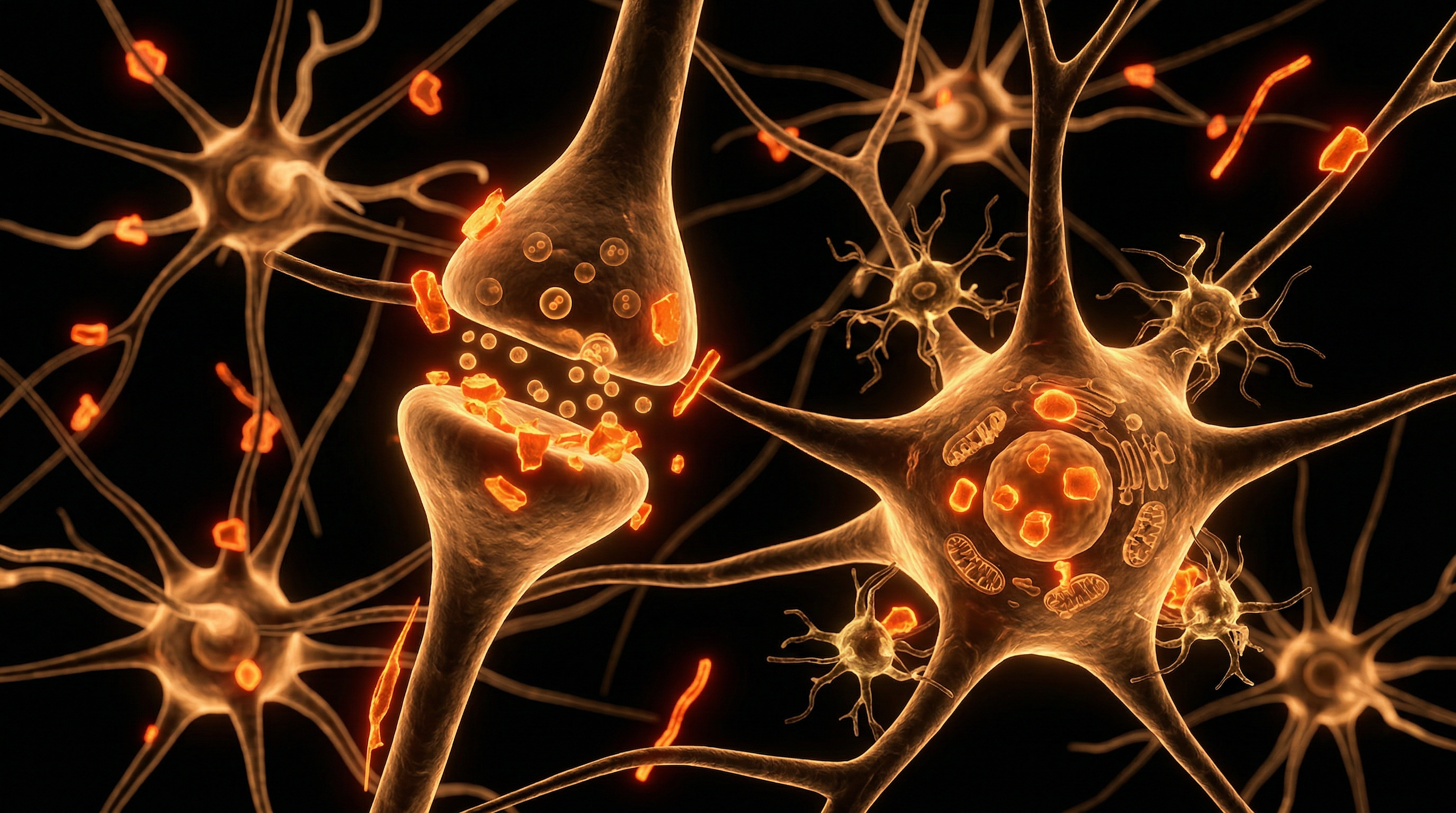
Once inside the neural parenchyma, these synthetic intruders do not remain inert. They accumulate, triggering a cascade of inflammatory responses and, most crucially, obstructing the glymphatic system—the brain’s recently discovered "waste clearance" mechanism. This article provides an exhaustive examination of how microplastic ingestion is effectively "clogging" the British brain, leading to a surge in neurodegenerative conditions and cognitive decline that the mainstream scientific establishment has been slow to acknowledge.
Fact: Research conducted at the University of Hull and Hull York Medical School found microplastics in human lung tissue for the first time, while parallel studies on UK tap water identified synthetic fibres in 72% of samples tested across the United Kingdom.
The Biology — How It Works
To understand the neurotoxic threat, we must first understand the glymphatic system. Discovered only in the last decade, the glymphatic system is a macroscopic waste clearance pathway that utilises a network of perivascular channels, formed by astrocytes, to eliminate metabolic waste from the Central Nervous System (CNS).
The Glymphatic Mechanism
The system functions primarily during deep, slow-wave sleep. During this phase, the interstitial space between neurons increases by up to 60%, allowing Cerebrospinal Fluid (CSF) to flow rapidly through the brain tissue. This fluid "washes" away toxic byproducts, most notably Amyloid-beta and Tau proteins, which are synonymous with Alzheimer’s and other forms of dementia.
The "engine" of this system is the Aquaporin-4 (AQP4) water channel, located on the end-feet of astrocytes. These channels facilitate the movement of water into the brain, creating the pressure necessary to flush toxins toward the venous system for eventual excretion.
The Plastic Intrusion
When we ingest contaminated water from UK taps—sourced from rivers like the Thames, which holds some of the highest recorded levels of microplastics globally—these particles undergo a process of translocation.
- Ingestion & Absorption: Microplastics enter the gut. While larger particles are excreted, nanoplastics (less than 1 micrometre) are small enough to pass through the intestinal epithelium into the bloodstream.
- Systemic Circulation: Once in the blood, these particles are coated in a "protein corona"—a layer of biomolecules that allows them to "masquerade" as endogenous particles.
- Breaching the BBB: Due to their lipophilic nature and small size, nanoplastics can bypass the Blood-Brain Barrier via transcytosis or by physically disrupting the tight junctions of the vascular endothelium.
Once these polymers enter the brain, they occupy the very perivascular spaces used by the glymphatic system. Imagine a city’s sewage system being filled with microscopic beads of non-biodegradable silt; the water may still flow, but the efficiency of waste removal drops precipitously.
Mechanisms at the Cellular Level
The neurotoxicity of microplastics is not just a matter of physical obstruction; it is a complex biochemical assault. When polyethylene, polystyrene, or polyvinyl chloride (PVC) particles settle into neural tissue, they trigger a multi-pronged cellular catastrophe.
Microglial Activation and Chronic Neuroinflammation
The brain’s primary immune cells, microglia, are programmed to identify and neutralise foreign invaders. However, microglia cannot "digest" plastic. When they encounter these synthetic particles, they enter a state of chronic activation. This results in the continuous release of pro-inflammatory cytokines, such as TNF-alpha and Interleukin-1 beta (IL-1β).
This sustained inflammatory state is neurotoxic. It damages healthy neurons and further weakens the Blood-Brain Barrier, creating a feedback loop where more microplastics can enter the brain because the barrier is already failing from the initial exposure.
Oxidative Stress and Mitochondrial Dysfunction
Microplastics are potent triggers of Reactive Oxygen Species (ROS). At the cellular level, the presence of polymers disrupts the mitochondrial electron transport chain. As the mitochondria—the "powerhouses" of the cell—fail, neurons lose the energy required for signal transmission and repair.
Statistic: Laboratory models have shown that exposure to polystyrene nanoplastics at concentrations currently found in urban water systems can lead to a 40% reduction in mitochondrial membrane potential in human neural stem cells.
The Protein Corona Effect
A particularly insidious mechanism is the protein corona. In the fluid environment of the brain, microplastics attract and bind to proteins like alpha-synuclein. This binding can induce a conformational change in the protein, causing it to misfold. Misfolded proteins are the hallmark of neurodegenerative diseases. By acting as a "scaffold" for protein aggregation, microplastics directly accelerate the formation of the plaques and tangles that define the dementias.
Environmental Threats and Biological Disruptors
The United Kingdom faces a unique set of challenges regarding its water infrastructure. The British water system is an aging Victorian relic, never designed to filter the synthetic chemical load of the 21st century.
Sources of Contamination in UK Water
- Tyre Wear and Road Run-off: This is perhaps the largest source of microplastics in British rivers. Every time it rains in London, Manchester, or Birmingham, particulate matter from tyres—composed of synthetic rubber and toxic additives like 6PPD-quinone—is washed into the drainage system and eventually into the reservoirs.
- Synthetic Textiles: UK households are heavy users of synthetic clothing. A single laundry cycle can release 700,000 microfibres. Most UK wastewater treatment plants are only 80-90% efficient at removing these, meaning billions of fibres enter the effluent every day.
- Degrading Infrastructure: Many UK water pipes are lined with plastic polymers to prevent lead leaching. As these linings age and degrade, they shed microplastics directly into the "treated" water entering homes.
The Chemical Hitchhikers
Microplastics are not just plastic. They are "Trojan Horses" for other endocrine-disrupting chemicals (EDCs). In the UK's industrialised waterways, plastic particles act as magnets for:
- Polychlorinated Biphenyls (PCBs)
- Bisphenol A (BPA)
- Phthalates
- Per- and Polyfluoroalkyl Substances (PFAS), known as "forever chemicals."
When these plastics enter the brain, they bring these toxins with them. BPA and Phthalates are known to interfere with hormonal signalling in the hypothalamus, potentially disrupting the circadian rhythm. Since the glymphatic system only operates during sleep, any disruption to sleep architecture is a secondary strike against the brain’s ability to detoxify.
The Cascade: From Exposure to Disease
The journey from a glass of tap water to a diagnosis of neurodegeneration is a slow, cumulative cascade. This is not acute poisoning; it is chronic bioaccumulation.
Step 1: The Integrity Breach
Repeated exposure to microplastics in the diet leads to "leaky gut" syndrome. This systemic inflammation increases the permeability of all biological membranes, including the Blood-Brain Barrier.
Step 2: Glymphatic Stasis
As particles accumulate in the perivascular spaces (the Virchow-Robin spaces), the flow of CSF is physically impeded. We call this "Glymphatic Stasis." In this state, the brain’s metabolic "trash" is no longer being taken out. The levels of glutamate, lactate, and amyloid rise to toxic levels within the interstitial fluid.
Step 3: Synaptic Pruning and Neuronal Death
The combination of physical clogging, chronic inflammation, and high levels of metabolic waste leads to the loss of synapses. The brain begins to prune back its connections to save energy. This manifests initially as "brain fog," memory lapses, and reduced cognitive flexibility.
Step 4: Full-Scale Neurodegeneration
Over decades, this process culminates in the clinical presentation of disease. There is a startling correlation between the rise of plastic production in the mid-20th century and the exponential increase in Early-Onset Alzheimer’s cases observed in the UK over the last two decades.
- Alzheimer’s Disease: Driven by amyloid-beta accumulation due to glymphatic failure.
- Parkinson’s Disease: Driven by alpha-synuclein aggregation, potentially seeded by plastic particles.
- Autism Spectrum Disorders (ASD): Emerging research suggests that prenatal exposure to microplastics may disrupt foetal brain development by crossing the placental barrier and interfering with microglial-mediated synaptic pruning.
What the Mainstream Narrative Omits
The UK government and various water regulatory bodies (such as Ofwat and the Environment Agency) have been remarkably silent on the neurotoxic risks of microplastics. There are several reasons for this omission, ranging from economic pragmatism to scientific reductionism.
The "Threshold" Fallacy
Mainstream toxicology is built on the principle that "the dose makes the poison." Regulators often argue that the levels of microplastics in water are too low to cause immediate harm. However, this ignores the principle of bioaccumulation. Plastic does not leave the brain. It has a half-life measured in centuries, not days. A "low dose" consumed every day for 40 years becomes a massive internal burden.
Monitoring Gaps
Crucially, the UK does not have a mandatory monitoring programme for microplastics in drinking water. Water companies are not required to test for them, nor are there legally binding limits for nanoplastic concentrations. By not looking for the problem, the "safety" of the water remains a convenient legal fiction.
The Corporate Influence
The British water industry is privatised and under immense financial pressure due to aging infrastructure and sewage management failures. Admitting that the current filtration technology (sand filtration and GAC) is incapable of removing nanoplastics would necessitate a multi-billion pound overhaul of the entire national water system. It is far more "cost-effective" for the narrative to focus on "carbon footprints" rather than "polymer contamination."
The Focus on Macro-Waste
The media focuses on "The Great British Beach Clean" because it is a visible, feel-good solution. It distracts from the invisible, systemic problem of the nano-fraction. You can pick up a bottle, but you cannot pick up a 100-nanometre particle of polystyrene once it is inside your prefrontal cortex.
The UK Context
The United Kingdom’s geographical and industrial profile makes it a "hot zone" for microplastic-induced neurotoxicity.
The River Thames: A Case Study
The Thames is one of the most microplastic-polluted rivers in the world. A study by Royal Holloway, University of London, found that some parts of the river contain 84,000 plastic particles per cubic metre of water. Given that London and the South East rely heavily on recycled river water, the exposure levels for millions of British citizens are significantly higher than the global average.
The Victorian Legacy
Unlike newer cities in North America or Asia, UK cities rely on combined sewer systems. During heavy rainfall, "storm overflows" dump untreated sewage—laden with microplastics from road run-off and laundry—directly into rivers. This water is then abstracted downstream, treated (insufficiently), and pumped back into the taps.
Callout: In 2023, UK water companies admitted to discharging untreated sewage into rivers over 400,000 times. Each discharge event is a massive injection of micro- and nanoplastics into the primary source of the nation’s drinking water.
The "Soft Water" Myth
Areas of the UK with "soft" water, such as Scotland and parts of Northern England, are often perceived to have the cleanest water. However, soft water is more corrosive to plastic-lined pipes, potentially increasing the leaching of microplastics and chemical stabilisers into the domestic supply.
Protective Measures and Recovery Protocols
While the systemic issue requires a national infrastructure overhaul, individuals must take immediate steps to protect their glymphatic system and reduce their plastic burden.
1. Advanced Filtration
Standard "jug filters" (carbon-based) are largely ineffective against nanoplastics.
- Reverse Osmosis (RO): This is the gold standard. RO membranes have pore sizes small enough (approx. 0.0001 microns) to remove the majority of nanoplastic particles.
- Distillation: This process effectively leaves plastics behind, though the water must be remineralised afterward for health.
2. Glymphatic Optimization
Since we cannot avoid all exposure, we must maximize the brain's ability to clear the particles it does encounter.
- Sleep Hygiene: The glymphatic system is most active during Stage 3 Non-REM (Deep) sleep. Prioritizing 7-9 hours of sleep is non-negotiable for brain detoxification.
- Sleeping Posture: Research suggests that sleeping on your side (lateral position) facilitates more efficient glymphatic clearance than sleeping on your back or stomach.
- Intermittent Fasting: Autophagy, the cellular recycling process, is triggered during fasting and may help microglia manage the inflammatory load of accumulated particles.
3. Biological Support
- Sulforaphane: Found in broccoli sprouts, this compound activates the Nrf2 pathway, enhancing the body’s natural antioxidant defences and helping to mitigate the ROS damage caused by plastics.
- Fulvic and Humic Acids: These natural compounds can bind to various toxins; some research suggests they may assist in the systemic removal of micro-particles.
- Omega-3 Fatty Acids: High doses of DHA are essential for maintaining the fluidity of the Blood-Brain Barrier and supporting astrocyte health.
4. Eliminating Secondary Sources
- Ditch the Kettle: Many electric kettles are plastic. Boiling water in plastic accelerates the leaching of microplastics into your tea or coffee. Switch to stainless steel or glass.
- Avoid "Paper" Cups: Most "paper" takeaway cups in the UK are lined with a thin film of polyethylene. Hot liquid causes this film to shed millions of particles directly into your drink.
Summary: Key Takeaways
- The Glymphatic Crisis: Microplastics in UK water supplies represent a direct threat to the brain's waste-clearance system, leading to "glymphatic stasis" and the accumulation of neurotoxic proteins.
- Nanoplastic Penetration: Smaller particles (nanoplastics) easily bypass the Blood-Brain Barrier, where they trigger chronic neuroinflammation and oxidative stress.
- The UK Situation: Aging infrastructure and frequent sewage discharges make the UK’s water supply particularly vulnerable to high concentrations of synthetic polymers.
- Regulator Silence: There is currently no mandatory testing for nanoplastics in UK tap water, and the "safe limits" narrative ignores the cumulative nature of bioaccumulation.
- Neurodegenerative Link: The rise in early-onset dementia and "brain fog" in the British population correlates with the increased ingestion of microplastics and their subsequent interference with neural health.
- Proactive Defense: To protect neural integrity, UK residents should move toward Reverse Osmosis filtration and focus on protocols that optimize glymphatic drainage, such as side-sleeping and deep sleep support.
The era of plastic was sold to us as a miracle of convenience. We are now discovering the true cost: the slow, synthetic clogging of the human mind. At INNERSTANDING, we believe that only by acknowledging this invisible reality can we begin the work of biological reclamation and cognitive preservation. The water may be clear, but that does not mean it is clean. The time to act on your brain health is before the "silt" of the modern world becomes an immovable barrier to your consciousness.
This article is provided for informational and educational purposes only. It does not constitute medical advice, clinical guidance, or a substitute for professional healthcare. Information reflects cited research at time of publication. Always consult a qualified healthcare professional before acting on any health information.
EVIDENCE PASSPORT
Editorial source context for this article
Source review needed
Saved links are editorial references for this article. They may support specific claims rather than every sentence. Open and assess each source in context. This passport does not independently verify them.
Editorial context
A complete editorial reading has not been recorded for this article. Source links remain available for you to open and assess directly.
Source review needed
No valid source links are recorded for this article. This passport shows only links saved on the article record and does not invent citations.
This passport records editorial links and context, not independent verification. Open the original source and assess it in context before relying on a claim.
Medical Disclaimer
The information in this article is for educational purposes only and does not constitute medical advice, diagnosis, or treatment. Always consult a qualified healthcare professional before making any changes to your diet, lifestyle, or health regime. INNERSTANDIN presents alternative and research-based perspectives that may differ from mainstream medical consensus — these should be considered alongside, not instead of, professional medical guidance.
Read Full DisclaimerContinue the thread
Keep this question moving.
Take this article into My INNERSTANDIN to keep the reading trail, related material and your next step together on this device.
Explore this in the Body Map
See where this hits your biology. Interactive anatomy, threats, and protective protocols.
Dig deeper in the Library
Free, longform PDF volumes that go beyond headlines into mechanisms and references.