
Mitochondrial Bioenergetics: How Hydrogen Therapy Rescues the Electron Transport Chain
Published April 2026
Mitochondrial decay is the primary driver of biological aging and chronic fatigue, yet standard protocols rarely address the efficiency of the electron transport chain (ETC). Molecular hydrogen acts as a mitochondrial stimulant by stabilizing the membrane potential and reducing electron leakage at Complexes I and III. This article examines the bioenergetic mechanisms of H2 and its role in reversing mitochondrial dysfunction in an era of mitochondrial toxicity.
Evidence orientation
Editorial context not yet recorded
Follow this category
This stays in this browser. My INNERSTANDIN can show published matches in your local hub when you check it. It does not send email, push, or alert notifications.
Local learning review
A private browser aid for revisiting ideas. It is not an alert or a health recommendation.
Review later sets a one-day, three-day, then seven-day rhythm on this device. Choose it only when you want to revisit this article.
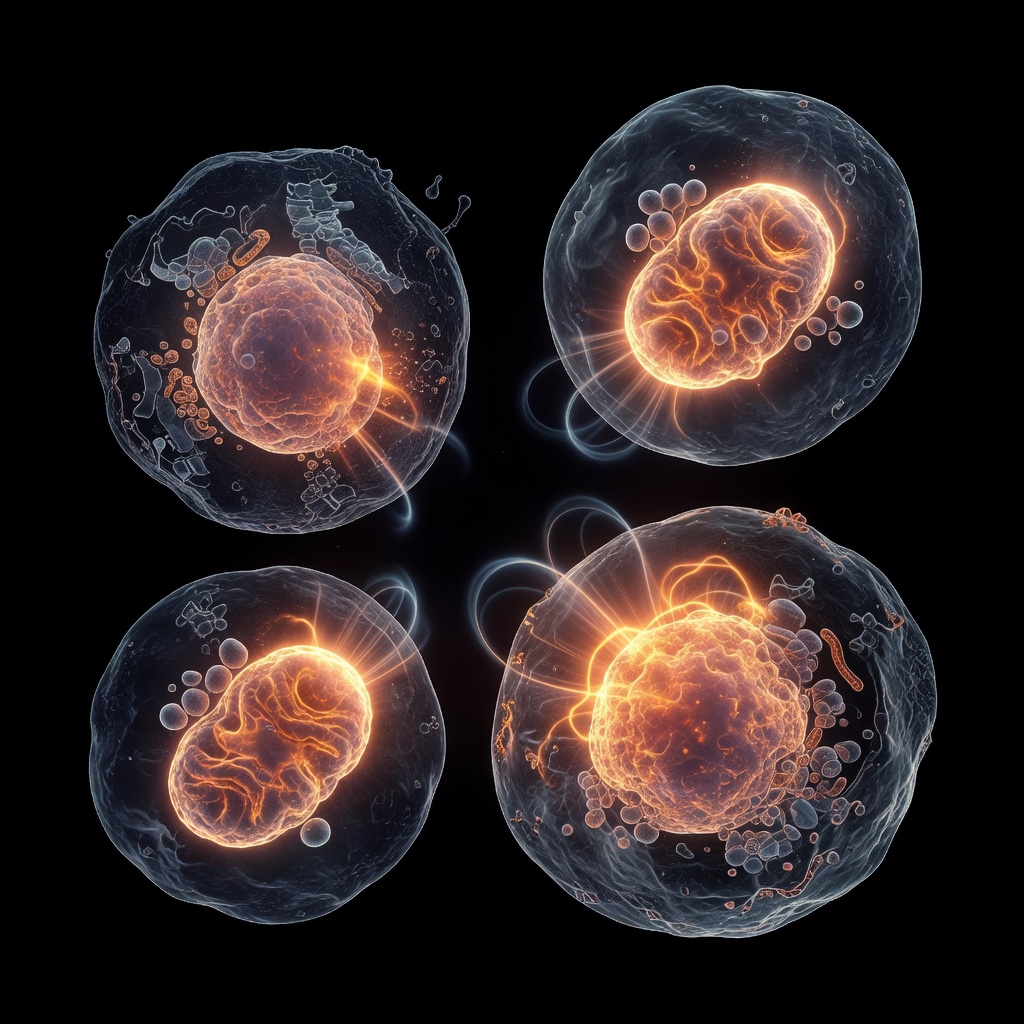
The mitochondria are far more than the 'powerhouses' of the cell; they are the environmental sensors that determine the fate of the organism. In the modern UK lifestyle, mitochondrial health is under constant assault from fluoride in water, sedentary behaviour, and the non-native electromagnetic fields (nnEMFs) that permeate urban environments. These factors lead to a state of mitochondrial 'uncoupling' or dysfunction, where the electron transport chain (ETC) fails to produce ATP efficiently, instead leaking electrons that form superoxide and other reactive species. This state of bioenergetic failure is the root of chronic fatigue syndrome (CFS), fibromyalgia, and neurodegenerative decline. Molecular hydrogen (H2) therapy offers a specific intervention for mitochondrial rescue.
Unlike most pharmaceutical agents which struggle to penetrate the double membrane of the mitochondria, H2 diffuses into the matrix with ease. Once inside, it performs several critical functions to restore bioenergetic efficiency. First, H2 acts to preserve the mitochondrial membrane potential (ΔΨm). When the membrane potential drops, the mitochondria can no longer synthesize ATP and may eventually trigger apoptosis (programmed cell death) via the release of cytochrome c. H2 prevents this collapse by modulating the opening of the mitochondrial permeability transition pore (mPTP), especially under conditions of stress or hypoxia.
Second, H2 has been shown to support the function of Complex I and Complex III of the ETC. These sites are notorious for 'electron leakage,' where electrons intended for ATP production instead escape and react with oxygen to form superoxide. By reducing the oxidative burden within the mitochondrial matrix, H2 allows for a more streamlined flow of electrons, effectively 'cleaning' the engine of the cell. This leads to a measurable increase in ATP production, which explains the significant improvements in physical endurance and cognitive clarity reported in hydrogen therapy trials. Conventional medicine typically addresses mitochondrial disease only in its most severe, genetically-inherited forms, often overlooking the 'acquired mitochondrial dysfunction' that plagues the majority of the population.
The standard medical model focuses on symptoms like low energy or 'brain fog' using stimulants or antidepressants, which further strain mitochondrial capacity. Biological medicine, however, recognizes that restoring the redox environment within the mitochondria is the only way to achieve lasting systemic health. Research in the journal 'Scientific Reports' has highlighted that H2 can also induce mitochondrial biogenesis—the creation of new mitochondria—via the activation of the PGC-1α pathway. This is the same pathway activated by high-intensity interval training (HIIT) and cold exposure, positioning H2 as a chemical mimetic of these beneficial stressors. For the individual seeking to optimize their biology, H2 therapy provides a way to counter the 'mitochondrial drain' of modern life.
Practical application involves the use of high-pressure hydrogen tablets or inhalation devices to ensure that the H2 reaches the deep tissue compartments where mitochondria are most dense, such as the heart, brain, and skeletal muscle. Furthermore, because H2 reduces the production of lactic acid during exercise by optimizing aerobic metabolism, it is an essential tool for athletic recovery. By addressing the electronic foundations of energy production, Molecular Hydrogen moves beyond supplementation into the realm of biological restoration, offering a primary defense against the aging process itself.
This article is provided for informational and educational purposes only. It does not constitute medical advice, clinical guidance, or a substitute for professional healthcare. Information reflects cited research at time of publication. Always consult a qualified healthcare professional before acting on any health information.
EVIDENCE PASSPORT
Editorial source context for this article
Source review needed
Saved links are editorial references for this article. They may support specific claims rather than every sentence. Open and assess each source in context. This passport does not independently verify them.
Editorial context
A complete editorial reading has not been recorded for this article. Source links remain available for you to open and assess directly.
Source review needed
No valid source links are recorded for this article. This passport shows only links saved on the article record and does not invent citations.
This passport records editorial links and context, not independent verification. Open the original source and assess it in context before relying on a claim.
Medical Disclaimer
The information in this article is for educational purposes only and does not constitute medical advice, diagnosis, or treatment. Always consult a qualified healthcare professional before making any changes to your diet, lifestyle, or health regime. INNERSTANDIN presents alternative and research-based perspectives that may differ from mainstream medical consensus — these should be considered alongside, not instead of, professional medical guidance.
Read Full DisclaimerContinue the thread
Keep this question moving.
Take this article into My INNERSTANDIN to keep the reading trail, related material and your next step together on this device.
Explore this in the Body Map
See where this hits your biology. Interactive anatomy, threats, and protective protocols.
Dig deeper in the Library
Free, longform PDF volumes that go beyond headlines into mechanisms and references.