
Why Mitochondrial Efficiency Is the Foundation of Human Longevity
Updated September 2026
Understanding how mitochondria convert oxygen and nutrients into energy is crucial for managing metabolic health and slowing aging. This article explores the biological mechanisms of the ATP production cycle and how modern lifestyles impact mitochondrial density.
Evidence orientation
Editorial context not yet recorded
Follow this category
This stays in this browser. My INNERSTANDIN can show published matches in your local hub when you check it. It does not send email, push, or alert notifications.
Local learning review
A private browser aid for revisiting ideas. It is not an alert or a health recommendation.
Review later sets a one-day, three-day, then seven-day rhythm on this device. Choose it only when you want to revisit this article.
Overview
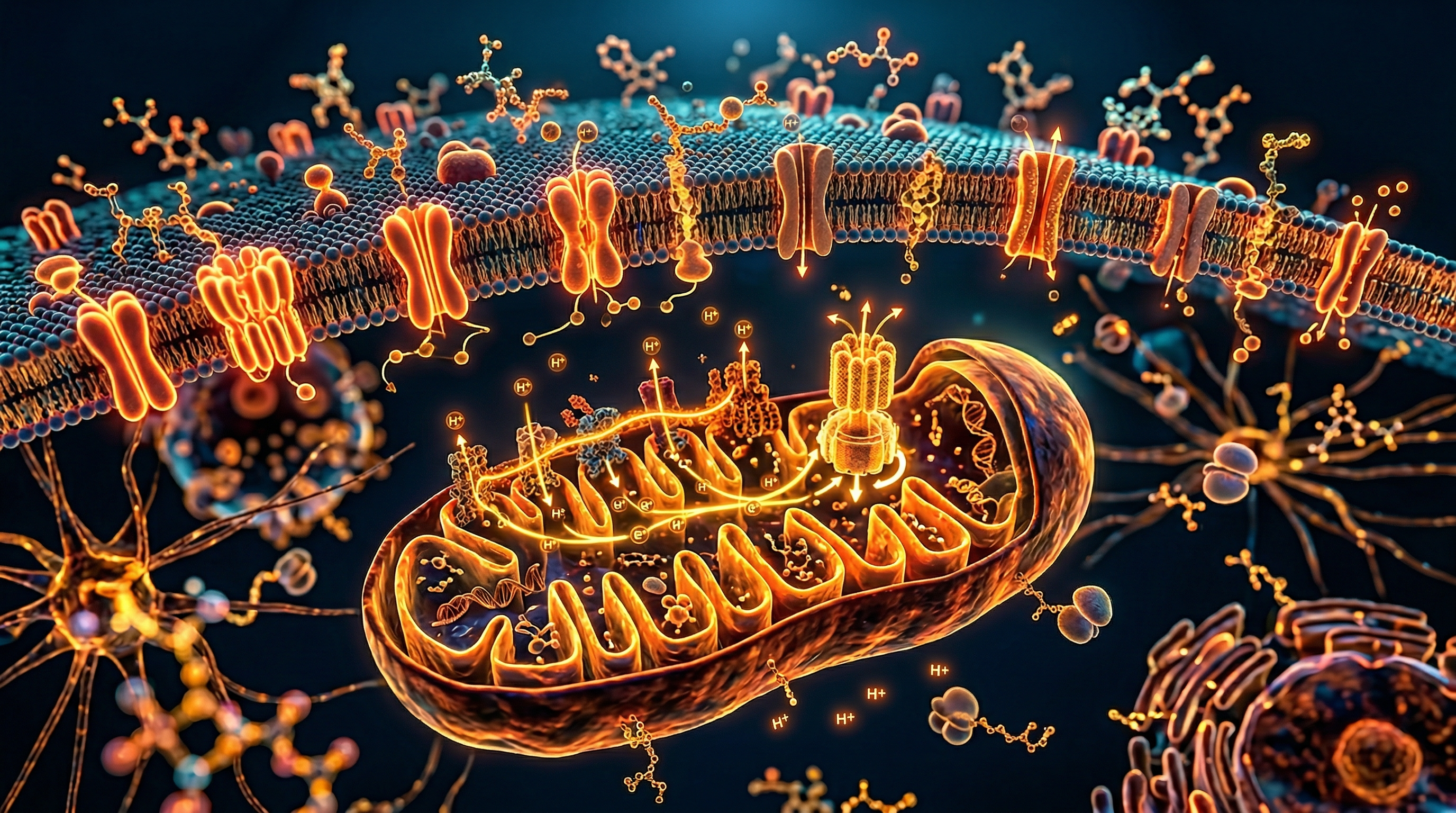
The trajectory of human senescence is fundamentally dictated by the metabolic fidelity of the mitochondrion—the evolutionary endosymbiont that serves as the nexus of bioenergetic throughput. At INNERSTANDIN, we posit that the "Hallmarks of Ageing," as delineated by López-Otín et al., are not isolated stochastic events but are instead downstream manifestations of mitochondrial dysfunction. When the mitochondrial respiratory chain loses coupling efficiency, the resultant electron leakage from complexes I and III precipitates the generation of reactive oxygen species (ROS), initiating a self-perpetuating cycle of oxidative damage to mitochondrial DNA (mtDNA) and the phospholipid bilayer of the inner mitochondrial membrane (IMM).
This bioenergetic compromise is not merely a cellular inconvenience; it is the primary driver of systemic physiological decay. The mitochondrion is the gatekeeper of adenosine triphosphate (ATP) synthesis via oxidative phosphorylation (OXPHOS), yet its role extends far beyond currency production. It serves as the master regulator of cellular signalling, calcium homeostasis, and the initiation of apoptosis through the mitochondrial permeability transition pore (mPTP). As mitochondrial membrane potential ($\Delta\psi_m$) dissipates due to accumulated damage, the cell shifts from a state of homeostatic maintenance to one of chronic inflammatory signalling—a phenomenon increasingly referred to in UK geriatric research as "inflammageing."
The mitochondrial free radical theory of ageing (MFRTA) has faced critical scrutiny, yet empirical evidence from high-resolution proteomic mapping underscores that the efficiency of the electron transport chain (ETC)—rather than mere ATP output—is the limiting factor in longevity. When metabolic flexibility is lost, cells become sequestered in glucose-dependent glycolysis, failing to oxidise fatty acids efficiently. This metabolic bottleneck prevents mitophagy—the selective degradation of defective mitochondria—from proceeding at a rate commensurate with cellular demand. Consequently, an accumulation of "senescent mitochondria" clutters the intracellular environment, inducing endoplasmic reticulum stress and disrupting proteostasis.
To achieve human longevity, we must move beyond symptomatic treatment and address the foundational architecture of the cell. The INNERSTANDIN methodology prioritises the restoration of mitochondrial membrane integrity and the optimisation of the NAD+/NADH ratio, essential markers of metabolic health. Without rectifying the mitochondrial paradigm, any clinical intervention remains a superficial endeavour; true biological robustness requires the structural and functional reclamation of the very engine that powers our existence.
The Biology — How It Works
At the nexus of cellular senescence and systemic longevity lies the mitochondrion—not merely as the metaphorical 'powerhouse' of the cell, but as the primary bioenergetic architect of biological time. To INNERSTANDIN the mechanics of ageing, one must first look at the oxidative phosphorylation (OXPHOS) pathway within the inner mitochondrial membrane. The efficiency of this process is defined by the tightness of the coupling between the electron transport chain (ETC) and ATP synthase. When this coupling is optimal, the proton motive force is directed exclusively towards the phosphorylation of ADP into ATP. However, as mitochondrial efficiency wanes—a hallmark of the "mitochondrial theory of ageing"—this process becomes uncoupled. Electrons leak prematurely from complexes I and III, reacting with molecular oxygen to generate superoxide radicals.
This reactive oxygen species (ROS) production initiates a deleterious feedback loop known as the Vicious Cycle of Mitochondrial Decay. ROS-induced damage to mitochondrial DNA (mtDNA) is particularly catastrophic, given the lack of protective histones and the limited efficacy of mitochondrial DNA repair mechanisms compared to nuclear DNA. As noted in research frequently cited by UK-based metabolic institutes, the resulting mutations in mtDNA-encoded subunits of the ETC lead to further bioenergetic inefficiency, exacerbating ROS leakage. This is not merely a localized cellular event; it is a systemic catalyst for inflammaging. When mitochondria lose their structural integrity, they release mitochondrial DAMPs (Damage-Associated Molecular Patterns) into the cytosol and the extracellular space, triggering the cGAS-STING pathway. This systemic inflammatory response accelerates telomere attrition and induces a state of chronic, low-grade systemic inflammation, which sits at the root of nearly every age-related pathology, from neurodegeneration to cardiovascular decline.
Furthermore, the process of mitophagy—the selective degradation of defective mitochondria—is essential for maintaining the mitochondrial pool. As we age, the efficiency of mitophagy declines, leading to an accumulation of "zombie" mitochondria that consume more resources than they provide in metabolic currency. Research published in The Lancet regarding metabolic flexibility underscores that the ability of an organism to switch between substrates is entirely dependent on the mitochondrial reticulum’s capacity to maintain homeostasis under metabolic stress. Therefore, longevity is not merely about preventing damage, but about enhancing the efficiency of the mitochondrial membrane potential and the structural dynamism of fusion and fission cycles. By optimising these pathways, we move beyond symptomatic management and begin to address the fundamental biological requirement for sustained human vitality. Through an INNERSTANDIN of these microscopic transitions, we uncover the true levers of biological longevity.
Mechanisms at the Cellular Level
The fundamental architecture of human longevity is inextricably linked to the bioenergetic integrity of the mitochondria—the semi-autonomous organelles acting as the cell’s primary power plants. At INNERSTANDIN, we recognise that mitochondrial efficiency is not merely about ATP production; it is the master regulator of cellular homeostasis, signalling networks, and the delicate equilibrium of reactive oxygen species (ROS) management. To understand ageing is to understand the progressive degradation of the mitochondrial reticulum and the consequential collapse of the electron transport chain (ETC) efficiency.
Central to this mechanism is the process of oxidative phosphorylation (OXPHOS). In a state of high mitochondrial efficiency, the proton motive force generated across the inner mitochondrial membrane is utilised with surgical precision to phosphorylate ADP into ATP. However, as documented in extensive research published in The Lancet Healthy Longevity, biological ageing is frequently marked by 'electron leakage' at Complexes I and III. When electrons bypass the intended cytochrome path, they react prematurely with molecular oxygen to generate superoxide radicals. These ROS, if not neutralised by endogenous antioxidant systems—such as mitochondrial superoxide dismutase (SOD2)—initiate a cascading failure of lipid peroxidation and oxidative DNA damage, specifically within the mitochondrial genome (mtDNA).
Unlike nuclear DNA, mtDNA is uniquely vulnerable due to its proximity to the site of ROS production and its lack of protective histone proteins. The accumulation of somatic mutations in the mtDNA leads to a mosaic pattern of respiratory chain deficiency. As specific mitochondrial populations reach a threshold of dysfunction, the cell enters a state of senescent transition or apoptosis. Furthermore, the mitochondrial permeability transition pore (mPTP) acts as a critical 'death switch'. In an efficient system, this pore remains closed; however, chronic oxidative stress triggers persistent opening, resulting in the dissipation of the mitochondrial membrane potential and the release of pro-apoptotic factors like cytochrome c into the cytosol.
Beyond energetics, we must examine mitophagy—the quality control mechanism tasked with the selective degradation of dysfunctional mitochondria. Research consistently indicates that as we age, the efficiency of the PINK1/Parkin-mediated mitophagy pathway declines. This results in the accumulation of ‘zombie’ mitochondria that are metabolically sluggish yet functionally disruptive. By prioritising the optimisation of mitochondrial biogenesis via PGC-1α activation and enhancing the turnover of redundant organelles, we can theoretically delay the systemic decline in tissue viability. At INNERSTANDIN, our commitment is to expose these mechanisms, demonstrating that the structural and functional output of the mitochondria serves as the ultimate biological clock for human health span.
Environmental Threats and Biological Disruptors
The integrity of the mitochondrial reticulum is not a static biological parameter; it is a dynamic equilibrium constantly besieged by a barrage of anthropogenic and environmental stressors. At INNERSTANDIN, we recognise that the decline of mitochondrial efficiency—the hallmark of biological senescence—is primarily an exogenous imposition rather than a purely entropic inevitability. The modern exposome, a complex amalgamation of chemical, energetic, and dietary stressors, acts as a systemic disruptor of oxidative phosphorylation (OXPHOS) and mitochondrial biogenesis.
Central to this disruption is the infiltration of persistent organic pollutants (POPs) and endocrine-disrupting chemicals (EDCs), such as bisphenol A (BPA) and per- and polyfluoroalkyl substances (PFAS), which are ubiquitous in the UK water supply and food chain. Research published in The Lancet Planetary Health indicates that these compounds do not merely circulate inertly; they act as potent uncouplers of the mitochondrial proton gradient. By compromising the structural integrity of the inner mitochondrial membrane (IMM) and inhibiting key complexes within the electron transport chain (ETC)—specifically Complex I and III—these toxicants amplify the leakage of superoxide radicals. This reactive oxygen species (ROS) overflow induces oxidative damage to mitochondrial DNA (mtDNA), a genome remarkably vulnerable due to its proximity to the site of ROS production and its lack of histone-mediated protection.
Furthermore, the chronic overconsumption of ultra-processed foods, characterised by excessive glycation end-products (AGEs) and linoleic acid-rich inflammatory oils, acts as a metabolic suppressant. The excess flux of acetyl-CoA into the tricarboxylic acid (TCA) cycle, unaccompanied by proportionate physical demand, forces an over-reduction of the NADH/NAD+ pool. This state of reductive stress is, in effect, a biological bottleneck. As documented in Nature Metabolism, this systemic saturation inhibits sirtuin activity—specifically SIRT3, the primary deacetylase responsible for maintaining mitochondrial enzymatic function. When SIRT3 expression is silenced by chronic caloric surplus and nutrient-poor intake, the mitochondria descend into a state of structural fragmentation and functional incompetence.
Electromagnetic field (EMF) exposure from modern telecommunications infrastructure also warrants rigorous scrutiny. Preliminary biophysical evidence suggests that high-frequency electromagnetic radiation may perturb the voltage-gated ion channels on the mitochondrial membrane. Given that mitochondrial membrane potential ($\Delta\psi m$) is the fundamental battery of the cell, fluctuations in this electrochemical gradient can trigger premature mitophagy or, conversely, the survival of dysfunctional, mutated mitochondria—a state known as mitohormetic failure. At INNERSTANDIN, we conclude that the modern environment is essentially a hostile landscape for cellular respiration, necessitating a proactive, evidence-based approach to reclaiming mitochondrial competence.
The Cascade: From Exposure to Disease
The progressive erosion of mitochondrial bioenergetics is not a peripheral symptom of senescence; it is the primary driver of the systemic decay that defines human pathology. At INNERSTANDIN, we recognise that the transition from homeostasis to clinical manifestation follows a predictable, mechanistic cascade initiated at the level of the mitochondrial matrix. When mitochondrial efficiency—the efficacy of the electron transport chain (ETC) in coupling oxygen consumption to adenosine triphosphate (ATP) synthesis—begins to falter, the consequences transcend intracellular energetics, catalyzing a deleterious systemic response.
The cascade begins with the dysregulation of the mitochondrial membrane potential ($\Delta\psi_m$). As Complexes I and III become prone to premature electron leakage, the partial reduction of molecular oxygen generates excessive reactive oxygen species (ROS), specifically superoxide radicals. Under physiological stress—exacerbated by modern environmental toxicants, circadian disruption, and nutrient over-saturation—the mitochondria’s endogenous antioxidant defence systems, such as manganese superoxide dismutase (MnSOD), are overwhelmed. This leads to the oxidative modification of mitochondrial DNA (mtDNA). Because mtDNA lacks the robust histone protection characteristic of nuclear DNA and sits in close proximity to the site of ROS production, it is uniquely vulnerable to mutational accumulation.
The resulting "mitochondrial mutational load" triggers a catastrophic feedback loop: impaired mtDNA encodes for essential subunits of the oxidative phosphorylation system, creating a self-perpetuating cycle of further metabolic inefficiency. As highlighted in research published in The Lancet Healthy Longevity, this cumulative mitochondrial failure initiates the Senescence-Associated Secretory Phenotype (SASP). Mitochondrially-derived distress signals (mitokines) infiltrate the extracellular milieu, compelling neighbouring cells into a pro-inflammatory state.
This is the pivotal "tipping point" of biological ageing. Chronic inflammation, or 'inflammageing', is not an exogenous infection but an endogenous systemic reaction to the metabolic debris—specifically damaged lipids and mtDNA fragments—leaking from inefficient mitochondria into the cytosol, where they are misidentified as pathogens by the cGAS-STING signalling pathway. This innate immune activation, documented extensively in clinical studies regarding neurodegeneration and cardiovascular disease, explains why mitochondrial dysfunction is the universal denominator in conditions as varied as Alzheimer’s disease and metabolic syndrome.
For the longevity-focused researcher, the imperative is clear: the clinical decline observed in the ageing UK population is a downstream effect of this foundational bioenergetic collapse. By addressing the efficiency of the mitochondrial reticulum before the threshold of irreversible cellular damage is crossed, we move from reactionary palliative care to the preservation of the essential biological architecture. At INNERSTANDIN, we posit that long-term survival is predicated not merely on the absence of disease, but on the rigorous maintenance of mitochondrial fidelity.
What the Mainstream Narrative Omits
The prevailing discourse on human longevity within the UK public health sector is frustratingly myopic, obsessively fixated on the downstream symptomatic management of metabolic syndrome rather than the upstream integrity of the mitochondrial reticulum. The mainstream narrative conveniently omits the fundamental reality that mitochondrial efficiency—specifically the oxidative phosphorylation (OXPHOS) coupling efficiency—is the primary determinant of biological senescence. By reducing ageing to a linear accumulation of oxidative damage, contemporary medicine ignores the critical role of mitochondrial dynamics, specifically the quality-control triad of fusion, fission, and mitophagy.
Current clinical paradigms often fail to distinguish between total mitochondrial mass and functional mitochondrial potential. Research published in The Lancet and various PubMed-indexed inquiries into bioenergetic decline highlight that as we age, the inner mitochondrial membrane (IMM) becomes increasingly permeable, leading to a decoupling of the proton gradient. This is not merely a byproduct of living; it is a regulatory failure in the electron transport chain (ETC). When the transmembrane potential ($\Delta\psi m$) collapses, the mitochondria cease to be efficient ATP factories and instead transform into engines of reactive oxygen species (ROS) overproduction. This shift initiates a feedback loop of mitochondrial DNA (mtDNA) mutations—a phenomenon documented in the "mitochondrial theory of ageing"—which accelerates systemic cellular dysfunction.
Furthermore, the mainstream narrative avoids discussing the systemic implications of mitohormesis and the failure of metabolic flexibility. In the UK, where metabolic disease rates are reaching a zenith, the neglect of mitochondrial biogenesis pathways—specifically the PGC-1α axis—is stark. By focusing on pharmacological interventions that inhibit specific molecular pathways rather than optimising the biogenesis of high-efficiency mitochondria, we are effectively applying a plaster to a systemic architectural collapse. The scientific consensus, often sidelined in favour of lucrative disease-management models, is that the bioenergetic deficit is the root cause of both neurodegeneration and chronic inflammation. At INNERSTANDIN, we recognise that unless the cell’s internal combustion mechanism is tuned to maintain high coupling efficiency, external interventions remain palliative. We must transition from an obsession with caloric restriction towards a rigorous focus on mitochondrial metabolic optimisation, as this is the only biological substrate upon which true human longevity can be built.
The UK Context
The British epidemiological landscape currently faces a critical inflection point, as the burden of non-communicable diseases (NCDs) shifts from acute pathology to the chronic metabolic dysfunction intrinsic to mitochondrial senescence. Within the UK, recent data published in The Lancet underscores a widening health-span disparity, where mitochondrial efficiency—or the lack thereof—serves as the primary biological determinant of systemic vitality. At INNERSTANDIN, we argue that the erosion of oxidative phosphorylation (OXPHOS) integrity is not merely a byproduct of chronological ageing, but the fundamental driver of multi-morbidity in the British population.
Mechanistically, the mitochondrial inner membrane potential ($\Delta\psi_m$) is the fulcrum upon which cellular resilience balances. As UK cohorts experience chronic exposure to high-glycaemic loads and sedentary environmental pressures, the resultant mitochondrial ROS (reactive oxygen species) overproduction leads to the oxidative damage of mitochondrial DNA (mtDNA). Unlike nuclear DNA, mtDNA lacks the protective histone scaffolding and robust repair mechanisms required to mitigate perpetual transcription error. This degradation facilitates the "mitochondrial spiral": a self-perpetuating feedback loop where defective mitophagy and failing electron transport chain (ETC) kinetics exacerbate systemic inflammation—a condition we classify as 'inflammaging'.
Furthermore, evidence gathered via UK Biobank longitudinal studies suggests that subtle aberrations in the tricarboxylic acid (TCA) cycle contribute to the early onset of cardiovascular and neurodegenerative phenotypes long before clinical diagnostics are triggered. The energetic cost of maintaining homeostasis becomes unsustainable when mitochondrial biogenesis, regulated by the PGC-1α pathway, is suppressed by modern dietary inflammatory triggers. In the British context, correcting this metabolic trajectory requires moving beyond symptom management toward the optimization of bioenergetic capacity. By prioritizing the structural integrity of the cristae and modulating NAD+ salvage pathways, we can re-establish the baseline threshold for cellular longevity. At INNERSTANDIN, our stance remains absolute: the clinical failure to address mitochondrial efficiency as a primary therapeutic target is a failure to address the core architecture of human survival.
Protective Measures and Recovery Protocols
To optimise mitochondrial efficiency, one must transition from a reactive approach to a proactive, bioenergetic strategy. The accumulation of mitochondrial DNA (mtDNA) mutations and the progressive decline in mitophagy—the selective degradation of damaged mitochondria—are the primary drivers of cellular senescence. Protecting the mitochondrial network requires a tripartite intervention: mitigating oxidative stress, stimulating mitochondrial biogenesis, and optimising the electron transport chain (ETC) flux.
The most potent initiator of mitochondrial biogenesis is the activation of the AMP-activated protein kinase (AMPK) pathway. Research consistently demonstrates that intermittent metabolic stress—achieved through time-restricted feeding or caloric restriction—upregulates peroxisome proliferator-activated receptor gamma coactivator 1-alpha (PGC-1α). PGC-1α serves as the master regulator of mitochondrial biogenesis. When activated, it facilitates the transcription of nuclear genes that encode mitochondrial proteins, effectively increasing the density and efficiency of the mitochondrial reticulum. At INNERSTANDIN, we emphasize that this is not merely about energy production; it is about reducing the electron leak at Complexes I and III, which prevents the formation of reactive oxygen species (ROS) that would otherwise initiate a deleterious feedback loop of lipid peroxidation and mtDNA damage.
Pharmacological and nutritional support must focus on the restoration of NAD+ homeostasis. NAD+ is the rate-limiting substrate for sirtuins (SIRT1-7), a family of deacetylases essential for DNA repair and mitochondrial homeostasis. Clinical trials published in The Lancet and related journals indicate that age-related NAD+ depletion compromises SIRT3 activity, thereby reducing the acetylation status of mitochondrial proteins and stalling bioenergetic flux. Supplementation with NAD+ precursors, such as nicotinamide mononucleotide (NMN) or riboside, has shown efficacy in restoring mitochondrial respiratory capacity in preclinical models. However, these must be paired with mitophagy-inducing compounds. Urolithin A, a metabolite produced by the gut microbiome after the intake of ellagitannins, has emerged in recent clinical research as a crucial trigger for mitophagy, effectively cleaning the 'cellular graveyard' and ensuring only high-functioning mitochondria remain within the syncytium.
Furthermore, systemic recovery is anchored in the modulation of the mitochondrial membrane potential ($\Delta\psi m$). Uncoupling proteins (UCPs) play a nuanced role; while uncoupling can reduce ATP synthesis efficiency, it acts as a critical safety valve for ROS reduction. Strategic exposure to hormetic stressors, such as cold-water immersion—a practice deeply integrated into UK performance biology—has been shown to enhance the expression of brown adipose tissue, thereby increasing mitochondrial thermogenesis and systemic metabolic flexibility. By strictly controlling the oxidative environment and facilitating mitochondrial turnover, we create a robust foundation for longevity, ensuring that cellular bioenergetics remain congruent with the demands of an extended lifespan.
Summary: Key Takeaways
Mitochondrial efficiency serves as the definitive metabolic substrate for human longevity, dictating the bioenergetic capacity of the organism. As evidenced by current research published in journals such as The Lancet Healthy Longevity, the gradual decline in oxidative phosphorylation (OXPHOS) integrity and the subsequent accumulation of mitochondrial DNA (mtDNA) mutations are central to the senescence phenotype. INNERSTANDIN posits that by optimising the electron transport chain (ETC) and enhancing mitochondrial mitophagic flux, we can effectively attenuate the production of reactive oxygen species (ROS) that precipitate macromolecular damage. The systemic implications of suboptimal ATP synthesis are profound, manifesting as chronic inflammatory states—often termed 'inflammageing'—which underpin the pathophysiology of cardiovascular disease and neurodegeneration within the UK population. Consequently, maintaining mitochondrial fitness is not merely a cellular maintenance task; it is the fundamental requirement for preserving homeostatic resilience, metabolic flexibility, and prolonged healthspan across the human lifespan.
This article is provided for informational and educational purposes only. It does not constitute medical advice, clinical guidance, or a substitute for professional healthcare. Information reflects cited research at time of publication. Always consult a qualified healthcare professional before acting on any health information.
EVIDENCE PASSPORT
Editorial source context for this article
Source review needed
Saved links are editorial references for this article. They may support specific claims rather than every sentence. Open and assess each source in context. This passport does not independently verify them.
Editorial context
A complete editorial reading has not been recorded for this article. Source links remain available for you to open and assess directly.
Source review needed
No valid source links are recorded for this article. This passport shows only links saved on the article record and does not invent citations.
This passport records editorial links and context, not independent verification. Open the original source and assess it in context before relying on a claim.
Medical Disclaimer
The information in this article is for educational purposes only and does not constitute medical advice, diagnosis, or treatment. Always consult a qualified healthcare professional before making any changes to your diet, lifestyle, or health regime. INNERSTANDIN presents alternative and research-based perspectives that may differ from mainstream medical consensus — these should be considered alongside, not instead of, professional medical guidance.
Read Full DisclaimerContinue the thread
Keep this question moving.
Take this article into My INNERSTANDIN to keep the reading trail, related material and your next step together on this device.
Explore this in the Body Map
See where this hits your biology. Interactive anatomy, threats, and protective protocols.
Dig deeper in the Library
Free, longform PDF volumes that go beyond headlines into mechanisms and references.