
The Mitochondria-Light Connection: Why Your Bulbs Are Aging You
Published April 2026
An exploration of the interaction between specific light wavelengths and mitochondrial function, exposing the hidden oxidative stress caused by energy-efficient LEDs.
Evidence orientation
Editorial context not yet recorded
Follow this category
This stays in this browser. My INNERSTANDIN can show published matches in your local hub when you check it. It does not send email, push, or alert notifications.
Local learning review
A private browser aid for revisiting ideas. It is not an alert or a health recommendation.
Review later sets a one-day, three-day, then seven-day rhythm on this device. Choose it only when you want to revisit this article.
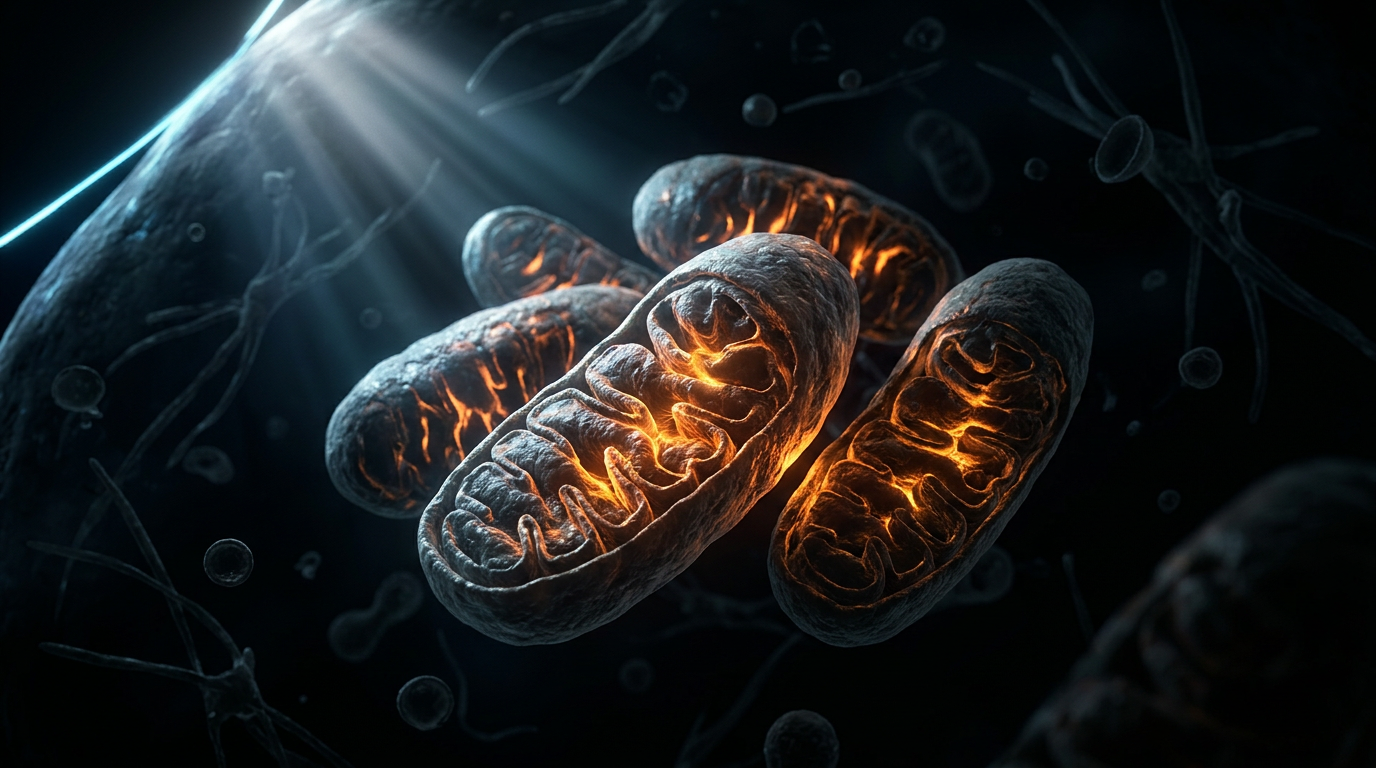
In the quest for energy efficiency, modern society has made a Faustian bargain with the Light Emitting Diode (LED). While the reduction in electricity consumption is undeniable, the biological cost is rarely factored into the equation. The central issue lies in the mitochondria—the organelles responsible for producing ATP, our cellular energy currency. Mitochondria are not just passive energy producers; they are highly sensitive to the electromagnetic environment, particularly the visible light spectrum. Mainstream medicine focuses on the eyes when discussing light, but the reality is that light affects our entire metabolic architecture through its interaction with mitochondrial respiration.
THE OXIDATIVE BURDEN OF UNBALANCED LIGHT. Every LED bulb features a significant peak in the 450nm range—the high-energy visible blue spectrum. This specific frequency is known to trigger the production of Reactive Oxygen Species (ROS) within the mitochondria of the retina and the skin. In a natural environment, this blue light would be accompanied by a vast amount of near-infrared (NIR) radiation. NIR light penetrates deeply into tissues and acts as a biological buffer, stimulating the production of mitochondrial melatonin—which is distinct from pineal melatonin—to neutralise the ROS generated by blue light.
Because modern lighting lacks NIR, we are living in a state of 'unbalanced illumination' where the oxidative damage caused by blue light goes unrepaired. THE IMPLICATIONS FOR CHRONIC DEGENERATION. The cumulative effect of this spectral imbalance is a gradual decline in mitochondrial efficiency, often referred to as 'mitochondrial decay.' This is a hallmark of aging and a primary driver of neurodegenerative diseases, macular degeneration, and insulin resistance. When mitochondria are stressed by constant blue light exposure, they become less efficient at burning glucose and fatty acids, leading to an accumulation of metabolic waste products. This is why light pollution is increasingly linked to the rise in Type 2 Diabetes; it is not just what we eat, but the light environment in which we metabolise that food.
The brain, being the most energy-hungry organ, is particularly susceptible to this photic stress. PROTECTIVE STRATEGIES FOR THE MITOCHONDRIA. Reversing the damage requires a return to spectral diversity. Incorporating Near-Infrared (NIR) or Red Light Therapy (photobiomodulation) into daily routines can help offset the oxidative stress of LED exposure. Furthermore, avoiding 'cool white' bulbs (5000K+) in favour of 'warm' bulbs (2700K or less) reduces the blue peak.
For those working in office environments, frequent 'light breaks' outdoors are essential, as even an overcast sky provides a more balanced spectral distribution than the most advanced indoor lighting systems. We must begin to view light as a bioactive drug rather than just a utility.
This article is provided for informational and educational purposes only. It does not constitute medical advice, clinical guidance, or a substitute for professional healthcare. Information reflects cited research at time of publication. Always consult a qualified healthcare professional before acting on any health information.
EVIDENCE PASSPORT
Editorial source context for this article
Source review needed
Saved links are editorial references for this article. They may support specific claims rather than every sentence. Open and assess each source in context. This passport does not independently verify them.
Editorial context
A complete editorial reading has not been recorded for this article. Source links remain available for you to open and assess directly.
Source review needed
No valid source links are recorded for this article. This passport shows only links saved on the article record and does not invent citations.
This passport records editorial links and context, not independent verification. Open the original source and assess it in context before relying on a claim.
Medical Disclaimer
The information in this article is for educational purposes only and does not constitute medical advice, diagnosis, or treatment. Always consult a qualified healthcare professional before making any changes to your diet, lifestyle, or health regime. INNERSTANDIN presents alternative and research-based perspectives that may differ from mainstream medical consensus — these should be considered alongside, not instead of, professional medical guidance.
Read Full DisclaimerContinue the thread
Keep this question moving.
Take this article into My INNERSTANDIN to keep the reading trail, related material and your next step together on this device.
Explore this in the Body Map
See where this hits your biology. Interactive anatomy, threats, and protective protocols.
Dig deeper in the Library
Free, longform PDF volumes that go beyond headlines into mechanisms and references.