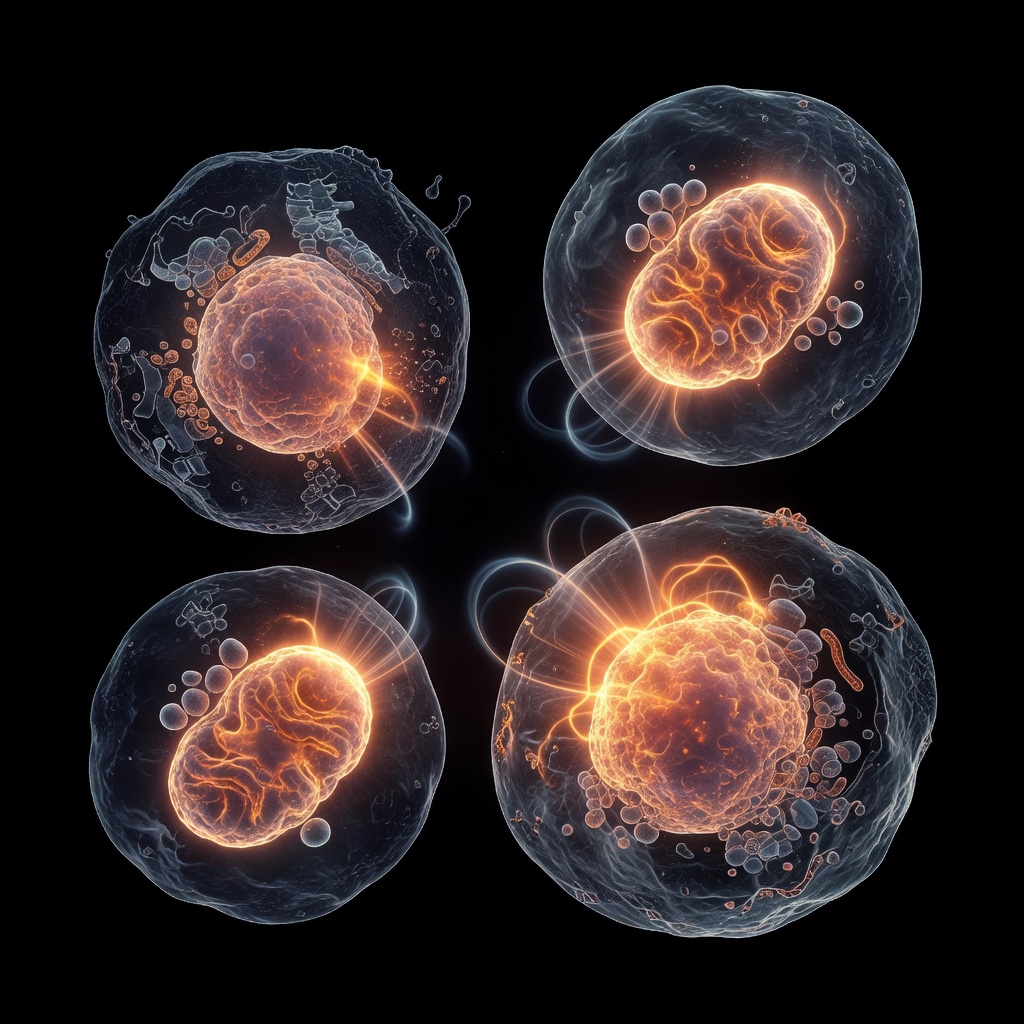
Mitochondrial Resiliency and the D3-K2-MK7 Complex: Optimising Oxidative Phosphorylation in Aging Populations
An in-depth exploration of the biochemical synergy between Vitamin D3 and Vitamin K2 (MK7) in maintaining mitochondrial integrity, enhancing ATP production via oxidative phosphorylation, and mitigating the metabolic hallmarks of aging through a root-cause functional medicine lens.

# Mitochondrial Resiliency and the D3-K2-MK7 Complex: Optimising Oxidative Phosphorylation in Aging Populations\n\nIn the landscape of functional medicine and geroscience, the mitochondrion has evolved in our understanding from a simple \"cellular powerhouse\" to a sophisticated environmental sensor and the primary determinant of biological age. For the aging population, particularly within the UK where environmental stressors and lack of sunlight are prevalent, the preservation of mitochondrial resiliency is the cornerstone of healthspan. Central to this preservation is the synergistic relationship between Vitamin D3 and Vitamin K2, specifically in the highly bioavailable MK7 form. This article delves into the mechanisms by which this complex optimises oxidative phosphorylation (OXPHOS) and prevents the bioenergetic decay associated with senescence.\n\n## The Mitochondrial Imperative in Aging\n\nAs we age, our cells face a dual challenge: a decrease in energy production capacity and an increase in the production of reactive oxygen species (ROS). This state, often referred to as mitochondrial dysfunction, is a primary driver of the \"hallmarks of aging.\" At the heart of this process is oxidative phosphorylation—the metabolic pathway where cells use enzymes to oxidise nutrients, thereby releasing energy which is used to produce adenosine triphosphate (ATP). \n\nIn aging populations, the efficiency of the Electron Transport Chain (ETC) declines.
Complex I and IV activity often diminishes, leading to an \"electron leak\" that generates superoxide radicals. This oxidative stress damages mitochondrial DNA (mtDNA), which lacks the protective histone coating of nuclear DNA, creating a vicious cycle of further energy depletion and cellular damage. To address the root cause of this decline, we must look beyond simple antioxidants and focus on the cofactors that regulate the structural and functional integrity of the mitochondria.\n\n## Vitamin D3: The Genomic Architect of Bioenergetics\n\nVitamin D3 (cholecalciferol) is often categorised as a bone-health nutrient, but its role as a seco-steroid hormone extends deeply into the mitochondria. The Vitamin D Receptor (VDR) is not only present in the nucleus but is also localised within the mitochondrial membrane. This allows Vitamin D3 to exert direct influence over mitochondrial biogenesis—the process by which cells increase their mitochondrial mass.\n\nResearch indicates that Vitamin D3 is essential for the expression of nuclear-encoded mitochondrial genes.
It regulates the activity of enzymes within the Krebs cycle and the ETC, particularly supporting the assembly of Complex I. Furthermore, D3 is a potent modulator of calcium signalling. Mitochondria serve as vital calcium sinks; however, an overload of mitochondrial calcium can trigger the opening of the permeability transition pore (mPTP), leading to cell death (apoptosis). Vitamin D3 ensures that calcium flux is tightly regulated, maintaining the membrane potential required for efficient ATP synthesis.\n\n## Vitamin K2 (MK7): The Bioavailable Electron Shuttle\n\nWhile Vitamin D3 sets the stage, Vitamin K2—specifically the long-chain menaquinone-7 (MK7)—acts as the functional catalyst. MK7 is uniquely characterised by its long half-life and high extra-hepatic bioavailability compared to K1 or MK4.
In the context of mitochondrial resiliency, MK7 has been identified as an electron carrier similar to ubiquinone (CoQ10).\n\nIn models of mitochondrial impairment, Vitamin K2 has demonstrated the ability to rescue the electron transport chain by facilitating the transfer of electrons even when traditional pathways are compromised. This is particularly relevant for aging tissues where mitochondrial membranes may become rigid or damaged. By maintaining the flow of electrons toward ATP synthase, MK7 reduces the likelihood of electron leakage and the subsequent formation of damaging free radicals. Furthermore, MK7 is the essential cofactor for the carboxylation of Matrix Gla Protein (MGP) and Osteocalcin. This ensures that calcium, which D3 helps absorb, is directed into the bone matrix and away from the mitochondrial membranes of vascular and soft tissues, where it could otherwise cause calcification and metabolic stiffness.\n\n## The D3-K2 Synergy: Harmonising the Flux\n\nThe Vitamin D3 & K2 Synergy Protocol is founded on the principle of biochemical harmony.
When high doses of Vitamin D3 are administered in isolation, they increase the demand for Vitamin K2. Without sufficient K2, the increased calcium levels induced by D3 can lead to ectopic calcification, which ironically impairs mitochondrial function in the vasculature and heart. \n\nWhen combined, these nutrients create a feedback loop that optimises OXPHOS. Vitamin D3 increases the production of K2-dependent proteins, while MK7 ensures those proteins are activated to manage the mineral flux. At the cellular level, this synergy maintains the mitochondrial membrane potential and supports the redox balance. This is the \"root-cause\" approach to aging: rather than merely masking symptoms of low energy, the D3-K2-MK7 complex addresses the underlying bioenergetic bottleneck, allowing for sustained ATP production and reduced systemic inflammation (inflammaging).\n\n## Clinical Applications for Aging Populations\n\nFor the UK demographic, the protocol takes on heightened importance.

Peptides, one of the secret Russian military health marvels, now available. 40 years research
Harness the restorative power of bioregulator peptides, a breakthrough in cellular science designed to support specific organ health and longevity. These short-chain amino acids act as biological messengers, helping to restore optimal protein synthesis and systemic balance.
Vetting Notes
Pending
Given the lack of UVB radiation for most of the year, Vitamin D3 deficiency is nearly universal without supplementation. However, supplementation must be intelligent. As we age, the conversion of K1 to K2 becomes less efficient, making direct MK7 intake vital.\n\nClinical observations suggest that optimising this complex can lead to significant improvements in markers of metabolic health, including insulin sensitivity and cardiovascular compliance. Because mitochondria are most dense in high-energy organs—the heart, the brain, and the muscles—the benefits of this synergy are often felt most acutely in cognitive clarity, physical endurance, and cardiac resilience. In aging populations, where sarcopenia and cognitive decline are major concerns, supporting the mitochondrial engine through the D3-K2-MK7 axis offers a proactive strategy for maintaining autonomy and vitality.\n\n## Conclusion: Mastering the Cellular Flux\n\nMitochondrial resiliency is not a static trait but a dynamic state that can be cultivated through targeted nutritional interventions.
The D3-K2-MK7 complex represents a master lever in the regulation of oxidative phosphorylation. By supporting genomic expression, facilitating electron transport, and ensuring precise calcium management, this synergy addresses the root causes of age-related mitochondrial decay. For the INNERSTANDING community, embracing this protocol is an essential step in moving from reactive healthcare to a model of proactive, bioenergetic optimisation, ensuring that the cellular engines of the body remain robust well into the later stages of life.
This article is provided for informational and educational purposes only. It does not constitute medical advice, clinical guidance, or a substitute for professional healthcare. Information reflects cited research at time of publication. Always consult a qualified healthcare professional before acting on any health information.
RESEARCH FOUNDATIONS
Biological Credibility Archive
Citations provided for educational reference. Verify via PubMed or institutional databases.
Medical Disclaimer
The information in this article is for educational purposes only and does not constitute medical advice, diagnosis, or treatment. Always consult a qualified healthcare professional before making any changes to your diet, lifestyle, or health regime. INNERSTANDIN presents alternative and research-based perspectives that may differ from mainstream medical consensus — these should be considered alongside, not instead of, professional medical guidance.
Read Full DisclaimerReady to learn more?
Continue your journey through our classified biological research.
DISCUSSION ROOM
Members of THE COLLECTIVE discussing "Mitochondrial Resiliency and the D3-K2-MK7 Complex: Optimising Oxidative Phosphorylation in Aging Populations"
SILENT CHANNEL
Be the first to discuss this article. Your insight could help others understand these biological concepts deeper.
THE ARSENAL
Based on Vitamin D3 & K2 Synergy Protocol — products curated by our research team for educational relevance and biological support.

Methylene Blue – Advanced Cellular Chemistry
Peptides, one of the secret Russian military health marvels, now available. 40 years research

Albedextrin – Specialist Cyclodextrin Complex
INNERSTANDING may earn a commission on purchases made through these links. All products are selected based on rigorous educational relevance to our biological research.
RABBIT HOLE
Follow the biological thread deeper