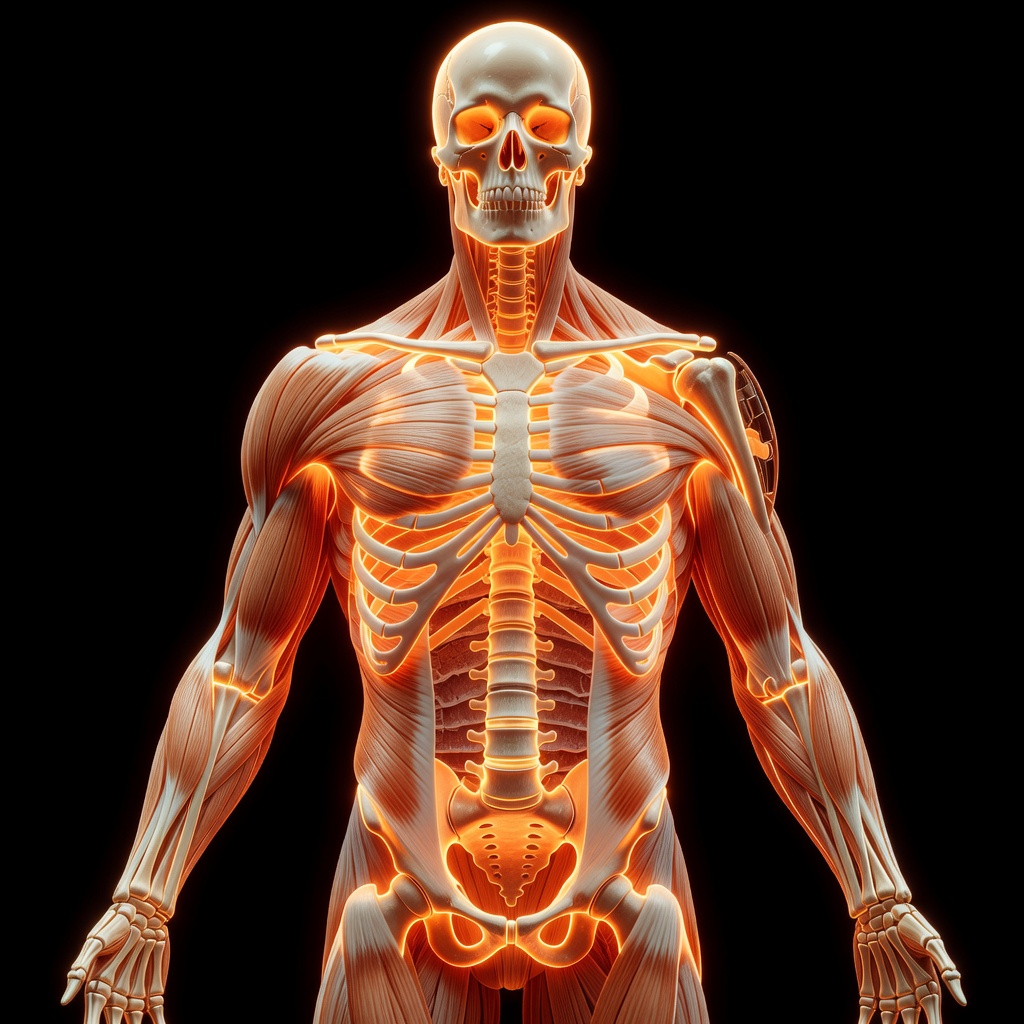
The Calcium Paradox and Bone Morphogenetic Proteins: Rebalancing Skeletal Integrity Through Directed Mineral Transport
An in-depth investigation into the Calcium Paradox, exploring how the synergy between Vitamin D3, Vitamin K2, and Bone Morphogenetic Proteins (BMPs) prevents arterial calcification and directs mineral density to the skeletal matrix.

# The Calcium Paradox and Bone Morphogenetic Proteins: Rebalancing Skeletal Integrity Through Directed Mineral Transport
Introduction: The Crisis of Mineral Mismanagement
In the landscape of modern preventative medicine, few nutrients are as lauded—and as misunderstood—as calcium. For decades, the primary intervention for osteoporosis and age-related bone loss in the UK has been the aggressive supplementation of calcium. However, epidemiological data and clinical trials have revealed a startling trend: high-dose calcium supplementation, when administered in isolation, often fails to significantly reduce fracture risk and may, in fact, increase the risk of cardiovascular events. This phenomenon is known as the 'Calcium Paradox.'
The Calcium Paradox describes the simultaneous occurrence of low mineral density in the skeletal system and excessive mineral accumulation in the soft tissues, specifically the coronary arteries, heart valves, and kidneys. To resolve this paradox, we must look beyond simple intake and examine the biological 'traffic control' mechanisms governed by Vitamin D3, Vitamin K2, and Bone Morphogenetic Proteins (BMPs).
The Role of Vitamin D3: The Gatekeeper of Absorption
Vitamin D3 (cholecalciferol) is often described as the master key to calcium homeostasis. Its primary function is to increase the efficiency of calcium absorption from the intestinal lumen into the bloodstream. Upon conversion to its active form, 1,25-dihydroxyvitamin D, it binds to Vitamin D Receptors (VDRs) in the gut, stimulating the production of calcium-binding proteins like calbindin.
While Vitamin D3 is essential for ensuring that calcium is available, it lacks the 'instructional' capacity to dictate where that calcium goes. Without further direction, the influx of calcium remains in the systemic circulation, where it is prone to being deposited in arterial walls. This is where the synergy with Vitamin K2 and the activation of BMP pathways becomes critical.
Vitamin K2: The Molecular Traffic Controller
If Vitamin D3 is the gatekeeper that lets calcium into the body, Vitamin K2 is the traffic controller that ensures it reaches its proper destination. Vitamin K2 (specifically the long-chain menaquinones like MK-7) performs this task through the carboxylation of specific proteins.
1. Osteocalcin (The Bone Builder)
Osteocalcin is a protein produced by osteoblasts (bone-forming cells). In its inactive form, it is useless. Vitamin K2 acts as a cofactor for the enzyme gamma-glutamyl carboxylase, which 'activates' osteocalcin. Once activated, osteocalcin possesses a high affinity for calcium ions, effectively 'grabbing' them from the blood and locking them into the hydroxyapatite matrix of the bone.
2. Matrix GLA Protein (The Arterial Shield)
Matrix GLA Protein (MGP) is the body's most potent inhibitor of soft-tissue calcification. Like osteocalcin, MGP requires Vitamin K2 for activation. Once carboxylated, MGP prevents calcium from binding to the elastic fibres in arterial walls, thereby protecting the cardiovascular system from the stiffening effects of 'extra-skeletal' mineralisation.
Bone Morphogenetic Proteins (BMPs): The Master Regulators
To understand root-cause skeletal integrity, we must delve into the role of Bone Morphogenetic Proteins (BMPs). BMPs are a group of growth factors belonging to the transforming growth factor-beta (TGF-̢̢̢) superfamily. They were originally discovered for their ability to induce the formation of bone and cartilage, but their role is far more expansive.
BMP-2 and BMP-7 are particularly relevant to the Calcium Paradox. These proteins act as the primary signals for mesenchymal stem cells to differentiate into osteoblasts. Vitamin D3 has been shown to upregulate the expression of BMP-2, creating the cellular infrastructure required for bone formation. However, the efficacy of BMP signaling is heavily dependent on the presence of a mineral-rich environment and the correct activation of Vitamin K-dependent proteins.
In a state of K2 deficiency, the BMP signaling pathway can be 'hijacked' by vascular smooth muscle cells. These cells, under stress, can undergo an osteogenic transdifferentiation, essentially turning into bone-like cells within the arteries. This is the root cause of vascular calcification. By maintaining high levels of active MGP and osteocalcin, we ensure that BMPs remain focused on skeletal repair rather than arterial destruction.
The Synergy Protocol: D3, K2, and BMP Optimization
Achieving skeletal integrity requires a nuanced protocol that respects the biochemical interdependence of these nutrients. At INNERSTANDING, we advocate for a root-cause approach that moves beyond isolated mineral supplementation.
1. Optimal Ratios
Research suggests that for every 5,000 IU of Vitamin D3, a minimum of 100-200mcg of Vitamin K2 (as MK-7) is required to ensure that the increased calcium load is correctly managed. This prevents the 'over-absorption' issues associated with high-dose D3 therapy in the absence of K2.
2. The Magnesium Co-factor
Magnesium is the often-forgotten third pillar. It is required for the activation of the enzymes that convert Vitamin D into its active form and is a necessary cofactor for the production of BMPs. Without sufficient magnesium, both D3 and K2 pathways function at sub-optimal levels.
3. Dietary BMP Support
While BMPs are produced endogenously, certain phytonutrients and a diet rich in bioavailable proteins provide the amino acids and signaling molecules necessary for their synthesis. This includes collagen-specific amino acids (proline, glycine) and trace minerals like boron and silica, which enhance BMP signaling sensitivity.
Conclusion: A Paradigm Shift in Skeletal Health
Skeletal integrity is not merely a matter of 'filling a bucket' with calcium. It is a complex, dynamic process of mineral transport, protein activation, and cellular signaling. The Calcium Paradox serves as a stark warning against ignoring the intricate synergy between Vitamin D3 and K2. By leveraging the power of Bone Morphogenetic Proteins and ensuring that calcium is directed to the bone matrix rather than the vasculature, we can effectively reverse the trends of osteoporosis and cardiovascular calcification. True health lies in balance, direction, and the understanding of our biological 'traffic' systems.
This article is provided for informational and educational purposes only. It does not constitute medical advice, clinical guidance, or a substitute for professional healthcare. Information reflects cited research at time of publication. Always consult a qualified healthcare professional before acting on any health information.
RESEARCH FOUNDATIONS
Biological Credibility Archive
Citations provided for educational reference. Verify via PubMed or institutional databases.
Medical Disclaimer
The information in this article is for educational purposes only and does not constitute medical advice, diagnosis, or treatment. Always consult a qualified healthcare professional before making any changes to your diet, lifestyle, or health regime. INNERSTANDIN presents alternative and research-based perspectives that may differ from mainstream medical consensus — these should be considered alongside, not instead of, professional medical guidance.
Read Full DisclaimerReady to learn more?
Continue your journey through our classified biological research.
DISCUSSION ROOM
Members of THE COLLECTIVE discussing "The Calcium Paradox and Bone Morphogenetic Proteins: Rebalancing Skeletal Integrity Through Directed Mineral Transport"
SILENT CHANNEL
Be the first to discuss this article. Your insight could help others understand these biological concepts deeper.
RABBIT HOLE
Follow the biological thread deeper