The Magnesium Connection: Why D3 and K2 Synergy Fails Without ATP-Dependent Enzymatic Activation
This educational feature explores the biochemical dependency of Vitamin D3 and K2 on magnesium, detailing how ATP-mediated enzymatic activation is the critical third pillar for bone health and systemic calcification prevention.

# The Magnesium Connection: Why D3 and K2 Synergy Fails Without ATP-Dependent Enzymatic Activation\n\nIn the landscape of functional nutrition, the synergy between Vitamin D3 and Vitamin K2 has become a gold standard for bone and cardiovascular health. We are often told that while Vitamin D3 facilitates calcium absorption, Vitamin K2 acts as the traffic warden, ensuring that calcium is deposited in the bones rather than the arterial walls. However, this popular narrative misses a foundational biochemical truth: without magnesium, this synergy remains physiologically inert. To understand why D3 and K2 protocols often fail or lead to secondary deficiencies, we must look at the root cause: the ATP-dependent enzymatic activation of these nutrients.\n\n## The Hidden Engine: Magnesium-Dependent Hydroxylation\n\nVitamin D, whether synthesized from sunlight or ingested via supplementation, is not biologically active in its initial form. It must undergo two specific hydroxylation steps to become the active hormone 1,25-dihydroxyvitamin D [1,25(OH)2D].
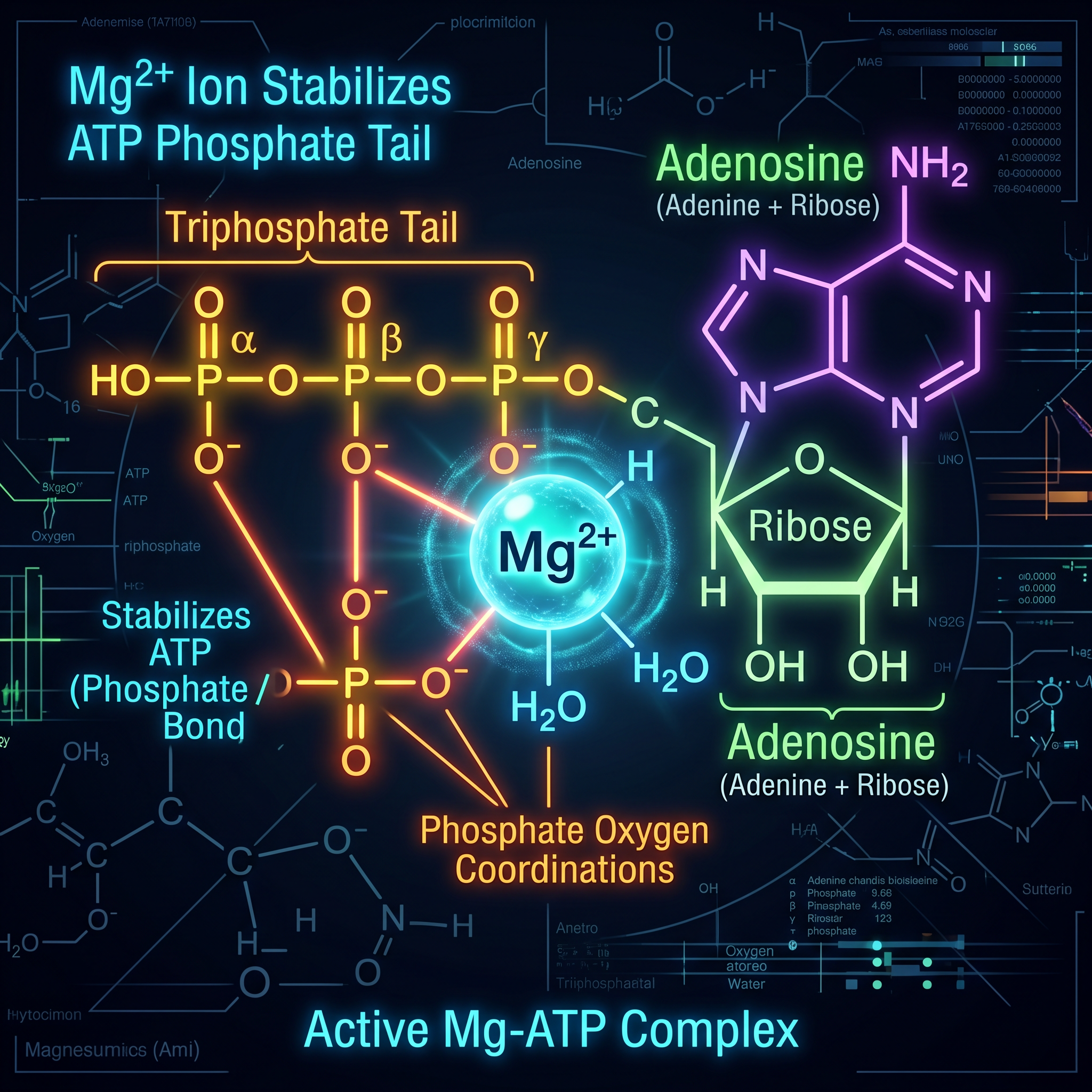
The first step occurs in the liver via the enzyme 25-hydroxylase, and the second in the kidneys via 1-alpha-hydroxylase. \n\nBoth of these enzymes are magnesium-dependent. Magnesium acts as a necessary cofactor for the binding of these enzymes to their substrates. In a state of magnesium deficiency, the body cannot effectively convert storage Vitamin D (25-OH D) into its active form. This often leads to a clinical paradox where individuals take increasingly high doses of D3 but fail to see a rise in their active Vitamin D levels, or worse, they experience symptoms of Vitamin D toxicity because the inactive forms are accumulating while the metabolic pathway is stalled.\n\n## The ATP Link: Magnesium as the Master Key\n\nEvery metabolic process involving Vitamin D and K2 requires energy in the form of Adenosine Triphosphate (ATP). However, from a biochemical standpoint, ATP is almost always present in the body as Mg-ATP.
The phosphate bonds in ATP are highly unstable, and magnesium is required to neutralize the negative charges, allowing the molecule to be functionally utilized by enzymes. \n\nWhen we supplement with Vitamin D, we are essentially turning on a metabolic engine. This engine requires magnesium-bound ATP to run. If magnesium levels are low, ATP cannot be effectively utilized, leading to a state of cellular energy failure even if Vitamin D and K2 are present in abundance. This is why many people report feelings of fatigue or 'brain fog' when starting a high-dose Vitamin D protocol without concurrent magnesium support; the D3 is pulling from a limited magnesium pool to fuel its own conversion, further depleting the body's energy currency.\n\n## The Calcium Paradox and Magnesium\u2019s Regulatory Role\n\nWhile Vitamin K2 is responsible for activating Osteocalcin (to pull calcium into bone) and Matrix GLA Protein (to keep it out of arteries), these proteins themselves are regulated by magnesium levels. Magnesium acts as a natural calcium channel blocker.
It sits at the gates of our cells and ensures that calcium does not flood the intracellular space, which would cause oxidative stress and cell death. \n\nIf you take Vitamin D3 and K2 but lack magnesium, the increased calcium absorption (triggered by D3) and the activation of K2-dependent proteins may still result in systemic imbalances. Magnesium is the mineral that maintains the solubility of calcium in the blood. Without sufficient magnesium, the calcium that Vitamin D helps you absorb can still crystallize, leading to kidney stones or 'micro-calcifications' even if Vitamin K2 is trying to direct it elsewhere. Magnesium and Vitamin K2 work as a secondary level of synergy that is rarely discussed but is vital for preventing soft tissue calcification.\n\n## The Sequestration Effect: Why D3 Depletes Magnesium\n\nOne of the most critical reasons for the 'Magnesium Connection' is the sequestration effect. Because magnesium is required for every step of Vitamin D metabolism, high-dose D3 supplementation 'consumes' magnesium.
Clinical observations show that when individuals with borderline magnesium deficiency take high doses of Vitamin D, they often develop classic symptoms of magnesium depletion: muscle cramps, heart palpitations, insomnia, and anxiety. \n\nThis is not a side effect of Vitamin D itself, but rather a sign that the Vitamin D is working and, in the process, has used up the last of the body\u2019s magnesium reserves. To ignore magnesium while supplementing with D3 and K2 is to ignore the metabolic cost of these nutrients. For the synergy to be successful, the magnesium pool must be replenished at a rate that matches the metabolic demand created by the D3/K2 protocol.\n\n## Clinical Implementation: Ratios and Forms\n\nFor the INNERSTANDING community, moving from theory to practice is essential. When optimizing the D3/K2 synergy, we suggest a root-cause approach to mineral balance. \n\n1. Magnesium Selection: Not all magnesium is created equal. For metabolic synergy, Magnesium Glycinate or Malate are preferred.
Magnesium Blend – The Most Important Mineral
A high-bioavailability mineral blend designed to support over 300 essential biochemical reactions, from energy production to muscle relaxation. This formula helps combat daily fatigue while providing the foundational support your nervous system and bones require.
Vetting Notes
Pending
Glycinate is highly bioavailable and crosses the blood-brain barrier, while Malate supports the Krebs cycle and ATP production directly.\n2. The 2:1 Ratio: While individual needs vary, a baseline goal should be a 2:1 ratio of Calcium to Magnesium, though many in the modern West benefit from a 1:1 ratio given the prevalence of magnesium deficiency.\n3. Timing: Magnesium should be taken daily, ideally in divided doses. Since Vitamin D is fat-soluble and stimulating for some, it is best taken in the morning with food, while magnesium can be taken in the evening to support the parasympathetic nervous system.\n\n## Conclusion\n\nThe Vitamin D3 and K2 synergy protocol is a powerful tool for longevity and systemic health, but it does not operate in a vacuum. Magnesium is the biochemical substrate that allows this engine to turn. By ensuring adequate magnesium levels, we provide the ATP-dependent enzymatic activation required to turn these vitamins into the life-sustaining hormones they are meant to be. Root-cause health is about understanding these interdependencies; we do not just need more nutrients, we need the right nutrients working together in their proper biochemical context.
This article is provided for informational and educational purposes only. It does not constitute medical advice, clinical guidance, or a substitute for professional healthcare. Information reflects cited research at time of publication. Always consult a qualified healthcare professional before acting on any health information.
RESEARCH FOUNDATIONS
Biological Credibility Archive
Citations provided for educational reference. Verify via PubMed or institutional databases.
Medical Disclaimer
The information in this article is for educational purposes only and does not constitute medical advice, diagnosis, or treatment. Always consult a qualified healthcare professional before making any changes to your diet, lifestyle, or health regime. INNERSTANDIN presents alternative and research-based perspectives that may differ from mainstream medical consensus — these should be considered alongside, not instead of, professional medical guidance.
Read Full DisclaimerReady to learn more?
Continue your journey through our classified biological research.
DISCUSSION ROOM
Members of THE COLLECTIVE discussing "The Magnesium Connection: Why D3 and K2 Synergy Fails Without ATP-Dependent Enzymatic Activation"
SILENT CHANNEL
Be the first to discuss this article. Your insight could help others understand these biological concepts deeper.
THE ARSENAL
Based on Vitamin D3 & K2 Synergy Protocol — products curated by our research team for educational relevance and biological support.
Magnesium Blend – The Most Important Mineral
INNERSTANDING may earn a commission on purchases made through these links. All products are selected based on rigorous educational relevance to our biological research.
RABBIT HOLE
Follow the biological thread deeper