
The Osteocalcin-Matrix Gla Protein Axis: Deciphering the Vitamin K2 Dependent Carboxylation Flux in High-Dose D3 Therapy
An analytical exploration of the biochemical synergy between Vitamin D3 and K2, focusing on the essential gamma-carboxylation of Osteocalcin and Matrix Gla Protein to prevent ectopic calcification and optimise skeletal integrity.

# The Osteocalcin-Matrix Gla Protein Axis: Deciphering the Vitamin K2 Dependent Carboxylation Flux in High-Dose D3 Therapy
In the realm of orthomolecular medicine and functional nutrition, few synergies are as critical yet as frequently misunderstood as the relationship between Vitamin D3 (cholecalciferol) and Vitamin K2 (menaquinone). As the use of high-dose Vitamin D3 therapy becomes increasingly common to address the systemic deficiency prevalent in the United Kingdom, understanding the downstream biochemical consequences is paramount. At the heart of this synergy lies the Osteocalcin-Matrix Gla Protein (MGP) axis—a sophisticated regulatory mechanism that dictates where calcium is deposited and, more importantly, where it is excluded.
The Calcium Paradox: The Genesis of Synergy
Vitamin D3 is primarily known for its role in systemic calcium homeostasis. Upon conversion to its active form, 1,25-dihydroxyvitamin D3 [1,25(OH)2D3], it acts as a steroid hormone, binding to the Vitamin D Receptor (VDR) and stimulating the intestinal absorption of calcium. While this process is essential for preventing rickets and osteomalacia, it creates a potential metabolic bottleneck. Without proper guidance, the influx of calcium into the bloodstream can lead to 'The Calcium Paradox'—a state where the body simultaneously suffers from skeletal calcium deficiency (osteoporosis) and soft-tissue calcium excess (vascular calcification).
Root-cause resolution requires us to look beyond mere absorption. The body requires a mechanism to direct this calcium into the hydroxyapatite matrix of the bone while preventing its accumulation in the arterial walls, heart valves, and kidneys. This is the domain of Vitamin K-dependent proteins (VKDPs).
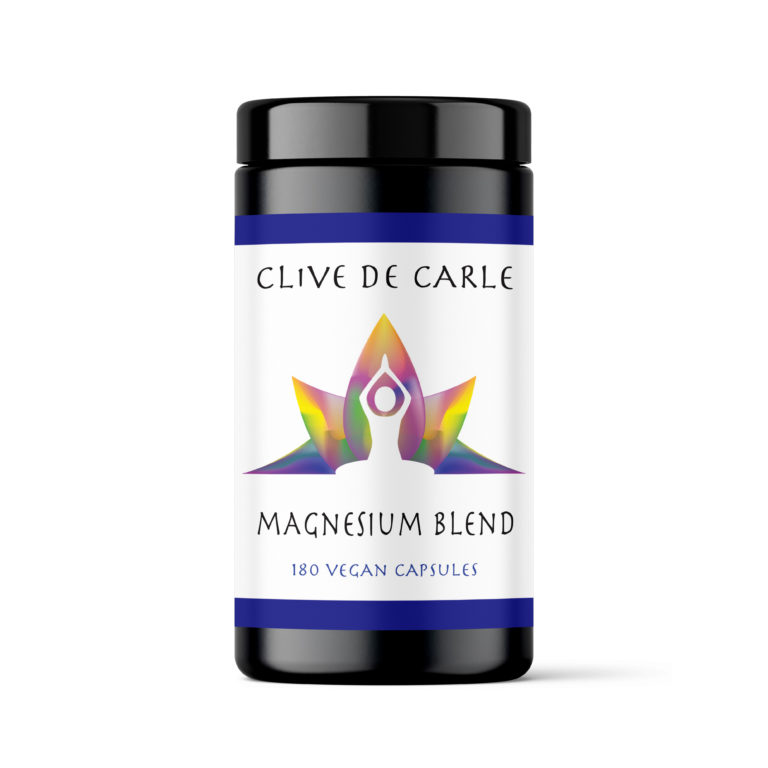
Magnesium Blend – The Most Important Mineral
A high-bioavailability mineral blend designed to support over 300 essential biochemical reactions, from energy production to muscle relaxation. This formula helps combat daily fatigue while providing the foundational support your nervous system and bones require.
Vetting Notes
Pending
The Genomic Impact of D3 on Protein Synthesis
When Vitamin D3 levels rise, it does more than just increase calcium absorption. It functions as a genomic signal, upregulating the transcription of several key VKDPs, most notably Osteocalcin and Matrix Gla Protein. However, Vitamin D3 only completes the first half of the job: it stimulates the *production* of these proteins. At the point of synthesis, these proteins are in an 'undercarboxylated' (inactive) state (ucOC and ucMGP).
To become biologically active, these proteins must undergo a post-translational modification known as gamma-carboxylation. This process requires Vitamin K2 as an essential cofactor for the enzyme gamma-glutamyl carboxylase (GGCX). Without sufficient K2, the proteins produced in response to D3 remain dormant, circulating as ineffective 'ghost' proteins that cannot bind calcium.
Osteocalcin: The Bone Mineralisation Catalyst
Osteocalcin (Bone Gla Protein) is the most abundant non-collagenous protein in the bone matrix. Once carboxylated by Vitamin K2, Osteocalcin gains a high affinity for calcium ions, allowing it to anchor calcium into the bone. This process is the foundation of structural skeletal integrity.
Furthermore, carboxylated Osteocalcin acts as a metabolic hormone. It has been shown to improve insulin sensitivity by stimulating the release of adiponectin from fat cells and increasing insulin secretion from the pancreas. In the context of high-dose D3 therapy, the 'carboxylation flux' refers to the rate at which newly synthesised Osteocalcin is activated. If D3-induced synthesis outpaces K2-mediated carboxylation, the result is a high level of undercarboxylated Osteocalcin, which is a significant biomarker for increased fracture risk.
Matrix Gla Protein: The Vascular Guardian
While Osteocalcin manages the bone, Matrix Gla Protein (MGP) is the primary inhibitor of calcification in the soft tissues. MGP is found in the heart, lungs, and kidneys, but its most critical role is in the arterial walls. Carboxylated MGP binds to calcium crystals in the blood vessels and facilitates their removal, preventing the hardening of the arteries (atherosclerosis).
MGP is one of the most potent inhibitors of vascular calcification currently known to science. However, its effectiveness is entirely dependent on Vitamin K2. When high doses of D3 are administered without K2, the resulting surge in undercarboxylated MGP (ucMGP) leaves the vasculature vulnerable. Research has consistently shown that high levels of ucMGP are correlated with arterial stiffness and cardiovascular mortality. Therefore, the Vitamin K2-dependent carboxylation flux is not just a skeletal concern, but a cardiovascular imperative.
The Flux Dynamics in High-Dose D3 Therapy
When patients in the UK follow a 'Vitamin D3 & K2 Synergy Protocol,' they are essentially managing a metabolic conveyor belt. High-dose D3 (typically defined as doses exceeding 4,000 to 10,000 IU daily) accelerates the 'input' of VKDPs. If the K2 'input' is not proportionally scaled, the pool of Vitamin K2 is rapidly depleted as the GGCX enzyme attempts to process the D3-induced protein surge.
This depletion creates a functional Vitamin K2 deficiency, even if dietary intake is technically 'adequate' by standard UK guidelines. The 'flux' must be balanced. In clinical practice, this often necessitates a ratio-based approach. While research is ongoing, many functional medicine practitioners suggest a baseline of 45mcg to 100mcg of Vitamin K2 (preferably in the MK-7 form due to its longer half-life) for every 1,000 to 5,000 IU of D3.
Addressing the Root Cause: Beyond the Duo
To fully decipher the carboxylation flux, we must also consider the roles of Magnesium and Vitamin A. Magnesium is required for the activation of the enzymes that convert Vitamin D into its hormonal form and for the binding of D3 to its transport protein. Without Magnesium, the genomic signalling that initiates the Osteocalcin-MGP axis is impaired.
Vitamin A (Retinol) also plays a competitive and synergistic role. It works with Vitamin D to regulate the expression of VKDPs. In an ancestral health context, Vitamins A, D, and K were consumed in tandem through organ meats, fatty fish, and fermented foods. Modern isolation of these nutrients often leads to the imbalances we see today.
Clinical Conclusion
The Osteocalcin-MGP axis represents a fundamental biological checks-and-balances system. High-dose D3 therapy is a powerful tool for immune modulation and bone health, but it is incomplete without its partner, Vitamin K2. By ensuring a robust carboxylation flux, we transform Vitamin D from a potential risk factor for calcification into a targeted driver of systemic vitality. For the INNERSTANDING community, the message is clear: the efficacy of your Vitamin D is not determined by its concentration in your blood, but by its synergy with the proteins that govern your internal landscape.
This article is provided for informational and educational purposes only. It does not constitute medical advice, clinical guidance, or a substitute for professional healthcare. Information reflects cited research at time of publication. Always consult a qualified healthcare professional before acting on any health information.
RESEARCH FOUNDATIONS
Biological Credibility Archive
Citations provided for educational reference. Verify via PubMed or institutional databases.
Medical Disclaimer
The information in this article is for educational purposes only and does not constitute medical advice, diagnosis, or treatment. Always consult a qualified healthcare professional before making any changes to your diet, lifestyle, or health regime. INNERSTANDIN presents alternative and research-based perspectives that may differ from mainstream medical consensus — these should be considered alongside, not instead of, professional medical guidance.
Read Full DisclaimerReady to learn more?
Continue your journey through our classified biological research.
DISCUSSION ROOM
Members of THE COLLECTIVE discussing "The Osteocalcin-Matrix Gla Protein Axis: Deciphering the Vitamin K2 Dependent Carboxylation Flux in High-Dose D3 Therapy"
SILENT CHANNEL
Be the first to discuss this article. Your insight could help others understand these biological concepts deeper.
THE ARSENAL
Based on Vitamin D3 & K2 Synergy Protocol — products curated by our research team for educational relevance and biological support.
Magnesium Blend – The Most Important Mineral
INNERSTANDING may earn a commission on purchases made through these links. All products are selected based on rigorous educational relevance to our biological research.
RABBIT HOLE
Follow the biological thread deeper
