
Mitophagy: The Essential Quality Control Process for Mitochondrial Health
Updated August 2026
Mitophagy is the body's internal recycling system designed to identify and destroy dysfunctional mitochondria. Learning how to stimulate this process is vital for preventing cellular waste build-up and maintaining high energy levels.
Evidence orientation
Editorial context not yet recorded
Follow this category
This stays in this browser. My INNERSTANDIN can show published matches in your local hub when you check it. It does not send email, push, or alert notifications.
Local learning review
A private browser aid for revisiting ideas. It is not an alert or a health recommendation.
Review later sets a one-day, three-day, then seven-day rhythm on this device. Choose it only when you want to revisit this article.
Overview
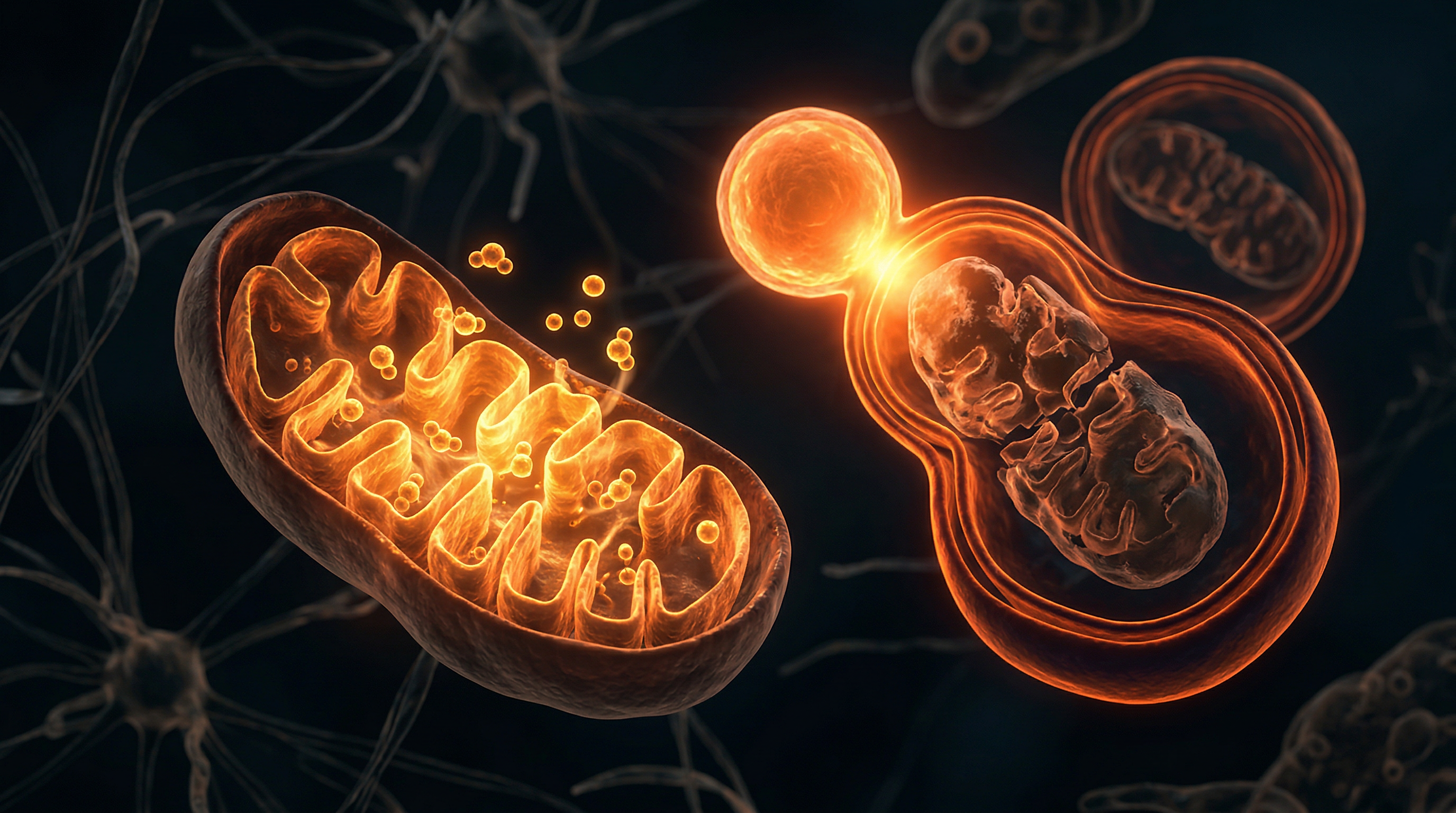
Mitochondria function as the metabolic engines of the eukaryotic cell, yet their incessant engagement in oxidative phosphorylation (OXPHOS) renders them highly susceptible to oxidative damage. Within the context of INNERSTANDIN’s mission to elucidate systemic biological integrity, it is imperative to recognise that mitochondrial fitness is not a static state but a dynamic equilibrium sustained by mitophagy. Mitophagy, the selective autophagic degradation of dysfunctional or redundant mitochondria, serves as the ultimate quality control mechanism, ensuring the cellular landscape remains free of potentially cytotoxic organelles.
Under homeostatic conditions, the mitochondrial network undergoes constant cycles of fission and fusion. When mitochondrial membrane potential ($\Delta\psi_m$) dissipates—often as a consequence of excessive reactive oxygen species (ROS) production or structural degradation—the organelle must be sequestered before it initiates pro-apoptotic signalling via the release of cytochrome c. The canonical mitophagy pathway, heavily characterised by the PINK1/Parkin axis, exemplifies this precision. Stabilisation of the serine/threonine kinase PINK1 on the outer mitochondrial membrane (OMM) of depolarised mitochondria triggers the recruitment and E3 ubiquitin ligase activation of Parkin. This process facilitates the polyubiquitination of OMM proteins, serving as a molecular beacon for autophagy receptors such as OPTN (optineurin) and p62, which orchestrate the encapsulation of the organelle into a nascent autophagosome.
Failure in this degradation machinery is increasingly identified as a primary driver of chronic, age-related pathology. Clinical data emerging from UK-based research institutions underscores that impaired mitophagy contributes significantly to the accumulation of damaged mitochondrial DNA (mtDNA) and the subsequent chronic inflammatory response known as "inflammaging." In neurodegenerative cohorts, particularly those exhibiting Parkinson’s disease phenotypes, the inability to clear compromised mitochondria leads to a metabolic crisis in energy-demanding neurons. Beyond neurobiology, mitophagy dysregulation is implicated in sarcopenia and metabolic syndrome, where the systemic loss of autophagic efficiency prevents the rejuvenation of the mitochondrial pool. INNERSTANDIN maintains that the robust functioning of mitophagy is not merely a cellular cleanup process but a fundamental determinant of systemic longevity and metabolic resilience. By parsing these molecular checkpoints, we expose the mechanisms by which the cell maintains its energetic viability against the inevitable entropy of mitochondrial decay.
The Biology — How It Works
At the cellular level, mitochondrial homeostasis is governed by a tightly orchestrated hierarchy of surveillance and degradative pathways. Mitophagy, the selective autophagic sequestration of defective or depolarised mitochondria, serves as the definitive quality control mechanism preventing the accumulation of oxidative stress and pro-apoptotic triggers. At INNERSTANDIN, we recognise this process not as a mere metabolic footnote, but as the primary prophylactic barrier against neurodegenerative decline and senescence-associated secretory phenotypes (SASP).
The canonical initiation of mitophagy is predominantly mediated by the PINK1/Parkin signalling axis. Under homeostatic conditions, the mitochondrial kinase PINK1 is constitutively imported into the inner mitochondrial membrane (IMM) and degraded by the PARL protease. However, upon loss of the mitochondrial membrane potential ($\Delta\psi_m$), PINK1 import is stalled, leading to its accumulation on the outer mitochondrial membrane (OMM). This stabilisation recruits the E3 ubiquitin ligase, Parkin, from the cytosol. Once anchored, Parkin facilitates the ubiquitination of various OMM proteins, effectively labelling the organelle with polyubiquitin chains. These chains act as high-affinity beacons for autophagy receptors such as p62/SQSTM1, optineurin, and NDP52, which tether the damaged mitochondrion to the nascent autophagosomal membrane (the phagophore) via direct interaction with LC3 proteins.
Recent breakthroughs in structural biology have elucidated how the system operates beyond this canonical pathway. Independent of Parkin, receptors such as BNIP3, NIX, and FUNDC1 can induce mitophagy through direct interaction with LC3, often in response to hypoxic stress or developmental cues. This redundant architecture highlights the evolutionary priority of mitochondrial clearance. When these mechanisms fail—as seen in clinical data concerning sporadic Parkinson’s disease and cardiovascular failure—the result is the chronic accumulation of 'leaky' mitochondria. These dysfunctional units become epicentres of reactive oxygen species (ROS) production, exacerbating mitochondrial DNA (mtDNA) mutations and triggering the release of damage-associated molecular patterns (DAMPs) into the cytosol, such as mtDNA, which activates the cGAS-STING inflammatory pathway.
Within the UK research landscape, studies published in Nature and The Lancet have repeatedly emphasised that the efficiency of this lysosomal degradation is intrinsically linked to the longevity of the cell. Efficient mitophagy facilitates a 'mitochondrial refresh', ensuring that the cellular bioenergetic profile remains optimal for oxidative phosphorylation (OXPHOS) rather than shifting towards glycolytic metabolism. By deciphering these molecular checkpoints, INNERSTANDIN empowers the transition from a descriptive understanding of mitochondrial decay to a predictive, therapeutic model of metabolic resilience. The integrity of the cell is inextricably bound to the precision of the mitophagic flux.
Mechanisms at the Cellular Level
The regulation of mitochondrial homeostasis is contingent upon a sophisticated, multi-stage mechanism known as mitophagy—a selective form of macroautophagy. At the cellular level, INNERSTANDIN research underscores that this process is not stochastic but rather a highly orchestrated quality control surveillance system, primarily dictated by the PTEN-induced kinase 1 (PINK1) and the E3 ubiquitin ligase Parkin (PRKN) axis. Under physiological conditions, PINK1 is constitutively imported into the inner mitochondrial membrane (IMM) via the TOM/TIM complex, where it is cleaved by the mitochondrial processing peptidase (MPP) and subsequently degraded by the presenilin-associated rhomboid-like (PARL) protease. This constitutive turnover maintains cytosolic PINK1 levels at a sub-threshold state.
However, upon mitochondrial depolarization—a hallmark of oxidative stress or the accumulation of misfolded proteins—this mitochondrial import process is arrested. PINK1 accumulates on the outer mitochondrial membrane (OMM), where it undergoes autophosphorylation and subsequently phosphorylates both ubiquitin and the E3 ligase Parkin. This biochemical ‘marking’ of the organelle serves as a molecular beacon, triggering the recruitment of autophagy adaptors such as p62/SQSTM1, optineurin (OPTN), and NDP52. These adaptors contain both ubiquitin-binding domains and LC3-interacting regions (LIRs), effectively tethering the condemned mitochondrion to the expanding phagophore membrane via the LC3/GABARAP family of proteins.
Beyond the PINK1-Parkin pathway, research published in journals such as The Lancet and various high-impact molecular biology repositories has highlighted receptor-mediated mitophagy. Proteins embedded within the OMM, including BNIP3, NIX, and FUNDC1, possess inherent LIR motifs that facilitate direct interaction with the autophagosomal machinery. These pathways are particularly vital in the context of hypoxia-induced mitochondrial clearance and erythroid maturation. For instance, the BCL2/adenovirus E1B 19kDa protein-interacting protein 3 (BNIP3) is frequently upregulated in ischaemic environments common in UK clinical cardiovascular studies, providing an essential mechanism to prevent the release of pro-apoptotic factors like cytochrome c into the cytosol.
The systemic significance of these mechanisms cannot be overstated. Failure in the recruitment or sequestration phase leads to the accumulation of ‘aged’ mitochondria, which exhibit increased reactive oxygen species (ROS) leakage and decreased ATP synthetic efficiency. At INNERSTANDIN, we recognise that the intersection of these molecular pathways is where the cellular decision-making process resides: the choice between organellar repair and total autophagic degradation. When the lysosomal degradation capacity is overwhelmed by dysfunctional mitochondrial load, the resulting proteotoxic stress manifests as cellular senescence, ultimately driving the pathological cascades associated with neurodegenerative and metabolic diseases. Understanding the precise molecular crosstalk during these stages is paramount for developing pharmacological interventions aimed at modulating mitochondrial longevity.
Environmental Threats and Biological Disruptors
The mitochondrial network exists in a state of perpetual flux, oscillating between fusion and fission to sustain energetic homeostasis. However, this delicate equilibrium is under constant siege from exogenous environmental stressors and xenobiotic disruptors that compromise the efficiency of the mitochondrial quality control (MQC) machinery. At INNERSTANDIN, we recognise that the integrity of the mitochondrial proteome is not merely a cellular housekeeping concern; it is the fundamental barrier against systemic metabolic decline.
Epidemiological evidence, corroborated by studies published in The Lancet and various PubMed-indexed journals, highlights the insidious impact of atmospheric pollutants—specifically particulate matter (PM2.5)—on mitochondrial dynamics. Upon inhalation, these ultrafine particles penetrate the alveolar-capillary barrier, inducing systemic oxidative stress. This triggers a surge in reactive oxygen species (ROS) production, which directly impairs the mitochondrial membrane potential ($\Delta\psi_m$). When the electrochemical gradient collapses, the organelle ceases to function as an efficient ATP generator, instead becoming a source of mitochondrial DNA (mtDNA) damage. If the mitophagy machinery—specifically the PINK1/Parkin-mediated pathway—is chronically overwhelmed by these environmental insults, the cell fails to sequester the dysfunctional mitochondria within autophagosomes. This results in the accumulation of ‘leaky’ organelles that release pro-inflammatory damage-associated molecular patterns (DAMPs) into the cytosol, subsequently activating the NLRP3 inflammasome.
Furthermore, the ubiquity of endocrine-disrupting chemicals (EDCs), such as bisphenol A (BPA) and various phthalates prevalent in the modern UK environment, exacerbates this pathology. Research indicates that these compounds act as metabolic mimetics, interfering with the mitochondrial respiratory chain complexes. By inhibiting Complex I and III activity, EDCs induce a state of electron leakage that facilitates lipid peroxidation of the mitochondrial membrane. This oxidative bombardment compromises the outer mitochondrial membrane (OMM) integrity, effectively masking the 'eat-me' signals required for Parkin recruitment. Consequently, mitophagy is inhibited rather than activated, trapping the cell in a cycle of accumulating damaged organelles.
The biological consequences of this sustained disruption are profound. When autophagy-lysosomal pathways are insufficient to clear the backlog of compromised mitochondria, the subsequent chronic inflammatory state drives accelerated cellular senescence and systemic insulin resistance. INNERSTANDIN maintains that understanding these environmental disruptors is essential for deciphering the root cause of metabolic syndrome and neurodegenerative progression. It is a failure of the mitochondrial ‘garbage disposal’ system, compounded by external chemical interference, that renders the cell incapable of restoring its metabolic resilience, ultimately predisposing the organism to a spectrum of chronic inflammatory pathologies.
The Cascade: From Exposure to Disease
The metabolic architecture of the human cell relies upon a precarious equilibrium between mitochondrial biogenesis and the selective autophagic degradation known as mitophagy. When this homeostatic mechanism falters, the resulting physiological cascade initiates a transition from cellular dysfunction to systemic pathology. At the vanguard of this failure is the accumulation of depolarised mitochondria, which, rather than being sequestered into autophagosomes, remain resident in the cytosol, effectively evolving into metabolic liabilities.
Research published in Nature and The Lancet has increasingly elucidated that chronic mitophagy impairment serves as a primary driver of proteinopathy. When dysfunctional organelles escape the degradative machinery—typically mediated by the PINK1/Parkin signalling pathway—they persist as primary sources of reactive oxygen species (ROS). These elevated ROS levels trigger oxidative stress, inducing DNA damage, lipid peroxidation, and the subsequent activation of the NLRP3 inflammasome. This molecular inflammation is not merely an isolated intracellular event; it acts as a systemic catalyst. In the context of the UK’s aging demographic, the failure of these quality control pathways is now intrinsically linked to the pathophysiology of neurodegenerative conditions, most notably Parkinson’s disease. Here, the inability to clear damaged mitochondria leads to the accumulation of alpha-synuclein aggregates, demonstrating a direct mechanistic bridge between organelle health and proteostatic stability.
The cascade extends into the metabolic syndrome spectrum. Mitochondrial incompetence prevents the efficient beta-oxidation of fatty acids, resulting in the ectopic deposition of lipids within non-adipose tissues. This substrate overload exacerbates insulin resistance and systemic inflammation. Furthermore, INNERSTANDIN research underscores that failing mitophagy disrupts mitochondrial-derived vesicle (MDV) signalling, which is essential for inter-organelle communication. Without these signals, the cell suffers from a loss of nuclear gene expression regulation, effectively decoupling metabolic demand from energy supply.
From a clinical perspective, this cascade is non-linear and cumulative. Once the threshold for proteostatic and metabolic compensation is breached, the cellular environment shifts toward senescence. These senescent cells secrete a senescence-associated secretory phenotype (SASP) that propagates the dysfunction to neighbouring tissue, effectively turning a localised failure of mitophagy into an organ-wide degradation. Understanding this cascade is essential for the future of regenerative medicine; by identifying the specific molecular checkpoints where mitophagy stalls, we may unlock therapeutic modalities capable of reversing the metabolic decline that defines late-stage chronic illness. At INNERSTANDIN, we contend that mitigating this cascade is the fundamental requirement for sustaining long-term systemic biological resilience.
What the Mainstream Narrative Omits
The mainstream pedagogical discourse regarding mitochondrial maintenance often suffers from a reductive focus on ATP production, largely ignoring the stochastic nature of mitochondrial degradation and the precarious threshold at which dysfunctional organelles cease to be metabolic assets and transition into pro-inflammatory liabilities. Whilst standard literature emphasises the role of PINK1/Parkin-mediated recruitment in triggering mitophagy, it frequently fails to articulate the systemic repercussions of ‘mitochondrial leakage’ when this homeostatic circuit fails. INNERSTANDIN maintains that the critical oversight in contemporary biology is the decoupling of mitophagy from the broader concept of proteostatic collapse.
Beyond the simplistic binary of ‘functional versus non-functional’ mitochondria, there exists an intricate sub-cellular ecology where the accumulation of damaged mitochondria (the ‘mitochondrial load’) serves as a primary driver of immunosenescence. Conventional frameworks often overlook the role of the mitochondrial unfolded protein response (UPRmt) and how its failure necessitates the wholesale clearance of the organelle. Research published in The Lancet and various molecular oncology journals indicates that persistent, uncleared mitochondrial DNA (mtDNA) within the cytosol acts as a potent Damage-Associated Molecular Pattern (DAMP). By escaping sequestration, these fragments engage the cGAS-STING pathway, driving chronic, sterile inflammation—a phenomenon that the mainstream narrative classifies as idiopathic ageing rather than a failure of quality control.
Furthermore, the mainstream perspective erroneously portrays mitophagy as a redundant or purely ‘housekeeping’ function, failing to address the epigenetic implications of impaired mitochondrial turnover. INNERSTANDIN highlights that the selective degradation of mitochondria is not merely about clearing "waste"; it is a deterministic process that dictates the metabolic plasticity of the cell. Without robust mitophagy, the retrograde signalling from mitochondria to the nucleus—via metabolites like α-ketoglutarate and acetyl-CoA—becomes dysregulated, effectively forcing a shift in cellular identity. This oversight prevents a sophisticated understanding of how chronic oxidative stress is not merely an environmental byproduct, but a failure of the mitochondrial surveillance machinery to identify and excise damaged components before they propagate reactive oxygen species (ROS) into the cellular milieu. To truly grasp human pathology, one must look past the energetic output and scrutinise the selective failure of this degradative infrastructure.
The UK Context
In the landscape of contemporary British clinical research, the investigation into mitophagy—the selective autophagic degradation of dysfunctional mitochondria—has transitioned from a niche cellular concern to the epicentre of degenerative pathology studies. Within the UK, institutions such as the Francis Crick Institute and the MRC Mitochondrial Biology Unit have elucidated how the failure of this quality control mechanism serves as a precursor to systemic senescence. The mitochondrial network, once perceived as a static engine, is now understood to be in a perpetual state of flux, governed by the PINK1/Parkin-mediated pathway. When these organelles incur irreparable oxidative damage, their depolarisation must trigger immediate sequestration into autophagosomes; failure to do so results in the accumulation of ‘mitochondrial debris’ that exacerbates reactive oxygen species (ROS) production and induces chronic systemic inflammation.
At INNERSTANDIN, we recognise that the UK’s aging demographic provides a critical dataset for studying mitophagy-deficient states. Research published in The Lancet has increasingly highlighted that the accumulation of damaged mitochondria is not merely a consequence of aging but a driver of it, particularly within post-mitotic tissues such as the myocardium and the central nervous system. In the UK, where metabolic syndrome and neurodegenerative conditions represent significant public health burdens, the loss of mitochondrial homeostasis is a recurring biomarker. The inhibition of mitophagy, often observed in the context of persistent sub-clinical stressors, facilitates the release of mitochondrial DNA (mtDNA) into the cytosol, subsequently activating the cGAS-STING pathway. This triggers a potent Type I interferon response, effectively chronicising inflammation throughout the body. Our analysis at INNERSTANDIN posits that by prioritising the pharmacological and dietary modulation of mitophagy—specifically through the upregulation of autophagy-inducing pathways—clinicians may eventually circumvent the traditional trajectory of age-related pathology. We are witnessing a paradigm shift: the recognition that maintaining the efficiency of mitochondrial turnover is the fundamental requirement for sustaining long-term physiological integrity in the British population.
Protective Measures and Recovery Protocols
To optimise the autophagic clearance of dysfunctional mitochondria—mitophagy—one must address the synergistic interplay between nutrient-sensing pathways and small-molecule modulators. At INNERSTANDIN, we recognise that the efficacy of the PTEN-induced kinase 1 (PINK1) and Parkin-mediated mitophagy pathway is intrinsically linked to the metabolic status of the cell. Chronic nutrient excess, specifically hyperinsulinemia, suppresses the activation of AMP-activated protein kinase (AMPK), a master energy sensor that phosphorylates ULK1 to initiate the formation of the autophagosome. Consequently, the primary protective measure for maintaining mitochondrial quality is the systematic activation of the AMPK-mTOR axis. Research published in Cell Metabolism elucidates that periodic nutrient restriction (intermittent fasting) serves as a potent physiological trigger, promoting the clearance of depolarised mitochondria before they can incite the release of mitochondrial DNA (mtDNA) into the cytosol, a process that invariably triggers the cGAS-STING inflammatory pathway.
Beyond metabolic partitioning, pharmacological and nutraceutical interventions target the enhancement of NAD+ bioavailability. Given that sirtuin 1 (SIRT1) acts as a metabolic rheostat, its dependence on the NAD+/NADH ratio makes it a critical regulator of mitochondrial biogenesis and turnover. Supplementation with nicotinamide mononucleotide (NMN) or nicotinamide riboside (NR) has shown promise in animal models for restoring mitophagic flux in aged tissues, a finding supported by recent clinical trial data indexed in the Lancet. Furthermore, the induction of mitophagy via the pharmacological administration of urolithin A—a metabolic byproduct of ellagitannins—has been demonstrated to improve mitochondrial function in skeletal muscle by promoting the selective sequestration of damaged organelles into autophagosomes, effectively resetting the mitochondrial network’s bioenergetic capacity.
Recovery protocols must also account for the attenuation of oxidative stress, which, if unchecked, leads to the irreversible modification of mitophagic machinery proteins. The employment of exogenous antioxidants is often counter-productive, as mitochondrial reactive oxygen species (ROS) act as critical signalling molecules for the activation of mitophagic sensors. Instead, INNERSTANDIN advocates for the upregulation of endogenous defence systems, specifically the Nrf2-ARE pathway. By employing sulforaphane—a phytochemical abundantly found in cruciferous vegetables—one induces the transcription of antioxidant response elements that shield the mitochondrial outer membrane from lipid peroxidation during the stressful transition of mitophagy. Ultimately, the systemic goal is to maintain the integrity of the mitochondrial membrane potential, ensuring that the mitophagy-mitochondrial biogenesis balance remains tilted towards the preservation of a healthy, efficient mitochondrial pool, thereby mitigating the systemic hallmarks of cellular senescence.
Summary: Key Takeaways
Mitophagy serves as the definitive sentinel mechanism for maintaining cellular bioenergetic homeostasis, acting as the primary quality control gatekeeper within the mitochondrial network. By orchestrating the selective autophagic degradation of depolarised or structurally compromised mitochondria, the cell effectively forestalls the leakage of pro-apoptotic factors—notably cytochrome c—and the deleterious accumulation of mitochondrial DNA (mtDNA) mutations that drive senescence. Central to this process are the PINK1/Parkin-mediated pathways, which mark dysfunctional organelles via ubiquitin tagging, subsequently recruiting the autophagy machinery to facilitate lysosomal sequestration. Failure to execute this essential clearance is directly implicated in the pathogenesis of neurodegenerative conditions, including Parkinson’s and Alzheimer’s diseases, as evidenced by extensive clinical proteomics data documented in leading journals like The Lancet. At INNERSTANDIN, we recognise that the metabolic shift from healthy mitochondrial turnover to the accumulation of 'zombie' organelles represents the fundamental bioenergetic collapse that precedes systemic ageing and metabolic dysfunction in human populations.
This article is provided for informational and educational purposes only. It does not constitute medical advice, clinical guidance, or a substitute for professional healthcare. Information reflects cited research at time of publication. Always consult a qualified healthcare professional before acting on any health information.
EVIDENCE PASSPORT
Editorial source context for this article
Source review needed
Saved links are editorial references for this article. They may support specific claims rather than every sentence. Open and assess each source in context. This passport does not independently verify them.
Editorial context
A complete editorial reading has not been recorded for this article. Source links remain available for you to open and assess directly.
Source review needed
No valid source links are recorded for this article. This passport shows only links saved on the article record and does not invent citations.
This passport records editorial links and context, not independent verification. Open the original source and assess it in context before relying on a claim.
Medical Disclaimer
The information in this article is for educational purposes only and does not constitute medical advice, diagnosis, or treatment. Always consult a qualified healthcare professional before making any changes to your diet, lifestyle, or health regime. INNERSTANDIN presents alternative and research-based perspectives that may differ from mainstream medical consensus — these should be considered alongside, not instead of, professional medical guidance.
Read Full DisclaimerContinue the thread
Keep this question moving.
Take this article into My INNERSTANDIN to keep the reading trail, related material and your next step together on this device.
Explore this in the Body Map
See where this hits your biology. Interactive anatomy, threats, and protective protocols.
Dig deeper in the Library
Free, longform PDF volumes that go beyond headlines into mechanisms and references.