
Permanent Pigmentation: The Mutagenic Potential of Para-Phenylenediamine (PPD)
Published April 2026
A deep dive into the genotoxicity of p-Phenylenediamine (PPD), explaining DNA adduct formation and how genetic polymorphisms affect individual detoxification capacity.
Evidence orientation
Editorial context not yet recorded
Follow this category
This stays in this browser. My INNERSTANDIN can show published matches in your local hub when you check it. It does not send email, push, or alert notifications.
Local learning review
A private browser aid for revisiting ideas. It is not an alert or a health recommendation.
Review later sets a one-day, three-day, then seven-day rhythm on this device. Choose it only when you want to revisit this article.
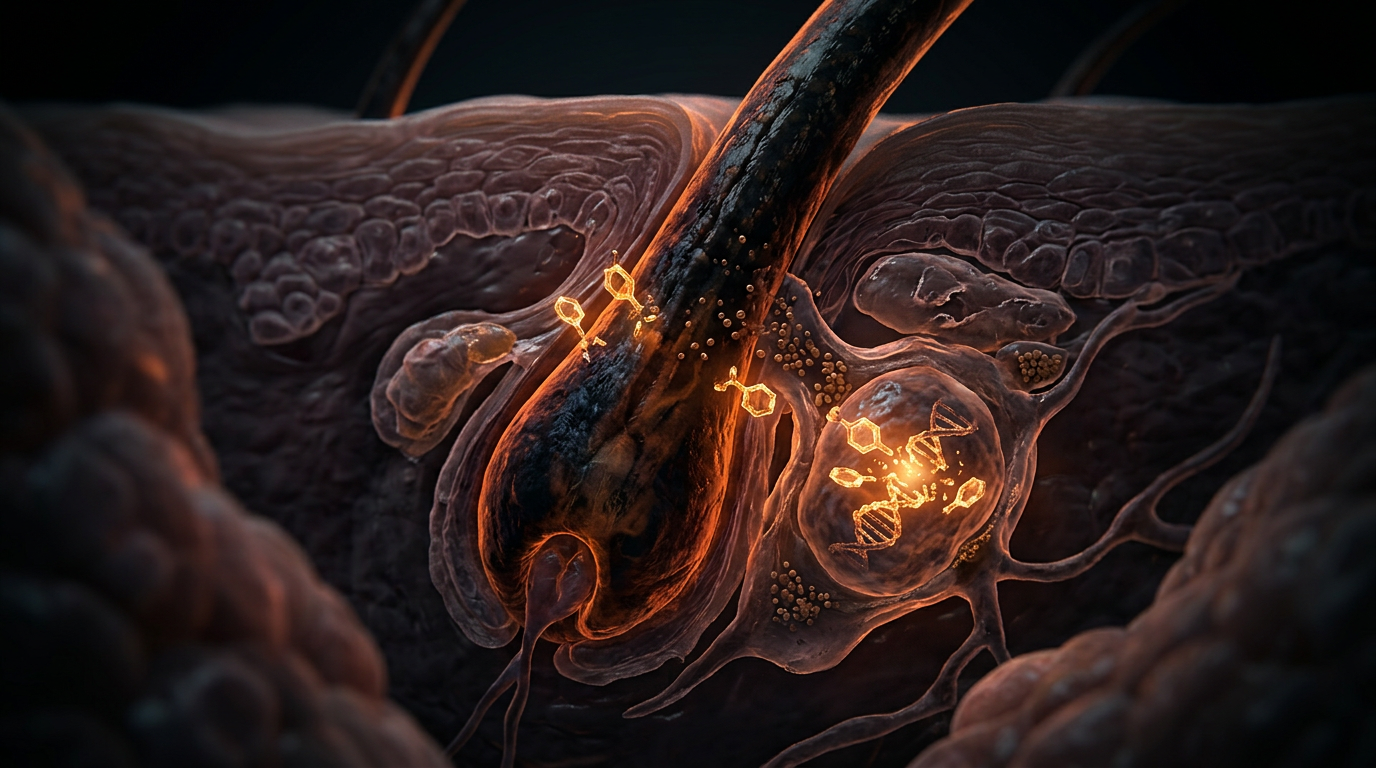
The desire for permanent color change in hair involves one of the most chemically aggressive processes in the beauty industry. At the heart of this process is p-Phenylenediamine (PPD) and its derivatives. While professional salons emphasize 'vibrancy' and 'coverage,' an Innerstanding of the biochemistry involved reveals a high cost: the potential for systemic DNA damage and the burden of mutagenic intermediates. Section 1: PPD and the Formation of DNA Adducts. PPD is a primary aromatic amine that requires oxidation to become a dye.
During this process, reactive intermediates known as Bandrowski's bases are formed. These molecules are highly reactive and have a high affinity for DNA. When PPD or its oxidation products enter the systemic circulation through the scalp, they can form DNA adducts—segments of DNA covalently bound to a cancer-causing chemical. If these adducts are not accurately repaired by the body's Nucleotide Excision Repair (NER) pathway, they can lead to permanent mutations. This genotoxicity is a significant factor in the epidemiological links between long-term hair dye use and increased risks of non-Hodgkin lymphoma and bladder cancer, associations that are often downplayed in mainstream cosmetic safety literature.
Section 2: NAT2 Polymorphisms and Individual Risk. A crucial missing piece in the standard safety narrative is genetic variability. The metabolism of aromatic amines like PPD is governed by the N-acetyltransferase (NAT) enzymes, specifically NAT1 and NAT2. These enzymes are responsible for detoxifying these chemicals in the liver and skin. However, human populations exhibit significant 'acetylator' polymorphisms.
Individuals classified as 'slow acetylators' have a reduced capacity to neutralize PPD, leading to higher levels of reactive intermediates circulating in their system for longer periods. For a 'slow acetylator,' a 'safe' dose of hair dye becomes a significant toxicological event. This highlights the failure of 'one-size-fits-all' safety regulations and the need for personalized biological awareness. Section 3: Oxidative Carbonylation and Protein Damage. Beyond DNA damage, PPD-induced oxidative stress leads to a process called protein carbonylation.
This is an irreversible post-translational modification where side chains of amino acids are oxidized into carbonyl groups. Carbonylated proteins are often non-functional and can aggregate, contributing to cellular senescence and impaired proteostasis. This damage isn't confined to the hair; the systemic absorption of PPD means these carbonyl markers can appear in the plasma. This process represents a fundamental erosion of the body's structural and functional integrity, suggesting that the chemical price of permanent pigmentation is far more than skin-deep.
This article is provided for informational and educational purposes only. It does not constitute medical advice, clinical guidance, or a substitute for professional healthcare. Information reflects cited research at time of publication. Always consult a qualified healthcare professional before acting on any health information.
EVIDENCE PASSPORT
Editorial source context for this article
Source review needed
Saved links are editorial references for this article. They may support specific claims rather than every sentence. Open and assess each source in context. This passport does not independently verify them.
Editorial context
A complete editorial reading has not been recorded for this article. Source links remain available for you to open and assess directly.
Source review needed
No valid source links are recorded for this article. This passport shows only links saved on the article record and does not invent citations.
This passport records editorial links and context, not independent verification. Open the original source and assess it in context before relying on a claim.
Medical Disclaimer
The information in this article is for educational purposes only and does not constitute medical advice, diagnosis, or treatment. Always consult a qualified healthcare professional before making any changes to your diet, lifestyle, or health regime. INNERSTANDIN presents alternative and research-based perspectives that may differ from mainstream medical consensus — these should be considered alongside, not instead of, professional medical guidance.
Read Full DisclaimerContinue the thread
Keep this question moving.
Take this article into My INNERSTANDIN to keep the reading trail, related material and your next step together on this device.
Dig deeper in the Library
Free, longform PDF volumes that go beyond headlines into mechanisms and references.