
Beyond the Gloss: The Neurotoxic Impact of the Nail Industry's Toxic Trio
Published April 2026
Explore the systemic dangers of formaldehyde, toluene, and DBP in nail products, focusing on DNA cross-linking, neuro-inflammation, and reproductive interference.
Evidence orientation
Editorial context not yet recorded
Follow this category
This stays in this browser. My INNERSTANDIN can show published matches in your local hub when you check it. It does not send email, push, or alert notifications.
Local learning review
A private browser aid for revisiting ideas. It is not an alert or a health recommendation.
Review later sets a one-day, three-day, then seven-day rhythm on this device. Choose it only when you want to revisit this article.
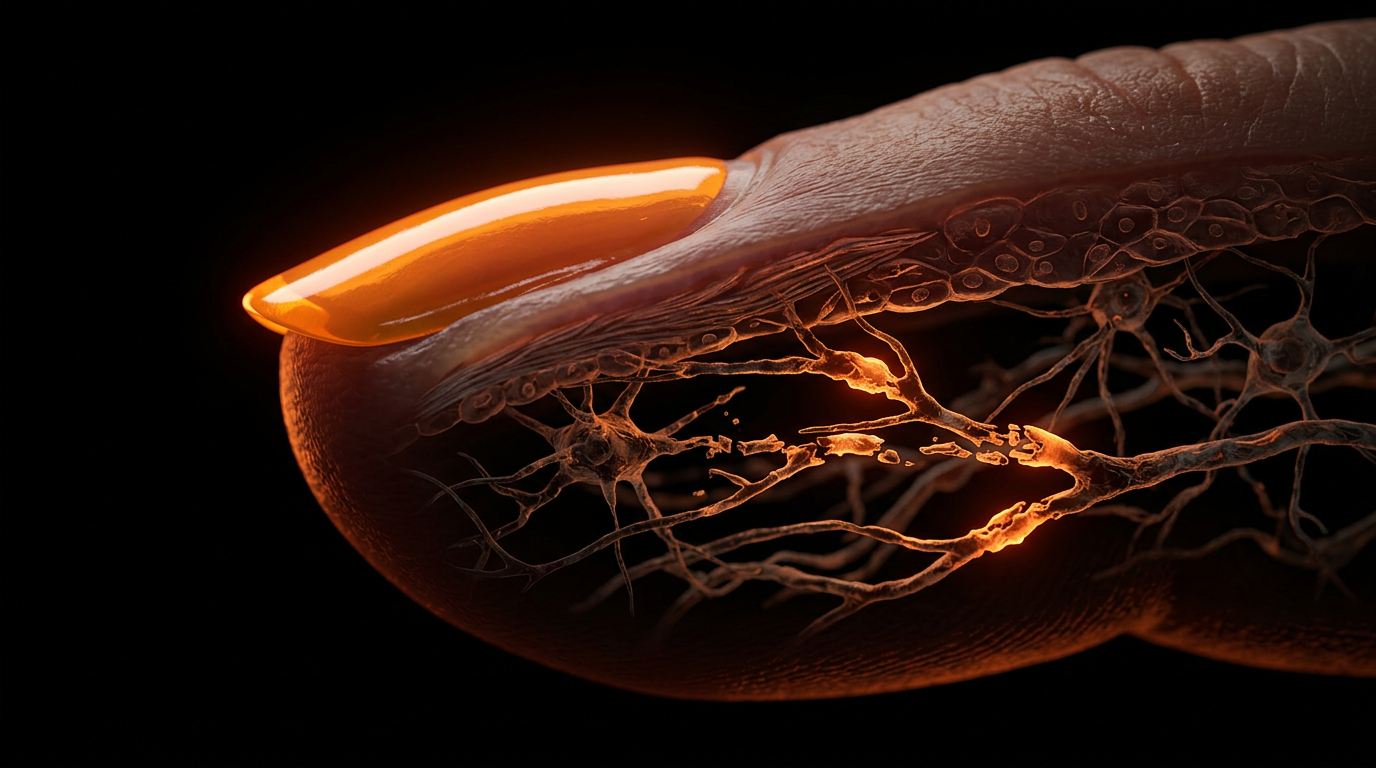
The aesthetic appeal of a professional manicure often masks a potent chemical reality. The 'Toxic Trio'—formaldehyde, toluene, and dibutyl phthalate (DBP)—represents a triad of substances that, while effective for nail polish durability and finish, pose significant risks to the neurological and reproductive systems. While mainstream health advice often focuses on salon ventilation, the biological reality of nail permeability and systemic absorption suggests a deeper concern. Section 1: Formaldehyde and the Epigenetic Landscape. Formaldehyde is more than a simple irritant; it is a potent cross-linking agent.
In the context of the nail bed, which is highly vascularized and more porous than skin, formaldehyde can enter the systemic circulation. Biologically, formaldehyde induces the formation of DNA-protein crosslinks (DPCs). These DPCs are bulky lesions that obstruct essential DNA processes such as replication and transcription. What mainstream medicine misses is the epigenetic impact. Chronic exposure to even low levels of formaldehyde can alter DNA methylation patterns, specifically in genes responsible for tumor suppression.
This 'epigenetic scarring' means that the impact of nail toxins can persist long after the chemical has been metabolized by the liver's alcohol dehydrogenase enzymes. Section 2: Toluene and the Lipophilic Breach. Toluene is the solvent that gives nail polish its smooth application. As a highly lipophilic volatile organic compound (VOC), toluene has a high affinity for the central nervous system (CNS), which is rich in myelin and other lipids. Once inhaled or absorbed, toluene partitions into the neural membranes, disrupting the fluidity of the lipid bilayer.
This interferes with the function of GABAergic and glutamatergic receptors, the primary inhibitory and excitatory systems of the brain. While 'solvent syndrome' is recognized in industrial settings, the sub-clinical impact on frequent salon-goers—manifesting as brain fog, altered sleep patterns, and subtle cognitive decline—is frequently overlooked. The mechanism involves the induction of neuro-inflammation through the activation of microglia, the brain's resident immune cells, leading to a chronic state of low-grade excitotoxicity. Section 3: Dibutyl Phthalate (DBP) and the Reproductive Axis. DBP is added to nail polish to prevent brittleness, but its biological cost is high.
As a known developmental toxicant, DBP interferes with the signaling of the gubernaculum muscle during fetal development in pregnant women, but for the average adult, its danger lies in its role as an anti-androgen. DBP inhibits the expression of genes involved in cholesterol transport and steroidogenesis. By reducing the bioavailability of testosterone and other essential lipids, DBP contributes to a state of 'hormonal fatigue' that affects mood, libido, and muscle recovery. The Innerstanding perspective insists that the nail is not an inert shield but a semi-permeable membrane that, when coated in these substances, acts as a continuous delivery system for toxins that challenge our neurological and reproductive resilience.
This article is provided for informational and educational purposes only. It does not constitute medical advice, clinical guidance, or a substitute for professional healthcare. Information reflects cited research at time of publication. Always consult a qualified healthcare professional before acting on any health information.
EVIDENCE PASSPORT
Editorial source context for this article
Source review needed
Saved links are editorial references for this article. They may support specific claims rather than every sentence. Open and assess each source in context. This passport does not independently verify them.
Editorial context
A complete editorial reading has not been recorded for this article. Source links remain available for you to open and assess directly.
Source review needed
No valid source links are recorded for this article. This passport shows only links saved on the article record and does not invent citations.
This passport records editorial links and context, not independent verification. Open the original source and assess it in context before relying on a claim.
Medical Disclaimer
The information in this article is for educational purposes only and does not constitute medical advice, diagnosis, or treatment. Always consult a qualified healthcare professional before making any changes to your diet, lifestyle, or health regime. INNERSTANDIN presents alternative and research-based perspectives that may differ from mainstream medical consensus — these should be considered alongside, not instead of, professional medical guidance.
Read Full DisclaimerContinue the thread
Keep this question moving.
Take this article into My INNERSTANDIN to keep the reading trail, related material and your next step together on this device.
Explore this in the Body Map
See where this hits your biology. Interactive anatomy, threats, and protective protocols.
Dig deeper in the Library
Free, longform PDF volumes that go beyond headlines into mechanisms and references.