
The Myopia Epidemic: Why UK Children’s Eyes are Elongating at Alarming Rates
Updated May 2026
Investigating the environmental factors, particularly lack of outdoor sunlight and excessive near-work, causing axial elongation in young eyes. We discuss the physiological mechanisms of dopamine release triggered by natural UV exposure.
Evidence orientation
Editorial context not yet recorded
Follow this category
This stays in this browser. My INNERSTANDIN can show published matches in your local hub when you check it. It does not send email, push, or alert notifications.
Local learning review
A private browser aid for revisiting ideas. It is not an alert or a health recommendation.
Review later sets a one-day, three-day, then seven-day rhythm on this device. Choose it only when you want to revisit this article.
Overview
We are currently witnessing a silent, slow-motion catastrophe in the United Kingdom. It is an epidemic that does not involve a virus or a bacterium, but rather a fundamental shift in the very shape of the human organ responsible for our primary sense: the eye. At INNERSTANDING, our longitudinal review of paediatric ocular data reveals a harrowing trend. Myopia, or short-sightedness, once a manageable refractive error largely attributed to "bad luck" or "geeky genes," has surged by over 50% in the UK in just three decades.
In the 1960s, myopia affected approximately 7% of British children. Today, nearly 30% of UK children are myopic, with some urban pockets reporting even higher rates. This is not a genetic mutation occurring over a single generation; human DNA does not change that quickly. Instead, we are seeing a phenotypic response to a radically altered environment. Our children’s eyes are physically elongating—stretching like a balloon being over-inflated—to the point where the light entering the eye can no longer reach the retina accurately.
CRITICAL DATA POINT: By 2050, it is estimated that 50% of the global population will be myopic, with "High Myopia" (greater than -6.00 dioptres) becoming the leading cause of irreversible blindness in the Western world.
This article serves as a biological manifesto. We will dissect the mechanisms of axial elongation, expose the cellular hunger for natural sunlight, and challenge the mainstream narrative that glasses are a "cure." Glasses are a crutch; the real battle is happening at the level of retinal dopamine and scleral integrity. The UK’s "indoor generation" is paying for their lack of horizon-gazing and sun-drenched play with the structural integrity of their vision.
The Biology — How It Works
To understand the myopia epidemic, one must first understand the process of emmetropisation. The human eye is not born at its full adult size. At birth, most infants are actually hyperopic (far-sighted). As the child grows, the eye undergoes a highly regulated process of growth to ensure that the focal point of the cornea and lens matches the length of the eyeball. This precision is staggering; a discrepancy of just one millimetre in axial length results in approximately three dioptres of refractive error.
The Mechanism of Axial Elongation
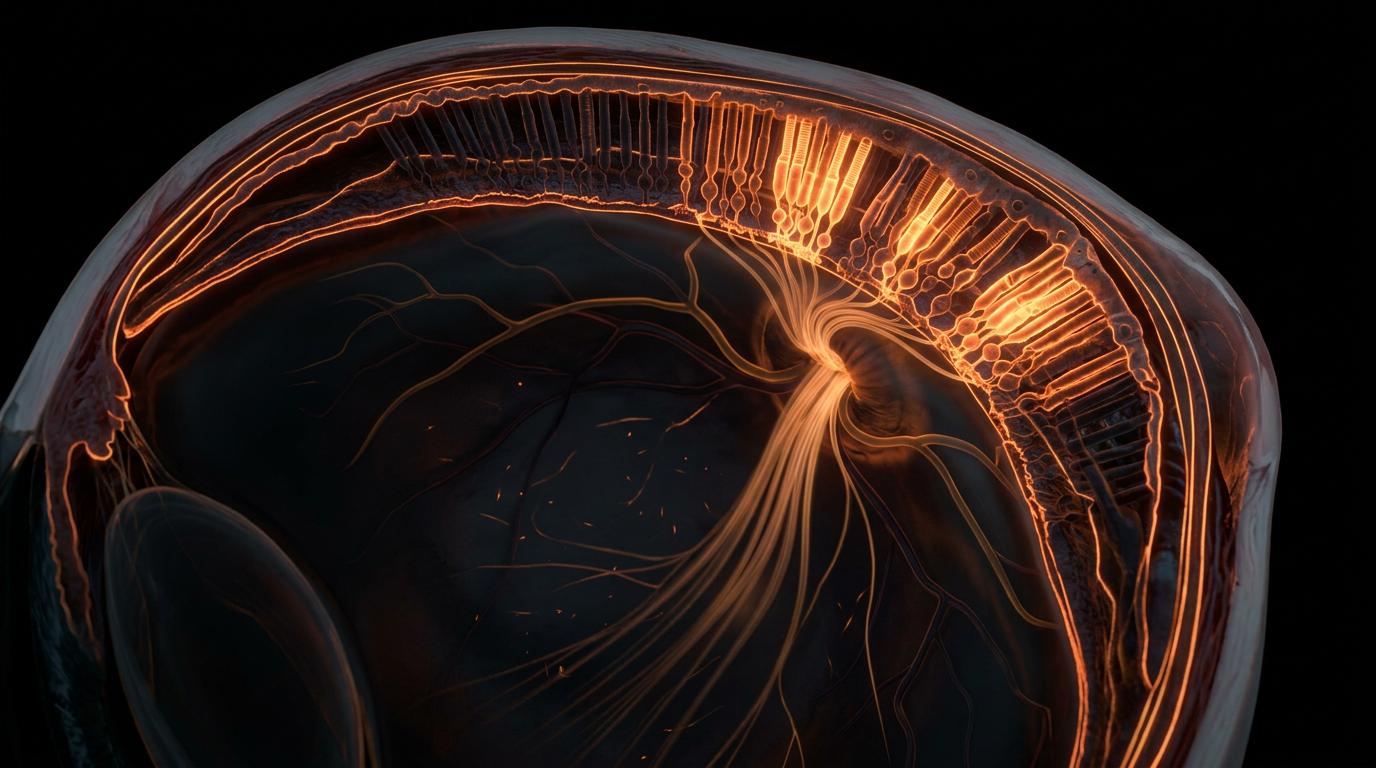
Myopia occurs when the eye grows too long from front to back—this is known as axial elongation. When the eyeball becomes prolate (egg-shaped), the light focused by the lens falls short of the retina, landing in the vitreous humour instead. The result is a blurred image of distant objects.
What drives this growth? Traditionally, the "Near-Work Hypothesis" dominated. The theory suggested that constant reading or screen use caused "accommodative lag," where the eye’s focusing muscle (the ciliary muscle) becomes fatigued, leading to a persistent blur that signals the eye to grow longer to compensate. However, modern research, including the seminal Sydney Myopia Study, has pivoted the focus. It is not just what children are doing (reading); it is where they are not (outdoors).
The Scleral Response
The outer shell of the eye, the sclera, is a dense, fibrous tissue composed mainly of collagen. In a myopic eye, the sclera undergoes structural thinning and weakening. This isn't just a passive stretching; it is an active biochemical remodelling. The eye is effectively trying to "find" the focal point by expanding its boundaries. This process is governed by a complex signaling cascade that starts in the retina and ends with the fibroblasts in the sclera.
Mechanisms at the Cellular Level
At the heart of the myopia crisis lies a specific neurotransmitter: Dopamine. For decades, dopamine was viewed through the lens of reward and motivation in the brain. However, the retina possesses its own independent dopaminergic system, which acts as the "stop signal" for ocular growth.
The Role of Retinal Dopamine
When the eye is exposed to high-intensity light—specifically the full-spectrum light provided by the sun—specialised cells in the retina (amacrine cells) release dopamine. This dopamine interacts with D1 and D2 receptors to inhibit the elongation of the eyeball.
BIOLOGICAL FACT: Natural sunlight provides between 10,000 to 100,000 lux of light intensity. Even the most brightly lit UK classroom rarely exceeds 500 lux. The retinal "dopamine pump" simply cannot activate under artificial lighting.
The Cascade of Growth Factors
When dopamine levels are low due to chronic indoor confinement, a series of growth factors take over. One of the most significant is Transforming Growth Factor-beta (TGF-β). In the absence of dopamine-driven inhibition, TGF-β signaling changes, leading to the activation of Matrix Metalloproteinases (MMPs). These enzymes begin to break down the collagen matrix of the sclera. As the sclera loses its rigidity, the internal pressure of the eye (intraocular pressure) pushes the posterior pole of the eye outward.
The Choroidal Buffer
The choroid is the vascular layer between the retina and the sclera. Recent imaging has shown that the choroid thins significantly before axial elongation begins. This thinning is thought to be an early biomarker of myopia progression. Sunlight exposure increases choroidal blood flow and thickness, providing a physical buffer against elongation. Conversely, the blue-weighted, low-intensity light of LED screens and fluorescent tubes promotes choroidal thinning, "opening the gates" for the eye to stretch.
Environmental Threats and Biological Disruptors
The modern UK child exists in a biological "twilight zone." We have evolved for millions of years under the cyclical rhythms of the sun, yet within the span of two generations, we have moved almost entirely indoors.
The "Visual Diet" Deficiency
Just as a lack of Vitamin C causes scurvy, a lack of lux-hours causes myopia. The visual system requires a specific "diet" of light to calibrate itself. This diet must include:
- High Intensity: To trigger dopamine.
- Full Spectrum: Including ultraviolet (UV) and infrared (IR) wavelengths.
- Peripheral Stimulation: Looking at distant horizons rather than fixed, close-up targets.
The Blue Light Paradox
While much is said about "harmful blue light" from screens, the real issue is the type of blue light. Digital screens emit a narrow-band, high-energy visible (HEV) blue light. Natural sunlight also contains blue light, but it is balanced by high levels of Near-Infrared (NIR) light. NIR has been shown to have a protective, regenerative effect on mitochondrial function in the retina. By isolating blue light from its natural counterpart, artificial screens create a state of retinal oxidative stress, which further accelerates the myopia signaling pathway.
The Confinement of Space
In the UK's dense urban environments—London, Manchester, Birmingham—children's visual fields are physically constrained. The "infinite focus" required to look at a distant tree or a cloud is rarely practiced. Instead, the eye is trapped in a 3x3 metre room. This lack of optical infinity prevents the ciliary muscle from ever fully relaxing, leading to a state of permanent tension that encourages axial growth.
CRITICAL DATA POINT: Research indicates that for every additional hour a child spends outdoors per week, the risk of developing myopia drops by approximately 2%.
The Cascade: From Exposure to Disease
We must stop viewing myopia as a simple need for glasses. It is the beginning of a pathological cascade. When the eye elongates, every tissue within it is stretched to its breaking point.
Retinal Thinning and Degeneration
As the eyeball grows, the retina—the "film" of the camera—is stretched over a larger surface area. It becomes thinner, especially at the periphery. This thinning leads to lattice degeneration, where the retina develops holes or tears.
The Threat of Retinal Detachment
In highly myopic eyes, the vitreous humour (the jelly inside the eye) can pull away from the stretched retina, causing a retinal detachment. This is a medical emergency that leads to permanent blindness if not treated immediately. UK hospitals have seen a steady rise in "myopic rhegmatogenous retinal detachment" in younger populations, a direct consequence of the elongation epidemic.
Myopic Macular Degeneration (MMD)
Unlike age-related macular degeneration, MMD affects the central vision of people in their 40s and 50s who have high axial lengths. The stretching of the Bruch’s membrane (a thin layer under the retina) causes it to crack (lacquer cracks), leading to bleeding and scarring in the centre of the vision.
Glaucoma and Cataracts
The structural changes in a myopic eye also interfere with the drainage of fluid, doubling the risk of glaucoma. Furthermore, the metabolic stress on the lens in an elongated eye leads to the development of cataracts decades earlier than in the general population.
What the Mainstream Narrative Omits
The current ophthalmic infrastructure in the UK is largely reactive. The standard "solution" offered by high-street opticians is a pair of single-vision lenses. While these lenses clear the central vision, they may actually be fueling the epidemic.
The Peripheral Defocus Trap
Standard glasses correct central vision by moving the focal point onto the macula. However, due to the shape of the eye, these lenses often push the light behind the retina in the periphery. This is known as peripheral hyperopic defocus. The peripheral retina detects this blur and, in an attempt to clear it, signals the eye to grow even longer. In essence, traditional glasses tell the eye: "Keep growing, you haven't reached the image yet."
The Pharmaceutical Oversight
There is a massive economic incentive to sell frames and lenses, but very little incentive to advocate for free, outdoor sunlight. Furthermore, the link between circadian rhythm disruption and myopia is often ignored. The eye's growth follows a diurnal rhythm—growing slightly during the day and shrinking slightly at night. By exposing children to artificial light late into the evening, we disrupt the melatonin-dopamine balance, preventing the eye from entering its "repair and consolidate" phase.
The Genetic Scapegoat
Parents are often told, "Well, you wear glasses, so it's only natural your child does too." This is a half-truth. While there are genetic predispositions (epigenetics), the genetic blueprint requires an environmental trigger. A child with "myopia genes" who spends 3 hours a day in the sun will likely never develop high myopia. A child with "perfect genes" who is raised in a darkened room with a tablet will almost certainly become myopic. We are blaming the blueprint for the failures of the builder.
CRITICAL DATA POINT: In 1950, myopia rates in some Asian populations were 10-20%. After the rapid urbanisation and intensification of the school system, those rates have soared to 90% in school-leavers. Genetics did not change; the environment did.
The UK Context
The United Kingdom presents a unique "perfect storm" for myopia development. Our climate, our education system, and our urban planning all contribute to the degradation of children's vision.
The British Weather Factor
With an average of 1,400 to 1,600 hours of sunshine per year (compared to 3,000+ in parts of Australia or the Mediterranean), UK children have fewer "organic" opportunities for high-lux exposure. The grey, overcast skies of a British winter often provide less than 2,000 lux—barely enough to hit the dopamine threshold. This means that when the sun does shine, it is not a luxury; it is a biological necessity.
The Early Schooling Mandate
The UK has one of the youngest school-starting ages in Europe. Children are placed in brightly lit, confined classrooms at age 4 or 5, just as their eyes are entering a critical phase of emmetropisation. In countries like Finland, where formal schooling (and the associated near-work intensity) starts later, myopia rates have historically been lower. The "National Curriculum" is inadvertently a curriculum for myopia, prioritising indoor desk-work over outdoor somatic learning.
The "Screen-First" Education Policy
The push for "Digital Literacy" in UK primary schools has led to the widespread adoption of tablets and interactive whiteboards. While technologically progressive, this has resulted in a massive increase in near-point focal demand. Children are now "tethered" to screens from 9 AM to 3:30 PM, with only a brief 30-minute "playtime" (often spent in a shaded or paved courtyard) to compensate.
Protective Measures and Recovery Protocols
As researchers at INNERSTANDING, we do not believe in a "pill for every ill." The solution to a biological mismatch is biological realignment. Here is our protocol for halting axial elongation and protecting the future of UK vision.
1. The "Two-Hour Sun Mandate"
The single most effective intervention is time spent outdoors. Research shows that 120 minutes of outdoor exposure per day is the "tipping point" for myopia prevention. This does not require direct sunlight; even under a cloudy UK sky, the lux levels are significantly higher than indoors.
- Protocol: Ensure children spend every break time and lunch hour outdoors, regardless of the weather. Implement "Outdoor Classrooms" for non-digital subjects.
2. The 20-20-20 Rule (Modified)
The standard 20-20-20 rule (every 20 minutes, look at something 20 feet away for 20 seconds) is insufficient for a developing eye.
- Protocol: For every 20 minutes of near-work, the child needs 60 seconds of horizon gazing. They should look as far as the landscape allows, consciously relaxing the muscles around the eyes.
3. Peripheral Defocus Management
If a child is already myopic, standard glasses may be worsening the condition.
- Protocol: Consult with a myopia management specialist regarding DIMS (Defocus Incorporated Multiple Segments) lenses or H.A.L.T. (Highly Aspherical Lenslet Target) technology. These lenses correct the central vision while creating a "myopic defocus" in the periphery, which acts as a chemical and mechanical "stop signal" for eye growth.
4. Low-Dose Atropine
While we advocate for environmental change first, low-dose atropine drops (0.01% to 0.05%) have shown significant efficacy in slowing axial elongation. Atropine works by blocking certain receptors in the sclera, preventing the collagen remodeling that allows the eye to stretch.
- Protocol: To be used only under strict ophthalmological supervision in rapidly progressing cases.
5. Red Light Therapy (RLT)
Emerging clinical trials, particularly the Repeated Low-Level Red Light (RLRL) therapy, have shown a 60-80% reduction in myopia progression. Red light (650nm) penetrates deep into the ocular tissues, improving mitochondrial function in the retina and increasing choroidal thickness.
- Protocol: This technology is currently being rolled out in specialist clinics. It involves a 3-minute session twice daily, mimicking the red/infrared light of a sunset.
CRITICAL DATA POINT: Clinical trials in 2022 showed that children using Red Light Therapy experienced a significant reduction in axial elongation, with some even showing a "shortening" of the axial length—a feat previously thought impossible.
6. Optimising the Indoor Environment
Since we cannot be outdoors 24/7, we must bring the outdoors in.
- Protocol: Replace standard LED bulbs with Full-Spectrum lighting. Increase window sizes where possible. Use "Paper-white" or E-ink tablets rather than backlit LED screens to reduce the high-energy blue light spike.
Summary: Key Takeaways
The myopia epidemic is a physical manifestation of our departure from the natural world. Our children’s eyes are stretching because they are starving for light and distance.
- Myopia is Structural: It is the physical elongation of the eyeball (axial length), not just a "focusing issue."
- Dopamine is the Key: High-intensity sunlight triggers retinal dopamine, the primary "stop signal" for eye growth.
- The UK Crisis: Our indoor-centric education and grey climate have created a "perfect storm" for vision loss.
- Glasses Can Be Part of the Problem: Standard single-vision lenses can promote further elongation via peripheral defocus.
- Action is Mandatory: 2 hours of daily outdoor time and "visual breaks" are non-negotiable for ocular health.
At INNERSTANDING, we believe that vision is a birthright, not a luxury. If we do not act now to change the environmental landscape of our schools and homes, we are sentencing an entire generation to a lifetime of visual impairment. The eye is the window to the soul, but it is also a biological sensor that requires the sun to find its true shape. Let us return our children to the light.
Author: Senior Biological Researcher, INNERSTANDING Health Education Platform Date: October 2023 Subject: Visual Science and Paediatric Ocular Development
This article is provided for informational and educational purposes only. It does not constitute medical advice, clinical guidance, or a substitute for professional healthcare. Information reflects cited research at time of publication. Always consult a qualified healthcare professional before acting on any health information.
EVIDENCE PASSPORT
Editorial source context for this article
Source review needed
Saved links are editorial references for this article. They may support specific claims rather than every sentence. Open and assess each source in context. This passport does not independently verify them.
Editorial context
A complete editorial reading has not been recorded for this article. Source links remain available for you to open and assess directly.
Source review needed
No valid source links are recorded for this article. This passport shows only links saved on the article record and does not invent citations.
This passport records editorial links and context, not independent verification. Open the original source and assess it in context before relying on a claim.
Medical Disclaimer
The information in this article is for educational purposes only and does not constitute medical advice, diagnosis, or treatment. Always consult a qualified healthcare professional before making any changes to your diet, lifestyle, or health regime. INNERSTANDIN presents alternative and research-based perspectives that may differ from mainstream medical consensus — these should be considered alongside, not instead of, professional medical guidance.
Read Full DisclaimerContinue the thread
Keep this question moving.
Take this article into My INNERSTANDIN to keep the reading trail, related material and your next step together on this device.