
Neonatal Light Pollution: Circadian Disruption in Maternity Wards
Updated May 2026
High levels of artificial blue light in maternity wards disrupt the circadian rhythms of both mother and newborn. This disruption can interfere with sleep architecture and hormonal regulation.
Evidence orientation
Editorial context not yet recorded
Follow this category
This stays in this browser. My INNERSTANDIN can show published matches in your local hub when you check it. It does not send email, push, or alert notifications.
Local learning review
A private browser aid for revisiting ideas. It is not an alert or a health recommendation.
Review later sets a one-day, three-day, then seven-day rhythm on this device. Choose it only when you want to revisit this article.
Overview
In the clinical sterility of the modern British maternity ward, a silent, invisible toxin permeates the atmosphere. It is not a chemical pathogen, nor a biological contaminant, but a spectral one: Artificial Light at Night (ALAN). For decades, the medical establishment has prioritised visibility and staff efficiency over the fundamental biological requirements of the mother-infant dyad. As a senior researcher at INNERSTANDING, my investigation into the photobiological environment of neonatal care reveals a staggering misalignment between hospital infrastructure and the evolutionary blueprints of human development.
The transition from the womb—a realm of near-total darkness and rhythmic maternal cues—to the high-intensity, blue-enriched environment of a contemporary Labour and Delivery (L&D) suite or Neonatal Intensive Care Unit (NICU) represents a profound Birth Trauma. This is not merely a matter of comfort; it is a systemic disruption of the circadian system, the master regulatory clock that governs almost every physiological process from gene expression to hormonal flux.
Current lighting standards in the UK, predominantly driven by the push for energy-efficient LEDs, expose neonates to a spectral power distribution (SPD) that is fundamentally alien to their biological needs. By saturating the environment with short-wavelength blue light (450–480 nm), we are effectively inhibiting the production of melatonin, the "hormone of darkness," at a critical developmental window. The result is a cascade of neuroendocrine disruption that affects sleep architecture, metabolic programming, and the formation of the nascent immune system. This article serves as a comprehensive deconstruction of how neonatal light pollution is re-wiring the next generation before they have even left the hospital.
Fact: The intensity of light in a standard NICU can reach 1,000 lux or higher, nearly 100 times the threshold required to suppress melatonin in a developing infant.
The Biology — How It Works
To understand the impact of light pollution, one must first appreciate the elegance of the maternal-foetal circadian interface. Humans are rhythmic beings; our physiology is synced to the 24-hour solar cycle via the Suprachiasmatic Nucleus (SCN), a pair of small nuclei in the hypothalamus.
The Maternal-Foetal Rhythmic Bridge
During gestation, the foetus does not possess a fully functioning independent circadian clock. Instead, it relies on the mother as a "biological proxy." Maternal rhythms in temperature, cortisol, and—most importantly—melatonin are transmitted across the placenta.
- Melatonin Transfer: The foetal SCN expresses melatonin receptors (MT1) long before it can produce its own melatonin. The mother’s nocturnal melatonin rise provides the foetus with a "chemical signal" of night, essential for coordinating the development of organ systems.
- Gene Priming: This rhythmic exposure primes the expression of "Clock Genes" (such as PER1, PER2, CLOCK, and BMAL1) in the foetal tissues, preparing the newborn for the transition to the extrauterine world.
The Neonatal Shift
Upon birth, the infant enters a state of "circadian transition." While the SCN is present, its internal synchronisation and its coupling with external light cues take weeks, if not months, to mature. This is a period of extreme neuroplasticity. The infant's brain is effectively "calibrating" its internal clock based on the light signals it receives from its new environment.
In a natural setting, the infant would be exposed to low-intensity, long-wavelength light (fire, twilight) and total darkness at night. In the modern maternity ward, this calibration is hijacked. The high-energy visible (HEV) blue light from overhead fluorescents and LED monitors provides a constant "daylight" signal, preventing the SCN from establishing a nocturnal baseline. This leads to circadian desynchrony, where the body’s internal processes are out of sync with each other and the external world.
Mechanisms at the Cellular Level
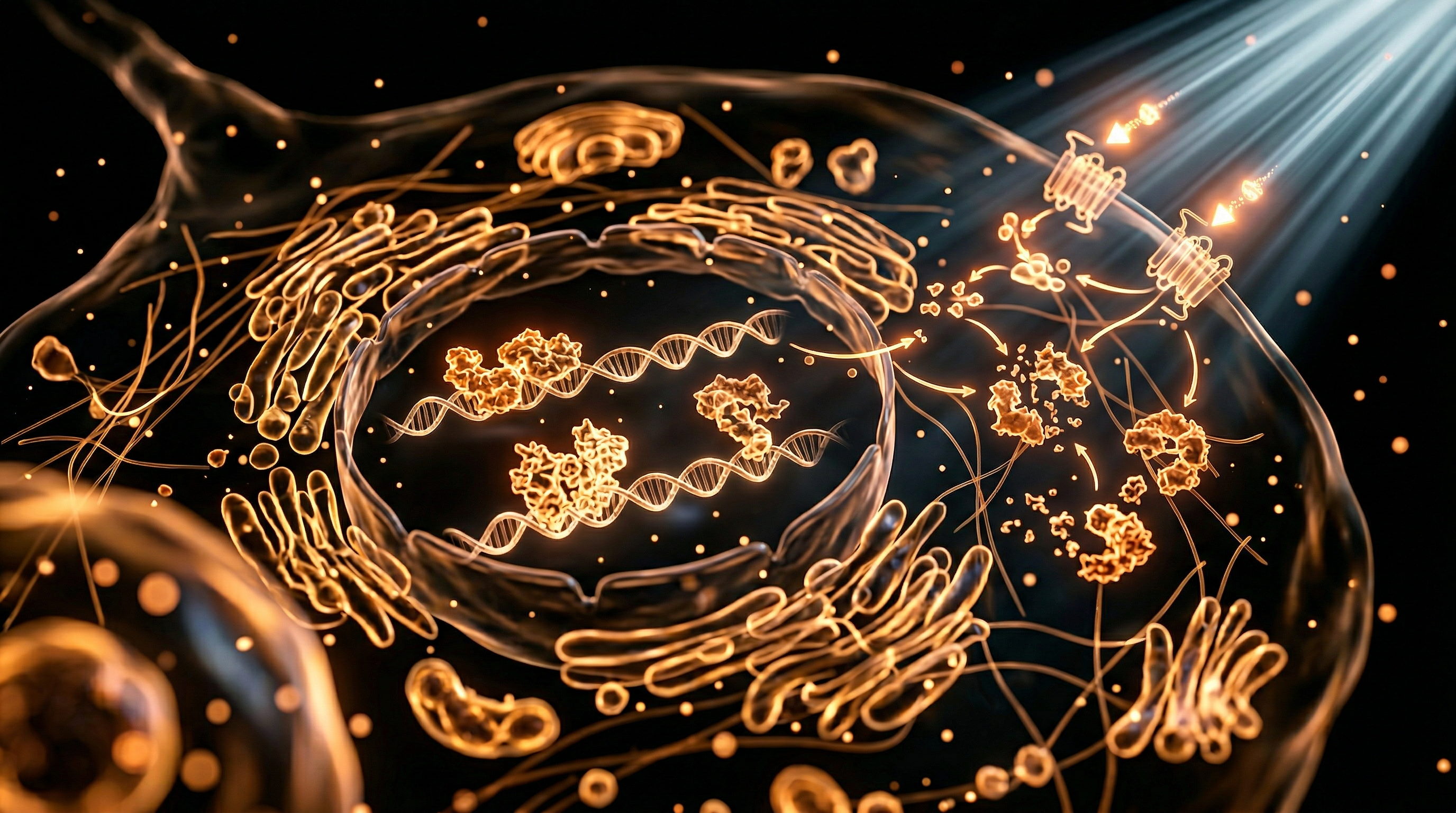
The damage of light pollution is not merely psychological; it is deeply molecular. The primary sensor for this disruption is a specialised group of cells in the retina known as Intrinsically Photosensitive Retinal Ganglion Cells (ipRGCs).
The Role of Melanopsin
Unlike the rods and cones we use for vision, ipRGCs contain a photopigment called melanopsin. Melanopsin is exquisitely sensitive to blue light. When these cells are stimulated, they send signals via the Retino-Hypothalamic Tract (RHT) directly to the SCN.
- Melatonin Suppression: The SCN signals the pineal gland to halt the production of melatonin. Because melatonin is a potent antioxidant and neuroprotectant, its suppression during the neonatal period increases oxidative stress in the developing brain.
- Glutamate Excitotoxicity: High-intensity light exposure has been linked to increased glutamate levels in the neonatal brain, which can lead to neuronal damage—a process known as excitotoxicity.
Mitochondrial Dysfunction
Recent research suggests that the impact of light goes deeper than the SCN. Mitochondria, the powerhouses of our cells, possess their own sensitivity to light spectra.
- Cytochrome c Oxidase: This enzyme in the mitochondrial respiratory chain is sensitive to red and near-infrared light, which generally aids in energy production and cellular repair.
- The Blue Light Tax: Conversely, excessive blue light exposure without the balancing presence of red/infrared (as found in natural sunlight) can lead to mitochondrial fragmentation and the overproduction of Reactive Oxygen Species (ROS). In a neonate, whose antioxidant defences are still maturing, this oxidative load can damage DNA and impair cellular differentiation.
Epigenetic Modulation
The most alarming mechanism is the epigenetic impact of light. Circadian disruption can lead to the methylation of promoter regions of key developmental genes. By altering the timing of gene expression during the "first 1000 days," light pollution may be "programming" the infant for future metabolic and psychological disorders.
Statistic: Studies show that infants in cycled-light environments (dim at night) gain weight 15% faster and reach hospital discharge readiness significantly earlier than those in constant-light environments.
Environmental Threats and Biological Disruptors
The modern maternity environment is a "perfect storm" of biological disruptors. We have replaced the gradual transitions of the sun with the binary, harsh glare of industrial lighting.
The LED Revolution
In the UK, the NHS has aggressively transitioned to LED lighting to meet carbon reduction targets. While energy-efficient, standard white LEDs have a significant "blue peak" at approximately 450nm. This is the exact wavelength that most aggressively suppresses melatonin and activates the stress response.
Blue Light Sources in the Ward:
- Phototherapy Units: Used to treat neonatal jaundice, these units provide intense blue light. While necessary for bilirubin breakdown, their use often lacks "light hygiene" for the rest of the infant's body and eyes, or for the mother nearby.
- Medical Monitors: Pulse oximeters, heart monitors, and computer screens emit constant blue light 24/7.
- The "Overnight Check": Midwives often use bright overhead lights or high-intensity torches to check on infants during the night, causing an immediate spike in the infant's cortisol levels.
The Loss of the Infrared Buffer
Natural sunlight is composed of roughly 50% infrared light. Infrared has a healing, anti-inflammatory effect that balances the high-energy blue light of the sun. Hospital lighting provides zero infrared. We are subjecting neonates to an "unbalanced" spectrum that has no precedent in human evolution. This "spectral malnutrition" is a significant, yet ignored, contributor to neonatal stress.
The Cascade: From Exposure to Disease
The disruption of the circadian rhythm in the first days of life does not end at discharge. It initiates a physiological cascade that can manifest as chronic pathology years later.
Immediate Effects: Sleep and Feeding
The most immediate casualty is sleep architecture. Neonates exposed to constant light suffer from fragmented sleep, missing out on critical REM (Rapid Eye Movement) cycles essential for synaptogenesis (the formation of brain connections).
- Breastfeeding Complications: Melatonin is naturally passed through breast milk, with levels peaking at night. If the mother’s melatonin is suppressed by ward lighting, the infant receives a "flat" hormonal signal through the milk, further confusing their internal clock and leading to feeding difficulties and irritability.
The Neurodevelopmental Link
There is a growing body of evidence linking early-life circadian disruption to neurodevelopmental disorders.
- ADHD and Autism: Proper circadian signalling is essential for the maturation of the dopaminergic and serotonergic systems. Interrupting these signals via light pollution may increase the risk of ADHD and sensory processing issues.
- Cognitive Impairment: Animal models show that chronic light exposure during infancy leads to permanent changes in the hippocampus, the area of the brain responsible for memory and learning.
Metabolic Programming and Obesity
The SCN controls the rhythm of insulin sensitivity and glucose metabolism. Infants exposed to constant light are at a higher risk of developing "metabolic asynchrony."
- Adiposity: Disrupted rhythms lead to altered leptin and ghrelin (hunger hormones) levels. This sets a "metabolic set-point" that favours fat storage, potentially explaining the skyrocketing rates of childhood obesity in urban environments where light pollution is prevalent.
Immune System Suppression
Melatonin is a primary regulator of the immune system, particularly the maturation of T-lymphocytes. By suppressing melatonin during the neonatal period, we may be handicapping the child’s ability to mount effective immune responses or increasing the risk of autoimmune conditions later in life.
Important Callout: Circadian disruption is now classified by the WHO as a "probable carcinogen" in adults. We are currently subjecting our most vulnerable population—newborns—to this same disruption during their most critical phase of growth.
What the Mainstream Narrative Omits
The mainstream medical narrative frames hospital lighting as a neutral, "safe" background element. This is a profound scientific oversight—or perhaps a convenient one.
The Myth of "Neutral" Light
Mainstream guidelines focus almost exclusively on Lux (intensity) rather than SPD (spectral power distribution). They assume that as long as the light isn't "too bright," it is safe. This ignores the fact that even low levels of blue-enriched light can be more biologically disruptive than high levels of warm, red-shifted light. The industry ignores the "biological potency" of the spectrum because LEDs are cheaper to run.
The Focus on Visibility over Vitality
The hospital is designed for the observer (the clinician), not the observed (the patient). The constant lighting is maintained to ensure that staff can monitor skin colour or read charts at any moment. While monitoring is vital, the technology exists to monitor infants without destroying their hormonal health (e.g., infrared cameras, wearable sensors, red-shifted task lighting). The failure to adopt these is a failure of institutional will, not technological capability.
The Suppression of the "Dark Phase"
Western medicine has a bias toward "activity" and "intervention." Darkness is viewed as a lack of something—an absence of data. In reality, Darkness is a biological requirement. It is during the dark phase that the body performs its most critical "maintenance" work: DNA repair, protein synthesis, and neuro-pruning. By eliminating darkness, the modern maternity ward prevents the "healing phase" of birth recovery from ever truly beginning.
Pharmaceutical Dependency
By ignoring light as a biological variable, the medical system often treats the symptoms of circadian disruption (agitation, poor sleep, digestive issues) with pharmaceutical interventions rather than addressing the root cause: the light environment. This creates a cycle of dependency and trauma that could be avoided with simple environmental adjustments.
The UK Context
In the United Kingdom, the state of neonatal lighting is particularly concerning due to the ageing infrastructure of many NHS trusts and the rigid adherence to outdated Health Technical Memoranda (HTM).
NHS Lighting Standards: A Fossilised System
Most UK hospitals follow HTM 08-01, which focuses on "lighting and visual comfort." These documents were written before the full discovery of the ipRGC pathway and its impact on neonatal health. Consequently, they lack any specific requirements for "circadian-friendly" lighting or the mitigation of blue light at night.
The "Postcode Lottery" of NICU Care
There is a massive disparity in how light is managed across the UK. Some newer, flagship hospitals (such as those built under the PFI schemes) have integrated "smart" lighting systems that dim at night. However, many older Victorian or mid-century NHS buildings rely on harsh, non-dimmable fluorescent tubes.
- Staff Education: There is currently no mandatory training for NHS midwives or neonatal nurses regarding photobiology. Many staff members are unaware that turning on an overhead light for a nappy change at 3:00 AM can reset an infant's biological clock for the next three days.
The BREEAM Trap
While the Building Research Establishment Environmental Assessment Method (BREEAM) encourages energy efficiency in hospital builds, it often inadvertently promotes high-blue LED systems because they use the least energy per square metre. This creates a situation where "green" building certifications are achieved at the direct expense of "biological" health.
Protective Measures and Recovery Protocols
Given the systemic failure to protect the neonatal light environment, parents and progressive clinicians must take proactive steps to mitigate the damage.
Immediate Environmental Adjustments
- Cycled Lighting: The most critical intervention is the implementation of a 12/12 light/dark cycle. In the NICU, "quiet hours" should involve turning off all non-essential lights and using red-tinted covers for incubators.
- Amber/Red Task Lighting: Instead of overhead "cool white" lights, staff should use small, amber-hued clip lights (under 2000K) for nocturnal checks. This provides visibility without suppressing melatonin.
- Blue-Blocker Shields: For infants in phototherapy, the use of high-quality, snug-fitting eye protection is non-negotiable. Furthermore, shields should be placed around the unit to protect other infants and the mother from "spill-over" blue light.
Maternal Protective Protocols
Since the mother is the primary circadian signal for the newborn, her light hygiene is paramount.
- Blue-Blocking Glasses: Mothers in the ward should wear high-quality orange-tinted "blue blockers" after 8:00 PM. This preserves her own melatonin levels, ensuring her breast milk contains the necessary nocturnal signals for the baby.
- Skin-to-Skin (Kangaroo Care): This practice is not just about warmth; it is a rhythmic "re-setting." Skin-to-skin contact synchronises the mother’s and infant’s heart rates and temperatures, providing a non-photic circadian cue that can help override the disruptive light environment.
Nutritional Support
- Timed Breastfeeding: If expressing milk, mothers should label milk as "AM" or "PM." PM milk, rich in melatonin and tryptophan, should only be given at night to help the infant establish a sleep-wake cycle.
- Antioxidant Support: For mothers, a diet rich in polyphenols can help combat the oxidative stress induced by the harsh hospital environment.
Long-Term Recovery at Home
Upon returning home, a "circadian detox" is often necessary.
- The "Low Blue" Home: Replace LED bulbs in the nursery with incandescent or "flicker-free" amber bulbs.
- Morning Sunlight: Exposure to natural, unfiltered sunlight within 30 minutes of waking is the most powerful way to "anchor" the infant’s SCN and begin the process of healing from the ward's light pollution.
Summary: Key Takeaways
The modern maternity ward, despite its technological prowess, is a site of significant chronobiological trauma. The failure to respect the "dark phase" of human development is a systemic oversight with far-reaching consequences for public health.
- The Primary Culprit: Short-wavelength blue light (450–480 nm) emitted by LEDs and medical screens.
- The Biological Victim: The Intrinsically Photosensitive Retinal Ganglion Cells (ipRGCs) which signal the brain to stop producing melatonin.
- The Resulting Cascade: Disrupted sleep, increased oxidative stress, altered metabolic programming, and potential neurodevelopmental risks like ADHD.
- The Systemic Failure: UK hospital standards (HTM) prioritise energy efficiency and clinician visibility over the biological "light hygiene" of the infant.
- The Solution: A paradigm shift toward Cycled Lighting, the use of Red-shifted spectra at night, and the protection of the maternal-foetal melatonin bridge.
As we move forward, it is imperative that we view light not just as a tool for seeing, but as a powerful drug that must be "dosed" correctly. The first few days of life should be spent in a gentle, rhythmic transition—not under the unyielding glare of a spectral assault. It is time for INNERSTANDING to lead the call for "Circadian Integrity" in the birth room. Only by returning to the wisdom of the natural light cycle can we hope to protect the foundational health of the next generation.
This article is provided for informational and educational purposes only. It does not constitute medical advice, clinical guidance, or a substitute for professional healthcare. Information reflects cited research at time of publication. Always consult a qualified healthcare professional before acting on any health information.
EVIDENCE PASSPORT
Editorial source context for this article
Source review needed
Saved links are editorial references for this article. They may support specific claims rather than every sentence. Open and assess each source in context. This passport does not independently verify them.
Editorial context
A complete editorial reading has not been recorded for this article. Source links remain available for you to open and assess directly.
Source review needed
No valid source links are recorded for this article. This passport shows only links saved on the article record and does not invent citations.
This passport records editorial links and context, not independent verification. Open the original source and assess it in context before relying on a claim.
Medical Disclaimer
The information in this article is for educational purposes only and does not constitute medical advice, diagnosis, or treatment. Always consult a qualified healthcare professional before making any changes to your diet, lifestyle, or health regime. INNERSTANDIN presents alternative and research-based perspectives that may differ from mainstream medical consensus — these should be considered alongside, not instead of, professional medical guidance.
Read Full DisclaimerContinue the thread
Keep this question moving.
Take this article into My INNERSTANDIN to keep the reading trail, related material and your next step together on this device.
Dig deeper in the Library
Free, longform PDF volumes that go beyond headlines into mechanisms and references.