
Neural Progenitors: Recovering Brain Function After Ischemic Stroke
Updated May 2026
Stem cell therapy aims to replace neurons lost during a stroke by activating endogenous neural progenitors. Discover the biological mechanisms that could restore mobility and speech in UK stroke survivors.
Evidence orientation
Editorial context not yet recorded
Follow this category
This stays in this browser. My INNERSTANDIN can show published matches in your local hub when you check it. It does not send email, push, or alert notifications.
Local learning review
A private browser aid for revisiting ideas. It is not an alert or a health recommendation.
Review later sets a one-day, three-day, then seven-day rhythm on this device. Choose it only when you want to revisit this article.
Overview
The human brain, long considered a static organ incapable of significant regeneration after adulthood, is currently the focal point of a paradigm shift in regenerative medicine. Ischaemic stroke, which accounts for approximately 85% of all stroke cases in the United Kingdom, represents one of the most devastating neurological events an individual can survive. It occurs when a thrombus or embolus obstructs blood flow to a specific region of the brain, depriving neurons of oxygen and glucose, leading to rapid cellular death. For decades, the medical establishment has operated under the grim assumption that once these neurons are lost, they are gone forever, leaving survivors with permanent deficits in mobility, cognition, and speech.
However, the discovery of Neural Progenitor Cells (NPCs) and the innate neurogenic niches within the adult human brain has challenged this dogma. NPCs are multipotent cells capable of differentiating into neurons, astrocytes, and oligodendrocytes. While the primary function of these cells in adulthood was once thought to be limited to memory formation in the hippocampus, we now understand that the brain possesses a latent, albeit suppressed, ability to repair its own circuitry.
At INNERSTANDING, we believe that the current standard of care—which focuses almost exclusively on "compensation" through physiotherapy rather than "regeneration" through biological activation—is fundamentally incomplete. The emergence of stem cell science suggests that we can do more than merely teach a stroke survivor how to live with a disabled limb; we can potentially regrow the neural pathways required to move that limb. This article explores the intricate biological mechanisms of endogenous neural progenitors, the environmental factors that currently hinder their activation, and the protocols required to unlock the brain's restorative potential.
Fact: Stroke is the single largest cause of adult disability in the UK, with over 100,000 people experiencing a stroke every year. Current estimates suggest that over 1.3 million people in Britain are living with the long-term effects of stroke.
The Biology — How It Works
To understand how the brain might repair itself, one must first understand the "nursery" of the brain: the neurogenic niches. In the adult mammalian brain, there are two primary regions where Neural Progenitor Cells reside and proliferate:
- The Subventricular Zone (SVZ): Located in the lateral walls of the lateral ventricles. This is the largest reservoir of NPCs.
- The Subgranular Zone (SGZ): Located within the dentate gyrus of the hippocampus, primarily responsible for memory and learning.
When an ischaemic event occurs, the brain releases a "distress signal" in the form of chemokines and growth factors. This signal reaches the SVZ, triggering a process known as reactive neurogenesis. Under ideal conditions, these progenitor cells begin to divide and migrate toward the site of the injury—the ischaemic penumbra.
The Recruitment of Endogenous Stem Cells
Unlike exogenous stem cell therapy, which involves injecting lab-grown cells into the patient, endogenous therapy seeks to "awaken" the cells already present. These NPCs are highly sensitive to the microenvironment. Following a stroke, the brain attempts to reorganise its structure through Neuroplasticity, but this process is often thwarted by the rapid formation of a glial scar.
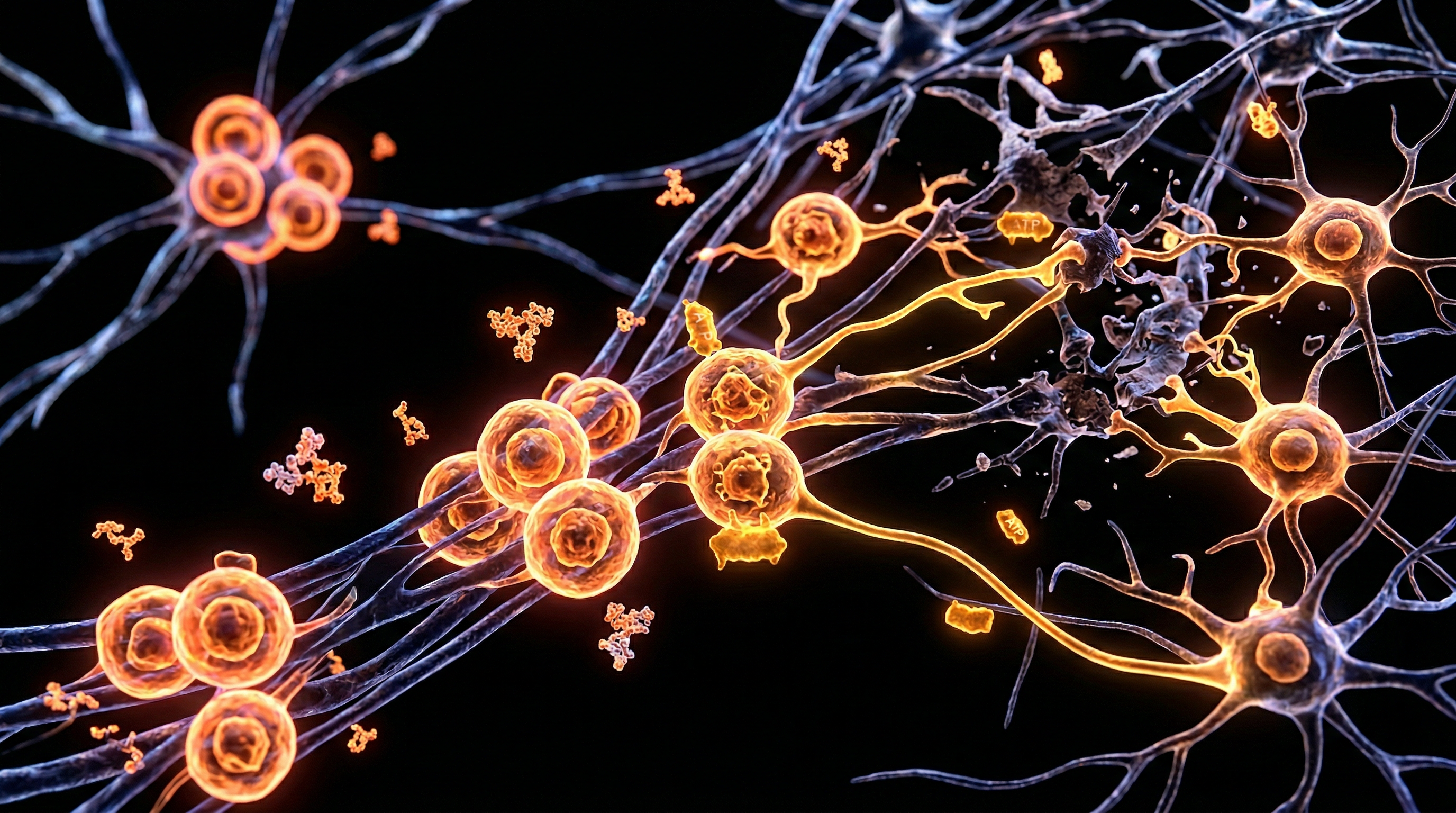
The transition from a "quiescent" (sleeping) state to an "activated" state involves the upregulation of specific transcription factors. The cells transform into neuroblasts, which use the brain’s blood vessels as a physical scaffolding to crawl toward the damaged tissue. This symbiotic relationship between new blood vessels (angiogenesis) and new neurons (neurogenesis) is known as the Neurovascular Unit (NVU).
The Role of BDNF and GDNF
Crucial to this biological "construction site" are neurotrophic factors, most notably Brain-Derived Neurotrophic Factor (BDNF) and Glial Cell-Derived Neurotrophic Factor (GDNF). These proteins act as both the "fuel" and the "GPS" for migrating NPCs. Without sufficient levels of BDNF, progenitor cells may reach the site of the stroke but fail to survive or differentiate into functional neurons. They essentially "stall" and eventually die, a phenomenon that explains why natural recovery often plateaus after a few months.
Mechanisms at the Cellular Level
The recovery of function—be it the ability to grip a cup or speak a coherent sentence—depends on the successful execution of four cellular stages: Proliferation, Migration, Differentiation, and Integration.
1. Proliferation and the Notch Signaling Pathway
The first stage is the rapid multiplication of NPCs. This is heavily regulated by the Notch signaling pathway. Notch is a transmembrane protein that determines cell fate. In the context of a stroke, Notch signaling must be precisely balanced. If it is overactive, the cells remain in a stem-like state and never become neurons. If it is underactive, the pool of progenitor cells is exhausted too quickly.
2. Migration: The "Ariadne’s Thread" of Recovery
Once produced, neuroblasts must navigate through the complex terrain of the brain. They follow a gradient of SDF-1 (Stromal Cell-Derived Factor-1), which is secreted by the damaged ischaemic tissue. This chemical trail acts like a beacon. However, the migration is often interrupted by the Glial Scar, a dense barrier of astrocytes and chondroitin sulfate proteoglycans (CSPGs) that forms to seal off the injury site. While the scar prevents the spread of inflammation, it also acts as a physical wall that NPCs cannot penetrate.
3. Differentiation: Choosing a Fate
Upon arriving at the penumbra (the salvageable area surrounding the dead core), the progenitor cell must decide what to become. In a healthy environment, it becomes a mature neuron. However, in the toxic, post-stroke environment—characterised by high acidity and low oxygen—many NPCs are forced to become astrocytes, contributing further to the scarring rather than the repair.
4. Synaptogenesis and Integration
The final and most difficult stage is integration. The new neuron must extend axons and dendrites to connect with existing networks. This is the biological basis for Synaptogenesis. For a UK stroke survivor to regain speech, these new neurons must successfully integrate into the Broca’s or Wernicke’s areas of the cortex and begin firing in synchrony with established neural circuits.
Fact: It is estimated that in a single ischaemic stroke, approximately 1.9 million neurons are lost every minute. The goal of NPC therapy is to offset this loss by facilitating the survival of the 'penumbra' and replacing the 'core'.
Environmental Threats and Biological Disruptors
The primary reason the brain often fails to heal itself is not a lack of "will" or "blueprint," but rather an internal environment that has become hostile to life. At INNERSTANDING, we investigate the factors that mainstream neurology frequently overlooks.
Neurotoxicity and Heavy Metals
The modern environment is saturated with neurotoxic elements that accumulate in the brain over decades. Aluminium, Lead, and Mercury are known to interfere with the signaling pathways required for NPC migration. Aluminium, in particular, has been shown to mimic iron in the brain, leading to oxidative stress that "paralyses" the mitochondria of neural progenitors. If the mitochondria—the power plants of the cell—cannot produce ATP, the NPC cannot fuel its journey to the site of the stroke.
The Glyphosate Factor
The UK’s agricultural reliance on certain herbicides, specifically glyphosate, poses a significant threat to the Blood-Brain Barrier (BBB). Glyphosate has been shown to disrupt the tight junctions of the gut lining and, by extension, the BBB. A "leaky brain" allows systemic toxins and pro-inflammatory cytokines into the neural niche, creating a state of chronic Neuroinflammation. In this inflamed state, the brain’s immune cells (microglia) switch from their "repair" mode (M2 phenotype) to a "warrior" mode (M1 phenotype), where they mistakenly attack and destroy new progenitor cells.
Electromagnetic Fields (EMF) and Calcium Channel Signaling
Emerging research suggests that the proliferation of high-frequency EMFs may interfere with Voltage-Gated Calcium Channels (VGCCs) in neural membranes. Since calcium signaling is the primary language through which NPCs communicate and decide when to differentiate, constant external interference may act as "noise" that prevents the brain's repair signals from being clearly heard at the cellular level.
The Cascade: From Exposure to Disease
The path from a stroke to permanent disability is not a single event but a biological cascade. Understanding this cascade is vital for identifying where we can intervene.
The Glutamate Storm (Excitotoxicity)
Immediately following the occlusion of a blood vessel, the affected neurons begin to leak Glutamate, the brain's primary excitatory neurotransmitter. In small amounts, glutamate is essential for thought; in the massive quantities seen during a stroke, it becomes a toxin. This "Glutamate Storm" overstimulates neighbouring neurons, causing them to take in too much calcium, which triggers Apoptosis (programmed cell death). This secondary wave of death often claims more brain tissue than the initial lack of oxygen.
Mitochondrial Dysfunction and ROS
As the cells struggle to survive, they produce vast amounts of Reactive Oxygen Species (ROS)—unstable molecules that tear through cellular membranes. This oxidative stress damages the DNA of the very neural progenitors the brain needs for repair. If the DNA of an NPC is damaged, it will either fail to divide or, worse, undergo a senescence-associated secretory phenotype (SASP), where it begins to secrete inflammatory signals that poison its neighbours.
The Failure of Autophagy
Autophagy is the body’s cellular "recycling" mechanism. In a healthy brain, autophagy clears out the debris of dead cells to make room for new ones. In the aftermath of a stroke, this system is often overwhelmed. The "rubble" of the stroke site—misfolded proteins and damaged organelles—physically blocks the path of NPCs and prevents the formation of new synapses.
Important Callout: Chronic metabolic dysfunction, particularly insulin resistance, is a primary driver of autophagy failure. UK stroke survivors with Type 2 diabetes or metabolic syndrome have significantly lower rates of endogenous NPC activation.
What the Mainstream Narrative Omits
The current medical narrative regarding stroke recovery is largely focused on pharmaceutical management (statins and blood thinners) and external rehabilitation. While these have their place, the omissions are glaring and, some would argue, systemic.
The Suppression of Metabolic Intervention
Mainstream protocols rarely mention the role of Ketosis in stroke recovery. Ketone bodies, specifically Beta-Hydroxybutyrate (BHB), serve as an alternative fuel source for struggling neurons and have been shown to be more efficient than glucose during ischaemic stress. Furthermore, BHB acts as a signaling molecule that upregulates BDNF, the very growth factor needed for NPC survival. Yet, the standard "hospital diet" in many UK wards remains high in refined carbohydrates, which spike insulin and suppress the very mechanisms of repair the patient needs.
The Pharmaceutical Bias against Endogenous Activation
There is little profit in teaching a patient how to activate their own internal stem cells through fasting, temperature stress, or specific phytonutrients. Instead, the industry focuses on developing "off-the-shelf" stem cell products which, while promising, are years away from general NHS availability and often fail to integrate because the patient’s internal environment remains toxic. Without addressing the underlying neuroinflammation and toxic load, even the most expensive stem cell injection will likely perish in the "ischaemic wasteland" of the post-stroke brain.
Ignoring the Vagus Nerve and Gut-Brain Axis
The connection between the gut and the brain is paramount. A significant portion of the "repair" signals for the brain originates in the enteric nervous system. The mainstream narrative often treats the brain as an isolated organ, ignoring the fact that a healthy gut microbiome produces short-chain fatty acids (SCFAs) like Butyrate, which are known to cross the BBB and promote neurogenesis.
The UK Context
In the United Kingdom, the "postcode lottery" of stroke care is a well-documented reality. While world-class research is being conducted at institutions like University College London (UCL) and the University of Edinburgh, the translation of these "bench-to-bedside" findings into the average NHS Trust is slow, often taking 10 to 15 years.
The NHS Burden and the "Maintenance" Model
The NHS is currently geared toward a model of "stabilisation and maintenance." Once a patient is out of the acute phase, the focus shifts to social care and basic physiotherapy. While the UK has some of the best acute stroke units in the world (Hyperacute Stroke Units or HASUs), the long-term regenerative phase is woefully underfunded.
British Research into NPCs
Britain remains a hub for stem cell innovation. UK-based clinical trials, such as the PISCES trials (sponsored by ReNeuron), have explored the use of neural stem cell lines injected directly into the brains of stroke survivors. While these trials showed safety and some improvements in motor function, they underscore the need for a more holistic approach that supports the survival of these cells once they are implanted—or, better yet, the activation of the patient’s own endogenous supply.
The Regulatory Environment
The UK’s regulatory environment for regenerative medicine is complex. While the MHRA (Medicines and Healthcare products Regulatory Agency) provides a framework for advanced therapy medicinal products (ATMPs), the path for "bio-hacking" or metabolic interventions is less clear. This creates a gap where patients are left to navigate the world of "alternative" neuro-regeneration without institutional guidance.
Protective Measures and Recovery Protocols
For those seeking to recover lost function or protect against the ravages of a future ischaemic event, a multi-faceted approach is required. This protocol focuses on creating a "pro-neurogenic" environment.
1. Metabolic Optimisation: The Fasting Mimicking State
Fasting is perhaps the most potent natural trigger for neurogenesis. Periodic prolonged fasting (under medical supervision) or a strict ketogenic diet lowers systemic inflammation and triggers Autophagy.
- Action: Aim for a state of nutritional ketosis (0.5 - 3.0 mmol/L) to provide the brain with BHB, which protects against glutamate excitotoxicity.
2. Nootropics and Phytonutrients for NPC Activation
Certain compounds have been scientifically shown to cross the BBB and stimulate the SVZ to produce more progenitor cells.
- Lion's Mane Mushroom (Hericium erinaceus): Contains hericenones and erinacines that stimulate Nerve Growth Factor (NGF).
- Sulforaphane: Found in broccoli sprouts, it activates the Nrf2 pathway, the body’s master antioxidant switch, protecting NPCs from oxidative stress.
- Curcumin (in liposomal form): A powerful anti-inflammatory that helps transition microglia from the destructive M1 state to the reparative M2 state.
3. Hyperbaric Oxygen Therapy (HBOT)
While controversial in some UK medical circles, HBOT involves breathing 100% oxygen at pressures greater than sea level. This increases the amount of oxygen dissolved in the plasma, reaching the ischaemic penumbra where red blood cells cannot pass. Research suggests that HBOT can "wake up" stunned neurons and stimulate the release of stem cells from the bone marrow into the general circulation, some of which may migrate to the brain.
4. Vagus Nerve Stimulation (VNS)
The Vagus nerve is the "reset button" for the nervous system. Stimulating the Vagus nerve (either through manual techniques, cold water immersion, or transcutaneous electrical devices) reduces systemic inflammation and has been shown in clinical trials to double the effectiveness of physiotherapy in stroke survivors. It essentially "primes" the brain for plasticity.
5. Environmental Detoxification
To allow the brain's "nursery" to function, one must remove the disruptors.
- Water Filtration: Use high-quality filters to remove fluoride and heavy metals.
- Organic Nutrition: Minimise glyphosate exposure by choosing organic produce, particularly in the UK where "no-till" farming still relies heavily on herbicides.
- EMF Hygiene: Minimise exposure to high-frequency radiation, especially during sleep, to protect the brain's delicate calcium signaling pathways.
Summary: Key Takeaways
The recovery of mobility and speech after an ischaemic stroke is no longer a matter of "if," but "how." The biological machinery for repair is already present within every human brain, located in the Subventricular and Subgranular zones. These Neural Progenitor Cells are the architects of our recovery.
However, the path to regeneration is blocked by a combination of acute biological events (the Glutamate Storm and Glial Scarring) and chronic environmental stressors (Neurotoxins and Metabolic Dysfunction). The mainstream medical narrative in the UK, while excellent at saving lives in the acute phase, often fails to provide the tools necessary for true biological restoration.
To recover function, we must:
- Activate the endogenous niches through metabolic and phytonutrient interventions.
- Clear the path by reducing neuroinflammation and promoting autophagy.
- Nurture the new cells with neurotrophic factors and oxygen-rich environments.
- Integrate the new neurons through targeted physical and cognitive rehabilitation.
The future of stroke recovery lies not in a single "magic bullet" pill, but in a comprehensive understanding of the brain’s own regenerative ecology. At INNERSTANDING, we remain committed to exposing the truths that allow individuals to take command of their own biological destiny. The brain is not a static machine; it is a living, breathing, and—most importantly—self-healing system. It is time we provided it with the environment it needs to perform the miracles it was designed for.
This article is provided for informational and educational purposes only. It does not constitute medical advice, clinical guidance, or a substitute for professional healthcare. Information reflects cited research at time of publication. Always consult a qualified healthcare professional before acting on any health information.
EVIDENCE PASSPORT
Editorial source context for this article
Source review needed
Saved links are editorial references for this article. They may support specific claims rather than every sentence. Open and assess each source in context. This passport does not independently verify them.
Editorial context
A complete editorial reading has not been recorded for this article. Source links remain available for you to open and assess directly.
Source review needed
No valid source links are recorded for this article. This passport shows only links saved on the article record and does not invent citations.
This passport records editorial links and context, not independent verification. Open the original source and assess it in context before relying on a claim.
Medical Disclaimer
The information in this article is for educational purposes only and does not constitute medical advice, diagnosis, or treatment. Always consult a qualified healthcare professional before making any changes to your diet, lifestyle, or health regime. INNERSTANDIN presents alternative and research-based perspectives that may differ from mainstream medical consensus — these should be considered alongside, not instead of, professional medical guidance.
Read Full DisclaimerContinue the thread
Keep this question moving.
Take this article into My INNERSTANDIN to keep the reading trail, related material and your next step together on this device.
Explore this in the Body Map
See where this hits your biology. Interactive anatomy, threats, and protective protocols.
Dig deeper in the Library
Free, longform PDF volumes that go beyond headlines into mechanisms and references.