
Neurological Inflammation: Seed Oils and the Blood-Brain Barrier
Updated May 2026
Oxidised lipid metabolites can cross the blood-brain barrier, contributing to neuroinflammation and cognitive decline. Explore the biological connection between industrial fat consumption and the UK's dementia crisis.
Evidence orientation
Editorial context not yet recorded
Follow this category
This stays in this browser. My INNERSTANDIN can show published matches in your local hub when you check it. It does not send email, push, or alert notifications.
Local learning review
A private browser aid for revisiting ideas. It is not an alert or a health recommendation.
Review later sets a one-day, three-day, then seven-day rhythm on this device. Choose it only when you want to revisit this article.
Overview
In the landscape of modern pathology, few crises are as devastating as the meteoric rise of neurodegenerative diseases. In the United Kingdom, dementia has overtaken heart disease as the leading cause of death, a statistic that should send shockwaves through the corridors of public health. Yet, as we funnel billions into pharmaceutical interventions targeting the "symptoms"—amyloid plaques and tau tangles—we have largely ignored the environmental and dietary triggers that breach our most sacred biological fortress: the Blood-Brain Barrier (BBB).
As a senior researcher at INNERSTANDING, my objective is to dissect the biochemical bridge between the consumption of industrial seed oils and the systemic "rusting" of the human brain. We are currently witnessing an unprecedented biological experiment. For the vast majority of human evolution, our intake of Linoleic Acid (LA), the primary omega-6 fatty acid found in seed oils, accounted for approximately 1% to 2% of our total caloric intake. Today, in the average British diet, that figure has climbed to 8%–12%, and in some cases, higher.
This article explores the mechanism of lipid peroxidation, the structural degradation of the BBB, and how oxidised metabolites from industrial fats—such as sunflower, rapeseed, soybean, and corn oils—act as Trojan horses, smuggling inflammation directly into the cerebral parenchyma. This is not merely a "lifestyle choice"; it is a silent, molecular assault on the cognitive integrity of the population.
Key Statistic: Since the 1910s, the concentration of linoleic acid in human adipose tissue has increased by more than 200%, reflecting a fundamental shift in our internal biochemistry that mirrors the rise in inflammatory neurological conditions.
The Biology — How It Works
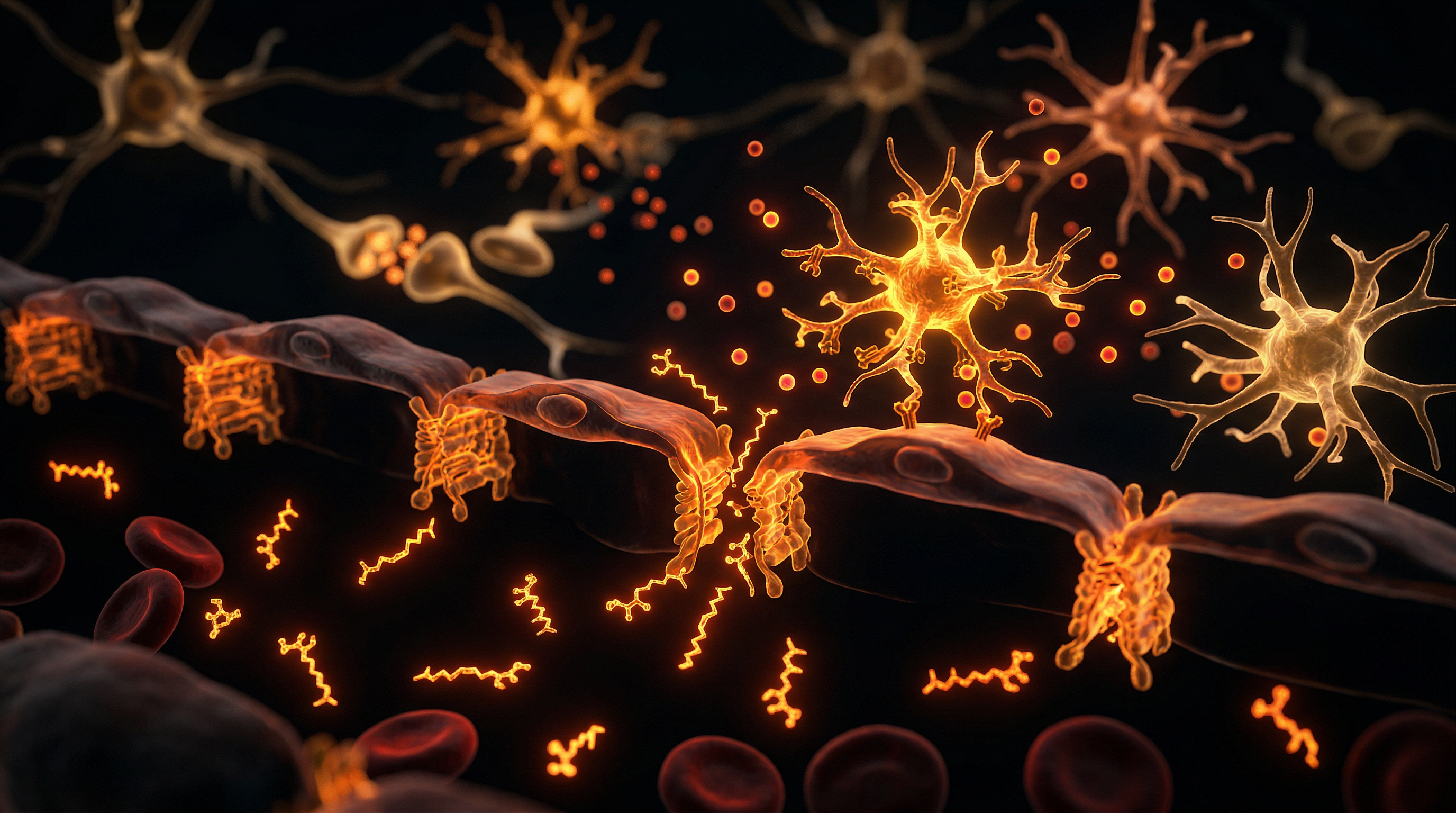
To understand how seed oils compromise the brain, we must first understand the architecture of the Blood-Brain Barrier. The BBB is not a simple wall; it is a highly selective, dynamic interface composed of endothelial cells, pericytes, and astrocyte end-feet, collectively known as the Neurovascular Unit (NVU).
The Vulnerability of Polyunsaturated Fatty Acids (PUFAs)
Seed oils are predominantly composed of Polyunsaturated Fatty Acids (PUFAs). Chemically, these fats possess multiple double bonds. While this makes them liquid at room temperature, it also makes them extremely unstable. These double bonds are magnets for free radicals. When exposed to heat, light, or oxygen—processes inherent in industrial refining and high-heat cooking—these fats undergo oxidative rancidity.
The Incorporation of "Foreign" Fats
When we consume these industrial fats, they are not merely burned for fuel. They are incorporated into our cellular membranes. The brain is the second most lipid-rich organ in the body (after adipose tissue), consisting of roughly 60% fat. The integrity of the neuronal membranes and the BBB itself depends on the quality of the fats provided.
When the diet is saturated with unstable omega-6 fats, the BBB’s endothelial cells begin to substitute stable saturated and monounsaturated fats for fragile PUFAs. This renders the barrier itself susceptible to Lipid Peroxidation—a chain reaction where oxygen attacks the double bonds, creating a cascade of destruction.
Crossing the Barrier
The brain was once thought to be an "immunologically privileged" site, protected from the systemic chaos of the body. However, we now know that oxidised lipid metabolites, specifically Oxidised Low-Density Lipoproteins (ox-LDL) and 4-Hydroxynonenal (HNE), can directly impair the Tight Junction proteins (claudins and occludins) that hold the BBB together. Once these junctions are loosened—a condition often termed "Leaky Brain"—pro-inflammatory cytokines and toxins from the systemic circulation flood the brain, initiating a state of chronic neuroinflammation.
Mechanisms at the Cellular Level
The damage occurs at a scale invisible to the naked eye but catastrophic to the organ. At INNERSTANDING, our research focuses on three primary pathways: Mitochondrial Insufficiency, Microglial Activation, and Proteotoxicity.
Mitochondrial Dysfunction and the Bioenergetic Crisis
The mitochondria are the power plants of our cells, and they are particularly dense in the brain. The mitochondrial membrane contains a unique phospholipid called cardiolipin, which is essential for the production of ATP (energy).
- The Substitution Effect: In a diet high in seed oils, the linoleic acid replaces the more stable fats in the cardiolipin molecule.
- The Result: This "omega-6 enriched" cardiolipin is highly prone to oxidation. When cardiolipin oxidises, the mitochondria "leak" electrons, reducing energy production and increasing the release of Reactive Oxygen Species (ROS).
- The Cognitive Impact: The brain, which consumes 20% of the body’s energy, begins to starve. This bioenergetic failure is a hallmark of early-stage cognitive decline and brain fog.
4-Hydroxynonenal (HNE): The Molecular Saboteur
One of the most dangerous byproducts of linoleic acid oxidation is 4-Hydroxynonenal (HNE). Unlike many other toxins, HNE is long-lived and can travel through the bloodstream.
- Protein Adduction: HNE acts as a "biological glue," binding to proteins and altering their shape and function.
- Enzyme Inhibition: It inhibits key enzymes responsible for DNA repair and antioxidant defence, such as Glutathione.
- The BBB Breach: HNE has been shown to specifically target the endothelial cells of the blood-brain barrier, inducing apoptosis (programmed cell death) and increasing paracellular permeability.
Microglial Polarization
Microglia are the resident immune cells of the brain. Under healthy conditions, they act as "gardeners," pruning synapses and clearing debris. However, when they detect oxidised lipid metabolites crossing the BBB, they shift from their "M2" anti-inflammatory state to a "M1" pro-inflammatory state.
Important Fact: Chronic microglial activation is the primary driver of the "cytokine storm" in the brain, leading to the destruction of healthy neurons—a process known as "bystander damage."
Environmental Threats and Biological Disruptors
The threat posed by seed oils is compounded by the way they are processed and consumed in the modern food environment. We are not just eating "vegetable oils"; we are eating chemically altered, heat-degraded industrial lubricants.
The Refining Process
Industrial seed oils (sunflower, corn, rapeseed, soy) must undergo an intensive refining process to be "palatable":
- Hexane Extraction: A petroleum-based solvent used to extract oil from the seeds.
- Degumming and Bleaching: Using high heat and chemicals to remove solids and colour.
- Deodorisation: High-heat steam distillation to remove the rancid smell inherent in the damaged oils.
By the time these oils reach the supermarket shelf, they are already "pre-oxidised."
The Deep-Fryer Cycle
In the UK, the consumption of takeaway food and "pub grub" is a cultural staple. In commercial kitchens, seed oils are kept in deep fryers for days or even weeks, heated and cooled repeatedly. This process creates a "toxic soup" of Cyclic Fatty Acids and Polymeric Oxidation Products. When these oils are ingested, they cause an immediate spike in systemic inflammation and a transient but significant weakening of the BBB.
The Synergy with Glyphosate
There is emerging evidence that the ubiquity of Glyphosate (the active ingredient in Roundup), used on the crops from which these oils are derived (particularly soy and rapeseed), may work synergistically with PUFAs. Glyphosate can disrupt the gut microbiome and the synthesis of essential amino acids, potentially further weakening the structural integrity of the tight junctions in both the gut and the brain.
The Cascade: From Exposure to Disease
The progression from a diet high in industrial fats to a diagnosis of Alzheimer’s or Parkinson’s is not overnight. It is a slow, decadal cascade of biological failure.
Phase 1: Metabolic Inflexibility
High linoleic acid intake impairs insulin sensitivity. When the brain becomes insulin resistant, it loses the ability to effectively use glucose for fuel. This is why Alzheimer's is frequently referred to as "Type 3 Diabetes."
Phase 2: The Amyloid Response
For years, the mainstream has viewed Amyloid-Beta plaques as the cause of Alzheimer's. However, at INNERSTANDING, we view amyloid as a protective response. Amyloid-beta is an antimicrobial and antioxidant peptide that the brain produces to seal off breaches in the BBB and neutralise oxidised lipids.
Callout: Modern medicine’s focus on removing amyloid is akin to blaming the firemen for the fire. If you remove the amyloid without addressing the oxidised lipids (the arsonist), the brain remains unprotected and the underlying damage accelerates.
Phase 3: Tau Tangles and Neuronal Death
As the oxidative stress becomes overwhelming and the BBB remains porous, the structural proteins within the neurons—Tau proteins—begin to collapse. This marks the transition from "mild cognitive impairment" to "clinical dementia." The neurons lose their ability to communicate, and the brain begins to atrophy.
What the Mainstream Narrative Omits
The refusal of major health organisations to acknowledge the dangers of seed oils is perhaps one of the greatest scandals in modern nutritional science. To understand why, one must look at the history of the "Diet-Heart Hypothesis."
The Ancel Keys Legacy
In the 1950s and 60s, Ancel Keys championed the idea that saturated fat caused heart disease by raising cholesterol. To lower cholesterol, the public was told to replace butter and lard with margarine and "vegetable oils." This was based on flawed, cherry-picked data, yet it became the foundation of global dietary guidelines.
The Cholesterol Distraction
Mainstream medicine remains obsessed with Low-Density Lipoprotein (LDL) levels. However, LDL is only dangerous when it becomes oxidised. What oxidises LDL? A diet high in unstable PUFAs and low in protective antioxidants. A person can have "high" cholesterol and be perfectly healthy, or "low" cholesterol and be at high risk for a stroke if their LDL particles are small, dense, and oxidised by seed oils.
The Industry Influence
The industrial seed oil industry is a multi-billion dollar behemoth. From the subsidies given to corn and soy farmers to the "Heart Healthy" seals of approval sold to oil manufacturers, there is a massive financial incentive to maintain the status quo. Admitting that these oils are neurotoxic would require a total dismantling of the ultra-processed food industry.
The UK Context
The United Kingdom faces a unique set of challenges regarding seed oil consumption and neurological health. The "British Diet" has evolved rapidly over the last four decades, with disastrous results.
The Rise of Ultra-Processed Foods (UPFs)
The UK consumes more ultra-processed food than any other country in Europe. Approximately 50% of the British diet comes from UPFs. These products—breads, biscuits, ready meals, and snacks—are almost universally manufactured using rapeseed or sunflower oil because they are cheap and shelf-stable.
The NHS Burden
The NHS is currently bucking under the weight of an ageing population with chronic conditions. Dementia currently costs the UK economy over £25 billion a year, a figure expected to double by 2040. Despite this, hospital meals and care home diets are frequently high in the very industrial fats that contribute to the condition.
The "Rapeseed" Marketing
In the UK, "Cold Pressed Rapeseed Oil" is often marketed as a premium, healthy alternative to olive oil, touted for its "low saturated fat" and "high omega-3" content. However, the omega-3 in rapeseed oil is Alpha-Linolenic Acid (ALA), which is poorly converted by the human body into the essential brain-building fats EPA and DHA. Furthermore, when used for cooking, even "cold-pressed" rapeseed oil is highly susceptible to the heat-induced oxidation described earlier.
Protective Measures and Recovery Protocols
While the damage caused by decades of seed oil consumption is significant, the human body—and the brain—possess remarkable regenerative capacities. At INNERSTANDING, we advocate for a biological "re-set."
1. The Elimination Phase
The first and most crucial step is the total elimination of industrial seed oils.
- Discard: Sunflower, soybean, corn, rapeseed (canola), grapeseed, and generic "vegetable" oils.
- Audit: Read every label. Seed oils are hidden in "healthy" hummus, salad dressings, and even oat milk.
- The "Takeaway" Rule: Avoid deep-fried foods from commercial outlets, as these oils are guaranteed to be highly oxidised.
2. Structural Reconstruction
Replace unstable fats with stable, evolutionary-consistent fats that support the BBB and neuronal membranes.
- Saturated Fats: Ghee, butter, tallow, and coconut oil. These lack double bonds and are resistant to oxidation even at high heat.
- Monounsaturated Fats: Extra Virgin Olive Oil and Avocado Oil (ensure they are high quality and not adulterated).
- Animal-Based Omega-3s: Prioritise DHA and EPA from fatty fish (sardines, mackerel, wild salmon). DHA is the primary structural fat of the brain and is essential for repairing the BBB.
3. Metabolic and Antioxidant Support
- Vitamin E (Tocopherols and Tocotrienols): This is the body’s primary fat-soluble antioxidant. It sits within the cell membrane and "quenches" lipid peroxidation before it can spread.
- Intermittent Fasting: Fasting triggers autophagy, the body’s cellular "cleanup" mode, which can help clear out damaged proteins and oxidised lipids from the brain.
- Glycine and Collagen: These provide the raw materials for the "tight junctions" in the gut and the blood-brain barrier.
4. The Half-Life of Fat
It is important to manage expectations. The half-life of linoleic acid in human adipose tissue is approximately 600 to 700 days. This means it takes years, not weeks, to fully purge these industrial fats from your system. Consistency is the only path to neurological restoration.
Summary: Key Takeaways
The connection between seed oils and neurological inflammation is a biological reality that the mainstream narrative is not yet ready to accept. However, the evidence at the molecular and cellular levels is undeniable.
- Seed oils are unstable: Their polyunsaturated structure makes them prone to oxidation, creating toxic metabolites like HNE.
- The BBB is the target: These oxidised fats compromise the Blood-Brain Barrier, leading to "Leaky Brain" and chronic neuroinflammation.
- Mitochondria suffer: Seed oils replace healthy fats in the mitochondrial membranes, leading to a bioenergetic crisis in the brain.
- The UK is at risk: High UPF consumption and a reliance on "vegetable oils" have contributed to a national dementia crisis.
- Removal is the only cure: To protect the brain, one must eliminate industrial fats and return to the stable, nutrient-dense fats that fueled human evolution for millennia.
The integrity of our minds depends on the integrity of our membranes. If we continue to build our brains out of industrial waste, we cannot be surprised when they fail us. The path to cognitive longevity begins in the kitchen, with a return to the fats that nature intended.
This article is provided for informational and educational purposes only. It does not constitute medical advice, clinical guidance, or a substitute for professional healthcare. Information reflects cited research at time of publication. Always consult a qualified healthcare professional before acting on any health information.
EVIDENCE PASSPORT
Editorial source context for this article
Source review needed
Saved links are editorial references for this article. They may support specific claims rather than every sentence. Open and assess each source in context. This passport does not independently verify them.
Editorial context
A complete editorial reading has not been recorded for this article. Source links remain available for you to open and assess directly.
Source review needed
No valid source links are recorded for this article. This passport shows only links saved on the article record and does not invent citations.
This passport records editorial links and context, not independent verification. Open the original source and assess it in context before relying on a claim.
Medical Disclaimer
The information in this article is for educational purposes only and does not constitute medical advice, diagnosis, or treatment. Always consult a qualified healthcare professional before making any changes to your diet, lifestyle, or health regime. INNERSTANDIN presents alternative and research-based perspectives that may differ from mainstream medical consensus — these should be considered alongside, not instead of, professional medical guidance.
Read Full DisclaimerContinue the thread
Keep this question moving.
Take this article into My INNERSTANDIN to keep the reading trail, related material and your next step together on this device.
Explore this in the Body Map
See where this hits your biology. Interactive anatomy, threats, and protective protocols.
Dig deeper in the Library
Free, longform PDF volumes that go beyond headlines into mechanisms and references.