
Oxidation Rate Determination: Assessing Mitochondrial Bioenergetics and Metabolic Efficiency using HTMA Data
An in-depth exploration of how Hair Tissue Mineral Analysis (HTMA) identifies metabolic oxidation rates, thyroid and adrenal synergy, and mitochondrial health to address the root causes of energy depletion.

# Oxidation Rate Determination: Assessing Mitochondrial Bioenergetics and Metabolic Efficiency using HTMA Data\n\nIn the landscape of functional health, the quest to understand why some individuals thrive while others languish in chronic fatigue often leads to the door of mitochondrial bioenergetics. At INNERSTANDING, we focus on the root causes of health imbalances, and few tools provide as much clarity into cellular energy production as Hair Tissue Mineral Analysis (HTMA). Central to the interpretation of HTMA is the concept of the "Oxidation Rate." This metric is not merely a number; it is a profound window into the speed at which the body converts nutrients into cellular energy (ATP), reflecting the synergy between the autonomic nervous system and the endocrine system.\n\n## The Origins of Oxidation Types\n\nThe concept of oxidation types was first pioneered by Dr. George Watson, a researcher who discovered that individuals metabolize food at different rates. He categorized people into 'fast' and 'slow' oxidizers based on blood pH and CO2 levels.
However, it was Dr. Paul Eck who revolutionized this field by applying Watson’s theories to mineral patterns in human hair. Dr. Eck realized that minerals act as the "spark plugs" for the body's enzymatic systems. By analyzing the ratios of specific minerals—primarily Calcium (Ca), Magnesium (Mg), Sodium (Na), and Potassium (K)—he could determine the rate of cellular metabolism and the state of the thyroid and adrenal glands.\n\n## The Two Pillars: Thyroid and Adrenal Synergy\n\nTo understand oxidation, one must understand the two primary mineral ratios that define it: the Thyroid Ratio (Ca/K) and the Adrenal Ratio (Na/Mg).\n\n### 1.
The Thyroid Ratio (Ca/K)\nCalcium and Potassium are the primary regulators of thyroid expression at a cellular level. In HTMA, the Ca/K ratio (ideal 4.0:1) indicates the sensitivity of the cells to thyroid hormone. Potassium is required to sensitize the cells to thyroid hormone, while calcium acts as a buffer or inhibitor. A high Ca/K ratio suggests a "slow" thyroid effect, where calcium is blocking the entry of thyroid hormone into the cell, regardless of how much hormone is circulating in the blood. Conversely, a low Ca/K ratio suggests an overactive thyroid effect, common in fast oxidation.\n\n### 2.
The Adrenal Ratio (Na/Mg)\nSodium and Magnesium reflect adrenal cortical activity. Sodium levels are closely linked to aldosterone production, the mineralocorticoid that regulates salt balance. Magnesium, on the other hand, is required for hundreds of enzymatic reactions and is often depleted by stress. The Na/Mg ratio (ideal 4.17:1) provides a snapshot of the adrenal response. A high ratio indicates an acute stress response (Alarm Stage), while a low ratio indicates adrenal insufficiency or exhaustion (Exhaustion Stage).\n\n## Fast Oxidation: The Engine Running Too Hot\n\nA fast oxidizer is characterized by high levels of sodium and potassium relative to calcium and magnesium.
From a root-cause perspective, this individual is in a state of "Fight or Flight" or the Alarm Stage of stress. While it may sound beneficial to have a "fast" metabolism, it often results in the body burning through its fuel too quickly, leading to inflammation, anxiety, and eventual burnout.\n\nIn fast oxidation, the mitochondria are under intense pressure to produce ATP. This rapid turnover leads to the excessive loss of magnesium and zinc, which are diverted to handle the stress response. Without intervention, the fast oxidizer is prone to "crashing," as the constant sympathetic dominance eventually depletes the adrenal reserves, pushing the individual toward a slow oxidation state.\n\n## Slow Oxidation: The Stalled Engine\n\nSlow oxidation is the most common pattern seen in modern clinical practice, representing the Resistance or Exhaustion stages of stress. It is characterized by high calcium and magnesium levels relative to sodium and potassium.
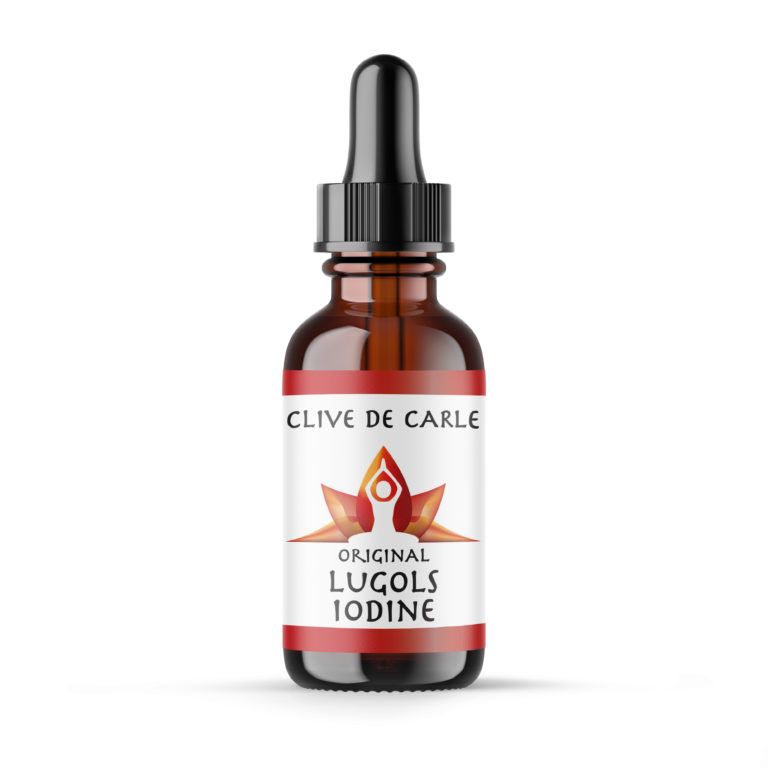
Lugol’s Iodine – Hormonal Issues, Menopause, Immune System, Brain Fog, Memory, Thyroid, Dry Skin
A high-potency 12% Lugol’s Iodine solution designed to support thyroid health, metabolic energy, and cognitive clarity. This traditional aqueous blend provides both iodine and potassium iodide to ensure your body has the essential elements needed for hormonal balance and healthy skin.
Vetting Notes
Pending
In this state, the "metabolic fire" is dim. The mitochondria are struggling to produce ATP efficiently, often due to a lack of bioavailable potassium and sodium to stimulate the necessary enzymatic pathways.\n\nOne of the most significant findings in slow oxidation is the "Calcium Shell." When the body is under chronic stress and cannot maintain its energy levels, it often sequesters calcium in the soft tissues. This acts as a physiological and psychological buffer—a literal shell that numbs the individual from further stress. However, this shell also slows down the transport of nutrients into the cells and the removal of waste products, further compromising mitochondrial bioenergetics.\n\n## Mitochondrial Bioenergetics and Mineral Bioavailability\n\nThe mitochondria are the powerhouses of the cell, but they are highly sensitive to their environment. For the Krebs cycle and the Electron Transport Chain (ETC) to function, a precise balance of minerals is required.
For instance, magnesium is essential for the stabilization of ATP. Without sufficient magnesium, the energy produced by the mitochondria cannot be utilized effectively.\n\nHTMA reveals the "Metabolic Efficiency" by showing whether these minerals are actually bioavailable. A common misconception is that high mineral levels in the hair always mean a surplus in the body. Often, high levels (like high Calcium in slow oxidation) represent a "loss" or a bio-unavailability, where the mineral is being shed from the tissues because it cannot be utilized. This insight allows for a more nuanced approach than simply supplementing what is low; it requires balancing the ratios to restore the mitochondrial environment.\n\n## The Root Cause of Metabolic Mismatch\n\nWhy does the oxidation rate matter?
Because it dictates the nutritional and lifestyle requirements of the individual. For example, a fast oxidizer needs higher fats and proteins to slow down their metabolism and prevent burnout, whereas a slow oxidizer needs more carbohydrates and lean proteins to stimulate their flagging thyroid and adrenal activity. Giving high doses of Vitamin C or B-vitamins to a fast oxidizer may inadvertently speed them up further, leading to a
This article is provided for informational and educational purposes only. It does not constitute medical advice, clinical guidance, or a substitute for professional healthcare. Information reflects cited research at time of publication. Always consult a qualified healthcare professional before acting on any health information.
RESEARCH FOUNDATIONS
Biological Credibility Archive
Citations provided for educational reference. Verify via PubMed or institutional databases.
Medical Disclaimer
The information in this article is for educational purposes only and does not constitute medical advice, diagnosis, or treatment. Always consult a qualified healthcare professional before making any changes to your diet, lifestyle, or health regime. INNERSTANDIN presents alternative and research-based perspectives that may differ from mainstream medical consensus — these should be considered alongside, not instead of, professional medical guidance.
Read Full DisclaimerReady to learn more?
Continue your journey through our classified biological research.
DISCUSSION ROOM
Members of THE COLLECTIVE discussing "Oxidation Rate Determination: Assessing Mitochondrial Bioenergetics and Metabolic Efficiency using HTMA Data"
SILENT CHANNEL
Be the first to discuss this article. Your insight could help others understand these biological concepts deeper.
THE ARSENAL
Based on Hair Tissue Mineral Analysis (HTMA) — products curated by our research team for educational relevance and biological support.

Rejuvenation Pack – Essential Vitamins and Minerals for Health Restoration
Magnesium L-Threonate
Lugol’s Iodine – Hormonal Issues, Menopause, Immune System, Brain Fog, Memory, Thyroid, Dry Skin
INNERSTANDING may earn a commission on purchases made through these links. All products are selected based on rigorous educational relevance to our biological research.
RABBIT HOLE
Follow the biological thread deeper