
The PCSK9 Revolution: Redefining LDL-C Lowering Boundaries
Updated May 2026
An in-depth look at how monoclonal antibodies and RNA interference therapies targeting the PCSK9 protein are transforming treatment for refractory hypercholesterolemia.
Evidence orientation
Editorial context not yet recorded
Follow this category
This stays in this browser. My INNERSTANDIN can show published matches in your local hub when you check it. It does not send email, push, or alert notifications.
Local learning review
A private browser aid for revisiting ideas. It is not an alert or a health recommendation.
Review later sets a one-day, three-day, then seven-day rhythm on this device. Choose it only when you want to revisit this article.
Introduction: The End of the Statin Monopoly
For nearly four decades, the management of hypercholesterolaemia has been synonymous with HMG-CoA reductase inhibitors—the statins. While these agents have undoubtedly reduced cardiovascular events globally, they represent an incomplete solution to an escalating metabolic crisis. We are now witnessing a paradigm shift that transcends mere enzyme inhibition. The discovery and subsequent therapeutic targeting of Proprotein Convertase Subtilisin/Kexin type 9 (PCSK9) has not only redefined the biological boundaries of Low-Density Lipoprotein Cholesterol (LDL-C) reduction but has also exposed the fragility of our current lipid management frameworks.
The PCSK9 revolution is more than a pharmaceutical milestone; it is a biological revelation. It challenges our understanding of 'physiological' cholesterol levels and highlights how modern environmental disruptors have hijacked our evolutionary lipid-clearing mechanisms. To truly INNERSTAND the implications of this shift, one must look beneath the surface of clinical guidelines and into the molecular architecture of the liver itself.
The Biological Mechanism: The Gatekeeper of the LDL Receptor
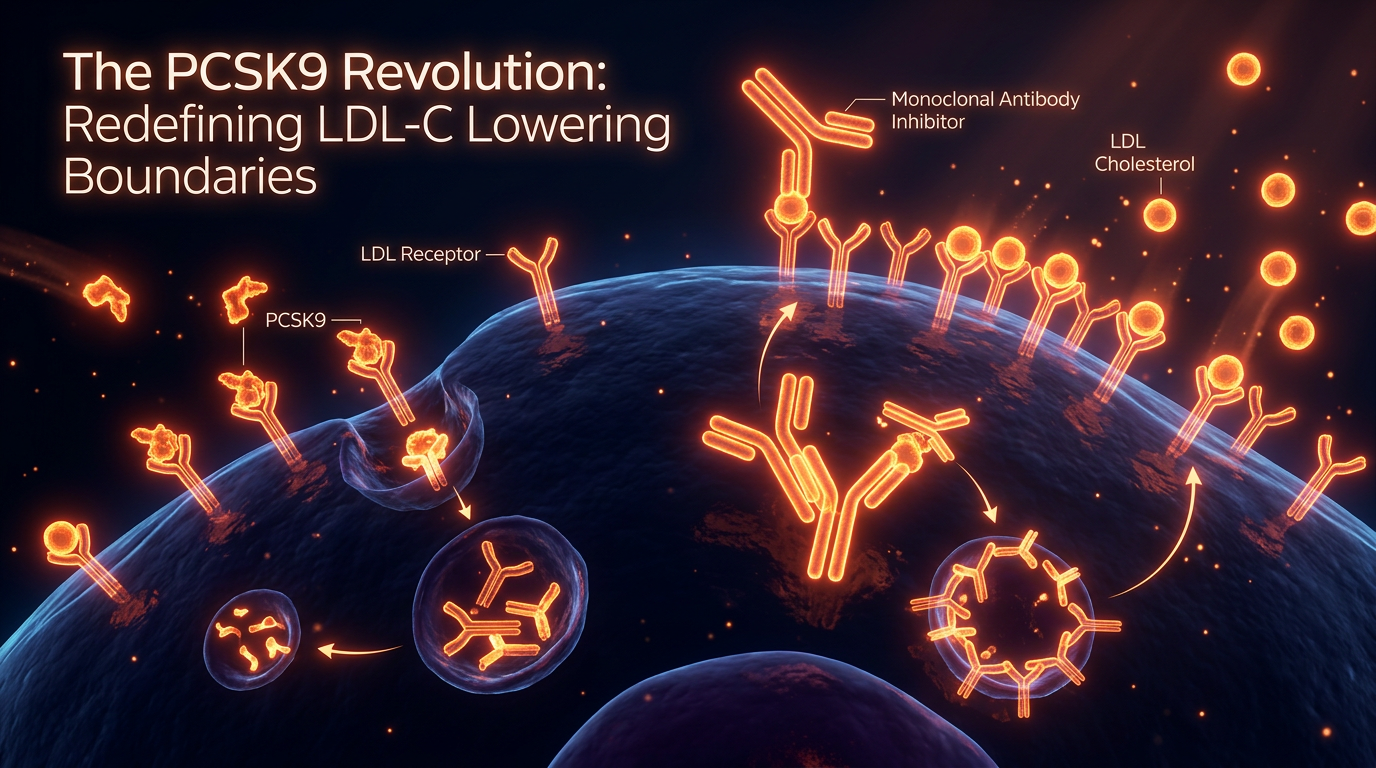
At the heart of lipid metabolism lies the LDL receptor (LDLR), situated primarily on the surface of hepatocytes (liver cells). The LDLR is the body’s primary vacuum cleaner for circulating LDL-C. In a healthy state, the LDLR grabs a molecule of LDL, brings it into the cell for processing, and then returns to the cell surface to repeat the cycle—a process it can perform up to 100 times.
The PCSK9 Interference
PCSK9 is a protease primarily synthesised in the liver. Its sole biological mission, in the context of lipidology, is to bind to the LDLR. However, unlike LDL itself, when PCSK9 binds to the receptor, it marks the receptor for destruction.
- The Degradation Pathway: Instead of the LDLR recycling back to the surface, the PCSK9-LDLR complex is diverted to the lysosome, where the receptor is dissolved by enzymes.
- The Consequence: Fewer receptors on the hepatocyte surface mean less LDL is cleared from the blood, leading to the sustained hyperlipidaemia that drives atherosclerosis.
- The Statin Paradox: Critically, and rarely discussed in routine clinical practice, statins actually upregulate the production of PCSK9. While statins increase the production of LDLRs, they simultaneously trigger the body to produce more PCSK9, which then destroys those very receptors. This "rebound" effect explains why many patients hit a 'statin ceiling' where increasing the dose yields diminishing returns.
The Genetic Revelation
The power of PCSK9 was first realised through the study of 'genetic outliers'. Individuals with 'Gain-of-Function' mutations in the PCSK9 gene suffer from severe familial hypercholesterolaemia and early-onset heart disease. Conversely, those with 'Loss-of-Function' mutations—essentially people whose bodies naturally produce very little PCSK9—exhibit LDL-C levels that are 30–40% lower than average from birth, resulting in an 88% reduction in the risk of coronary heart disease. These individuals live long, healthy lives, suggesting that ultra-low LDL-C levels are not only safe but potentially protective.
The Environmental Disruptors: Why Our Biology is Failing
If our genetics provided a blueprint for lipid efficiency, our environment has acted as a demolition crew. The modern rise in lipid-driven disease is not merely a result of caloric excess; it is a result of environmental interference with the PCSK9-LDLR axis.
Endocrine Disruptors and the Exposome
We are currently existing within an 'exposome'—a cumulative map of environmental exposures—that is fundamentally hostile to lipid homeostasis. Research now indicates that specific environmental toxins can alter PCSK9 expression.
- PFAS and Microplastics: Per- and polyfluoroalkyl substances (PFAS), often found in non-stick cookware and water supplies, have been linked to disruptions in hepatic lipid processing. These 'forever chemicals' can interfere with PPAR-alpha signalling, which indirectly influences the cholesterol-clearing capacity of the liver.
- Bisphenol A (BPA): Evidence suggests that BPA exposure may influence the epigenetic regulation of the PCSK9 gene, potentially leading to over-expression and subsequent receptor degradation.
- Air Quality: Fine particulate matter (PM2.5) has been shown to induce systemic inflammation. Inflammation is a known driver of PCSK9 production; the body perceives the inflammation as a threat and restricts the recycling of receptors, keeping lipids in circulation to assist in 'immune defence'.
The Evolutionary Mismatch
Why would the body evolve a mechanism like PCSK9 that seems to encourage heart disease? From an evolutionary perspective, cholesterol is a vital component for repairing cell membranes and synthesising steroid hormones. In a resource-scarce environment, PCSK9 may have served to keep cholesterol in the bloodstream longer to ensure it was available for these vital functions. In the modern era of nutrient density and environmental toxicity, this survival mechanism has become a liability.
Redefining the Boundaries: How Low Can We Go?
The emergence of PCSK9 inhibitors—monoclonal antibodies (Evolocumab, Alirocumab) and small interfering RNA (Inclisiran)—has allowed clinicians to achieve LDL-C levels previously thought impossible, often dipping below 0.5 mmol/L.
UK Lipid Statistics (British Heart Foundation):
* Approximately 7.6 million people in the UK are living with heart or circulatory diseases.
* High cholesterol contributes to over 7% of all deaths in the UK.
* Despite widespread statin use, cardiovascular disease remains the leading cause of morbidity, suggesting the need for 'lower for longer' strategies.
The Safety of Ultra-Low LDL
A major concern in the medical community has been whether lowering cholesterol to extreme levels would impair brain function or hormone production. The brain, however, synthesises its own cholesterol and does not rely on circulating LDL.
Clinical trials such as FOURIER and ODYSSEY OUTCOMES have demonstrated that even at LDL-C levels below 0.7 mmol/L (25 mg/dL), there was no increase in:
- Neurocognitive decline or dementia.
- Haemorrhagic stroke.
- Steroid hormone deficiency (testosterone/oestrogen).
The 'truth-exposing' reality is that the 'normal' LDL levels we see in Western populations (between 3.0 and 5.0 mmol/L) are likely three to four times higher than what our ancestors experienced. We are currently redefining what 'normal' means in the context of human longevity.
The Therapeutic Landscape: From Jabs to Gene Editing
The current revolution is defined by its delivery systems. We have moved from daily pills to monthly or even bi-annual interventions.
Monoclonal Antibodies (mAbs)
These are lab-engineered proteins that bind directly to PCSK9 in the blood, preventing it from ever touching the LDL receptor.
- Frequency: Every 2 to 4 weeks.
- Efficacy: Up to 60% reduction in LDL-C on top of statin therapy.
siRNA: The "Vaccine" for Cholesterol
Inclisiran represents a monumental shift. Instead of mopping up PCSK9 in the blood, it uses small interfering RNA to enter the hepatocyte and 'turn off' the production of PCSK9 at the source.
- The NHS Rollout: The UK is currently at the forefront of this, with the NHS implementing a population-health approach to Inclisiran for high-risk patients.
- Frequency: Two doses a year. It provides a level of adherence that was previously impossible.
The Future: CRISPR-Cas9
The ultimate boundary-pushing technology is gene editing. Early-stage trials (such as the HEART-1 trial) are using CRISPR to permanently disable the PCSK9 gene in the liver with a single infusion. This could effectively 'cure' high cholesterol for a lifetime, removing the need for daily or monthly medications.
Recovery Protocols: Restoring Hepatic Harmony
While the pharmaceutical revolution provides the 'heavy lifting', a holistic INNERSTANDING of lipid health requires a multifaceted recovery protocol. Relying solely on a bi-annual injection without addressing the environmental and metabolic drivers is a narrow-sighted strategy.
1. Mitigating the Exposome
To reduce the environmental 'hit' on the PCSK9-LDLR axis, one must focus on detoxification and avoidance:
- Water Filtration: Utilise high-grade reverse osmosis or activated carbon filters to remove PFAS and microplastics that disrupt hepatic lipid signalling.
- Phthalate Reduction: Eliminate plastic food storage and switch to glass or stainless steel to reduce endocrine disruptor interference.
- Sauna Therapy: Regular thermal stress assists in the excretion of lipophilic toxins that accumulate in adipose tissue and interfere with metabolic health.
2. Nutritional Modulation of PCSK9
While not as potent as monoclonal antibodies, certain dietary compounds have been shown to naturally influence the PCSK9 pathway:
- Berberine: Often called 'nature’s PCSK9 inhibitor', berberine has been shown in studies to increase the expression of LDLR by prolonging the half-life of its mRNA, partially by inhibiting PCSK9.
- Soluble Fibre: Increasing intake of beta-glucans (found in oats) and psyllium husk encourages the excretion of bile acids, forcing the liver to use more LDL-C to create new ones.
- Polyphenols: Quercetin and EGCG (from green tea) have shown potential in reducing the secretion of PCSK9 from hepatocytes in vitro.
3. Metabolic Flexibility
High insulin levels (Hyperinsulinaemia) are a silent driver of PCSK9. Insulin actually promotes the expression of the PCSK9 gene through the SREBP-1c pathway.
- Time-Restricted Feeding: Lowering the 'insulin area under the curve' by restricting the eating window can help downregulate the genetic triggers for PCSK9 production.
- Resistance Training: Muscle is the largest glucose sink in the body. Improving insulin sensitivity through hypertrophy-based training indirectly supports lipid clearance by reducing the insulin-driven PCSK9 surge.
Conclusion: The New Frontier of Lipid Science
The PCSK9 revolution has stripped away the illusion that we are at the mercy of our 'bad' genes. It has revealed that the boundaries we once accepted—those LDL targets of 2.0 or 3.0 mmol/L—were merely a reflection of the limitations of 20th-century medicine.
In this new era, we INNERSTAND that:
- Lower is Better, and Earlier is Better: The cumulative burden of LDL (the 'cholesterol-years') is what drives cardiovascular events.
- Statin Resistance is Biological: The failure to reach targets is often due to the PCSK9 'rebound' effect, not patient non-compliance.
- Environment Matters: We cannot ignore the role of the exposome in hijacking our liver's ability to clear lipids.
As we move toward a future of gene editing and biannual RNA therapies, the challenge will be to integrate these high-tech solutions with a primal awareness of our environment. The revolution is not just about a new drug; it is about reclaiming the biological potential for a life free from the ravages of atherosclerotic disease. The boundaries have been moved; it is now up to us to inhabit the new territory.
This article is provided for informational and educational purposes only. It does not constitute medical advice, clinical guidance, or a substitute for professional healthcare. Information reflects cited research at time of publication. Always consult a qualified healthcare professional before acting on any health information.
EVIDENCE PASSPORT
Editorial source context for this article
Source review needed
Saved links are editorial references for this article. They may support specific claims rather than every sentence. Open and assess each source in context. This passport does not independently verify them.
Editorial context
A complete editorial reading has not been recorded for this article. Source links remain available for you to open and assess directly.
Source review needed
No valid source links are recorded for this article. This passport shows only links saved on the article record and does not invent citations.
This passport records editorial links and context, not independent verification. Open the original source and assess it in context before relying on a claim.
Medical Disclaimer
The information in this article is for educational purposes only and does not constitute medical advice, diagnosis, or treatment. Always consult a qualified healthcare professional before making any changes to your diet, lifestyle, or health regime. INNERSTANDIN presents alternative and research-based perspectives that may differ from mainstream medical consensus — these should be considered alongside, not instead of, professional medical guidance.
Read Full DisclaimerContinue the thread
Keep this question moving.
Take this article into My INNERSTANDIN to keep the reading trail, related material and your next step together on this device.
Explore this in the Body Map
See where this hits your biology. Interactive anatomy, threats, and protective protocols.