
PFAS and Collagen Degradation
Updated May 2026
Persistent environmental toxins in UK water systems are increasingly linked to the breakdown of collagen fibers. This investigation highlights the biochemical pathways by which 'forever chemicals' weaken connective tissue.
Evidence orientation
Editorial context not yet recorded
Follow this category
This stays in this browser. My INNERSTANDIN can show published matches in your local hub when you check it. It does not send email, push, or alert notifications.
Local learning review
A private browser aid for revisiting ideas. It is not an alert or a health recommendation.
Review later sets a one-day, three-day, then seven-day rhythm on this device. Choose it only when you want to revisit this article.
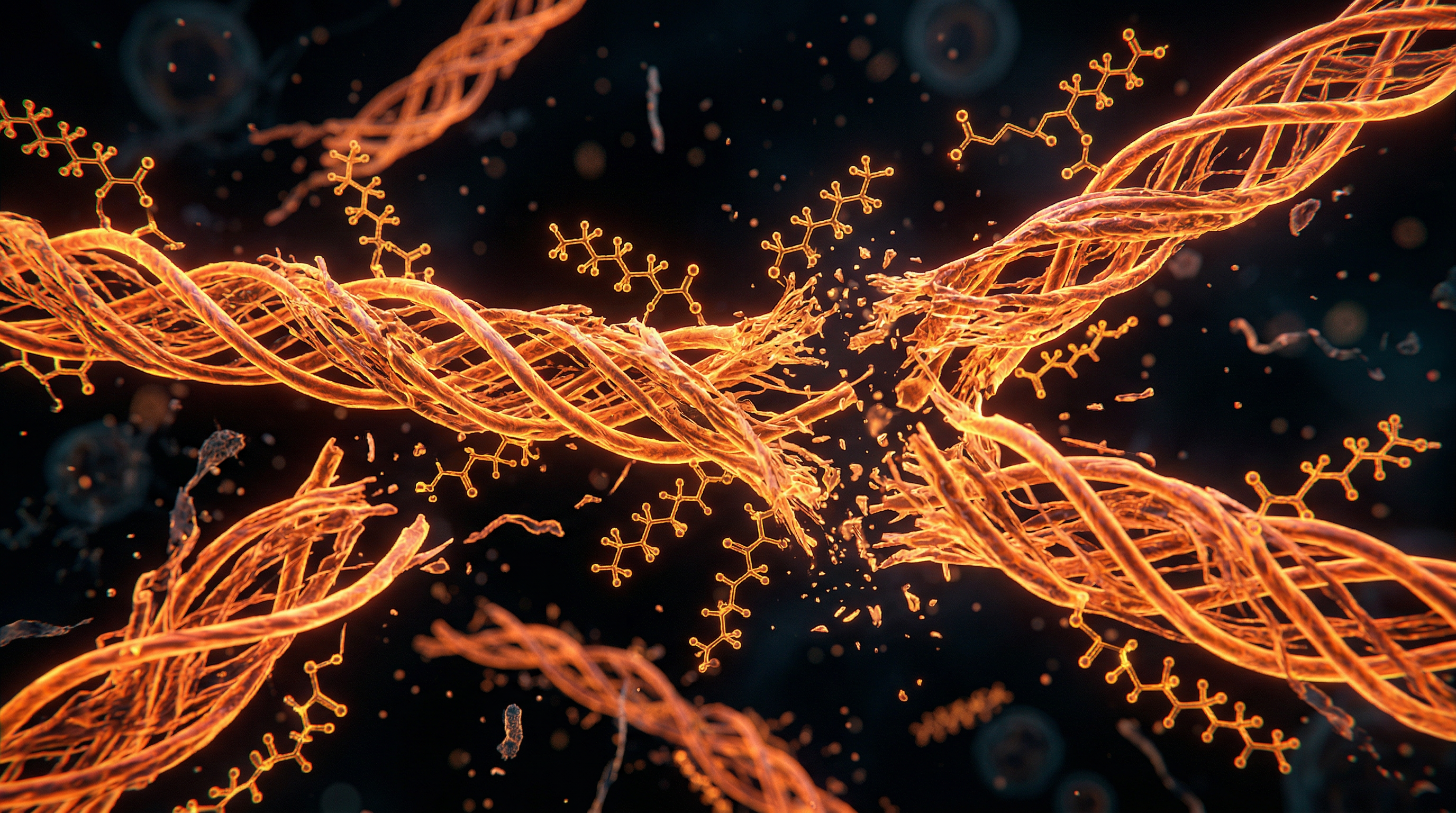
Overview
In the modern age, the integrity of the human biological architecture is under a silent, chemical siege. For decades, the scientific community and regulatory bodies have focused their lens on the carcinogenic potential of industrial pollutants, often ignoring the more insidious, structural erosion occurring at the level of the Extracellular Matrix (ECM). Central to this structural decline are Per- and Polyfluoroalkyl Substances (PFAS)—a class of over 12,000 synthetic chemicals known colloquially as 'forever chemicals' due to their refusal to degrade in the environment or the human body.
While the metabolic and endocrine-disrupting effects of PFAS are well-documented in niche academic circles, a more profound catastrophe is unfolding within our connective tissues. This investigation explores the catastrophic intersection between PFAS bioaccumulation and collagen degradation. Collagen, the most abundant protein in the human body, serves as the literal glue holding our organs, skin, tendons, and fascia together. When the integrity of this scaffolding is compromised, the body does not merely age; it dissolves at a fundamental structural level.
The UK’s water infrastructure, much of which remains antiquated and ill-equipped to filter these microscopic toxins, has become a primary vector for this biological degradation. As we consume these substances, they don't simply pass through us; they embed themselves into our tissues, triggering a cascade of enzymatic reactions that shear away our structural resilience. This article serves as a technical exposé on how the 'forever chemical' crisis is fundamentally rewriting the biology of the British population, leading to a silent epidemic of fascial failure and systemic connective tissue weakness.
The Biology — How It Works
To understand how PFAS destroys the body, one must first understand the majesty of the collagen triple helix. Collagen is not a static substance; it is a dynamic, living lattice that provides tensile strength and elastic recoil. It is synthesised primarily by fibroblasts, specialized cells that inhabit the fascia and interstitial spaces.
The Architecture of Resilience
The structural unit of collagen consists of three polypeptide chains wrapped around each other in a tight, right-handed helix. This configuration is stabilised by hydrogen bonds and the precise sequencing of amino acids, predominantly glycine, proline, and hydroxyproline. This triple helix then organises into fibrils, which further bundle into the heavy-duty fibres that constitute our ligaments and fascial planes.
Fascia as the Body’s Internet
We must view fascia not just as a wrapping, but as a sensory organ and a structural communication network. It is the collagenous web that facilitates force transmission and maintains organ placement. When collagen integrity wanes, this communication breaks down. The 'tensegrity'—a term used to describe the balance of tension and compression in the body—is lost.
Callout Fact: Collagen makes up approximately 30% of the total protein mass in the human body and roughly 70-80% of the dry weight of the skin and tendons. Even a 5% reduction in cross-linking density can lead to a 50% decrease in tensile strength.
The PFAS Interference
PFAS molecules are uniquely dangerous because they are amphiphilic—they possess both a water-repellent (hydrophobic) carbon-fluorine tail and a water-attracting (hydrophilic) head. The carbon-fluorine bond is the strongest in organic chemistry. This allows PFAS to masquerade as fatty acids, permitting them entry into cell membranes and allowing them to bind with high affinity to various proteins, most notably albumin and collagen. Once bound, they act as molecular grit, disrupting the delicate electrostatic balance that maintains the collagen helix.
Mechanisms at the Cellular Level
The degradation of collagen by PFAS is not a passive process of 'wear and tear.' It is an active, biochemically mediated destruction. Research indicates several key pathways through which these chemicals sabotage our structural proteins.
Activation of Matrix Metalloproteinases (MMPs)
The primary mechanism of PFAS-induced collagen loss is the up-regulation of Matrix Metalloproteinases, specifically MMP-1, MMP-2, and MMP-9. These are enzymes whose sole purpose is to break down the extracellular matrix to allow for tissue remodelling. Under healthy conditions, MMPs are tightly regulated by Tissue Inhibitors of Metalloproteinases (TIMPs).
However, PFAS exposure creates a state of chronic cellular stress. Studies have shown that PFOA (Perfluorooctanoic acid) and PFOS (Perfluorooctane sulfonate) significantly increase the expression of these 'collagen-eating' enzymes while simultaneously suppressing TIMPs. This creates a proteolytic environment where collagen is being dissolved faster than the fibroblasts can replenish it.
Oxidative Stress and Fibroblast Senescence
PFAS chemicals induce the production of Reactive Oxygen Species (ROS) within the mitochondria of fibroblasts. This oxidative stress damages the DNA of the fibroblast, leading to cellular senescence—a state where the cell stops dividing and begins secreting inflammatory cytokines (the Senescence-Associated Secretory Phenotype, or SASP). Senescent fibroblasts produce poor-quality, fragmented collagen and high levels of inflammatory markers, further accelerating the breakdown of the surrounding fascia.
Disruption of Cross-linking
For collagen to be strong, it must undergo cross-linking, a process mediated by the enzyme lysyl oxidase (LOX). This process links individual collagen molecules together into a sturdy mesh. PFAS molecules have been shown to interfere with the catalytic site of the LOX enzyme. Without effective cross-linking, the collagen remains 'soft' and susceptible to mechanical failure, leading to the hypermobility and 'stretchy' tissue symptoms increasingly observed in clinical settings.
Important Statistic: Longitudinal studies on PFAS-exposed cohorts have shown a significant correlation between serum PFAS levels and decreased bone mineral density, a direct clinical marker of impaired collagenous matrix mineralisation.
Environmental Threats and Biological Disruptors
The ubiquity of PFAS in the UK environment is a result of decades of industrial deregulation and chemical mismanagement. These substances are not merely 'out there'; they are integrated into the modern life cycle.
The Water Vector
The most significant source of chronic, low-level exposure in the UK is potable water. Because PFAS are resistant to conventional wastewater treatment processes, they circulate through the water table indefinitely. Major UK rivers, including the Thames, the Mersey, and the Severn, have tested positive for high levels of PFOS and PFOA. These chemicals enter the domestic supply, where they are consumed via drinking water and absorbed through the skin during bathing.
Consumer Products and Bio-accumulation
PFAS are used for their non-stick, water-resistant, and stain-resistant properties. They are found in:
- Cookware (PTFE/Teflon): When overheated, these pans release fumes and micro-flakes that are ingested.
- Textiles: Waterproof jackets, stain-resistant carpets, and 'breathable' fabrics used in high-end British outdoor gear.
- Food Packaging: Grease-proof papers used in fast food often contain PFAS that leaches into hot, fatty foods.
The 'Forever' Problem
The half-life of these chemicals in the human body is measured in years, not days. Bio-accumulation means that even if daily intake is minimal, the 'total body burden' increases over time. This cumulative load settles preferentially in the liver, kidneys, and—crucially—the fascial compartments, where blood flow is slower and the 'clearing' of toxins is more difficult.
The Cascade: From Exposure to Disease
When the structural integrity of the body is compromised by PFAS, the clinical manifestations are diverse and often misdiagnosed as unrelated conditions. We are witnessing a 'structural cascade' that begins with cellular interference and ends with systemic disease.
Connective Tissue Disorders and Hypermobility
There is an emerging link between environmental toxin exposure and the rise in Hypermobility Spectrum Disorders (HSD). While genetics play a role, the 'epigenetic trigger' is often chemical. PFAS-weakened collagen results in ligaments that lack the necessary tension to hold joints in place, leading to subluxations, chronic pain, and early-onset osteoarthritis.
Cardiovascular Implications
The heart and blood vessels are essentially collagenous tubes reinforced by muscle. Type III collagen is vital for the elasticity of the aorta. As PFAS degrades this collagen, the risk of aortic stiffness and even aneurysms increases. Furthermore, the interference with lipid metabolism caused by PFAS (often mislabelled as simply 'high cholesterol') may actually be the body's attempt to repair chemically damaged vascular walls.
Skin Ageing and Wound Healing
The skin is the most visible indicator of collagen health. PFAS exposure accelerates photo-ageing and leads to 'thin' skin that bruises easily. Perhaps more dangerously, the inhibition of fibroblast activity means that wound healing is significantly delayed, increasing the risk of chronic ulcers and infection.
The Fascial Inflammatory Response
Fascia is densely populated with mast cells. PFAS exposure can trigger Mast Cell Activation Syndrome (MCAS) within the connective tissue. This leads to a state of 'fascial inflammation,' where the tissue becomes thick, fibrotic, and painful—a condition often dismissed by mainstream medicine as 'non-specific' chronic pain or fibromyalgia.
What the Mainstream Narrative Omits
The mainstream medical and regulatory narrative regarding PFAS is one of 'cautionary observation,' yet this masks a deeper refusal to acknowledge the systemic biological threat.
The Fallacy of 'Safe Levels'
Regulatory bodies like the Environment Agency and the Drinking Water Inspectorate (DWI) often cite 'allowable' limits of PFAS. However, these limits are based on acute toxicity, not chronic bio-accumulation or structural degradation. For a 'forever chemical' that never leaves the body, there is no such thing as a safe daily dose. The mainstream narrative omits the fact that PFAS are endocrine disruptors that operate at parts-per-trillion levels—concentrations far below current UK regulatory thresholds.
Regulatory Capture and the 'Chemical Ghosting'
The UK’s exit from the EU has left a regulatory vacuum where the UK is no longer bound by the more stringent REACH (Registration, Evaluation, Authorisation and Restriction of Chemicals) updates. Major chemical manufacturers have a history of 'ghosting' data—hiding internal studies from the 1970s and 80s that already proved the collagen-binding and toxic nature of these compounds.
The Focus on Cancer as a Distraction
By focusing almost exclusively on whether PFAS cause rare cancers, the media ignores the fact that 100% of the exposed population will suffer from structural erosion. Cancer is the 'end-stage' symptom; the breakdown of the fascia and the weakening of the skeletal system are the 'mid-stage' symptoms that affect the quality of life for millions right now.
Callout Fact: Internal memos from major chemical corporations, surfaced in US litigation, reveal that as early as 1961, researchers noted that PFAS-like compounds had a high affinity for 'proteinaceous tissues' and were difficult to excrete.
The UK Context
The United Kingdom faces a unique set of challenges regarding PFAS and connective tissue health.
Antiquated Filtration
The majority of UK water treatment plants use Granular Activated Carbon (GAC) filters. While somewhat effective at catching larger molecules, they are notoriously poor at removing the newer, 'short-chain' PFAS (like GenX or PFBS) that have replaced PFOA in manufacturing. These shorter chains are more mobile in water and penetrate the collagenous matrix even more effectively.
Regional 'Hotspots'
In the UK, areas surrounding airports (due to PFAS-heavy firefighting foams), industrial zones in the North West, and the Thames Valley have recorded PFAS levels significantly higher than the national average. Residents in these areas are effectively participating in an involuntary, long-term toxicological experiment.
The NHS Burden
The NHS is currently overwhelmed by cases of chronic pain, joint replacements, and cardiovascular disease. There is zero screening in the NHS for PFAS body burden. We are treating the symptoms of collagen degradation with painkillers and surgery, without ever addressing the chemical catalyst in the patient’s drinking water.
Protective Measures and Recovery Protocols
While the situation is dire, biological resilience can be supported through targeted intervention. Recovery from PFAS-induced collagen degradation requires a dual approach: Mitigation and Restoration.
Advanced Filtration (The First Line of Defence)
Standard charcoal filters (like those in most jugs) are insufficient. To protect your collagen, you must use Reverse Osmosis (RO) filtration or high-grade Ion Exchange systems. RO is the only domestic technology capable of removing up to 99% of PFAS molecules from drinking water.
Nutritional Scaffolding
To counteract the enzymatic destruction of collagen, the body requires an excess of building blocks and inhibitors:
- Glycine and Proline Supplementation: Providing the raw materials for collagen synthesis can help fibroblasts overcome the inhibitory effects of PFAS.
- High-Dose Vitamin C: A critical co-factor for the lysyl oxidase enzyme. It is essential for cross-linking.
- Polyphenols (Quercetin, EGCG): These natural compounds act as mild MMP inhibitors, helping to slow the 'melting' of the extracellular matrix.
- Glutathione Support: PFAS depletes cellular antioxidants. N-Acetyl Cysteine (NAC) and selenium can help maintain the glutathione levels needed to protect fibroblasts from oxidative damage.
Enhancing Detoxification
Since the body cannot easily break down PFAS, we must support the organs of elimination:
- Sweating (Sauna Therapy): While PFAS excretion through sweat is low, it is one of the few pathways available for systemic toxin reduction.
- Bile Sequestrants: PFAS cycle through the enterohepatic circulation (they are released by the liver in bile and then re-absorbed by the gut). Using natural binders like activated charcoal or chlorella during meals can help 'trap' PFAS in the gut and facilitate excretion.
- Lymphatic Drainage: The fascia relies on the lymphatic system to clear metabolic waste. Techniques like dry brushing and manual lymphatic drainage can prevent the 'stagnation' of toxins in the connective tissue.
Lifestyle Alterations
- Discard Non-Stick Cookware: Transition to stainless steel, cast iron, or 100% ceramic.
- Audit Personal Care: Avoid products with "Fluoro" in the ingredient list (often found in dental floss and high-end cosmetics).
- The 'UK Rain' Factor: Be mindful that PFAS are present in rainwater; ensure that any domestic 'grey water' systems are not used for drinking or vegetable irrigation without RO filtration.
Summary: Key Takeaways
- PFAS are structural toxins: Beyond cancer and hormones, PFAS directly degrade the collagen triple helix, the body’s primary scaffolding.
- Enzymatic Hijacking: These chemicals up-regulate Matrix Metalloproteinases (MMPs), essentially causing the body to dissolve its own connective tissue.
- Fascial Failure: The rise in hypermobility, chronic joint pain, and 'mystery' fascial inflammation is inextricably linked to the 'forever chemical' burden.
- The UK Vector: Antiquated water systems and a lack of stringent post-Brexit regulation make the UK population particularly vulnerable to chronic exposure.
- The Mainstream Blindspot: Regulatory 'safe limits' ignore the cumulative, bio-accumulative nature of these substances and their impact on structural integrity.
- Proactive Protection: Recovery is possible through Reverse Osmosis filtration, MMP-inhibiting nutrition, and supporting the body’s natural elimination pathways.
The health of our fascia is the health of our foundation. As we move further into the 21st century, the battle for biological integrity will be fought at the molecular level, defending our collagen from the persistent, invisible legacy of the industrial age. At INNERSTANDING, we believe that to know the truth is the first step toward reclaiming your biological sovereignty.
This article is provided for informational and educational purposes only. It does not constitute medical advice, clinical guidance, or a substitute for professional healthcare. Information reflects cited research at time of publication. Always consult a qualified healthcare professional before acting on any health information.
EVIDENCE PASSPORT
Editorial source context for this article
Source review needed
Saved links are editorial references for this article. They may support specific claims rather than every sentence. Open and assess each source in context. This passport does not independently verify them.
Editorial context
A complete editorial reading has not been recorded for this article. Source links remain available for you to open and assess directly.
Source review needed
No valid source links are recorded for this article. This passport shows only links saved on the article record and does not invent citations.
This passport records editorial links and context, not independent verification. Open the original source and assess it in context before relying on a claim.
Medical Disclaimer
The information in this article is for educational purposes only and does not constitute medical advice, diagnosis, or treatment. Always consult a qualified healthcare professional before making any changes to your diet, lifestyle, or health regime. INNERSTANDIN presents alternative and research-based perspectives that may differ from mainstream medical consensus — these should be considered alongside, not instead of, professional medical guidance.
Read Full DisclaimerContinue the thread
Keep this question moving.
Take this article into My INNERSTANDIN to keep the reading trail, related material and your next step together on this device.