
PFAS Contamination and Liver Lipid Accumulation
Updated May 2026
Per- and polyfluoroalkyl substances (PFAS) found in UK water supplies are linked to impaired fat metabolism in the liver. We investigate the mechanism behind chemical-induced fatty liver disease.
Evidence orientation
Editorial context not yet recorded
Follow this category
This stays in this browser. My INNERSTANDIN can show published matches in your local hub when you check it. It does not send email, push, or alert notifications.
Local learning review
A private browser aid for revisiting ideas. It is not an alert or a health recommendation.
Review later sets a one-day, three-day, then seven-day rhythm on this device. Choose it only when you want to revisit this article.
Overview
For decades, the mainstream medical narrative regarding Metabolic Dysfunction-Associated Steatotic Liver Disease (MASLD)—formerly known as Non-Alcoholic Fatty Liver Disease (NAFLD)—has focused almost exclusively on the "calories in, calories out" model and the overconsumption of high-fructose corn syrup. While lifestyle factors are undoubtedly significant, this reductionist view ignores a burgeoning environmental crisis that is silently re-wiring the metabolic architecture of the human population. At the heart of this crisis is a class of synthetic compounds known as Per- and Polyfluoroalkyl Substances (PFAS).
Commonly referred to as "forever chemicals" due to the near-indestructible nature of the carbon-fluorine bond, PFAS have permeated every level of the British ecosystem. From the tap water in London to the sediment of the River Mersey, these substances are omnipresent. However, their most insidious impact is not merely their presence in the environment, but their high affinity for the human liver.
As a senior biological researcher, it has become increasingly clear that PFAS act as potent metabolic disruptors. They do not simply sit inertly in our tissues; they actively hijack the molecular machinery of lipid metabolism. By mimicking natural fatty acids, PFAS deceive the liver’s regulatory receptors, leading to an unnatural accumulation of triglycerides and a systemic breakdown of cholesterol transport. This article provides a comprehensive investigation into the mechanisms of PFAS-induced hepatic steatosis, the inadequacy of current UK regulatory frameworks, and the biological reality of living in a chemically saturated world.
Fact: Recent environmental surveys have detected PFAS in 97% of human blood samples tested, with the liver serving as the primary site for long-term sequestration.
The Biology — How It Works
To understand why PFAS are so destructive to the liver, one must first understand the liver's role as the central processing unit for fats. In a healthy state, the liver maintains a delicate balance between lipogenesis (the creation of fats), fatty acid oxidation (the burning of fats for energy), and the secretion of Very Low-Density Lipoproteins (VLDL) to transport lipids to the rest of the body.
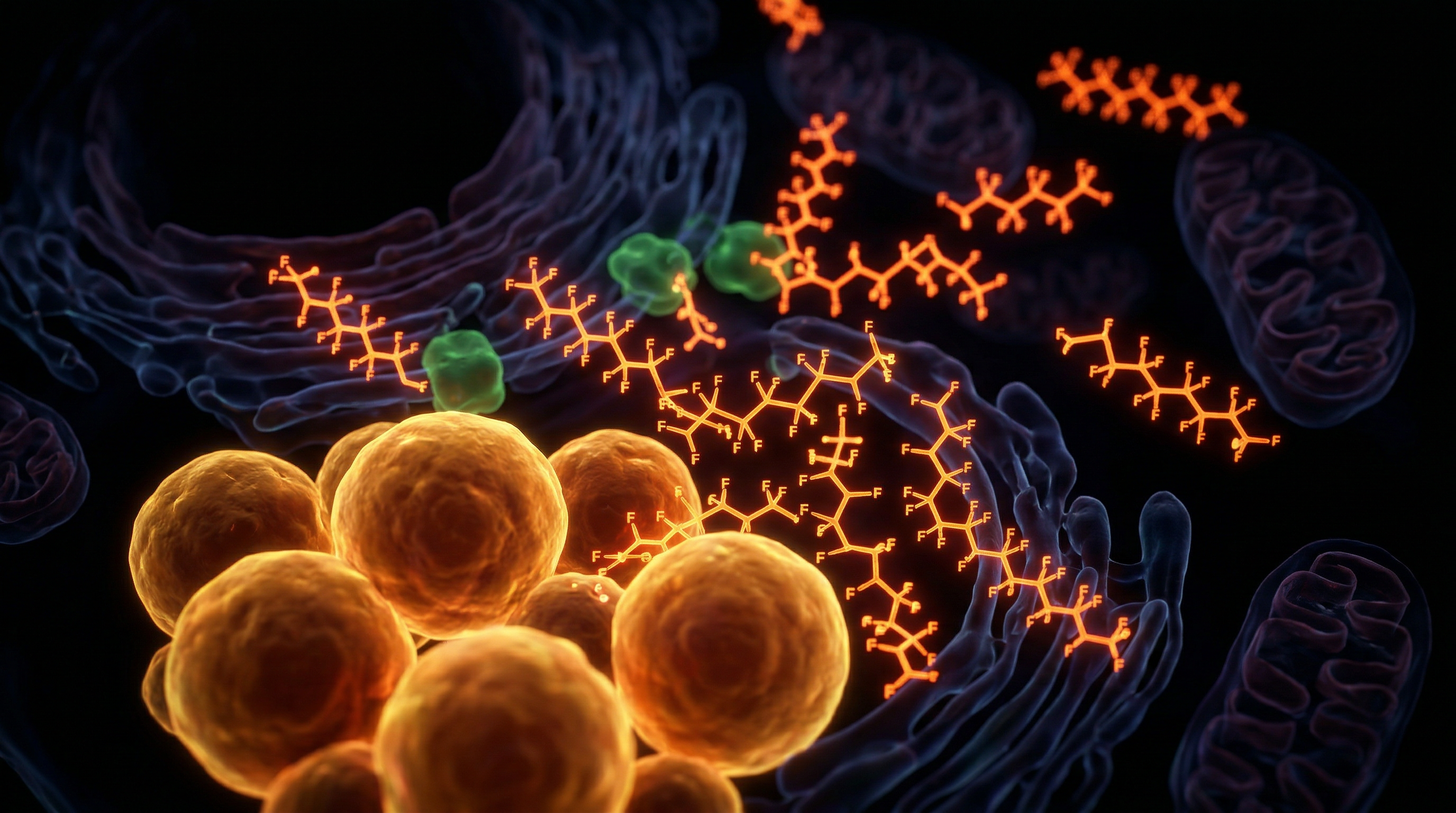
PFAS interfere with this balance because of their structural similarity to endogenous long-chain fatty acids. A typical PFAS molecule consists of a hydrophobic fluorinated carbon chain and a hydrophilic head group (usually a carboxylate or sulfonate). This amphiphilic structure allows them to enter cells with ease, often by hitching a ride on transport proteins designed for natural nutrients.
The Affinity for Albumin and Liver Fatty Acid-Binding Proteins (L-FABP)
Once ingested through contaminated water or food, PFAS molecules bind with high affinity to human serum albumin. This allows them to circulate throughout the vascular system, but their ultimate destination is the liver. The liver expresses high levels of Liver Fatty Acid-Binding Proteins (L-FABP), which are intended to shuttle essential fats to the nucleus for metabolic signalling. PFAS have been shown to bind to L-FABP with even greater affinity than our natural fats, effectively crowding out the nutrients and "clogging" the intracellular transport system.
Mimicry and Deception
Because the body perceives PFAS as fatty acids, it attempts to process them using the standard metabolic pathways. However, because the carbon-fluorine bond cannot be broken by any known human enzyme, the liver cannot "burn" or detoxify these chemicals. The result is a metabolic "dead end." The liver becomes congested with synthetic mimics that it cannot metabolise, leading to a state of chronic cellular stress that signals the body to store more fat rather than burn it.
Mechanisms at the Cellular Level
The transition from a healthy liver to one riddled with lipid droplets is governed by a complex set of nuclear receptors. PFAS are particularly adept at activating these receptors in ways that are counterproductive to human health.
Activation of PPARα (Peroxisome Proliferator-Activated Receptor alpha)
PPARα is a nuclear receptor protein that serves as a major regulator of lipid metabolism in the liver. Under normal conditions, it is activated during fasting to stimulate fatty acid oxidation. However, many PFAS, particularly PFOA (Perfluorooctanoic acid), are potent PPARα agonists. While this might sound beneficial (burning more fat), the chronic, low-level activation by PFAS leads to peroxisome proliferation and a paradoxical increase in fat storage. In humans, unlike in rodents, this chronic activation is linked to oxidative stress and the disruption of the mitochondrial respiratory chain.
Mitochondrial Dysfunction and Oxidative Stress
The mitochondria are the powerhouses of the hepatic cells. PFAS disrupt the mitochondrial membrane potential, leading to an "uncoupling" of oxidative phosphorylation. This means the liver cells are consuming oxygen but failing to produce ATP (energy) efficiently.
- Reactive Oxygen Species (ROS): As the mitochondria struggle, they leak electrons, creating an abundance of ROS.
- Lipid Peroxidation: These free radicals attack the unsaturated fats already present in the liver, turning them into toxic lipid peroxides that damage the cell membrane.
- Hepatocyte Death: The resulting damage can lead to apoptosis (cell death), which triggers an inflammatory response and the eventual formation of scar tissue (fibrosis).
Inhibition of VLDL Secretion
For the liver to clear fat, it must package triglycerides into VLDL particles and export them into the blood. Research indicates that PFAS interfere with the assembly of these lipoproteins. By inhibiting the Microsomal Triglyceride Transfer Protein (MTTP), PFAS trap fats inside the liver cells. This is a primary mechanism for the "lipid accumulation" noted in clinical studies: the fat is produced or imported, but the exit door is effectively locked.
Key Mechanism: PFAS disrupt the "export" phase of liver metabolism, causing fats to become physically trapped within hepatocytes, leading to rapid-onset steatosis.
Environmental Threats and Biological Disruptors
The term "PFAS" encompasses a family of over 12,000 different synthetic chemicals. While the mainstream focus is often on the "legacy" compounds like PFOS (Perfluorooctane sulfonic acid) and PFOA, modern industry has replaced these with "short-chain" alternatives like GenX and PFBS, which are often just as toxic but move more easily through water filtration systems.
Routes of Exposure
The primary vector for PFAS exposure in the UK is contaminated drinking water. Unlike chemical spills that cause immediate illness, PFAS contamination is a "slow-burn" event.
- Aqueous Film-Forming Foams (AFFF): Used heavily at UK airports and military bases for fire training. These foams leach directly into the groundwater.
- Industrial Discharge: Factories involved in textile treatment (waterproof clothing), non-stick cookware manufacturing, and food packaging.
- Biosolids in Agriculture: Sewage sludge used as fertiliser on British farms often contains concentrated levels of PFAS, which then enters the food chain via cereal crops and livestock.
The Bioaccumulation Factor
The half-life of PFAS in the human body is staggering. While most toxins are cleared within hours or days, certain PFAS compounds have half-lives ranging from 3 to 10 years. This means that even if all PFAS production ceased today, the levels in our livers would remain elevated for decades. This persistent presence creates a state of chronic metabolic interference, where the liver is never given the opportunity to reset its lipid regulatory mechanisms.
The Cascade: From Exposure to Disease
The progression from PFAS exposure to clinically diagnosed liver disease follows a predictable, albeit hidden, cascade. This is not a process that happens overnight, but rather a decades-long erosion of metabolic integrity.
Phase 1: Subclinical Steatosis
In this initial phase, the patient may feel entirely healthy. Blood tests for liver enzymes (ALT, AST) often remain within the "normal" range. However, at the cellular level, PFAS are already disrupting the PPAR receptors. Small lipid droplets begin to coalesce within the hepatocytes. The liver is slightly enlarged, but this is rarely detected unless an ultrasound is performed for unrelated reasons.
Phase 2: Metabolic Dysregulation
As the lipid burden increases, the liver becomes insulin resistant. This is where the PFAS "signal" interferes with the insulin receptor substrate (IRS) proteins. The liver continues to pump out glucose even when blood sugar is high, contributing to the development of Type 2 Diabetes. At this stage, cholesterol profiles begin to shift—specifically, a rise in small dense LDL particles and a drop in "protective" HDL.
Phase 3: Steatohepatitis and Fibrosis
The accumulation of lipids, combined with the presence of PFAS-induced oxidative stress, leads to inflammation. This is Metabolic Dysfunction-Associated Steatohepatitis (MASH). The immune system's Kupffer cells become activated, secreting pro-inflammatory cytokines like TNF-alpha. These signals tell the liver's "stellate cells" to produce collagen, leading to fibrosis (scarring).
Phase 4: Cirrhosis and Hepatocellular Carcinoma
In the final stage, the liver is no longer able to regenerate. The scar tissue restricts blood flow, and the metabolic functions of the liver collapse. Furthermore, PFAS are classified as possible carcinogens. The chronic inflammation and DNA damage caused by ROS increase the risk of liver cancer, a disease that is seeing a worrying upward trend in the UK.
Statistic: Individuals with the highest quartiles of PFAS in their blood are estimated to have a 40% higher risk of elevated ALT levels, a primary marker for liver damage.
What the Mainstream Narrative Omits
The current public health advice regarding fatty liver disease is focused on weight loss and exercise. While these are beneficial, the narrative conveniently ignores the obesogen hypothesis. PFAS are potent obesogens—chemicals that "programme" the body to gain weight by altering the set-point of the metabolism.
The Myth of the "Safe Level"
Regulatory bodies often set "Safe Daily Intakes" or "Maximum Contaminant Levels" (MCLs). However, these limits are typically based on old data and fail to account for the cocktail effect. Humans are not exposed to one PFAS at a time; we are exposed to dozens of different PFAS, along with microplastics, heavy metals, and phthalates.
- Synergistic Toxicity: Studies have shown that when multiple PFAS are present, their toxic effect on the liver is not just additive—it is synergistic. They work together to shut down metabolic pathways more effectively than any single chemical could.
Regulatory Capture and Corporate Influence
The delay in regulating PFAS in the UK can be traced back to the immense economic power of the chemical industry. For years, manufacturers suppressed internal studies showing the hepatotoxicity of PFOA. By the time the science became undeniable, billions of pounds had been made, and the environment was already saturated. The mainstream narrative avoids discussing "chemical-induced MASLD" because it shifts the blame from the individual (their diet) to the industrial-regulatory complex.
The "Hidden" Liver Epidemic in Lean Individuals
One of the most revealing aspects of PFAS research is the discovery of "Lean MASLD." We are seeing an increase in individuals with low body fat percentages but significant liver fat accumulation. This defies the "overeating" explanation and points directly to environmental endocrine disruption. PFAS can force a lean body to store fat in the liver, effectively mimiking the metabolic profile of an obese individual at the cellular level.
The UK Context
The situation in the United Kingdom is uniquely concerning due to our dense population, industrial heritage, and aging water infrastructure.
The "Forever Pollutant" Map of the UK
Data from the Environment Agency and various NGOs has mapped the "hotspots" of PFAS contamination across the UK. Significant levels of PFOS and PFOA have been found in the River Thames, the River Severn, and the River Trent. These rivers are vital sources for the UK's drinking water supply.
UK Regulatory Lag
While the US Environmental Protection Agency (EPA) has recently introduced significantly stricter limits for PFAS in drinking water (reducing some limits to near-zero), the UK's Drinking Water Inspectorate (DWI) has been slower to act.
- The "Monitor" vs. "Act" Strategy: Currently, many UK water companies are only required to "monitor" levels if they fall between certain thresholds, rather than taking immediate remedial action.
- The HSE and UK REACH: Since Brexit, the UK has its own regulatory framework (UK REACH). Concerns have been raised that the UK is falling behind the European Union’s more aggressive stance on banning entire classes of PFAS, potentially making the UK a "dumping ground" for PFAS-containing products that are restricted elsewhere.
The Thames Water Crisis
London's water supply is under particular scrutiny. With the infrastructure of companies like Thames Water under financial and operational strain, the investment required for advanced filtration (such as high-end Granular Activated Carbon or Reverse Osmosis) is often deferred. This leaves millions of residents exposed to "acceptable" but biologically active levels of these liver-disrupting chemicals.
Protective Measures and Recovery Protocols
While the systemic issue of PFAS contamination requires legislative change, individuals can take proactive steps to mitigate their exposure and support their liver’s recovery.
1. Advanced Water Filtration
Standard carbon "jug" filters are largely ineffective at removing the full spectrum of PFAS.
- Reverse Osmosis (RO): This is the gold standard. A high-quality RO system can remove up to 99% of PFAS compounds.
- Dual-Stage Granular Activated Carbon (GAC): Effective, but the filters must be changed frequently, as once the carbon is "saturated" with PFAS, it can actually begin to leak the chemicals back into the water.
2. Dietary Interventions to Support Lipid Export
To counter the "trapping" of lipids in the liver, we must support the export pathways.
- Choline Supplementation: Choline is essential for the production of phosphatidylcholine, a key component of VLDL. Without enough choline, the liver cannot export fat. PFAS increase the demand for choline.
- Glutathione Support: Since PFAS induce oxidative stress, the liver's primary antioxidant, glutathione, is rapidly depleted. Supplementing with N-Acetyl Cysteine (NAC) or S-Acetyl Glutathione can help neutralise the ROS produced by PFAS.
- Sulforaphane: Found in broccoli sprouts, sulforaphane activates the Nrf2 pathway, which enhances the liver's natural Phase II detoxification enzymes and helps protect against chemical-induced injury.
3. Eliminating "Co-Exposures"
Reducing the metabolic load on the liver is crucial when it is already dealing with PFAS.
- Avoid Ultra-Processed Foods: High-fructose corn syrup and seed oils (high in Omega-6) exacerbate the inflammation triggered by PFAS.
- Non-Stick Alternatives: Replace Teflon-coated pans with cast iron, stainless steel, or ceramic.
- Personal Care: Audit cosmetics and sunscreens for "fluoro" ingredients.
4. Bile Acid Sequestrants
In clinical settings, certain medications known as bile acid sequestrants (like cholestyramine) have been used "off-label" to help clear PFAS from the body. PFAS undergo enterohepatic circulation—they are secreted into the bile, then reabsorbed in the gut. Sequestrants bind to the PFAS in the intestines and prevent them from being reabsorbed, allowing them to be excreted. Note: This should only be done under medical supervision.
Summary: Key Takeaways
The link between PFAS and Liver Lipid Accumulation is one of the most significant environmental health discoveries of the 21st century. It represents a shift from "lifestyle-based" medicine to "environmental-biological" medicine.
- PFAS are Metabolic Mimics: They structurally resemble fatty acids, allowing them to hijack the liver’s PPAR receptors and L-FABP transport proteins.
- Bioaccumulation is the Problem: The C-F bond cannot be broken by the body, leading to a half-life of years and a constant state of liver congestion.
- The "Export" Blockade: PFAS inhibit the secretion of VLDL, physically trapping triglycerides inside liver cells and causing rapid steatosis (fatty liver).
- The UK Infrastructure is Failing: Current UK water standards are insufficient to protect against the chronic, low-dose exposure that leads to MASLD.
- Proactive Protection is Mandatory: Relying on the "mainstream narrative" will not protect your metabolic health. Advanced water filtration and nutritional support for the liver's export and antioxidant pathways are essential in the modern environment.
The accumulation of fat in the liver is not always a sign of "gluttony" or "sloth"; it is increasingly the physical evidence of a body struggling to process the synthetic chemistry of the industrial age. Understanding the Innerstanding of this biological sabotage is the first step toward reclaiming metabolic health in a contaminated world.
This article is provided for informational and educational purposes only. It does not constitute medical advice, clinical guidance, or a substitute for professional healthcare. Information reflects cited research at time of publication. Always consult a qualified healthcare professional before acting on any health information.
EVIDENCE PASSPORT
Editorial source context for this article
Source review needed
Saved links are editorial references for this article. They may support specific claims rather than every sentence. Open and assess each source in context. This passport does not independently verify them.
Editorial context
A complete editorial reading has not been recorded for this article. Source links remain available for you to open and assess directly.
Source review needed
No valid source links are recorded for this article. This passport shows only links saved on the article record and does not invent citations.
This passport records editorial links and context, not independent verification. Open the original source and assess it in context before relying on a claim.
Medical Disclaimer
The information in this article is for educational purposes only and does not constitute medical advice, diagnosis, or treatment. Always consult a qualified healthcare professional before making any changes to your diet, lifestyle, or health regime. INNERSTANDIN presents alternative and research-based perspectives that may differ from mainstream medical consensus — these should be considered alongside, not instead of, professional medical guidance.
Read Full DisclaimerContinue the thread
Keep this question moving.
Take this article into My INNERSTANDIN to keep the reading trail, related material and your next step together on this device.
Explore this in the Body Map
See where this hits your biology. Interactive anatomy, threats, and protective protocols.