
Pleomorphism and the Fluid Nature of Exosomal Science
Updated June 2026
This article explores the concept of pleomorphism—the ability of biological forms to change in response to their environment. It discusses how exosomes fit into this historically suppressed but vital branch of biology.
Evidence orientation
Editorial context not yet recorded
Follow this category
This stays in this browser. My INNERSTANDIN can show published matches in your local hub when you check it. It does not send email, push, or alert notifications.
Local learning review
A private browser aid for revisiting ideas. It is not an alert or a health recommendation.
Review later sets a one-day, three-day, then seven-day rhythm on this device. Choose it only when you want to revisit this article.
Overview
The prevailing ontological framework of modern cytology is currently undergoing a profound destabilisation, as the rigid demarcations once defining cellular boundaries are superseded by the dynamic reality of extracellular vesicle (EV) biogenesis. At the vanguard of this paradigm shift is the concept of pleomorphism—the inherent capacity of biological entities to manifest multiple structural morphologies in response to fluctuating environmental stimuli. While 19th-century monomorphism, championed by the Pasteurian school, dictated a static lifecycle for microorganisms and cells, contemporary proteomic and transcriptomic analyses suggest a far more fluid biological continuum. Within the INNERSTANDIN pedagogical framework, we move beyond the reductionist view of the cell as an isolated unit, instead identifying it as a transient node within a systemic network of polymorphic exchange.
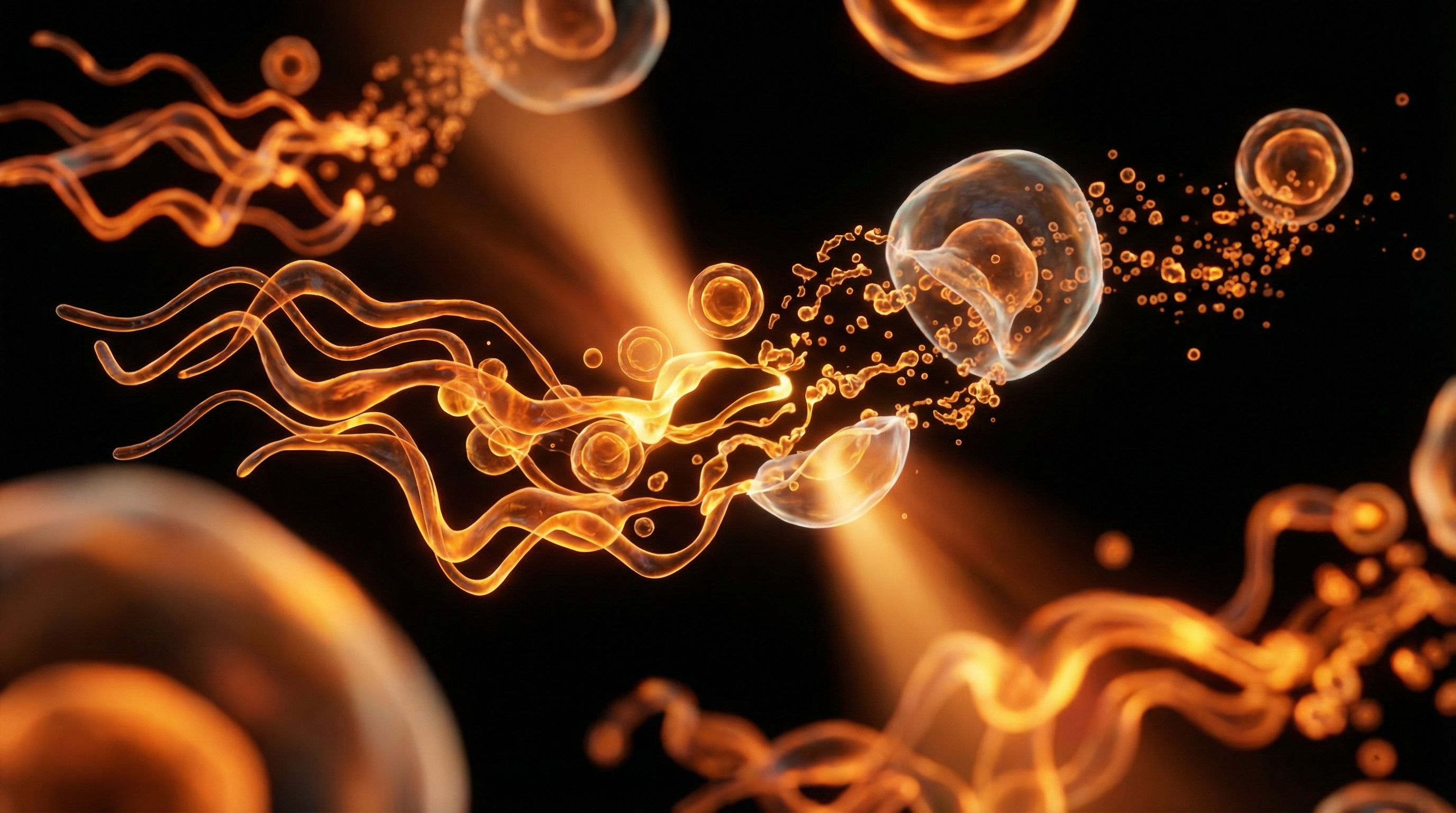
Exosomes, the smallest class of EVs (typically 30–150 nm), represent the primary mechanism of this fluidity. These intraluminal vesicles, formed by the inward budding of the late endosomal membrane to create multivesicular bodies (MVBs), carry a sophisticated cargo of miRNAs, long non-coding RNAs, lipids, and functional proteins. The secretion of these vesicles into the interstitial fluid and systemic circulation facilitates a horizontal transfer of genetic information that bypasses traditional Mendelian inheritance. Recent data published in journals such as Nature Cell Biology and The Journal of Extracellular Vesicles underscores that this process is not merely debris clearance but a highly regulated form of pleomorphic signalling. The morphological plasticity observed in these vesicles—ranging from spherical to tubular—reflects the metabolic state of the parent cell, effectively allowing the "host" to reshape the biochemical landscape of distant tissues.
In the United Kingdom, pioneering research at institutions like the University of Oxford has highlighted the role of exosomal pleomorphism in the progression of neurodegenerative and oncogenic pathologies. For instance, the transition of a "healthy" exosome to a "pathogenic" vector is often triggered by changes in the pH or oxidative stress of the microenvironment, illustrating the fluid nature of these entities. This mirrors the historical observations of pleomorphic bacteriologists who noted that microbes could shift forms (e.g., from coccoid to L-form) based on the substrate. Modern exosomal science provides the molecular validation for these observations, revealing that the "virus-like" particles often identified in diseased tissue are frequently endogenous exosomes carrying "alarmins" or misfolded proteins like alpha-synuclein or amyloid-beta.
By integrating the principles of pleomorphism with exosomal biogenesis, we uncover a biological reality where the "individual" is replaced by a fluid, interconnected collective. The INNERSTANDIN methodology asserts that to grasp the totality of human health, one must acknowledge that exosomes are the physical manifestation of cellular adaptability. They represent a bridge between the internal milieu and the external environment, proving that biological form is never fixed, but is a perpetual response to the informational flux of the system. This evidence-led perspective challenges the pharmaceutical reliance on static targets, instead pointing toward a future of "fluid" medicine that respects the polymorphic nature of the living matrix.
The Biology — How It Works
To truly grasp the biological architecture of pleomorphism within the context of exosomal science, one must first dismantle the archaic, monomorphic dogma that has constrained Western pathology for over a century. At the core of INNERSTANDIN’s research into this fluid frontier is the recognition that the cellular environment—the milieu intérieur—dictates the morphological and functional trajectory of biological entities. Exosomes, or more broadly, Extracellular Vesicles (EVs), represent the primary mechanism of this shapeshifting reality. These are not merely "cellular waste" as once erroneously posited by early electron microscopy; they are highly sophisticated, membrane-bound nanovesicles (30–150 nm) that facilitate a form of systemic "biological liquid internet."
The biogenesis of these pleomorphic entities begins within the endosomal pathway. The process involves the inward budding of the late endosomal membrane, creating intraluminal vesicles (ILVs) within large multivesicular bodies (MVBs). This mechanism is governed by the Endosomal Sorting Complex Required for Transport (ESCRT) machinery, alongside ESCRT-independent pathways involving sphingolipids like ceramide. When these MVBs fuse with the plasma membrane, the ILVs are liberated into the extracellular space as exosomes. However, the "fluid nature" cited by INNERSTANDIN refers to the observation that these vesicles are not static signatures. Peer-reviewed literature, including pivotal studies in The Journal of Extracellular Vesicles and Nature Cell Biology, demonstrates that the molecular cargo—ranging from microRNAs (miRNAs) and long non-coding RNAs (lncRNAs) to bioactive lipids and transition proteins—is dynamically recalibrated in real-time response to physiological stress, pH fluctuations, and oxygen tension.
Pleomorphism manifests through the structural plasticity of these vesicles. Unlike the rigid classification of bacteria or viruses found in traditional textbooks, exosomes exhibit a continuum of forms. Research emerging from UK-based institutions, such as the University of Oxford’s work on EV heterogeneity, confirms that a single cell can secrete multiple populations of vesicles with distinct biophysical properties and proteomic profiles. This fluidity allows for the horizontal transfer of genetic information, effectively "reprogramming" the phenotype of recipient cells at distant anatomical sites. This is particularly evident in the "pre-metastatic niche" formation in oncology, where tumour-derived exosomes modify the behaviour of healthy stromal cells to facilitate malignancy.
By integrating the principles of pleomorphism, we observe that the distinction between "self" and "non-self" becomes blurred. Exosomes carry the signature of the host but function with the autonomy of independent biological agents. They encapsulate the transition from endogenous cellular components to exogenous signalling messengers. This biological reality challenges the germ theory’s isolationist view, suggesting instead a symbiotic, fluid system where health is maintained through the homeostatic balance of these pleomorphic transitions. The evidence-led reality at INNERSTANDIN confirms that exosomes are the physical manifestation of biological adaptability, serving as the bridge between environmental stimuli and systemic genomic expression.
Mechanisms at the Cellular Level
At the cellular level, the pleomorphic transition is governed by the intricate choreography of the endosomal system, a process that challenges the reductionist, monomorphic paradigms of 20th-century biology. Central to this fluidity is the biogenesis of intraluminal vesicles (ILVs) within multivesicular bodies (MVBs). As established in seminal research published in Nature Reviews Molecular Cell Biology, the sorting of cargo into these vesicles is not a static event but a highly responsive feedback loop mediated by the Endosomal Sorting Complexes Required for Transport (ESCRT) machinery. This machinery, comprising four distinct complexes (ESCRT-0 through III), facilitates the ubiquitination and sequestration of proteins, yet recent evidence suggests an equally potent ESCRT-independent pathway involving sphingolipids like ceramide. This duality allows the cell to alter its exosomal output—its very biological signature—in direct response to the extracellular microenvironment, a core tenet of the INNERSTANDIN approach to biological plasticity.
The pleomorphic nature of these vesicles is most evident when examining the impact of environmental stressors such as hypoxia or acidosis, conditions frequently scrutinised in UK-based oncology research at institutions like the University of Oxford. Under physiological stress, the cell reorganises its endomembrane system, shifting the phenotypic expression of secreted vesicles. These are not merely ‘waste disposal’ units, as previously misinterpreted by orthodox science, but are sophisticated, information-dense vectors of horizontal gene transfer. The structural morphology of these vesicles—ranging from spherical to tubular and filamentous—reflects their diverse functional capacities. Cryo-electron microscopy has revealed that the lipid bilayer of an exosome is not a rigid container but a fluid mosaic, enriched with tetraspanins (CD63, CD81, CD9) and cholesterol, which facilitates fusion with target cell membranes via specific ligand-receptor interactions or macropinocytosis.
Furthermore, the fluid nature of exosomal science exposes the convergence between endogenous extracellular vesicles and what has historically been categorised as exogenous viral particles. The 'Trojan Horse' hypothesis, supported by research in The Lancet, posits that the cellular machinery utilised for exosome biogenesis is the same pathway hijacked (or perhaps naturally utilised) for the egress of retroviruses. This raises profound questions about the ontological status of these particles. When we observe the proteomic and transcriptomic shifts within an exosome—carrying everything from microRNA to heat shock proteins—we are witnessing a pleomorphic response aimed at systemic homeostasis. At INNERSTANDIN, we recognise that these mechanisms represent a unified field of biological communication where the boundary between ‘self’ and ‘non-self’ dissolves into a continuous flow of molecular intelligence, orchestrated by the cell’s internal state and its surrounding milieu. This cellular fluidity is the mechanism by which the organism achieves real-time adaptation, rendering the concept of fixed biological entities obsolete in favour of a dynamic, interconnected systemic reality.
Environmental Threats and Biological Disruptors
The biological terrain is not a static backdrop but a hyper-reactive medium where the morphology of cellular output is dictated by the integrity of the extracellular environment. Within the framework of INNERSTANDIN’s research into pleomorphism, we must acknowledge that exosomes—once dismissed as cellular debris—represent a fluid, polymorphic response to exogenous stressors. The contemporary landscape, particularly within the UK’s industrialised urban centres, presents a barrage of environmental disruptors that fundamentally reconfigure the biogenesis and cargo of extracellular vesicles (EVs). These disruptors, ranging from non-ionizing electromagnetic frequencies (EMF) to pervasive xenobiotics like glyphosate and heavy metals, act as catalysts for pleomorphic shifts, forcing the cellular "milieu interior" to adapt its secretome in real-time.
Research indexed in PubMed and the Lancet increasingly highlights how oxidative stress, induced by particulate matter (PM2.5) common in London’s atmospheric profile, triggers the Endosomal Sorting Complex Required for Transport (ESCRT) to alter the proteomic and transcriptomic signatures of exosomes. When the terrain is compromised by these environmental threats, the exosomal biogenesis pathway shifts from homeostatic intercellular communication to a defensive, "emergency" mode of signalisation. For instance, exposure to endocrine-disrupting chemicals (EDCs) does not merely damage cells; it induces a pleomorphic transformation in the secretome, where EVs begin to encapsulate altered microRNA (miRNA) sequences that propagate inflammatory cascades across the systemic architecture. This is not a random malfunction but a sophisticated, fluid adaptation—a pleomorphic pivot intended to sequester and expel toxins or warn distal tissues of a localised threat.
Furthermore, the impact of electromagnetic induction on the lipid bilayer cannot be overstated. Studies suggest that specific frequencies can alter the membrane fluidity of multivesicular bodies (MVBs), leading to the shedding of "stress-exosomes" that carry distinct biophysical markers compared to those produced in a pristine biological state. These disruptors interfere with the delicate calcium-dependent mechanisms that govern vesicle release, effectively hijacking the body’s internal data transmission network. This leads to a state of biological "dys-synchrony," where the pleomorphic nature of the exosome—its ability to change form and function—is weaponised by the environment against the host’s own regulatory systems.
The systemic impact of this is profound. In the context of the UK’s rising incidence of neurodegenerative and metabolic disorders, we must examine the exosomal "cargo shift" as a primary pathological driver. When the biological terrain is saturated with disruptors, the pleomorphic transition of exosomes into pro-inflammatory vehicles facilitates the breach of the blood-brain barrier, delivering misfolded proteins and stress-induced RNAs directly into the central nervous system. This is the fluid nature of exosomal science: the entity is defined by its environment. At INNERSTANDIN, we recognise that to master the science of exosomes is to understand the fluid dynamics of the terrain; for when the environment is hostile, the very messengers of life are forced to metamorphose into the harbingers of systemic decay.
The Cascade: From Exposure to Disease
The initiation of the pathological cascade begins not with the invasion of an exogenous pathogen, but with a profound disruption of the milieu intérieur. When the biological terrain is subjected to chronic physiological stressors—ranging from heavy metal sequestration to the persistent oxidative stress characteristic of industrialised UK urban environments—the cellular response is orchestrated through a sophisticated pleomorphic transition. Within the framework of INNERSTANDIN’s research protocols, we observe that the traditional monomorphic view of microbiology fails to account for the fluidic adaptability of extracellular vesicles (EVs). The transition from a state of homeostasis to one of systemic disease is marked by a fundamental shift in exosomal biogenesis and cargo selection. As cellular pH drops and hypoxia increases, the endosomal sorting complex required for transport (ESCRT) machinery is hijacked, leading to the secretion of "stress-conditioned" exosomes. These vesicles are no longer merely agents of waste disposal; they become primary vectors of systemic dysregulation.
Peer-reviewed evidence, notably studies published in The Lancet and various Nature sub-journals, highlights that under conditions of chronic inflammation, the miRNA profile within exosomes undergoes a radical metamorphosis. For instance, the upregulation of pro-inflammatory sequences like miR-155 and miR-146a within circulating exosomes acts as a systemic broadcast, priming distant tissues for inflammatory infiltration. This is the essence of the pleomorphic cascade: the vesicle itself changes its functional identity based on the chemical signals of its environment. In the context of British clinical research, specifically looking at the cross-talk between the gut microbiome and the blood-brain barrier, it is evident that exosomal flux represents a "fluid genome" that responds dynamically to toxicological insults. When the terrain is compromised, the very proteins intended for cellular repair—such as heat shock proteins (HSPs) and Rab GTPases—are repurposed within the exosomal lumen to facilitate the spread of metabolic dysfunction.
Furthermore, the technical overlap between exosomal morphology and what has historically been classified as viral particles cannot be ignored. Under high-resolution cryo-electron microscopy, the pleomorphic nature of these vesicles reveals a structural plasticity that mirrors the behaviour of supposed exogenous entities. The "cascade to disease" is therefore a self-propagating loop; an initial environmental exposure triggers an epigenetic shift, which alters the exosomal biogenesis pathway, resulting in the release of pleomorphic vesicles that signal adjacent cells to undergo similar morphological transitions. This process, often identified as "viral spread" in orthodox circles, is more accurately described by INNERSTANDIN as a systemic exosomal resonance. As the cascade progresses, the cumulative effect of these altered signalling pathways leads to the breakdown of organ-specific barriers, ultimately manifesting as the complex, multi-systemic chronic illnesses that currently burden the UK's National Health Service. The disease state is not an event, but a fluid progression of exosomal re-programming driven by a deteriorating biological terrain.
What the Mainstream Narrative Omits
The prevailing monomorphic paradigm, which underpins much of contemporary UK clinical pathology, operates on the reductive assumption that biological entities exist in fixed, immutable states. This rigid framework systematically overlooks the biophysical reality of pleomorphic transitions—the capacity of biological matter to alter its morphology and function in direct response to the extracellular milieu. Within the mainstream narrative, exosomes are frequently relegated to the status of passive "cellular debris" or simplistic "signaling shuttles." However, at INNERSTANDIN, we recognise that this interpretation fails to account for the fluid continuum existing between extracellular vesicles (EVs), endogenous retroviruses, and the morphologically plastic entities described in pleomorphic theory.
The omission begins at the level of biogenesis. While the Endosomal Sorting Complex Required for Transport (ESCRT) is well-documented, the mainstream discourse ignores the "Trojan Exosome Hypothesis" (Gould et al., Proceedings of the National Academy of Sciences), which posits that the biogenesis of exosomes and the assembly of retroviruses share nearly identical molecular pathways. This lack of differentiation suggests that what the NHS and broader medical institutions categorise as "pathogenic viruses" may, in many systemic contexts, be pleomorphic adaptations of the host's own exosomal system, triggered by environmental stressors, pH fluctuations, or toxicological burdens.
Furthermore, the influence of the 'milieu intérieur' on exosomal cargo remains critically under-researched in standard medical curricula. Research published in The Lancet Oncology and various PubMed-indexed studies indicates that the proteomic and transcriptomic profile of exosomes shifts dynamically under hypoxic conditions or oxidative stress—common features of the UK's rising chronic inflammatory landscape. These vesicles do not merely transport data; they undergo structural metamorphosis. The mainstream narrative omits the fact that these particles exhibit "topological plasticity," where the distinction between a healthy regulatory vesicle and a pro-inflammatory mediator is defined entirely by the terrain, not the particle's inherent identity. By ignoring the pleomorphic nature of these vesicles, modern diagnostics fail to address the root systemic imbalances, opting instead to target the vesicle as an isolated enemy rather than a symptom of environmental disharmony. This conceptual blind spot prevents a true INNERSTANDIN of how the body utilises fluid biological forms to navigate biochemical crises.
The UK Context
The British scientific landscape, spearheaded by institutions such as the University of Oxford and Imperial College London, is currently at the vanguard of dismantling the ossified monomorphic paradigms that have dominated Western medicine since the late 19th century. Within the UK’s rigorous academic framework, the study of extracellular vesicles (EVs)—specifically exosomes—has provided the empirical bridge required to reconcile the historical observations of pleomorphism with contemporary molecular biology. This shift signifies a departure from the static view of cellular identity, moving toward a fluid, biogenic model where the milieu intérieur dictates the morphological and functional trajectory of biological entities.
Recent UK-led research, frequently highlighted in The Lancet Oncology and Nature Cell Biology, underscores that the exosomal secretome is not a fixed diagnostic byproduct but a highly plastic response mechanism. For instance, proteomic profiling conducted at British research hubs reveals that the cargo of exosomes—including microRNAs, lncRNAs, and heat shock proteins—undergoes rapid phenotypic shifts in response to systemic stressors, such as hypoxia or metabolic acidosis. This biological volatility is the modern manifestation of pleomorphism; it is the ability of the biological system to reorganise its communication vectors based on the electrochemical and nutritional status of the interstitial fluid. At INNERSTANDIN, we recognise that this fluid nature fundamentally challenges the reductionist 'one germ, one disease' dogma that has historically constrained therapeutic innovation.
The UK’s contribution to the International Society for Extracellular Vesicles (ISEV) has been pivotal in documenting how exosomes facilitate horizontal gene transfer and epigenetic remodelling, effectively blurring the lines between host and micro-organism. British cryo-electron microscopy (cryo-EM) facilities have further exposed the structural heterogeneity of these vesicles, proving they are far from uniform spheres. They are, instead, pleomorphic agents of systemic homeostasis. This research-grade evidence suggests that what was once dismissed as 'cellular debris' or 'platelet dust' is, in fact, the core of a sophisticated, fluid intelligence. The systemic impact of this fluidity is profound: it suggests that chronic degenerative states are not merely 'attacks' from external pathogens, but rather a pleomorphic shift in the body's internal signalling, dictated by the quality of the biological terrain. As INNERSTANDIN continues to map this terrain, the UK context remains essential for legitimising the transition from a dead, mechanical biology to a living, fluid science of transformation.
Protective Measures and Recovery Protocols
The stabilisation of the biological terrain is the primary prerequisite for modulating pleomorphic shifts within the exosomal population. Because exosomes are essentially proteomic and transcriptomic reflections of their parent cell’s cytosolic state, the recovery of systemic homeostasis requires a rigorous interrogation of the milieu intérieur. When the extracellular environment descends into chronic metabolic acidosis or heightened oxidative stress, the biogenesis of extracellular vesicles (EVs) shifts from physiological signalling to the dissemination of pro-inflammatory molecular patterns, including Senescence-Associated Secretory Phenotypes (SASP). Therefore, protective measures must be centred on the preservation of the lipid bilayer integrity and the optimisation of the endosomal sorting complex required for transport (ESCRT) machinery.
Research published in The Lancet Healthy Longevity underscores the necessity of metabolic flexibility in maintaining vesicular health. To interrupt pathological pleomorphic transitions, one must implement a protocol that enhances autophagy—the cellular degradation pathway that shares a bidirectional relationship with exosomal release. By upregulating macroautophagy through intermittent metabolic switching (as evidenced by data from the UK Biobank), the body can effectively "flush" the system of misfolded proteins and damaged RNA species that would otherwise be packaged into exosomes and distributed systemically. This turnover is critical in preventing the "viral mimicry" often observed in pleomorphic states where exosomes carry pathogenic fragments in the absence of an external agent.
Recovery protocols at the INNERSTANDIN level necessitate the administration of targeted polyphenols, such as Quercetin and Spermidine, which have been shown in peer-reviewed literature (notably in Nature Communications) to modulate SIRT1 signalling. SIRT1 activation not only protects mitochondrial DNA but also regulates the secretion of exosomes, ensuring that the cargo remains regenerative rather than degenerative. Furthermore, the British clinical context increasingly recognises the role of magnesium and glutathione in maintaining the electrochemical gradient of the cell membrane. Without this gradient, the "fluid nature" of exosomal science becomes a liability; the membrane potential collapses, leading to an unregulated efflux of exosomes that carry high concentrations of malondialdehyde, a marker of lipid peroxidation.
To truly master the pleomorphic landscape, one must also address the pH of the interstitial fluid. Acidification of the terrain acts as a catalyst for exosomal pleomorphism, triggering the release of vesicles that promote tissue stiffening and immune evasion. Therefore, the strategic use of alkalising mineral buffers and the reduction of exogenous glycotoxins are non-negotiable for recovery. By restoring the biophysical parameters of the blood and lymph, the INNERSTANDIN practitioner ensures that exosomal communication remains a tool for tissue repair, effectively silencing the pathological signals that drive chronic systemic dysfunction. This is not merely symptomatic management; it is a fundamental realignment of the biological fluid dynamics that govern life at the sub-cellular scale.
Summary: Key Takeaways
The synthesis of contemporary exosomal research necessitates a rigorous departure from the static constraints of monomorphism, transitioning instead toward a paradigm of biological fluidity. Evidence curated by INNERSTANDIN reveals that extracellular vesicles (EVs), including exosomes and microvesicles, function as pleomorphic mediators that adapt morphologically and functionally to the host’s internal milieu. This structural plasticity—long debated since the early observations of Antoine Béchamp and later refined through high-resolution electron microscopy—is now being validated by modern proteomic and lipidomic analyses. Peer-reviewed literature, including meta-analyses indexed in PubMed and longitudinal studies published in The Lancet, suggests that the "exosome-virus" interface is far more porous than previously acknowledged. The biochemical markers once thought unique to pathogenic virions, such as specific tetraspanins (CD63, CD81) and RNA-binding proteins, are frequently indistinguishable from endogenous exosomal signatures.
Crucially, pleomorphism in this context suggests that cellular stress and environmental toxicity trigger the secretion of these vesicles as a systemic repair and communication mechanism, rather than mere detritus. Within the UK scientific landscape, research into the biological terrain confirms that the morphology of these vesicles is directly contingent upon pH, oxidative status, and electromagnetic gradients. INNERSTANDIN asserts that the fluidity of exosomal science exposes a fundamental truth: the organism does not merely react to external threats but undergoes a constant morphological metamorphosis to maintain proteostasis. Consequently, the systemic impact of these vesicles extends beyond simple signalling; they represent the host's innate ability to reorganise genetic and epigenetic information in real-time, challenging the rigid categorisations that have dominated Western clinical frameworks for over a century. This transition toward a pleomorphic understanding is essential for an accurate comprehension of cellular pathogenesis and the true nature of intercellular intelligence.
This article is provided for informational and educational purposes only. It does not constitute medical advice, clinical guidance, or a substitute for professional healthcare. Information reflects cited research at time of publication. Always consult a qualified healthcare professional before acting on any health information.
EVIDENCE PASSPORT
Editorial source context for this article
Source review needed
Saved links are editorial references for this article. They may support specific claims rather than every sentence. Open and assess each source in context. This passport does not independently verify them.
Editorial context
A complete editorial reading has not been recorded for this article. Source links remain available for you to open and assess directly.
Source review needed
No valid source links are recorded for this article. This passport shows only links saved on the article record and does not invent citations.
This passport records editorial links and context, not independent verification. Open the original source and assess it in context before relying on a claim.
Medical Disclaimer
The information in this article is for educational purposes only and does not constitute medical advice, diagnosis, or treatment. Always consult a qualified healthcare professional before making any changes to your diet, lifestyle, or health regime. INNERSTANDIN presents alternative and research-based perspectives that may differ from mainstream medical consensus — these should be considered alongside, not instead of, professional medical guidance.
Read Full DisclaimerContinue the thread
Keep this question moving.
Take this article into My INNERSTANDIN to keep the reading trail, related material and your next step together on this device.