
Post-Harvest Preservation: Chemical Coated Citrus in UK Retail
Updated May 2026
Post-harvest fungicides applied to citrus fruits intended for the UK market create a persistent surface residue. Ingestion of these coatings is linked to localized gut irritation and allergic sensitization.
Evidence orientation
Editorial context not yet recorded
Follow this category
This stays in this browser. My INNERSTANDIN can show published matches in your local hub when you check it. It does not send email, push, or alert notifications.
Local learning review
A private browser aid for revisiting ideas. It is not an alert or a health recommendation.
Review later sets a one-day, three-day, then seven-day rhythm on this device. Choose it only when you want to revisit this article.
Overview
In the modern British supermarket, the produce aisle is an engineered landscape of eternal seasonality. Lemons, limes, oranges, and grapefruits—citrus fruits that were once seasonal luxuries—are now available year-round, appearing remarkably vibrant and free from the physiological signs of decay. This aesthetic perfection, however, is not a product of nature, but of a rigorous, multi-stage chemical intervention known as post-harvest preservation.
For the UK consumer, citrus is marketed as a cornerstone of health, a primary source of Vitamin C and bioflavonoids. Yet, beneath the glossy, paraffin-waxed exterior lies a cocktail of synthetic fungicides and preservatives designed to inhibit fungal pathogens such as Penicillium digitatum (green mould) and Penicillium italicum (blue mould). In the United Kingdom, where the majority of citrus is imported from Spain, South Africa, and Morocco, the transit times necessitate a heavy reliance on these "stay-fresh" coatings.
The central concern for INNERSTANDING and the wider biological research community is the persistence of these residues. Unlike "pre-harvest" pesticides that may degrade under UV light or rainfall, post-harvest chemicals are specifically formulated to remain stable and adherent. They are frequently embedded in polyethylene or shellac-based waxes, creating a plasticised "skin" that is resistant to simple water washing.
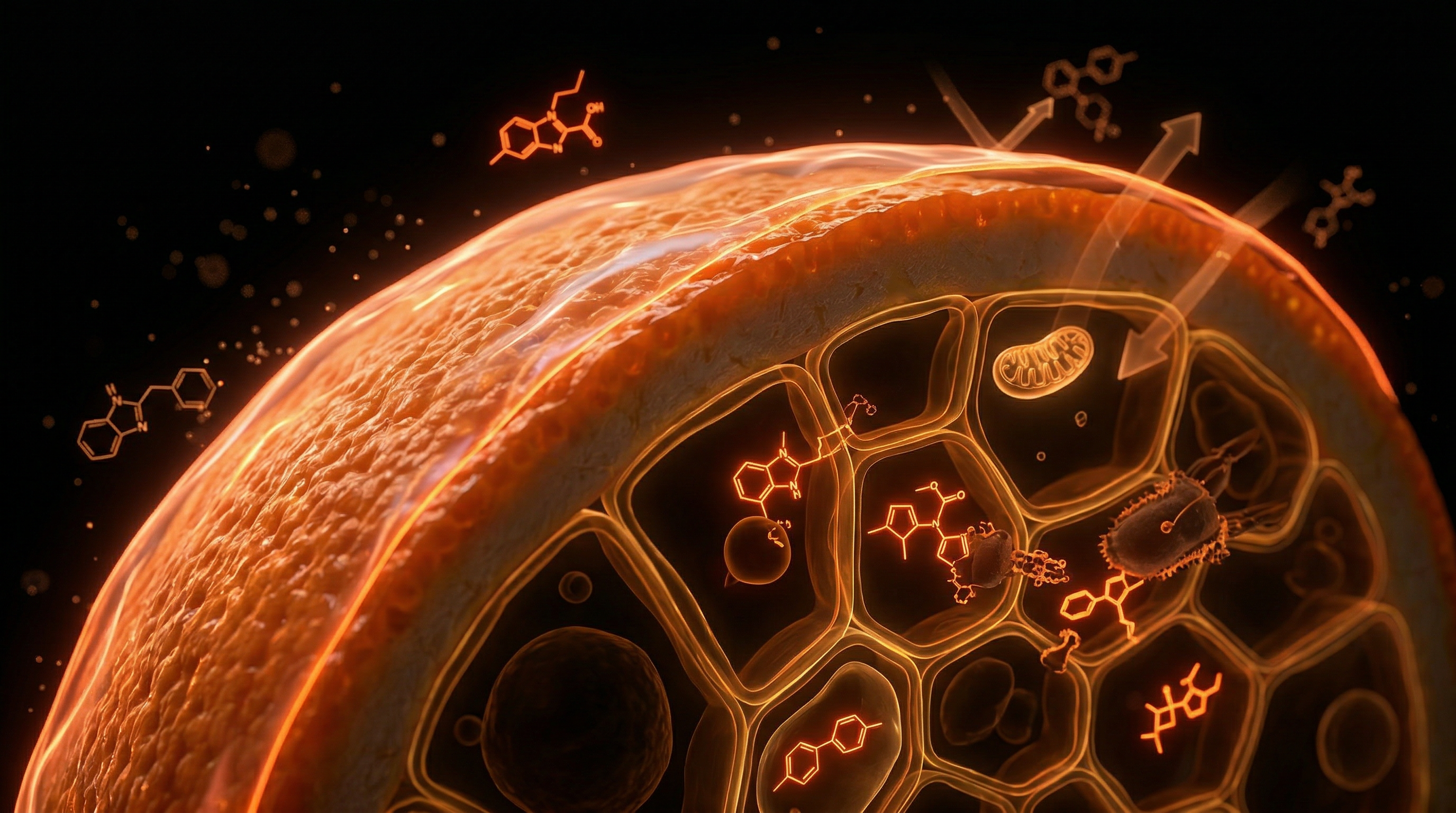
Scientific investigation now reveals that these residues—primarily Imazalil, Thiabendazole, and Orthophenylphenol—are not merely inert surface contaminants. They are bioactive compounds that, upon ingestion, interfere with the delicate homeostasis of the human gastrointestinal tract and the broader endocrine system. This article exposes the systemic reality of chemical-coated citrus in UK retail, detailing the biological mechanisms of harm and the regulatory failures that allow these substances to reach the British dinner table.
Key Statistic: According to the UK’s Expert Committee on Pesticide Residues in Food (PRiF), over 85% of sampled oranges and 92% of lemons tested in recent years contained residues of multiple post-harvest fungicides, often exceeding the expectations of consumers who believe "washing" removes the risk.
The Biology — How It Works
The lifecycle of a commercially grown orange intended for the UK market does not end at the tree. Once harvested, the fruit enters a "packing house" where it undergoes a series of industrial processes designed to extend its shelf-life from weeks to months.
The Application Process
Post-harvest treatment is essentially a two-pronged strategy: disinfection and encapsulation.
- The Wash Phase: Fruits are submerged in or sprayed with aqueous solutions containing high concentrations of fungicides. This is intended to kill spores present on the skin and prevent "nesting"—where one rotting fruit infects an entire crate.
- The Waxing Phase: To prevent moisture loss (which causes shrivelling), the fruit is coated in a "wax." In the UK, this is often a mixture of oxidised polyethylene wax (a petroleum derivative) or shellac (an insect secretion). It is during this phase that the most potent fungicides are mixed into the wax itself.
The Chemical Trio
The industry relies on a specific set of molecules, each with a targeted mode of action against fungal life:
- Imazalil (Enilconazole): A systemic fungicide that inhibits the biosynthesis of ergosterol, a vital component of fungal cell membranes. It is classified by the EPA as a "likely human carcinogen."
- Thiabendazole (E233): Used both as a food preservative and an anthelmintic (to treat parasitic worms). It interferes with the fungal tubulin-microtubule equilibrium.
- Orthophenylphenol (OPP/E231): A biocide used as a surface disinfectant. It is highly lipophilic, meaning it dissolves easily into the oils of the citrus peel.
The "Stay-Fresh" Paradox
The biological goal of the fruit is to decay and release its seeds into the soil. The biological goal of the retailer is to halt this process indefinitely. By creating a synthetic barrier, the industry effectively mummifies the fruit. However, because citrus peel is porous, these chemicals migrate into the flavedo (the coloured outer layer) and even the albedo (the white pith), meaning that even "zesting" a lemon for a cake introduces a concentrated dose of fungicides into the human diet.
Mechanisms at the Cellular Level
To understand why these coatings are problematic, we must look beyond the macro-symptoms and examine the cellular interactions between fungicide residues and human tissue.
Inhibition of Cytochrome P450 Enzymes
The human liver relies on the Cytochrome P450 (CYP450) enzyme family to detoxify xenobiotics (foreign chemicals). Imazalil, in particular, is a potent inhibitor of these enzymes. When we ingest citrus residues, we are not just consuming a toxin; we are consuming a substance that actively disables the body’s primary mechanism for clearing other toxins. This creates a synergistic effect where the cumulative toxic load from our environment becomes harder to manage.
Mitochondrial Disruption
Recent research suggests that many post-harvest fungicides act as mitochondrial poisons. They interfere with the electron transport chain—the process by which our cells produce ATP (energy).
- Oxidative Stress: By disrupting mitochondrial function, these chemicals trigger the production of Reactive Oxygen Species (ROS).
- Apoptosis: High levels of ROS lead to oxidative damage to DNA and can trigger premature cell death (apoptosis) in the epithelial cells lining the gut.
The Endocrine Interference
Both Thiabendazole and Imazalil are documented Endocrine Disrupting Chemicals (EDCs). At a cellular level, they can mimic or block natural hormones.
- Thyroid Interference: Thiabendazole has been shown to interfere with thyroid hormone metabolism, potentially leading to metabolic slowdown and weight gain in sensitive individuals.
- Oestrogenic Activity: Some residues exhibit weak oestrogenic activity, contributing to the "oestrogen dominance" seen in many modern hormonal pathologies.
Biological Fact: The human gut lining is only one cell thick. The constant introduction of "biocidal" fungicides via food coatings can cause direct desquamation (sloughing off) of these vital cells, leading to what is colloquially known as "leaky gut."
Environmental Threats and Biological Disruptors
The narrative of citrus coatings is not limited to human ingestion. The environmental trajectory of these chemicals presents a significant threat to biological diversity and the health of the UK’s water systems.
The "Wash-Off" Problem
When consumers wash chemically treated citrus at home, or when industrial packing houses discharge their wastewater, these fungicides enter the local water system. Unlike organic matter, synthetic fungicides are designed to be persistent. They do not break down easily in standard municipal water treatment plants.
Impact on Soil and Microbiota
In agricultural settings, the runoff from treated citrus groves (and the disposal of treated peels in landfills) introduces these chemicals into the soil.
- Mycorrhizal Fungi: These are "good" fungi that form symbiotic relationships with plant roots, helping them absorb nutrients. Fungicides like Imazalil do not discriminate; they kill the beneficial soil fungi as effectively as they kill the fruit moulds, leading to biological "dead zones" in the soil.
- Aquatic Toxicity: Orthophenylphenol is known to be highly toxic to fish and aquatic invertebrates, disrupting the delicate balance of river ecosystems in the UK when trace amounts accumulate.
The Microbial Resistance Crisis
Perhaps the most overlooked environmental threat is the development of fungal resistance. By saturating the environment with low levels of fungicides, we are inadvertently breeding "super-moulds." This mirrors the antibiotic resistance crisis in medicine. As fungi become resistant to Imazalil and Thiabendazole, industry responds by increasing the dosage or developing even more aggressive chemicals, creating an escalating "arms race" that further contaminates the food supply.
The Cascade: From Exposure to Disease
The path from a morning glass of water with a slice of lemon to a chronic health condition is often a slow, insidious cascade of biological failures.
Stage 1: Localised Gut Irritation
The first point of contact is the oral and gastric mucosa. For many individuals, ingestion of citrus coatings results in immediate, though often ignored, symptoms:
- Glossitis: Inflammation of the tongue.
- Acid Reflux: Not necessarily caused by the citrus acid, but by the chemical irritation of the lower oesophageal sphincter.
Stage 2: Dysbiosis and the Microbiome
The human microbiome contains billions of fungal organisms (the mycobiome). When we ingest fungicides, we disrupt the balance between bacteria and fungi in the gut.
- Fungal Overgrowth: Paradoxically, killing off sensitive "good" fungi can allow resistant, pathogenic fungi like Candida albicans to proliferate without competition.
- Metabolic By-products: A disrupted microbiome produces toxic metabolites that enter the bloodstream, leading to "brain fog" and chronic fatigue.
Stage 3: Allergic Sensitisation and MCAS
The chronic presence of these chemicals triggers the immune system’s Mast Cells.
- Allergic Priming: Exposure to Imazalil can "prime" the immune system to overreact to other benign substances. This explains why many people report "citrus allergies" that are actually reactions to the surface chemicals, not the fruit itself.
- The Rise of MCAS: Mast Cell Activation Syndrome is increasingly linked to environmental chemical burdens. The fungicides act as "triggers" that keep the body in a state of constant, low-grade inflammatory hyper-arousal.
Stage 4: Systemic Disease
Long-term, low-level exposure is linked to more severe outcomes:
- Dermatological Issues: Eczema, psoriasis, and "idiopathic" rashes are often the skin’s way of expressing internal toxic overload.
- Neurotoxicity: Some studies in animal models have linked high-level exposure to fungicides with neurodevelopmental delays and motor-function impairment.
What the Mainstream Narrative Omits
The UK’s regulatory and retail sectors maintain a narrative of "safety" and "compliance." However, this narrative is built on several key omissions.
The Myth of the "Safe" MRL
The Maximum Residue Level (MRL) is the legal limit of a pesticide allowed on food. The mainstream narrative suggests that as long as residues are below the MRL, they are safe. The Truth: MRLs are calculated based on acute toxicity in healthy adults. They do not account for:
- The Cocktail Effect: The cumulative impact of consuming 10-20 different pesticide residues across a day’s worth of various foods.
- Developmental Windows: The specific vulnerability of infants, children, and pregnant women.
- Bioaccumulation: The tendency of lipophilic chemicals to store in human fat tissue over decades.
The "Peeling" Deception
Retailers often argue that because the peel is discarded, the chemicals pose no risk.
"The Truth:"
- Cross-Contamination: The act of peeling a fruit transfers the concentrated wax and fungicides from the outside of the peel to the edible flesh via the hands and the knife.
- Aerosolisation: When you "spritz" a citrus peel to release the oils, you are aerosolising the chemical residues, which are then inhaled.
- Culinary Use: Modern British recipes frequently call for "zest," "preserved lemons," or "wedges" in drinks, where the treated skin is directly consumed.
The Commercial Incentive for Waxes
Waxes are not just for preservation; they are for weight retention. Citrus is sold by weight. By sealing the fruit in plastic-like wax, the industry prevents the natural evaporation of water. This means the consumer is paying "fruit prices" for trapped water, while the retailer enjoys a longer "sell-by" window. The health of the consumer is secondary to the "shelf-life" of the asset.
The UK Context
In the post-Brexit landscape, the UK’s regulation of pesticide residues has undergone significant shifts. While many EU standards were initially "rolled over," there is increasing pressure to diverge in favour of trade expediency.
The PRiF Reports
The Expert Committee on Pesticide Residues in Food (PRiF) conducts quarterly testing of produce sold in UK supermarkets (Tesco, Sainsbury's, ASDA, Waitrose, etc.). Their data consistently shows that citrus is one of the most contaminated categories of produce on British shelves.
- Multiple Residues: It is common for a single UK lemon to test positive for three or four different fungicides simultaneously.
- Non-EU Imports: Citrus imported from outside the EU often shows higher concentrations of chemicals that are strictly limited or banned for use within UK borders, yet are permitted on imported goods.
The "Cosmetic Standard" Culture
The British consumer has been conditioned to expect "perfect" fruit. Any blemish, spot, or natural variation is seen as a sign of poor quality. This cultural demand for aesthetic perfection drives the supermarkets to demand higher levels of chemical intervention from their suppliers. In the UK, a "natural" orange is often unsellable, simply because it doesn't look like a plasticised replica.
Regulatory Lag
The Health and Safety Executive (HSE) is responsible for monitoring these levels, but the testing is always retrospective. By the time a "high" residue level is identified in a batch of oranges, those oranges have long been consumed by the British public. The system is designed for monitoring, not prevention.
Protective Measures and Recovery Protocols
For the health-conscious individual in the UK, navigating the "chemical citrus" landscape requires a proactive strategy.
1. The Organic Imperative
The only way to guarantee a fruit has not been treated with post-harvest synthetic fungicides is to buy Certified Organic (Soil Association or EU Organic). Organic standards strictly prohibit the use of Imazalil, Thiabendazole, and petroleum waxes.
- Note: Organic citrus will spoil faster. This is a sign of biological integrity.
2. The Sodium Bicarbonate Wash
If organic citrus is unavailable, research from the University of Massachusetts suggests that a solution of Sodium Bicarbonate (Baking Soda) and water is more effective at removing residues than plain water or commercial "fruit washes."
- Protocol: Soak citrus in a bowl of water with 1 tablespoon of baking soda for at least 15 minutes. Scrub with a stiff brush and rinse thoroughly. This helps break down the wax and neutralise acidic pesticide molecules.
3. Avoid "Waxed" Labelling
In the UK, retailers are legally required to state if fruit has been "waxed" or treated with preservatives, though this is often in tiny print on the shelf edge or the back of the bag. Look for "Unwaxed" labels, but be aware that "unwaxed" does not always mean "pesticide-free"—it simply means the final wax coating was omitted.
4. Gut and Liver Support
To counteract the biological "cascade" of exposure, focus on:
- Glutathione Support: Consume cruciferous vegetables (broccoli, kale) to provide the precursors for the body’s master antioxidant, which helps the liver process fungicide residues.
- Spore-Based Probiotics: These are more resilient to the presence of fungicides in the gut and can help restore a healthy microbiome.
- Fulvic and Humic Acids: These natural compounds can bind to certain pesticide residues in the GI tract, preventing their absorption.
Summary: Key Takeaways
The reality of citrus in the UK retail market is a testament to the prioritisation of commerce over chemistry. To protect your biological integrity, keep these points in mind:
- Persistent Coatings: Post-harvest fungicides (Imazalil, Thiabendazole) are embedded in waxes and do not wash off with water alone.
- Systemic Disruption: These chemicals inhibit liver detoxification (CYP450), disrupt mitochondrial energy production, and act as endocrine disruptors.
- Gut Health Crisis: Ingestion is linked to intestinal permeability ("leaky gut"), dysbiosis, and the rising prevalence of Mast Cell Activation Syndrome (MCAS).
- Regulatory Gap: UK MRLs do not account for the "cocktail effect" or long-term bioaccumulation of multiple residues.
- The Organic Solution: Choosing organic is the only reliable method to avoid these specific post-harvest preservatives.
- Proactive Decontamination: Use a baking soda soak for all non-organic citrus to reduce the toxic load.
In the pursuit of health, we must look past the "shiny" exterior of the supermarket shelf. True vitality is found in produce that lives, breathes, and eventually decays—not in chemically mummified fruit that serves the balance sheet at the expense of the human biological system.
This article is provided for informational and educational purposes only. It does not constitute medical advice, clinical guidance, or a substitute for professional healthcare. Information reflects cited research at time of publication. Always consult a qualified healthcare professional before acting on any health information.
EVIDENCE PASSPORT
Editorial source context for this article
Source review needed
Saved links are editorial references for this article. They may support specific claims rather than every sentence. Open and assess each source in context. This passport does not independently verify them.
Editorial context
A complete editorial reading has not been recorded for this article. Source links remain available for you to open and assess directly.
Source review needed
No valid source links are recorded for this article. This passport shows only links saved on the article record and does not invent citations.
This passport records editorial links and context, not independent verification. Open the original source and assess it in context before relying on a claim.
Medical Disclaimer
The information in this article is for educational purposes only and does not constitute medical advice, diagnosis, or treatment. Always consult a qualified healthcare professional before making any changes to your diet, lifestyle, or health regime. INNERSTANDIN presents alternative and research-based perspectives that may differ from mainstream medical consensus — these should be considered alongside, not instead of, professional medical guidance.
Read Full DisclaimerContinue the thread
Keep this question moving.
Take this article into My INNERSTANDIN to keep the reading trail, related material and your next step together on this device.
Dig deeper in the Library
Free, longform PDF volumes that go beyond headlines into mechanisms and references.