
Proteoglycan Aggregation: The Biochemistry of Disc Hydration
Published April 2026
The ability of your spine to absorb shock is entirely dependent on the concentration of proteoglycans within the nucleus pulposus. This article investigates the biochemical structures of aggrecan and chondroitin sulfate, explaining how systemic metabolic health dictates the osmotic pressure of your discs. We expose how high-glucose environments and insulin resistance lead to the 'deflation' of the spine at a cellular level.
Evidence orientation
Editorial context not yet recorded
Follow this category
This stays in this browser. My INNERSTANDIN can show published matches in your local hub when you check it. It does not send email, push, or alert notifications.
Local learning review
A private browser aid for revisiting ideas. It is not an alert or a health recommendation.
Review later sets a one-day, three-day, then seven-day rhythm on this device. Choose it only when you want to revisit this article.
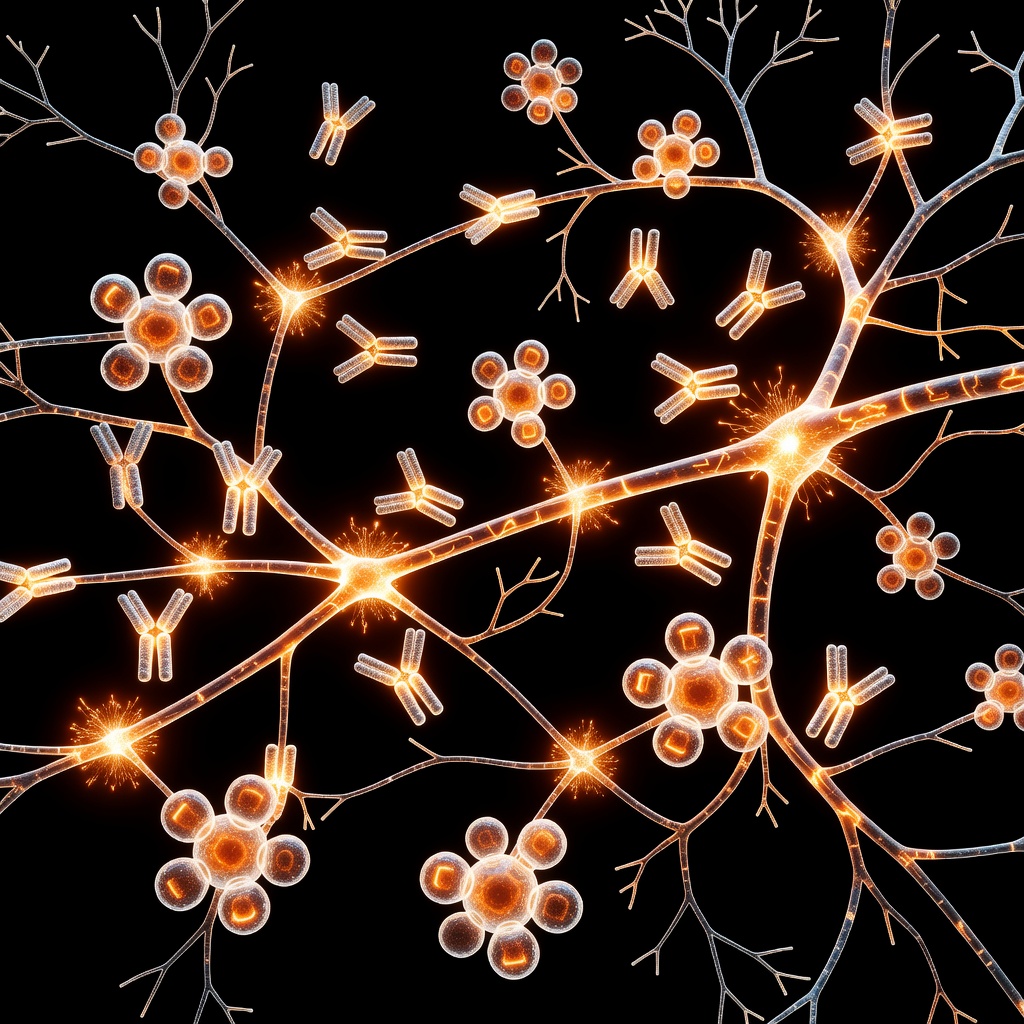
At the core of every spinal disc lies a gelatinous substance known as the nucleus pulposus. Its primary function is to resist compression, a feat it achieves through the sheer power of osmosis. The 'magic' molecules responsible for this are proteoglycans—large protein complexes that act like biological sponges. The most significant of these is aggrecan, which is heavily laden with glycosaminoglycan (GAG) chains like chondroitin sulfate. These chains carry a strong negative charge, which naturally attracts and holds water molecules.
When we talk about a 'dehydrated' or 'desiccated' disc on an MRI, we are actually describing a loss of these negatively charged molecules. Conventional medicine often views this as an inevitable part of aging, but biological evidence suggests it is a result of metabolic dysfunction. Chronic systemic inflammation and high blood sugar levels lead to the formation of Advanced Glycation End-products (AGEs), which cross-link with the collagen in the disc, making it brittle and preventing the proper aggregation of proteoglycans. Furthermore, insulin resistance can impair the chondrocytes—the specialized cells responsible for producing these proteoglycans. This creates a vicious cycle: as the disc loses its osmotic pressure, it loses height; as it loses height, the surrounding ligaments become lax, leading to instability and further mechanical damage.
To preserve disc hydration, one must address the systemic biochemistry of the body. This includes managing glycemic variability and ensuring the presence of specific precursors like glucosamine and sulfur, which are essential for GAG synthesis. Research indicates that the health of the disc is a reflection of the body's overall metabolic efficiency, not just a matter of structural 'wear.'
This article is provided for informational and educational purposes only. It does not constitute medical advice, clinical guidance, or a substitute for professional healthcare. Information reflects cited research at time of publication. Always consult a qualified healthcare professional before acting on any health information.
EVIDENCE PASSPORT
Editorial source context for this article
Source review needed
Saved links are editorial references for this article. They may support specific claims rather than every sentence. Open and assess each source in context. This passport does not independently verify them.
Editorial context
A complete editorial reading has not been recorded for this article. Source links remain available for you to open and assess directly.
Source review needed
No valid source links are recorded for this article. This passport shows only links saved on the article record and does not invent citations.
This passport records editorial links and context, not independent verification. Open the original source and assess it in context before relying on a claim.
Medical Disclaimer
The information in this article is for educational purposes only and does not constitute medical advice, diagnosis, or treatment. Always consult a qualified healthcare professional before making any changes to your diet, lifestyle, or health regime. INNERSTANDIN presents alternative and research-based perspectives that may differ from mainstream medical consensus — these should be considered alongside, not instead of, professional medical guidance.
Read Full DisclaimerContinue the thread
Keep this question moving.
Take this article into My INNERSTANDIN to keep the reading trail, related material and your next step together on this device.