
Cytochrome c Oxidase: The Primary Photo-Acceptor in Human Tissue
Updated May 2026
Deep dive into the copper centers of the mitochondrial respiratory chain that act as antennas for light. Understanding this receptor is key to mastering the therapeutic application of NIR light.
Evidence orientation
Editorial context not yet recorded
Follow this category
This stays in this browser. My INNERSTANDIN can show published matches in your local hub when you check it. It does not send email, push, or alert notifications.
Local learning review
A private browser aid for revisiting ideas. It is not an alert or a health recommendation.
Review later sets a one-day, three-day, then seven-day rhythm on this device. Choose it only when you want to revisit this article.
Overview
In the realm of modern bioenergetics, we are witnessing a paradigm shift that moves beyond the simplistic "food-as-fuel" model of human metabolism. At the heart of this revolution lies a singular, sophisticated enzyme embedded within our mitochondrial membranes: Cytochrome c Oxidase (CcO). While traditional biology textbooks frequently relegate CcO to a mere "step" in the Electron Transport Chain (ETC), a more profound truth has been suppressed or ignored by mainstream clinical practice: Cytochrome c Oxidase is a high-precision quantum antenna.
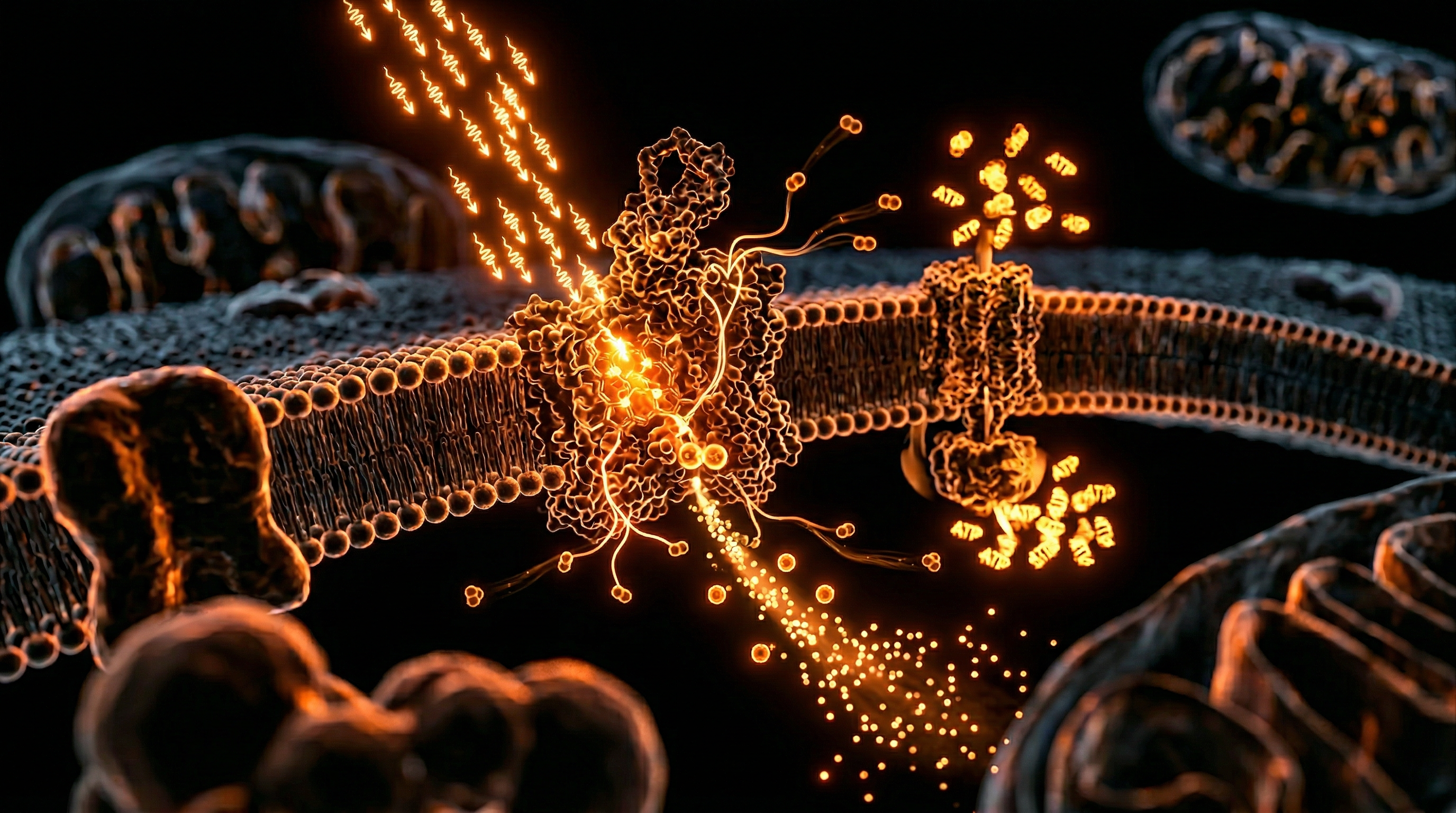
It is the terminal enzyme of the mitochondrial respiratory chain (Complex IV), and more importantly, it is the primary chromophore—a light-absorbing molecule—within human tissue that responds specifically to Red and Near-Infrared (NIR) light. This interaction, known as Photobiomodulation (PBM), represents one of the most significant intersections between physics and biology. By understanding how CcO intercepts photons, we unlock the ability to direct cellular energy, repair damaged DNA, and reverse the systemic oxidative stress that defines the modern "civilisational" disease profile.
This article provides an exhaustive examination of the biochemical architecture of CcO, its role as a photo-acceptor, the environmental toxins currently sabotaging its function, and why this information has been largely omitted from the curriculum of our medical institutions.
The Biology — How It Works
To master the application of light as a therapeutic tool, one must first master the anatomy of the mitochondrion, specifically the cristae where the respiratory complexes reside. Cytochrome c Oxidase is a large transmembrane protein complex found in the inner mitochondrial membrane of mammals, consisting of 13 subunits.
The Copper and Heme Architecture
The "magic" of CcO’s light sensitivity lies in its metallic prosthetic groups. Unlike many other proteins, CcO contains a specific arrangement of Copper and Iron (within Heme groups) that creates an electronic environment capable of absorbing specific wavelengths of light.
- Copper A (CuA) Centre: This binuclear copper centre is the first port of call for electrons arriving from Cytochrome c. It acts as an electronic reservoir.
- Heme a: A prosthetic group that facilitates the transfer of electrons from the CuA centre to the active site.
- The Binuclear Centre (Heme a3 and CuB): This is the functional heart of the enzyme where oxygen is reduced to water. It is here that the interaction with light is most critical.
Callout Fact: Cytochrome c Oxidase contains two distinct copper centres, making it uniquely sensitive to the 800nm–850nm range of the electromagnetic spectrum, which corresponds perfectly with the "Optical Window" of human tissue.
The Respiratory Process
Under normal conditions, electrons are passed down the ETC (Complexes I through III) until they reach Complex IV (CcO). The final task of CcO is to facilitate the four-electron reduction of Oxygen (O2) into Water (H2O). During this process, protons are pumped across the inner mitochondrial membrane, creating the electrochemical gradient (the proton motive force) that drives the production of Adenosine Triphosphate (ATP) by the ATP Synthase turbine.
The Photo-Acceptor Mechanism
Why does light matter to an enzyme? The absorption of photons by the metallic centres of CcO triggers an "excited state." When NIR light (600nm to 1000nm) hits the copper and heme centres, it alters the electronic configuration of the enzyme. This excitation lowers the activation energy required for the transfer of electrons and the pumping of protons. Essentially, light acts as a catalyst, greasing the wheels of a cellular engine that may be stalled due to age, toxicity, or disease.
Mechanisms at the Cellular Level
The therapeutic effect of Red Light Therapy is not a "heating" effect (thermogenic), but a photochemical one. When a photon of the correct wavelength hits the CcO enzyme, several critical events occur simultaneously within the cell.
1. Dissociation of Nitric Oxide (NO)
This is perhaps the most vital mechanism in the PBM literature. In states of stress or inflammation, the cell produces excess Nitric Oxide (NO). This NO has a high affinity for the heme a3-CuB binuclear centre of CcO. It binds to the enzyme, effectively "clogging" it and preventing oxygen from binding. This is known as competitive inhibition of respiration.
When NIR light is applied, it causes the photodissociation of NO from the CcO enzyme. Once the NO "plug" is removed, oxygen can once again bind to the site, restoring the flow of electrons and dramatically increasing the oxygen consumption rate of the cell.
2. The Acceleration of ATP Synthesis
By removing NO and optimising the redox state of the copper centres, light allows the ETC to function at maximum efficiency. The resulting increase in the mitochondrial membrane potential ($\Delta\psi m$) leads to a significant surge in ATP production. This provides the cell with the "currency" required for repair, replication, and the maintenance of homeostasis.
3. Retrograde Signalling and Gene Expression
The interaction of light with CcO does not just stay within the mitochondrion. The process triggers the release of low levels of Reactive Oxygen Species (ROS). While high levels of ROS are damaging, these low-level pulses act as signalling molecules. They activate transcription factors such as NF-kB and AP-1, which in turn trigger the expression of over 100 genes related to:
- Protein synthesis
- Cell survival
- Anti-inflammatory cytokines
- Growth factors (such as BDNF in the brain)
4. Structuring Mitochondrial Water
Recent research into interfacial water suggests that the energy absorbed by CcO also affects the viscosity of the water surrounding the mitochondrial turbine. By turning bulk water into "structured" or Exclusion Zone (EZ) water, the light reduces the friction of the ATP Synthase rotor, allowing it to spin more freely and produce more energy with less fuel.
Environmental Threats and Biological Disruptors
Despite the elegance of the CcO system, modern life is a relentless assault on mitochondrial integrity. Our "antenna" is being jammed by environmental factors that the mainstream scientific establishment frequently downplays.
Blue Light Toxicity and Circadian Mismatch
We evolved under the full spectrum of the sun, where NIR light always accompanies visible light. Today, we spend 90% of our time indoors under Artificial Light at Night (ALAN) and LED screens. These sources are heavy in high-energy visible (HEV) blue light and entirely devoid of the restorative NIR wavelengths that target CcO.
Scientific Fact: Excessive blue light without the balance of NIR leads to the overproduction of ROS and the eventual "shutdown" of CcO as a protective mechanism, leading to cellular apoptosis (cell death).
Non-native Electromagnetic Fields (nnEMFs)
The pervasive mesh of Wi-Fi, 5G, and cellular radiation interferes with the quantum coherence of the mitochondria. nnEMFs have been shown to trigger the Voltage-Gated Calcium Channels (VGCCs), flooding the cell with calcium. This intracellular calcium overload leads to the production of peroxynitrite, a highly reactive oxidant that damages the delicate copper centres of CcO.
Heavy Metal Interference
CcO requires bioavailable Copper to function. However, the modern environment is saturated with antagonists like Aluminum, Lead, and Mercury. These metals can displace copper in the enzyme's structure, rendering the "antenna" deaf to light and incapable of reducing oxygen. Furthermore, the use of Glyphosate in industrial agriculture acts as a potent mineral chelator, stripping the body of the very copper needed to build functional Cytochrome c Oxidase.
The Cascade: From Exposure to Disease
When Cytochrome c Oxidase is inhibited—whether by light deficiency, NO-clogging, or toxic interference—the body enters a state of Bioenergetic Failure. This is not a localised issue; it is the root of systemic pathology.
The Warburg Effect and Cancer
When CcO cannot process oxygen efficiently, the cell is forced to revert to primitive glycolysis (fermentation) to survive, even in the presence of oxygen. This shift, known as the Warburg Effect, is a hallmark of malignancy. Chronic inhibition of Complex IV is, in many ways, the "on-switch" for oncogenesis.
Neurodegeneration
The brain is the most mitochondrially-dense organ in the body. When CcO activity drops in the neurons, the result is a massive increase in oxidative stress and a decrease in the clearance of metabolic waste. Diseases like Alzheimer’s, Parkinson’s, and Multiple Sclerosis are increasingly being viewed as mitochondrial encephalopathies caused by the failure of the ETC to maintain the cellular voltage required for neural health.
Chronic Fatigue and Fibromyalgia
In these conditions, the "metabolic brake" is permanently engaged. The CcO enzymes are often saturated with Nitric Oxide or damaged by chronic inflammatory markers, leaving the patient in a state of perpetual energy deficit regardless of how many calories they consume.
What the Mainstream Narrative Omits
One must ask: if the science of Cytochrome c Oxidase and Photobiomodulation is so robust (with over 5,000 peer-reviewed studies), why is it not a cornerstone of modern medicine?
The Pharmaceutical Bias
The current medical-industrial complex is built upon the biochemical model of intervention—specifically, the use of patentable molecules to block or stimulate receptors. Light cannot be patented. The sun is free. An LED device that lasts ten years represents a poor "recurring revenue" model compared to a daily pill for cholesterol or blood pressure.
The Flexner Legacy
The suppression of light therapy can be traced back to the 1910 Flexner Report, which restructured North American and British medical education. It effectively demonised "electro-therapy," "heliotherapy," and "biophysical medicine" in favour of the burgeoning petrochemical-pharmaceutical industry. This led to a "Dark Age" in bioenergetics that we are only now beginning to escape.
The Reductionist Trap
Mainstream biology often treats the cell as a "bag of chemicals" interacting by random diffusion. This ignores the Quantum Biological reality: that the cell is an integrated electronic circuit where CcO acts as a semiconductor. Acknowledging this would require a total rewrite of oncology, neurology, and endocrinology—a task the establishment is unwilling to undertake.
The UK Context
In the United Kingdom, the crisis of mitochondrial dysfunction is particularly acute, driven by a unique combination of geography, climate, and institutional inertia.
The Northern Latitude Deficit
For much of the year, the UK lacks sufficient solar intensity to provide therapeutic levels of NIR light through the skin. Historically, the British population spent more time outdoors, but the shift to an indoor, office-based economy has created a "Light Famine." The "British Gloom" is not just a psychological state; it is a physiological state of hypo-metabolism caused by under-stimulated CcO.
The NHS Stagnation
While countries like Germany and Switzerland have integrated "Klimatherapie" (climate therapy) and advanced PBM into their clinical settings, the National Health Service (NHS) remains tethered to a model of symptom management. Light therapy is often dismissed as "alternative," despite the UK’s own rich history in the field (such as the work of Dr. Niels Finsen, who won a Nobel Prize for light therapy).
Environmental Burden in the UK
The UK’s legacy of heavy industrialisation, coupled with current high-density urban "Smart City" initiatives, means British citizens are exposed to some of the highest nnEMF loads in Europe. This, combined with a diet high in ultra-processed foods (which lack the trace minerals like copper and manganese required for CcO), has created a perfect storm for mitochondrial decay.
Protective Measures and Recovery Protocols
Understanding that CcO is the primary photo-acceptor allows us to design specific protocols to "re-tune" our cellular antennas.
1. Targeted Photobiomodulation (PBM)
To effectively stimulate Cytochrome c Oxidase, one must use specific wavelengths and power densities.
- 660nm (Red): Ideal for skin, surface wound healing, and systemic effects via the blood.
- 810nm–850nm (NIR): These wavelengths have the deepest penetration, reaching the brain, bones, and deep muscle tissue where the densest concentrations of CcO reside.
- Timing: Morning exposure is best, as it mimics the high NIR content of the sunrise and prepares the mitochondria for the day's stressors.
2. Optimising Copper Bioavailability
CcO cannot function without copper. However, taking cheap synthetic copper supplements can be toxic. Instead, focus on:
- Organ Meats: Beef liver is the most concentrated source of bioavailable copper and retinol (Vitamin A), which is required for copper loading into the enzyme.
- Shilajit: A mineral resin that provides fulvic acid to help shuttle minerals into the mitochondria.
- Avoiding Glyphosate: Eat organic to ensure the copper you consume isn't chelated and excreted before it reaches your cells.
3. Methylene Blue (MB)
MB is a unique "redox agent" that acts as an alternative electron carrier. It can bypass stalled parts of the ETC and donate electrons directly to Cytochrome c Oxidase. When combined with Red Light Therapy, MB and light work synergistically to "supercharge" ATP production and clear NO blockages.
4. Mitigating Blue Light and nnEMFs
- Blue-Blockers: Wear red-tinted glasses after sunset to prevent the inhibition of CcO and the suppression of melatonin.
- Hardwire Your Environment: Use Ethernet instead of Wi-Fi and keep mobile phones on airplane mode when not in use to reduce the calcium-channel-mediated damage to mitochondrial enzymes.
5. Structured Water and Hydration
Since CcO efficiency is tied to the viscosity of mitochondrial water, drinking high-quality, mineral-rich water and grounding (walking barefoot on the earth) can help maintain the EZ water layer, reducing the energy cost of ATP synthesis.
Summary: Key Takeaways
The mastery of our internal health begins with the mastery of the Cytochrome c Oxidase enzyme. It is the bridge between the external world of light and the internal world of biochemistry.
- The Antenna: CcO is the primary receptor for Red and NIR light, using copper and heme centres to absorb photons.
- The NO Plug: Light works primarily by displacing Nitric Oxide, which otherwise acts as a "metabolic brake" on our cellular respiration.
- Energy and Beyond: Stimulating CcO increases ATP, but also triggers a cascade of genetic expression that promotes systemic healing and anti-inflammatory responses.
- Environmental Sabotage: Our modern environment—characterised by blue light, nnEMFs, and mineral depletion—is a direct assault on this enzyme.
- The Solution: By intentionally utilizing PBM, optimizing copper intake, and respecting our circadian biology, we can restore the "quantum coherence" of our cells.
The "INNERSTANDING" of Cytochrome c Oxidase is more than a lesson in biology; it is a blueprint for reclaiming human sovereignty in an age of biological disruption. The light is not just for seeing; it is for being. By feeding our mitochondrial antennas the specific frequencies they evolved to receive, we move from a state of mere survival into a state of vibrant, high-voltage health.
This article is provided for informational and educational purposes only. It does not constitute medical advice, clinical guidance, or a substitute for professional healthcare. Information reflects cited research at time of publication. Always consult a qualified healthcare professional before acting on any health information.
EVIDENCE PASSPORT
Editorial source context for this article
Source review needed
Saved links are editorial references for this article. They may support specific claims rather than every sentence. Open and assess each source in context. This passport does not independently verify them.
Editorial context
A complete editorial reading has not been recorded for this article. Source links remain available for you to open and assess directly.
Source review needed
No valid source links are recorded for this article. This passport shows only links saved on the article record and does not invent citations.
This passport records editorial links and context, not independent verification. Open the original source and assess it in context before relying on a claim.
Medical Disclaimer
The information in this article is for educational purposes only and does not constitute medical advice, diagnosis, or treatment. Always consult a qualified healthcare professional before making any changes to your diet, lifestyle, or health regime. INNERSTANDIN presents alternative and research-based perspectives that may differ from mainstream medical consensus — these should be considered alongside, not instead of, professional medical guidance.
Read Full DisclaimerContinue the thread
Keep this question moving.
Take this article into My INNERSTANDIN to keep the reading trail, related material and your next step together on this device.