
Enzymatic Inhibition: How Fluoride Halts Mitochondrial Respiration
Updated May 2026
This technical review explains how fluoride ions interfere with essential metabolic enzymes like phosphatase. The resulting oxidative stress and cellular energy depletion are explored through a biological lens.
Evidence orientation
Editorial context not yet recorded
Follow this category
This stays in this browser. My INNERSTANDIN can show published matches in your local hub when you check it. It does not send email, push, or alert notifications.
Local learning review
A private browser aid for revisiting ideas. It is not an alert or a health recommendation.
Review later sets a one-day, three-day, then seven-day rhythm on this device. Choose it only when you want to revisit this article.
Overview
In the hierarchy of biological imperatives, the production of adenosine triphosphate (ATP) sits at the very apex. Without the constant, rhythmic generation of energy within the mitochondria, multicellular life ceases to exist. As a senior biological researcher, I have spent decades observing the delicate choreography of enzymatic reactions that sustain human vitality. However, a silent, pervasive antagonist has been introduced into the human biosphere—one that systematically dismantles this choreography at the molecular level. That antagonist is the fluoride ion ($F^-$).
While the public is routinely fed a narrative of "dental health" and "community benefit," the biochemical reality is far more sinister. Fluoride is not a nutrient; it is a cumulative, protoplasmic poison with an affinity for the metal-dependent enzymes that drive our metabolism. This article serves as an exhaustive technical review into the mechanism of enzymatic inhibition, specifically focusing on how fluoride ions infiltrate the mitochondria, disrupt the Electron Transport Chain (ETC), and induce a state of chronic cellular asphyxiation.
We are not merely discussing a topical treatment for tooth enamel; we are examining the systemic degradation of the human "bio-battery." By understanding how fluoride mimics other ions and binds to essential metallic co-factors, we can begin to see the true scope of the mitochondrial crisis currently unfolding in fluoridated populations.
Fact: Fluoride is the most electronegative element in existence, meaning it possesses an insatiable "hunger" for electrons, allowing it to interfere with almost every known biochemical process.
The Biology — How It Works
To understand fluoride’s toxicity, one must first understand its chemical nature. Fluoride is a halogen, residing in the same group as iodine, chlorine, and bromine. However, its small atomic radius and extreme electronegativity give it a unique and devastating ability to penetrate biological membranes.
The Mimicry of the Hydroxyl Group
One of the primary ways fluoride disrupts biology is through the substitution of the hydroxyl group ($-OH$). Because the fluoride ion and the hydroxyl ion share similar charges and sizes, fluoride can "trick" enzymes and structural proteins into incorporating it. In the context of bone and teeth, this creates fluoroapatite, which is harder but more brittle than the natural hydroxyapatite. In the context of enzymes, this substitution is catastrophic.
The Affinity for Cations
Fluoride has an overwhelming affinity for divalent and trivalent metal cations. It seeks out:
- Magnesium ($Mg^{2+}$): The "master mineral" required for over 300 enzymatic reactions.
- Aluminium ($Al^{3+}$): Forming Fluoroaluminium complexes ($AlF_x$), which mimic phosphate groups.
- Calcium ($Ca^{2+}$): Leading to the calcification of soft tissues.
- Iron ($Fe^{3+}$) and Copper ($Cu^{2+}$): Crucial components of the mitochondrial respiratory chain.
By binding to these metals, fluoride effectively "strips" enzymes of their necessary tools. An enzyme without its metal co-factor is like a lock without a key; it becomes biologically inert.
Competitive and Non-Competitive Inhibition
Fluoride acts as both a competitive and non-competitive inhibitor. In some cases, it competes with the substrate for the active site of the enzyme. In others, it binds to an allosteric site, changing the enzyme's shape and rendering it useless. This dual-pronged attack makes it one of the most versatile disruptors of metabolic pathways.
Mechanisms at the Cellular Level
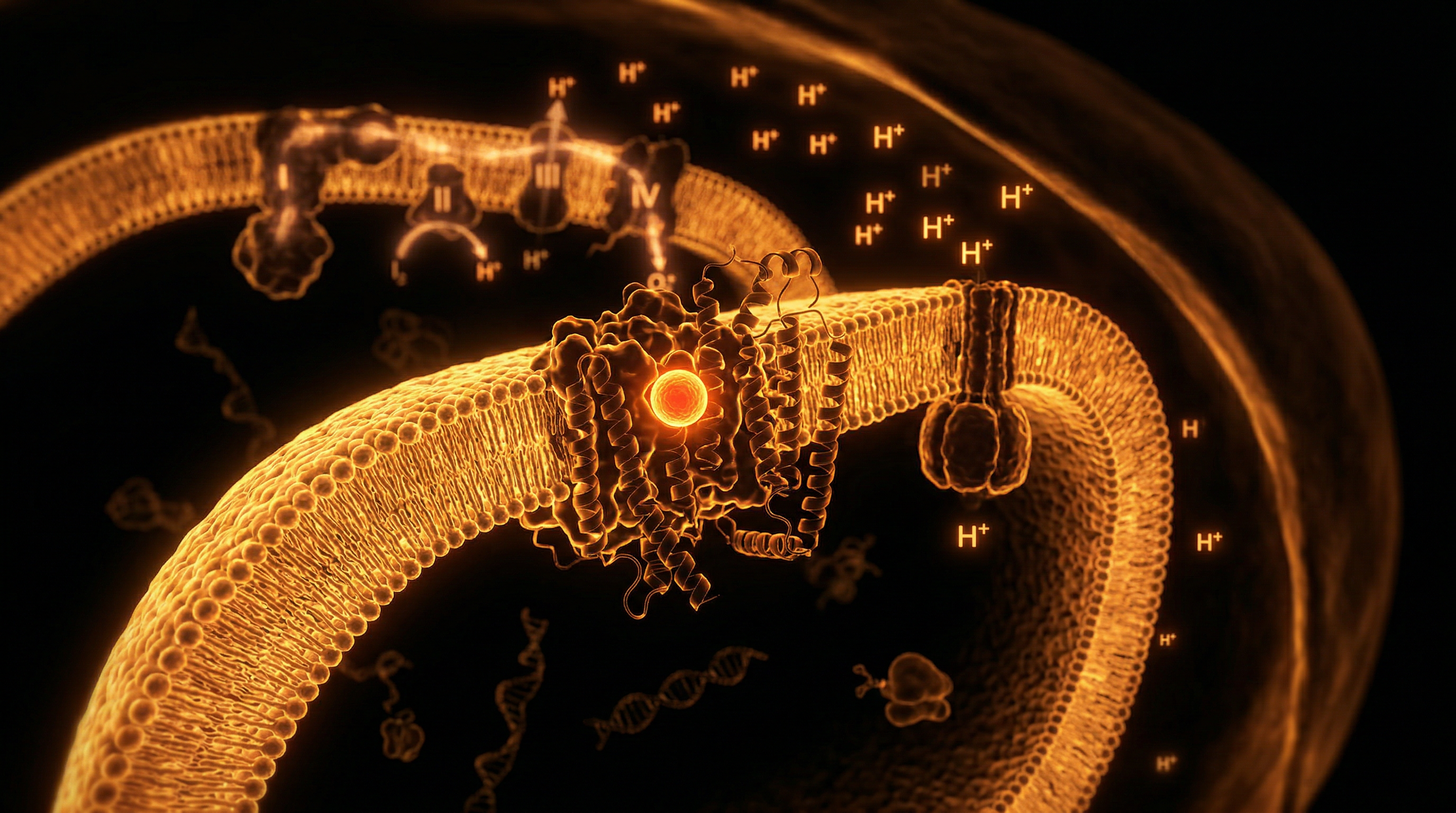
The heart of the fluoride problem lies within the mitochondrial matrix. The mitochondria are responsible for converting the energy from our food into the chemical currency of ATP through a process known as oxidative phosphorylation. Fluoride halts this process at multiple stages.
1. Inhibition of Enolase and Glycolysis
Before energy even reaches the mitochondria, it must go through glycolysis. The enzyme enolase is responsible for converting 2-phosphoglycerate to phosphoenolpyruvate. Enolase is highly dependent on magnesium. Fluoride binds with magnesium and phosphate at the enzyme's active site, forming a complex that locks the enzyme.
- Result: The glycolytic pathway is choked, reducing the available pyruvate for mitochondrial entry.
2. The Krebs Cycle Sabotage (Aconitase)
Within the mitochondria, the Krebs Cycle (Citric Acid Cycle) processes acetyl-CoA. A critical enzyme here is aconitase. Aconitase contains an iron-sulfur ($Fe-S$) cluster that is extremely sensitive to oxidative stress. Fluoride-induced reactive oxygen species (ROS) directly attack this cluster, deactivating the enzyme.
- Result: The cycle breaks down, and the cell can no longer efficiently process fuel.
3. Disruption of the Electron Transport Chain (ETC)
The ETC consists of five protein complexes. Fluoride primarily targets Complex IV (Cytochrome c oxidase).
- Complex IV contains copper and iron centres that facilitate the final reduction of oxygen to water.
- Fluoride ions bind to these metal centres, blocking the flow of electrons.
- This is the same mechanism by which cyanide kills, though fluoride acts at a slower, chronic rate.
4. Interference with ATP Synthase (Complex V)
ATP Synthase is the rotary motor that physically assembles ATP. Research suggests that fluoride disrupts the proton gradient necessary to turn this motor. Furthermore, by mimicking the inorganic phosphate group, fluoride can create "fake" intermediates that the enzyme cannot process.
5. The Phosphatase Problem
Phosphatases are enzymes that remove phosphate groups from proteins—a process vital for "switching" enzymes on and off. Fluoride is a potent inhibitor of serine/threonine phosphatases.
- When these enzymes are inhibited, proteins remain in a phosphorylated state.
- This leads to "signal jamming" within the cell, where instructions for growth, repair, and apoptosis (cell death) are misinterpreted or ignored.
Key Statistic: Studies have shown that fluoride concentrations as low as 1 ppm (the level added to many municipal water supplies) can inhibit certain enzymatic activities by up to 50% in vitro.
Environmental Threats and Biological Disruptors
While water fluoridation is the most debated source, fluoride is an environmental "omnipresence" in the modern age. We are facing a cumulative load that exceeds any "safe" threshold established in the 1940s.
The Industrial By-product
It is a common misconception that the fluoride in water is "natural." While calcium fluoride does exist in nature, the substance added to 70% of the US and 10% of the UK water supply is Hexafluorosilicic acid ($H2SiF6$). This is a captured hazardous waste product from the phosphate fertiliser industry, often contaminated with lead, arsenic, and mercury.
Bioaccumulation in Food and Beverage
- Tea ($Camellia sinensis$): The tea plant is a hyper-accumulator of fluoride from the soil. Older leaves contain the highest concentrations.
- Pesticides: Many modern pesticides (e.g., Cryolite) are fluoride-based, leaving residues on grapes, raisins, and leafy greens.
- PFAS (Per- and Polyfluoroalkyl Substances): Known as "forever chemicals," these contain indestructible carbon-fluorine bonds. They are found in non-stick cookware, firefighting foam, and waterproof clothing.
Pharmaceuticals
A staggering number of pharmaceutical drugs are fluorinated to increase their lipophilicity (the ability to cross fatty membranes like the Blood-Brain Barrier).
- SSRIs: Fluoxetine (Prozac) contains significant fluoride.
- Antibiotics: Ciprofloxacin and other "Fluoroquinolones" are notorious for causing mitochondrial damage and tendon rupture—a direct result of enzymatic and collagen inhibition.
The Cascade: From Exposure to Disease
When mitochondrial respiration is halted and enzymes are inhibited, the body doesn't simply stop; it begins a slow, compensatory slide into pathology. This is the Fluoride Cascade.
Oxidative Stress and DNA Damage
The inhibition of the ETC causes electrons to "leak" out, reacting with oxygen to form Superoxide radicals. This leads to a state of chronic oxidative stress.
- These radicals damage mitochondrial DNA (mtDNA), which lacks the protective histones found in nuclear DNA.
- Damaged mtDNA leads to the production of "broken" respiratory proteins, creating a vicious cycle of energy failure.
Endocrine Disruption: The Thyroid and Pineal Gland
The Thyroid requires iodine to produce hormones (T3 and T4). Because fluoride is more electronegative than iodine, it competitively inhibits the uptake of iodine by the thyroid gland.
- Furthermore, fluoride inhibits the enzymes that convert T4 (inactive) to T3 (active).
- The result is a "subclinical hypothyroidism" that is rampant in fluoridated areas, manifesting as fatigue, weight gain, and brain fog.
The Pineal Gland is a major target because it is not protected by the blood-brain barrier and has a high rate of blood flow. It is a calcifying tissue. Fluoride accumulates here in massive concentrations, inhibiting the enzymatic production of melatonin. This disrupts circadian rhythms and accelerates the onset of puberty.
Neurotoxicity and IQ
The brain is the most energy-demanding organ in the body. By inhibiting mitochondrial ATP production, fluoride effectively "starves" neurons.
- The Grandjean and Choi Meta-Analysis: Numerous studies have now confirmed a correlation between high fluoride exposure and reduced IQ in children.
- Fluoride interferes with the acetylcholinesterase enzyme, which is vital for neurotransmission and memory.
Skeletal Fluorosis
Long before the teeth fall out, the bones suffer. Fluoride-induced enzymatic disruption in osteoblasts and osteoclasts leads to an imbalance in bone remodelling. This results in skeletal fluorosis—a painful, debilitating condition where bones become overly dense, brittle, and prone to fracture.
What the Mainstream Narrative Omits
The promotion of fluoride is perhaps one of the most successful "scientific" PR campaigns in history. To maintain the illusion of safety, several critical truths are routinely suppressed or ignored by public health authorities.
The Dose Control Problem
In no other area of medicine is a "medication" delivered via the water supply, where the dose cannot be controlled. A marathon runner or a manual labourer drinking six litres of water a day receives six times the "dose" of a sedentary individual. This violates every principle of pharmacology and medical ethics.
The "Topical vs. Systemic" Lie
The prevailing consensus among dental researchers (including the CDC) is that fluoride’s benefit is primarily topical—it works by direct contact with the tooth. There is no biological requirement to ingest fluoride. Yet, the policy of systemic fluoridation continues, forcing every organ in the body to process a chemical that is only intended for the tooth surface.
The Suppression of the NTP Report
Recently, the US National Toxicology Program (NTP) completed a multi-year systematic review of fluoride’s neurotoxicity. The report concluded that fluoride is a developmental neurotoxin. However, the release of this report was reportedly delayed and suppressed by high-ranking health officials—a clear indication that political and legal liabilities are being prioritised over public health.
The Lack of Informed Consent
Water fluoridation is a form of compulsory mass medication. In most other contexts, treating a patient without their informed consent is a breach of the Nuremberg Code. By adding fluoride to the public water supply, the State removes the individual's right to refuse medical intervention.
The UK Context
The United Kingdom occupies a unique position in the fluoride debate. Unlike many European nations that have rejected or banned water fluoridation (such as Germany, France, and the Netherlands), the UK government has recently signalled an intent to expand fluoridation schemes.
The Health and Care Act 2022
With the passing of the Health and Care Act 2022, the power to decide on water fluoridation was moved from local authorities to the Secretary of State for Health and Social Care. This centralisation makes it easier to implement national fluoridation programmes with minimal local opposition.
Regions at Risk
Currently, about 10% of the UK population (around 6 million people) receive fluoridated water. This is concentrated in:
- The West Midlands (Birmingham has been fluoridated since the 1960s).
- Parts of the North East (Newcastle and Gateshead).
- East Midlands and limited areas of the North West.
The government's "Levelling Up" white paper specifically mentioned expanding fluoridation to the most deprived areas, ostensibly to tackle tooth decay. However, critics point out that these areas also suffer from higher rates of thyroid issues, obesity, and cognitive decline—all of which are exacerbated by mitochondrial toxins like fluoride.
The Aluminium Synergy
In many parts of the UK, the water infrastructure is aging. The presence of residual aluminium (used as a flocculant in water treatment) combined with added fluoride creates the dreaded Fluoroaluminium ($AlF_3$) complex. This complex is a potent G-protein activator, tricking cells into believing they have received hormonal signals that aren't there, leading to systemic metabolic chaos.
Protective Measures and Recovery Protocols
If you reside in a fluoridated area or have been exposed to high levels of fluoride, there are biochemical strategies to mitigate the damage and support mitochondrial recovery.
1. Filtration is Mandatory
Standard "carbon" filters (like many jug filters) do not remove fluoride. You must use:
- Reverse Osmosis (RO): The most effective way to remove the $F^-$ ion.
- Activated Alumina: Specific filters designed for fluoride removal.
- Distillation: Highly effective, though it requires re-mineralisation of the water afterward.
2. The Magnesium Shield
Since fluoride’s primary target is magnesium, supplementing with high-quality magnesium (such as Magnesium Glycinate or Malate) is essential. Magnesium acts as a "decoy," binding to fluoride in the gut and preventing its absorption, while also replenishing the stores needed for enolase and ATP production.
3. Boron (Borax)
Boron is perhaps the most effective element for fluoride detoxification. It has a high affinity for fluoride, pulling it out of the tissues and bones to be excreted via the urine. Small amounts of ionic boron or even very dilute "borax" solutions (under professional guidance) have been used historically to reverse skeletal fluorosis.
4. Iodine Supplementation
To protect the thyroid, one must ensure iodine sufficiency. However, this must be done carefully. If one is iodine-deficient, fluoride will occupy the iodine receptors. Supplementing with iodine (and its co-factors like selenium) helps "displace" the fluoride.
5. Mitochondrial Support
To repair the damage to the ETC:
- Coenzyme Q10 (Ubiquinol): Supports Complex IV of the ETC.
- PQQ (Pyrroloquinoline quinone): Stimulates mitochondrial biogenesis (the creation of new mitochondria).
- Methylene Blue: In very low doses, this acts as an alternative electron cycler, bypassing the inhibited Complex IV and restoring oxygen consumption.
6. Dietary Antagonists
- Curcumin: Research has shown that curcumin (the active compound in turmeric) can mitigate fluoride-induced neurotoxicity by boosting antioxidant defences.
- Tamarind: Some studies suggest that tamarind paste can help increase the urinary excretion of fluoride.
Summary: Key Takeaways
The evidence against fluoride is not based on "conspiracy," but on fundamental enzymology and mitochondrial biology. When we look through the lens of a senior researcher, the following truths become self-evident:
- Fluoride is a Metabolic Poison: Its primary action is the inhibition of metal-dependent enzymes, specifically those requiring magnesium, iron, and manganese.
- Mitochondrial Asphyxiation: By targeting Enolase and Cytochrome c oxidase, fluoride systematically reduces the cell's ability to produce ATP, leading to chronic fatigue and cellular death.
- Systemic Disruptor: The effects are not limited to the teeth; they extend to the brain (reduced IQ), the endocrine system (hypothyroidism), and the skeletal system.
- The UK Expansion: The British public must be aware of the legislative shift toward mandatory fluoridation and the potential for increased fluoroaluminium exposure.
- Proactive Defence: Mitigating fluoride toxicity requires a multi-faceted approach involving advanced water filtration, mineral repletion (Magnesium/Boron/Iodine), and targeted mitochondrial support.
The "Innerstanding" of this topic requires us to look past the superficial dental propaganda and recognise fluoride for what it truly is: a biochemical "handbrake" on human potential. By halting mitochondrial respiration, fluoride does more than just "harden" teeth—it dims the very spark of life. It is time for the scientific community and the public to demand an end to this archaic and biologically devastating practice.
This article is provided for informational and educational purposes only. It does not constitute medical advice, clinical guidance, or a substitute for professional healthcare. Information reflects cited research at time of publication. Always consult a qualified healthcare professional before acting on any health information.
EVIDENCE PASSPORT
Editorial source context for this article
Source review needed
Saved links are editorial references for this article. They may support specific claims rather than every sentence. Open and assess each source in context. This passport does not independently verify them.
Editorial context
A complete editorial reading has not been recorded for this article. Source links remain available for you to open and assess directly.
Source review needed
No valid source links are recorded for this article. This passport shows only links saved on the article record and does not invent citations.
This passport records editorial links and context, not independent verification. Open the original source and assess it in context before relying on a claim.
Medical Disclaimer
The information in this article is for educational purposes only and does not constitute medical advice, diagnosis, or treatment. Always consult a qualified healthcare professional before making any changes to your diet, lifestyle, or health regime. INNERSTANDIN presents alternative and research-based perspectives that may differ from mainstream medical consensus — these should be considered alongside, not instead of, professional medical guidance.
Read Full DisclaimerContinue the thread
Keep this question moving.
Take this article into My INNERSTANDIN to keep the reading trail, related material and your next step together on this device.
Explore this in the Body Map
See where this hits your biology. Interactive anatomy, threats, and protective protocols.
Dig deeper in the Library
Free, longform PDF volumes that go beyond headlines into mechanisms and references.