
Pulsatile Cerebrovascular Health and Fluid Transport
Updated May 2026
The rhythmic pulsation of arterial walls drives the movement of cerebrospinal fluid through the brain's parenchyma. Maintaining cardiovascular health and arterial elasticity is therefore a prerequisite for effective brain detox.
Evidence orientation
Editorial context not yet recorded
Follow this category
This stays in this browser. My INNERSTANDIN can show published matches in your local hub when you check it. It does not send email, push, or alert notifications.
Local learning review
A private browser aid for revisiting ideas. It is not an alert or a health recommendation.
Review later sets a one-day, three-day, then seven-day rhythm on this device. Choose it only when you want to revisit this article.
Overview
For decades, the scientific community viewed the human brain as a static organ of computation, insulated from the body’s metabolic waste by the formidable blood-brain barrier. We were taught that while the body had a lymphatic system to drain toxins, the brain was somehow exempt, relying on slow, passive diffusion to maintain its delicate internal environment. This "static" model of the brain was not only incomplete—it was fundamentally dangerous.
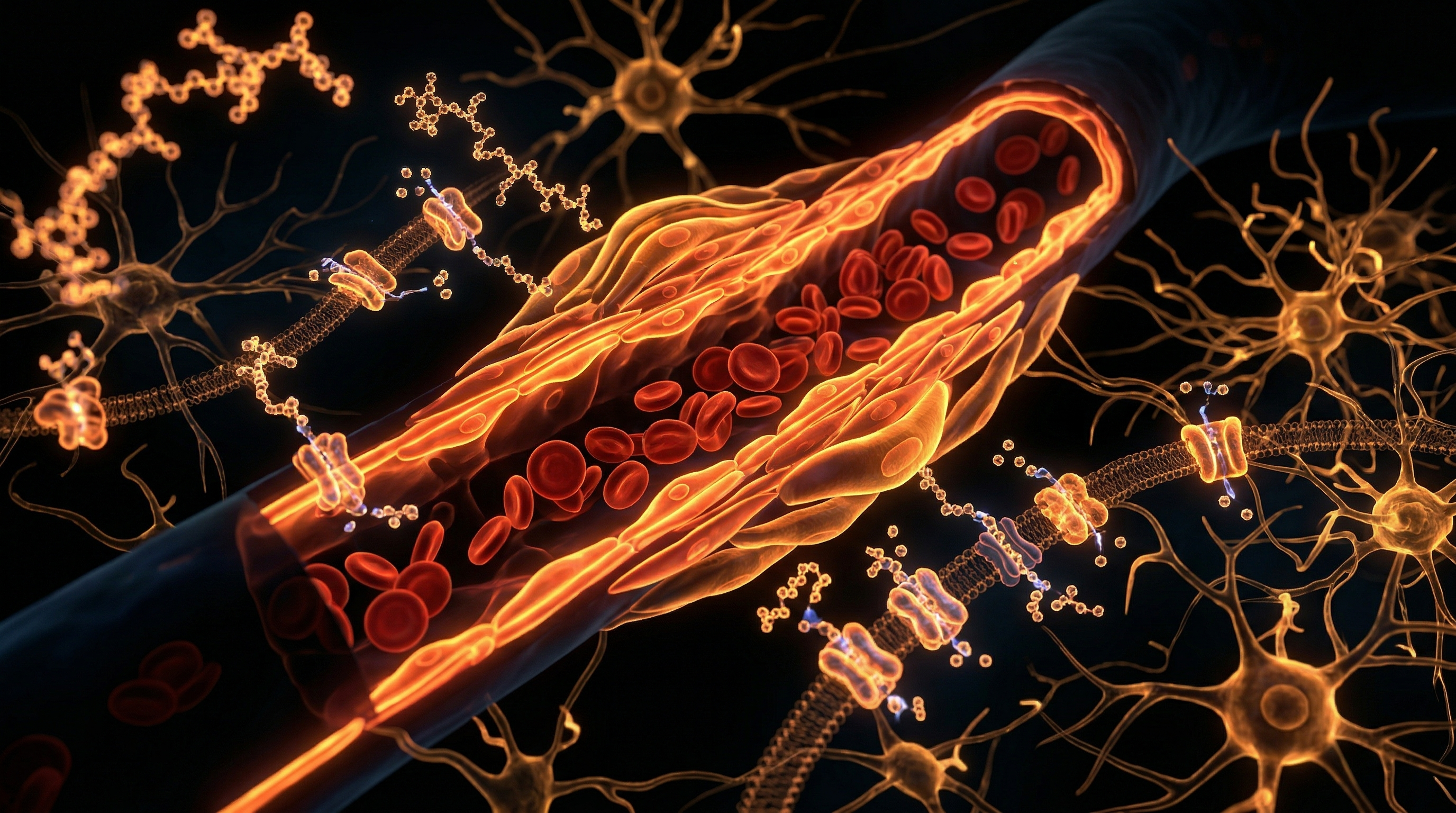
Recent breakthroughs in neurobiology have revealed a high-pressure, rhythmic, and exquisitely engineered plumbing system known as the Glymphatic System. This system does not merely "sit" within the cranium; it is driven by the mechanical force of the heart. Specifically, the pulsatile cerebrovascular rhythm—the expansion and contraction of arterial walls—acts as the primary engine for the transport of cerebrospinal fluid (CSF) through the brain’s parenchyma.
At INNERSTANDING, we recognise that brain health is inseparable from cardiovascular integrity. If the arteries lose their elasticity, the brain loses its ability to self-clean. This article serves as a comprehensive deep dive into the fluid mechanics of the cranium, exposing how the modern industrial environment contributes to "stagnant brain syndrome" and providing a blueprint for restoring the pulsatile vitality necessary for cognitive longevity.
The Biology — How It Works
The movement of fluid through the brain is a masterpiece of biological engineering. To understand it, one must first discard the notion of the brain as a dry sponge. Instead, envision it as a porous matrix saturated with two primary fluids: Cerebrospinal Fluid (CSF) and Interstitial Fluid (ISF).
The Macro-Pump: Arterial Pulsatility
The primary driver of fluid exchange is not a passive gradient, but the kinetic energy of the heartbeat. As the heart contracts (systole), a wave of pressure travels through the carotid arteries and into the circle of Willis. This pressure wave causes the large pial arteries on the surface of the brain to expand.
Because the brain is encased in a rigid skull (the Monro-Kellie doctrine), this expansion must be compensated for. As the arterial wall expands, it physically displaces CSF, forcing it into the Virchow-Robin spaces—the "sleeves" that surround the penetrating arteries as they dive deep into the brain tissue.
The Glymphatic Loop
The term "Glymphatic" is a portmanteau of "Glia" (the support cells of the brain) and "Lymphatic." The process follows a specific circuit:
- Inflow: CSF is pumped into the periarterial spaces by arterial pulsations.
- Convective Flow: This fluid is then forced through the brain tissue (the parenchyma), mixing with the ISF that bathes the neurons.
- Waste Clearance: As the fluid moves, it picks up metabolic by-products, such as Beta-amyloid and Tau proteins.
- Outflow: The waste-laden fluid is directed into the perivenous spaces (around the veins) and eventually exits the cranium via the meningeal lymphatic vessels and the cervical lymph nodes in the neck.
Key Fact: The glymphatic system is almost exclusively active during Slow-Wave Sleep (N3 stage). During this phase, the interstitial space between neurons increases by up to 60%, drastically reducing resistance to fluid flow and allowing for a "power wash" of the brain.
Vasomotion and Low-Frequency Oscillations
Beyond the heartbeat, a second rhythm known as vasomotion—the spontaneous oscillation of blood vessel tone—plays a critical role. These ultra-low-frequency pulses (typically around 0.1 Hz) provide a secondary pumping mechanism that ensures fluid reaches the deepest cortical layers, even when the heart rate is low.
Mechanisms at the Cellular Level
While the heart provides the "shove," the cellular architecture of the brain provides the "gate." The efficiency of the glymphatic system is entirely dependent on the health of the Glia Limitans—the outermost layer of the brain tissue.
The Aquaporin-4 (AQP4) Channel
The star of the cellular show is the Aquaporin-4 (AQP4) water channel. These channels are densely packed onto the "endfeet" of astrocytes—star-shaped glial cells that wrap around the brain’s blood vessels.
- Function: AQP4 channels act as selective valves that allow CSF to flow from the periarterial space into the brain tissue.
- Polarisation: In a healthy brain, AQP4 is highly "polarised," meaning it is concentrated specifically on the endfeet facing the vessel.
- Pathological Mis-localisation: In states of chronic inflammation or vascular stiffening, AQP4 channels migrate away from the endfeet and spread across the entire astrocyte body. This "loss of polarisation" renders the glymphatic pump useless, as the fluid no longer has a directed path to follow.
The Endothelial Glycocalyx
The interior of every blood vessel in the brain is lined with a delicate, gel-like layer called the glycocalyx. This layer senses the "shear stress" of blood flow and signals the vessel to release Nitric Oxide (NO), which maintains arterial elasticity.
- A damaged glycocalyx leads to "stiff" vessels.
- Stiff vessels do not pulse effectively.
- Lack of pulsation halts CSF transport.
Mitochondrial Energetics in the Vasculature
The smooth muscle cells that line the cerebral arteries require significant ATP to maintain their contractile rhythm. Mitochondrial dysfunction—driven by environmental toxins—leads to a failure in myogenic tone, meaning the arteries cannot respond to the pressure waves of the heart, further stalling the brain's detox system.
Environmental Threats and Biological Disruptors
We are currently living in an environment that is fundamentally "anti-pulsatile." Several modern factors are systematically stripping our arteries of their elasticity and clogging the brain’s drainage channels.
1. The Calcification of the Vasculature
The modern diet, devoid of Vitamin K2 and overloaded with synthetic Calcium supplements and "fortified" foods, leads to the deposition of calcium in the arterial walls.
- Arteriosclerosis: When the cerebral arteries calcify, they become rigid pipes rather than elastic pumps.
- The Result: The pulse wave is reflected back towards the heart rather than being used to drive CSF flow.
2. Microplastics and Nanoplastics
Recent autopsies have confirmed the presence of microplastics within the human olfactory bulb and the brain's vascular endothelium. These particles trigger a chronic immune response, leading to Vasculitis (inflammation of the blood vessels) which narrows the Virchow-Robin spaces and physically obstructs fluid movement.
3. Electromagnetic Fields (EMF) and the BBB
The brain’s vascular system is sensitive to exogenous electromagnetic frequencies. High-frequency EMF exposure has been shown in various studies to trigger the opening of Voltage-Gated Calcium Channels (VGCCs).
- This leads to an influx of calcium into the cells, causing oxidative stress and "leaky" blood-brain barriers.
- When the BBB is compromised, large proteins from the blood enter the brain tissue, increasing the viscosity of the ISF and making it too thick to be pumped out by the glymphatic system.
4. Glyphosate and the Glycocalyx
The ubiquitous herbicide glyphosate has been implicated in the disruption of sulphate synthesis. Sulphated glycosaminoglycans are the primary building blocks of the endothelial glycocalyx. By stripping this protective lining, glyphosate indirectly destroys the brain's ability to regulate its own pulsatile flow.
The Cascade: From Exposure to Disease
When the pulsatile transport of CSF fails, the brain enters a state of Chronic Cerebrospinal Venous Insufficiency (CCSVI) and metabolic stagnation. The resulting cascade is predictable and devastating.
The Accumulation of Proteinopathy
Without the "rinse" provided by the glymphatic system, metabolic waste begins to precipitate.
- Beta-Amyloid: Often called the "trash" of the brain, it forms plaques that disrupt neuronal communication (Alzheimer’s).
- Alpha-Synuclein: Stagnation in the substantia nigra leads to the formation of Lewy bodies (Parkinson’s).
- Tau Proteins: These stabilize microtubules in neurons; when they become phosphorylated and aren't cleared, they form neurofibrillary tangles.
Neuro-Inflammation and Microglial Activation
The brain's resident immune cells, the microglia, are designed to clean up small amounts of debris. However, in a stagnant brain, the sheer volume of waste keeps the microglia in a permanent "pro-inflammatory" state.
- This leads to the release of cytokines like TNF-alpha and IL-6.
- Chronic inflammation further damages the AQP4 channels, creating a vicious cycle of stagnation and decay.
Increased Intracranial Pressure (ICP)
Failure of fluid outflow leads to a subtle but chronic rise in intracranial pressure. This "brain congestion" presents as:
- Chronic morning headaches.
- Brain fog.
- Tinnitus (ringing in the ears).
- Visual disturbances.
Statistic: Research indicates that a mere 20% reduction in glymphatic efficiency over a decade can lead to a 300% increase in the risk of developing neurodegenerative symptoms.
What the Mainstream Narrative Omits
The current medical paradigm views dementia and cognitive decline through a lens of "genetics" or "bad luck," primarily focusing on expensive pharmaceutical interventions that attempt to clear plaques after they have already formed. This narrative conveniently ignores several "inconvenient" truths.
The Role of Cervical Alignment
The mainstream rarely mentions that the entire glymphatic drainage system must pass through the jugular foramen and the cervical lymphatics in the neck.
- Modern "tech-neck" (the forward-leaning posture caused by smartphone use) physically compresses the internal jugular veins.
- This creates a "back-pressure" in the brain, halting the outflow of CSF regardless of how healthy the heart is.
The Fluoride Connection
While the UK government continues to advocate for water fluoridation, the neurotoxic reality is suppressed. Fluoride has a high affinity for calcium and accumulates in the Pineal Gland and the Cerebral Vasculature.
- A calcified pineal gland disrupts melatonin production.
- Melatonin is not just a sleep hormone; it is a potent antioxidant that specifically signals the glymphatic system to "turn on" during the night. No melatonin = no brain detox.
The "Statin" Deception
Cholesterol is a vital component of the myelin sheath and the cellular membranes of the astrocytes. By aggressively lowering cholesterol with statins, the structural integrity of the very cells that manage fluid transport is compromised. Furthermore, statins deplete Coenzyme Q10, which is essential for the mitochondrial energy required to maintain arterial pulsatility.
The UK Context
In the United Kingdom, the crisis of cerebrovascular health is particularly acute due to a combination of geography, infrastructure, and public health policy.
The "Stiffened" Population
The UK has one of the highest rates of cardiovascular disease in Europe. The prevalence of Type 2 Diabetes and metabolic syndrome—driven by the dominance of ultra-processed foods (UPFs) in the British diet—has created a population with prematurely "aged" arteries.
- The NHS focuses on "blood pressure management," but rarely measures Pulse Wave Velocity (PWV), the gold standard for assessing the arterial elasticity required for brain detox.
Water Quality and Regional Variations
The UK's water supply is a "postcode lottery" for brain health.
- The North East and West Midlands: These regions have significant levels of artificial water fluoridation.
- The South East: Characterised by "hard water" high in calcium carbonate, which, in the absence of sufficient Vitamin K2 and Magnesium in the diet, contributes to rapid vascular calcification.
Urban Air Quality
In cities like London, Birmingham, and Manchester, PM2.5 (fine particulate matter) is a major disruptor. These nanoparticles are small enough to pass through the lungs into the bloodstream and eventually cross the BBB. Once in the brain, they act as physical "dams" in the micro-vasculature, stalling pulsatile transport and triggering neuro-inflammation.
Protective Measures and Recovery Protocols
Restoring the brain’s plumbing system requires a multi-pronged approach that focuses on restoring arterial elasticity, optimising fluid dynamics, and reducing toxic burden.
1. Dietary Interventions for Elasticity
- Vitamin K2 (MK-7): Essential for activating Matrix Gla-Protein (MGP), which "mops up" calcium from the arteries and shuttles it to the bones. Dosage: 200mcg–400mcg daily.
- Magnesium Threonate: The only form of magnesium that effectively crosses the BBB. It relaxes the smooth muscle of the cerebral arteries, enhancing vasomotion.
- Omega-3 Fatty Acids (High EPA/DHA): Vital for maintaining the fluidity of the astrocyte membranes and the AQP4 channel function.
- Nitric Oxide Boosters: L-Citrulline, beetroot extract, and arugula (rocket) help maintain the endothelial glycocalyx and arterial "spring."
2. Mechanical and Postural Optimisation
- Cervical Decompression: Regular visits to a neurologically-focused chiropractor or the use of a cervical traction device can unblock the jugular outflow.
- Inversion Therapy: Spending 5-10 minutes a day at a slight decline (head lower than heart) can help "flush" the venous sinuses, provided there are no contraindications like glaucoma.
- Nasal Breathing: Mouth breathing reduces nitric oxide levels and disrupts the pressure gradients between the chest and the cranium. Strict nasal breathing, especially during sleep (use mouth tape), is non-negotiable for glymphatic health.
3. Circadian and EMF Hygiene
- Melatonin Optimisation: Total darkness at night. Use blue-light blocking glasses after sunset to ensure the pineal gland triggers the glymphatic "cleaning cycle."
- EMF Mitigation: Turn off Wi-Fi routers at night and keep mobile phones out of the bedroom. This reduces the oxidative stress on the Voltage-Gated Calcium Channels in the brain’s vasculature.
- Cold Exposure: Brief cold showers or ice baths trigger "cold-shock proteins" and cause a robust vascular contraction-expansion cycle, effectively "pumping" the lymphatic system.
4. Advanced Supplementation
- Taurine: Acts as an osmolyte, helping to regulate the volume of cells in the brain and facilitating fluid movement.
- Proteolytic Enzymes: (e.g., Serrapeptase, Nattokinase) taken on an empty stomach may help break down fibrin and arterial plaque, restoring elasticity to the cerebral vessels.
Summary: Key Takeaways
- The Heart-Brain Link: The brain is not self-cleaning; it is "power-washed" by the rhythmic pulsations of the heart and the cerebral arteries.
- The Glymphatic Engine: Fluid transport depends on the Aquaporin-4 channels on astrocytes. If these are damaged or mis-localised, toxins accumulate.
- The Stagnation Crisis: Modern life—characterised by fluoride, EMFs, microplastics, and "tech-neck"—is a recipe for brain stagnation.
- Pulsatility is Life: To prevent neurodegeneration, one must maintain arterial elasticity (Vitamin K2, Magnesium) and ensure unobstructed outflow (posture, nasal breathing).
- Sleep is Non-Negotiable: The "detox" only happens during deep sleep. Any disruption to the circadian rhythm is a direct hit to the brain’s waste management system.
The "Golden Age" of neurology is moving away from the "chemical imbalance" theory and toward a "mechanical flow" theory. If we wish to preserve our cognitive faculties in an increasingly toxic world, we must ensure that our internal rivers continue to flow. A stagnant brain is a dying brain; a pulsing brain is a thriving one.
This article is provided for informational and educational purposes only. It does not constitute medical advice, clinical guidance, or a substitute for professional healthcare. Information reflects cited research at time of publication. Always consult a qualified healthcare professional before acting on any health information.
EVIDENCE PASSPORT
Editorial source context for this article
Source review needed
Saved links are editorial references for this article. They may support specific claims rather than every sentence. Open and assess each source in context. This passport does not independently verify them.
Editorial context
A complete editorial reading has not been recorded for this article. Source links remain available for you to open and assess directly.
Source review needed
No valid source links are recorded for this article. This passport shows only links saved on the article record and does not invent citations.
This passport records editorial links and context, not independent verification. Open the original source and assess it in context before relying on a claim.
Medical Disclaimer
The information in this article is for educational purposes only and does not constitute medical advice, diagnosis, or treatment. Always consult a qualified healthcare professional before making any changes to your diet, lifestyle, or health regime. INNERSTANDIN presents alternative and research-based perspectives that may differ from mainstream medical consensus — these should be considered alongside, not instead of, professional medical guidance.
Read Full DisclaimerContinue the thread
Keep this question moving.
Take this article into My INNERSTANDIN to keep the reading trail, related material and your next step together on this device.
Explore this in the Body Map
See where this hits your biology. Interactive anatomy, threats, and protective protocols.
Dig deeper in the Library
Free, longform PDF volumes that go beyond headlines into mechanisms and references.