
Ruminant Fermentation vs Plant Processing: Energy Efficiency in the Human Gut
Updated May 2026
Compares the energy-intensive processing of plants in the human gut versus the efficiency of animal fats. It discusses the evolutionary reduction of the human colon.
Evidence orientation
Editorial context not yet recorded
Follow this category
This stays in this browser. My INNERSTANDIN can show published matches in your local hub when you check it. It does not send email, push, or alert notifications.
Local learning review
A private browser aid for revisiting ideas. It is not an alert or a health recommendation.
Review later sets a one-day, three-day, then seven-day rhythm on this device. Choose it only when you want to revisit this article.
Overview
The modern dietary landscape is currently dominated by a paradigm that equates plant consumption with health and meat consumption with disease. However, when we strip away the veneer of contemporary nutritional epidemiology and examine the cold, hard facts of comparative anatomy and bioenergetics, a different story emerges. This is the story of a radical evolutionary trade-off that defined the human species: the transition from a high-volume, low-nutrient plant diet to a low-volume, high-density animal-based diet.
At the heart of this discussion lies the Expensive Tissue Hypothesis. To develop the most complex brain in the known animal kingdom, our ancestors had to sacrifice another energy-intensive organ: the digestive tract. Specifically, the human gut underwent a massive reduction in the size of the large intestine (colon), the very site where our primate cousins ferment fibrous plant matter into usable energy.
This article explores the profound disparity between the ruminant digestive system—a biological masterpiece of fermentation—and the human digestive system, which is optimised for the direct absorption of animal-sourced fats and proteins. We will expose the biological costs of "plant processing" in a gut that is no longer designed for it and why the modern insistence on high-fibre, plant-centric diets represents an evolutionary mismatch of catastrophic proportions.
Fact: The human brain accounts for approximately 20% of the body���s total basal metabolic rate (BMR), despite representing only 2% of total body weight. To fuel this, the human gut had to shrink by roughly 40% compared to what would be expected for a primate of our size.
The Biology — How It Works
To understand why humans are not designed to process large quantities of plant matter, we must first look at how true herbivores, such as ruminants (cows, sheep, deer), accomplish this task.
The Ruminant Bioreactor
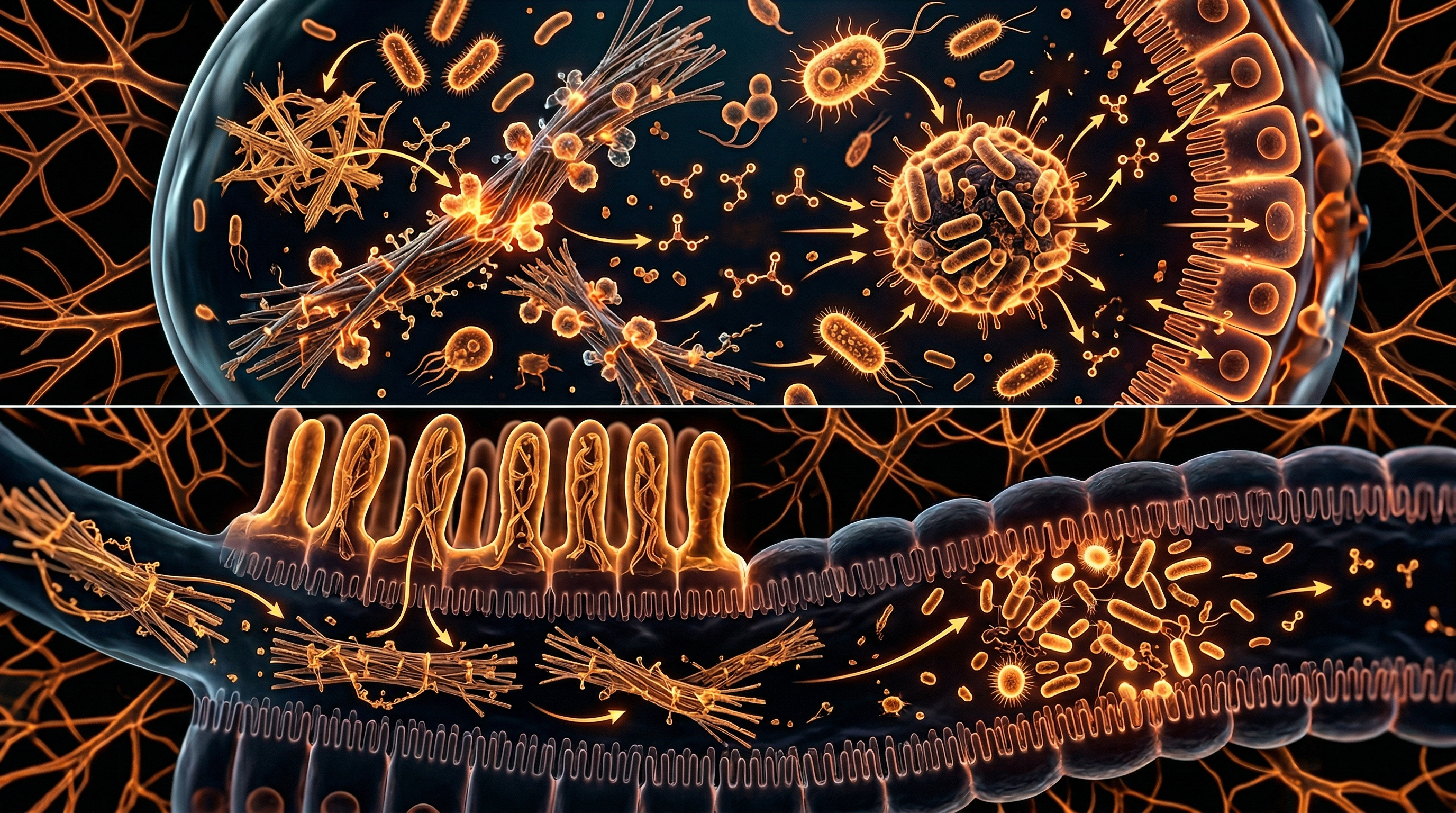
A ruminant is not a "plant-eater" in the way most people imagine. It is, in fact, a microbe-farmer. The ruminant possesses a four-chambered stomach, the largest of which is the rumen. This 100-to-150-litre vat is a sophisticated anaerobic fermentation chamber filled with trillions of bacteria, protozoa, and fungi.
- Cellulose Breakdown: These microbes possess the enzymes (cellulases) that mammals lack, allowing them to break down the tough cell walls of grasses.
- Conversion to Fat: The primary output of this fermentation is not glucose, but Short-Chain Fatty Acids (SCFAs)—specifically butyrate, propionate, and acetate.
- Protein Synthesis: Ruminants also digest the microbes themselves as they pass into the later stages of the gut, providing a source of high-quality protein and B-vitamins synthesized by the bacteria.
In essence, a cow eats grass so that its microbes can produce saturated fats, which provide 70-80% of the cow’s energy. The cow is, metabolically speaking, a high-fat carnivore.
The Human Divergence
Humans, by contrast, are monogastric (single-stomached) with an anatomy that mirrors facultative carnivores.
- The Stomach: Our stomach is highly acidic, with a pH of 1.5 to 2.0. This is significantly more acidic than most herbivores and even many omnivores, matching the pH of scavengers like hyenas. This acidity is designed to neutralise pathogens in aging meat and to denature complex animal proteins.
- The Small Intestine: This is where the majority of nutrient absorption happens. In humans, the small intestine is disproportionately large compared to our colon, indicating an evolutionary focus on the rapid absorption of high-quality nutrients (fats and amino acids) that require little to no fermentation.
- The Caecum and Colon: In herbivores, the caecum is a large fermentation pouch. In humans, the caecum is vestigial (the appendix), and the colon is short and smooth, lacking the complex structure required to ferment significant amounts of fibre into energy.
The Bioenergetic Cost of Fibre
When a human consumes a diet high in fibrous plants, they are essentially asking an organ designed for waste management (the colon) to perform the job of a bioreactor (the rumen). This results in:
- Mechanical Abrasion: Insoluble fibre acts like internal sandpaper, irritating the mucosal lining.
- Antinutrient Load: Plants contain chemical defence mechanisms (phytates, oxalates, tannins) that bind to minerals, preventing their absorption.
- Energy Loss: The "processing" of high-bulk, low-nutrient plants requires significant blood flow and metabolic energy for peristalsis and detoxification, yielding a net energy loss compared to the effortless absorption of animal fat.
Mechanisms at the Cellular Level
At the cellular level, the efficiency of energy production is determined by the mitochondria and the substrates they are fed. The human body has two primary fuel sources: glucose (from carbohydrates/plants) and fatty acids/ketones (from animal fats).
Mitochondrial Respiration and Saturated Fats
Animal fats, particularly long-chain saturated fats like stearic acid (found in beef tallow), are the preferred fuel for human mitochondria.
- FADH2 to NADH Ratio: Saturated fats provide a higher ratio of FADH2 to NADH during beta-oxidation. This stimulates a process called Reverse Electron Transport, which signals the mitochondria to produce a physiological amount of Reactive Oxygen Species (ROS).
- Insulin Sensitivity: This ROS signal acts as a "traffic light," telling the cell it has enough energy and should temporarily become insulin resistant to prevent over-fuelling. This is a natural, healthy mechanism that maintains metabolic flexibility.
The Problem with Plant-Derived PUFAs
In contrast, plant-based diets are often high in Polyunsaturated Fatty Acids (PUFAs), such as linoleic acid.
- Mitochondrial Leaking: PUFAs are highly prone to oxidation (rancidity) due to their multiple double bonds. When they enter the mitochondrial membrane, they cause "leaks" in the electron transport chain.
- Metabolic Confusion: Because PUFAs do not produce the same ROS signal as saturated fats, the cell never receives the "full" signal, leading to chronic over-eating and the storage of damaged fats in adipose tissue.
The Shikimate Pathway and Gut Microflora
A crucial mechanism often ignored is the Shikimate pathway. This is the metabolic pathway used by plants and bacteria to synthesise essential aromatic amino acids (phenylalanine, tyrosine, and tryptophan).
Callout: While humans do not possess the Shikimate pathway, our gut microbiome does. When we consume plant matter laden with agricultural chemicals or naturally occurring plant toxins, we disrupt the very microbes that help maintain our gut barrier.
The Short-Chain Fatty Acid Myth
Mainstream nutritionists argue that we need fibre to produce butyrate (a SCFA) in the colon. While butyrate is indeed the preferred fuel for colonocytes (colon cells), there is a more efficient way to obtain it.
- Direct Source: Ruminant fats (butter and tallow) contain butyrate and its precursor, beta-hydroxybutyrate (the primary ketone body).
- Efficiency: By consuming animal fats, we provide the body with the fuel it needs directly, without the inflammatory byproduct of methane gas and the antinutrient burden associated with fermenting fibre.
Environmental Threats and Biological Disruptors
The human gut is currently under siege by a cocktail of "biological disruptors" that are intrinsic to a plant-heavy, industrialised diet. These disruptors make the already difficult task of plant processing nearly impossible for the modern gut.
1. Antinutrients: The Hidden Weapons
Plants cannot run away; they defend themselves through chemical warfare.
- Oxalates: Found in "superfoods" like spinach and kale, these tiny glass-like crystals can deposit in joints, kidneys, and the gut lining, causing systemic inflammation.
- Phytates: Found in grains and legumes, these bind to iron, zinc, and calcium, rendering them unabsorbable and leading to chronic mineral deficiencies.
- Lectins: Aggressive proteins (like gluten or those found in nightshades) that can "zip" open the tight junctions of the intestinal wall, leading to Intestinal Permeability (Leaky Gut).
2. Agricultural Residues
In the UK and globally, plant crops are heavily treated with Glyphosate (Roundup).
- Antibiotic Effect: Glyphosate acts as a broad-spectrum antibiotic, specifically targeting the Shikimate pathway in our gut bacteria. This decimate’s our internal ecosystem, favouring the overgrowth of pathogenic species like Clostridia.
- Chelation: Glyphosate chelates (binds) essential minerals in the soil, meaning that even if the plant were "healthy," it is now nutritionally hollow.
3. The Industrial Processing of Plants
To make plant matter palatable and shelf-stable, it must undergo extreme processing.
- Extrusion and Bleaching: Grains are subjected to high heat and pressure, denaturing proteins and creating toxic byproducts like acrylamide.
- The Seed Oil Crisis: "Plant-based" fats (soybean, rapeseed, sunflower oil) are industrial lubricants extracted with hexane and deodorised with chemicals. These are incorporated into our cell membranes, making them rigid and prone to oxidative stress.
The Cascade: From Exposure to Disease
When we force the human gut to process an energy-poor, toxin-rich plant diet, we initiate a predictable cascade of biological failure.
Phase 1: Localised Inflammation
The process begins in the gut. The constant abrasion of fibre and the chemical irritation of lectins lead to a breakdown of the mucus layer. The body responds by increasing mucus production (bloating) and speeding up transit time (diarrhoea/loose stools) to expel the irritant.
Phase 2: Intestinal Permeability (Leaky Gut)
As the tight junctions between cells fail, undigested food particles, bacterial endotoxins (LPS), and plant chemicals leak into the bloodstream. This is the "smoking gun" for the modern epidemic of autoimmune diseases.
Phase 3: Systemic Endotoxaemia
Once Lipopolysaccharides (LPS) enter the blood, the immune system goes into overdrive.
- Cytokine Storm: Chronic low-grade inflammation becomes the baseline.
- Metabolic Shut-down: The body prioritises "survival" over "thriving," leading to fatigue, brain fog, and a lowered metabolic rate.
Phase 4: Chronic Disease Manifestation
Depending on an individual's genetic predisposition, this systemic inflammation manifests as:
- Neurological: Anxiety, depression, and Alzheimer’s (often called "Type 3 Diabetes").
- Metabolic: Insulin resistance, obesity, and Non-Alcoholic Fatty Liver Disease (NAFLD).
- Autoimmune: Rheumatoid arthritis, Hashimoto’s, and Crohn’s disease.
Statistics: In the UK, it is estimated that 1 in 4 people suffer from some form of metabolic syndrome, and autoimmune diagnoses are rising by 3% to 9% annually. The common denominator is the abandonment of animal-based fats in favour of processed plant matter.
What the Mainstream Narrative Omits
The current push for "plant-based" nutrition is not rooted in evolutionary biology or human physiology; it is a synthesis of corporate interests, flawed science, and environmental dogma.
The Fibre Myth
The idea that "fibre is essential for bowel health" is one of the most successful marketing campaigns in history.
- The Truth: A landmark study published in the World Journal of Gastroenterology (2012) showed that reducing or eliminating fibre intake completely resolved chronic constipation and bloating in patients.
- The "Pipe Cleaner" Fallacy: Fibre does not "clean" the colon; it irritates it, forcing the body to produce mucus and evacuate. Using fibre to treat constipation is like using a sandpaper-wrapped baton to clear a clogged pipe.
The "Meat Causes Cancer" Fallacy
Mainstream headlines frequently cite the IARC's classification of red meat as a "Class 2A Carcinogen."
- Omitted Context: These studies are based on observational epidemiology, which cannot prove causation. They fail to distinguish between a person eating a regenerative ribeye steak and a person eating a "Big Mac" with a flour bun, seed-oil-laden sauce, and a litre of corn syrup soda.
- The Healthy User Bias: In the Western world, those who eat red meat have been told for 50 years that it is unhealthy. Consequently, meat-eaters are also more likely to smoke, drink, and avoid exercise, while "health-conscious" individuals gravitate toward plants.
The Vitamin B12 and Bioavailability Gap
Plants contain "analogues" of many nutrients that the human body cannot use.
- Vitamin A: Plants contain Beta-Carotene, which must be converted to Retinol (the active form). The conversion rate can be as low as 3%.
- Omega-3: Plants contain ALA, which has a conversion rate to DHA (essential for brain health) of less than 1%.
- Vitamin B12: There is no reliable plant source of B12. A diet that requires synthetic supplementation to be viable is, by definition, a deficient diet.
The UK Context
The United Kingdom has a unique relationship with this nutritional crisis. Historically, the British Isles were the "Beef Capital" of the world, with a climate perfectly suited for permanent pasture and the grazing of ruminants.
The Decline of the British "Nose-to-Tail" Tradition
Until the mid-20th century, the British diet was rich in organ meats (liver and onions, kidney pie, sweetbreads) and animal fats (dripping and tallow). These "nose-to-tail" practices provided a spectrum of fat-soluble vitamins (A, D, K2) that are now largely absent from the UK diet.
The Rise of the "Eatwell Guide"
The UK government’s "Eatwell Guide" is a blueprint for metabolic disaster. It recommends that over a third of the diet be based on starchy carbohydrates (grains) and another third on fruits and vegetables, with a tiny sliver reserved for animal protein.
- The Result: The UK now has the highest rates of obesity in Europe.
- The NHS Burden: Type 2 Diabetes treatment accounts for roughly 10% of the entire NHS budget. This is a disease of "plant processing" (carbohydrate overload) that was virtually non-existent when animal fats were the dietary staple.
The UK Agricultural Shift
British farmers are being incentivised to move away from livestock and toward "rewilding" or monocrop pea/oat production for meat-alternatives.
- Ecological Irony: Ruminants are essential for the UK’s topsoil health. The "Carbon Sequestration" potential of well-managed British pasture far outweighs the carbon footprint of the cattle. Removing cows from the British landscape will lead to soil desertification and a reliance on imported, nutrient-poor plant crops.
Protective Measures and Recovery Protocols
For those seeking to reclaim their health from the burden of plant-centric processing, a return to species-appropriate nutrition is required. This involves a strategic shift from "fermentation-style" eating to "direct-absorption" eating.
1. The Elimination Phase
The first step is to remove the biological disruptors that are irritating the gut lining.
- Remove all seed oils: Replace rapeseed, sunflower, and vegetable oils with tallow, suet, lard, or butter.
- Eliminate grains and legumes: These are the primary sources of lectins and phytates.
- Reduce fibre intake: Transition away from "bulk" and toward nutrient density.
2. Prioritise Ruminant Meat and Fat
The human body is most efficient when processing the meat of animals that have already done the hard work of fermenting plants.
- Focus on Beef, Lamb, and Venison: These ruminants have the most robust fermentation systems, ensuring their meat is low in PUFAs and high in stearic acid.
- The "Fat to Protein" Ratio: Aim for a 2:1 fat-to-protein ratio by weight to ensure the mitochondria have sufficient fuel for the healing process.
3. Reintroduce Organ Meats (Nose-to-Tail)
Organs are the most nutrient-dense foods on the planet.
- Liver: The "Multivitamin" of the animal kingdom. High in Retinol, B12, and Copper.
- Heart: A concentrated source of CoQ10, essential for mitochondrial energy production.
- Bone Broth: Rich in glycine and proline, which are the building blocks required to repair a "leaky" gut lining.
4. Strategic Supplementation
While a nose-to-tail diet provides most nutrients, the modern environment may require extra support:
- Magnesium Malate/Glycinate: To counteract the mineral depletion caused by years of plant antinutrients.
- Betaine HCL: To restore the high stomach acidity needed to digest animal proteins effectively.
Summary: Key Takeaways
The transition from the forest floor to the open savannah was fueled by one thing: access to animal fat. This shift allowed our ancestors to bypass the energy-draining requirement of plant fermentation, shrinking the gut and expanding the mind.
- Anatomical Reality: Humans have a carnivore-adjacent digestive tract. We lack the rumen and the large colon necessary to ferment plant fibre into significant energy without incurring a massive biological cost.
- Bioenergetic Efficiency: Animal fats (saturated fats) provide a clean-burning, high-efficiency fuel for human mitochondria, whereas plant-derived PUFAs and carbohydrates lead to metabolic dysfunction and oxidative stress.
- Plant Toxins as Disruptors: Plants are not passive food sources; they contain a suite of antinutrients and chemical defences that compromise the human gut barrier, leading to systemic inflammation.
- The "Fibre" Deception: High fibre intake is not a requirement for health but a cause of mechanical and chemical irritation in a gut designed for low-residue animal foods.
- Cultural and Health Recovery: Reclaiming the British tradition of nose-to-tail, ruminant-based eating is the only viable solution to the UK's burgeoning metabolic and autoimmune crisis.
The path to "Innerstanding" our biology requires us to acknowledge that we are not, and never were, designed to be "plant processors." We are the apex hunters of the natural world, and our health depends on the efficiency of the animal-based energy model.
By rejecting the mainstream narrative and returning to the foods that built the human brain—the fat and meat of the ruminant—we can end the cycle of chronic disease and restore the biological heritage of our species.
This article is provided for informational and educational purposes only. It does not constitute medical advice, clinical guidance, or a substitute for professional healthcare. Information reflects cited research at time of publication. Always consult a qualified healthcare professional before acting on any health information.
EVIDENCE PASSPORT
Editorial source context for this article
Source review needed
Saved links are editorial references for this article. They may support specific claims rather than every sentence. Open and assess each source in context. This passport does not independently verify them.
Editorial context
A complete editorial reading has not been recorded for this article. Source links remain available for you to open and assess directly.
Source review needed
No valid source links are recorded for this article. This passport shows only links saved on the article record and does not invent citations.
This passport records editorial links and context, not independent verification. Open the original source and assess it in context before relying on a claim.
Medical Disclaimer
The information in this article is for educational purposes only and does not constitute medical advice, diagnosis, or treatment. Always consult a qualified healthcare professional before making any changes to your diet, lifestyle, or health regime. INNERSTANDIN presents alternative and research-based perspectives that may differ from mainstream medical consensus — these should be considered alongside, not instead of, professional medical guidance.
Read Full DisclaimerContinue the thread
Keep this question moving.
Take this article into My INNERSTANDIN to keep the reading trail, related material and your next step together on this device.
Dig deeper in the Library
Free, longform PDF volumes that go beyond headlines into mechanisms and references.