
Stratospheric Aerosol Injection: The Impact of Barium and Aluminium on Soil pH
Updated May 2026
This article examines the chemical fallout of solar geoengineering and how metallic particulates alter soil chemistry. We explore the mechanisms of nutrient lockout and the long-term implications for UK agriculture.
Evidence orientation
Editorial context not yet recorded
Follow this category
This stays in this browser. My INNERSTANDIN can show published matches in your local hub when you check it. It does not send email, push, or alert notifications.
Local learning review
A private browser aid for revisiting ideas. It is not an alert or a health recommendation.
Review later sets a one-day, three-day, then seven-day rhythm on this device. Choose it only when you want to revisit this article.
Overview
The atmosphere above the British Isles is no longer merely a canvas for natural meteorological phenomena; it has become a laboratory for the most audacious and dangerous experiment in human history. Stratospheric Aerosol Injection (SAI), a primary pillar of solar geoengineering, involves the deliberate dispersal of reflective metallic particulates into the upper atmosphere to deflect incoming solar radiation. While proponents frame this as a necessary "emergency brake" for climate change, the biological reality on the ground—and beneath it—paints a catastrophic picture.
At the heart of this atmospheric intervention are two primary elements: Aluminium and Barium. These are not benign substances. When deployed at the scale required to alter the Earth’s albedo, these nanoparticulates do not remain in the stratosphere. Through gravitational settling and precipitation, they descend into the troposphere, eventually infiltrating our soil, water, and lungs.
The focus of this investigation is the silent crisis unfolding in the UK's pedosphere—the layer of soil that sustains our agriculture and natural ecosystems. The influx of aluminium and barium is not merely a matter of "pollution"; it is a fundamental re-engineering of soil chemistry. By shifting soil pH and inducing what is known as nutrient lockout, these metallic deposits are effectively sterilising the ground. For a nation like the United Kingdom, where food security is already precarious and soil health has been depleted by decades of industrial farming, the chemical fallout of SAI represents an existential threat to our ancestral lands.
The Chemical Reality: Stratospheric Aerosol Injection relies on the mass-dispersal of sub-micron particles, predominantly aluminium oxide and barium salts, which possess high refractive indices but also high biological reactivity once they enter the terrestrial nitrogen and carbon cycles.
This article will expose the hidden mechanisms of metallic fallout, the cellular-level destruction of plant life, and the systemic failure of UK regulatory bodies to acknowledge the mounting evidence of geoengineering-induced environmental degradation.
##
The Biology — How It Works
To understand the impact of SAI fallout, one must first understand the delicate equilibrium of the rhizosphere—the complex zone of soil surrounding plant roots. Soil is not a dead medium; it is a living, breathing biological matrix. The introduction of concentrated aluminium and barium disrupts the cation exchange capacity (CEC), which is the soil's ability to hold and exchange essential nutrients like magnesium, calcium, and potassium.
The Aluminium Acidification Cycle
Aluminium is the most abundant metal in the Earth's crust, but under natural conditions, it is largely bound in insoluble forms (such as aluminosilicates) that are biologically unavailable to plants. However, the aluminium used in SAI is typically in the form of nano-sized aluminium oxide (Al2O3).
When these particulates meet rainwater—particularly in the UK, where rainfall is frequent—they undergo chemical transformations. The presence of these metallic oxides in the atmosphere acts as a catalyst for the formation of acids. Once they reach the soil, the aluminium becomes "activated." As the soil pH drops below 5.0, aluminium shifts from its solid state into the highly toxic trivalent aluminium cation (Al3+).
Barium: The Potassium Mimic
Barium, while less discussed than aluminium, is equally insidious. In geoengineering patents, barium salts are often cited for their ability to enhance the electrical conductivity of the atmosphere and assist in the "seeding" of clouds. When barium reaches the soil, it behaves as a divalent cation (Ba2+).
The biological danger of barium lies in its ionic radius, which is strikingly similar to that of potassium (K+). In the soil matrix and within the plant's vascular system, barium competes for the same uptake channels as potassium. This "molecular mimicry" allows barium to infiltrate the plant, where it begins to shut down essential metabolic processes by displacing the vital potassium ions required for cellular turgor and enzymatic activation.
The pH Pivot Point
The interaction between these two metals creates a pincer movement on soil health. Aluminium directly increases acidity by releasing hydrogen ions during its hydrolysis. Barium, as an alkaline earth metal, can initially seem to buffer acidity, but its presence in high concentrations leads to the displacement of other essential base cations (like Calcium and Magnesium), leading to a structural collapse of the soil's buffering capacity.
Critical Fact: Once soil pH drops below the critical threshold of 5.5, the solubility of aluminium increases exponentially, leading to a "toxic feedback loop" where the soil becomes increasingly hostile to life, regardless of how much organic fertiliser is applied.
##
Mechanisms at the Cellular Level
The damage inflicted by aluminium and barium is not merely a surface-level phenomenon; it occurs at the most fundamental levels of plant physiology and microbiology.
Aluminium and the Root Apex
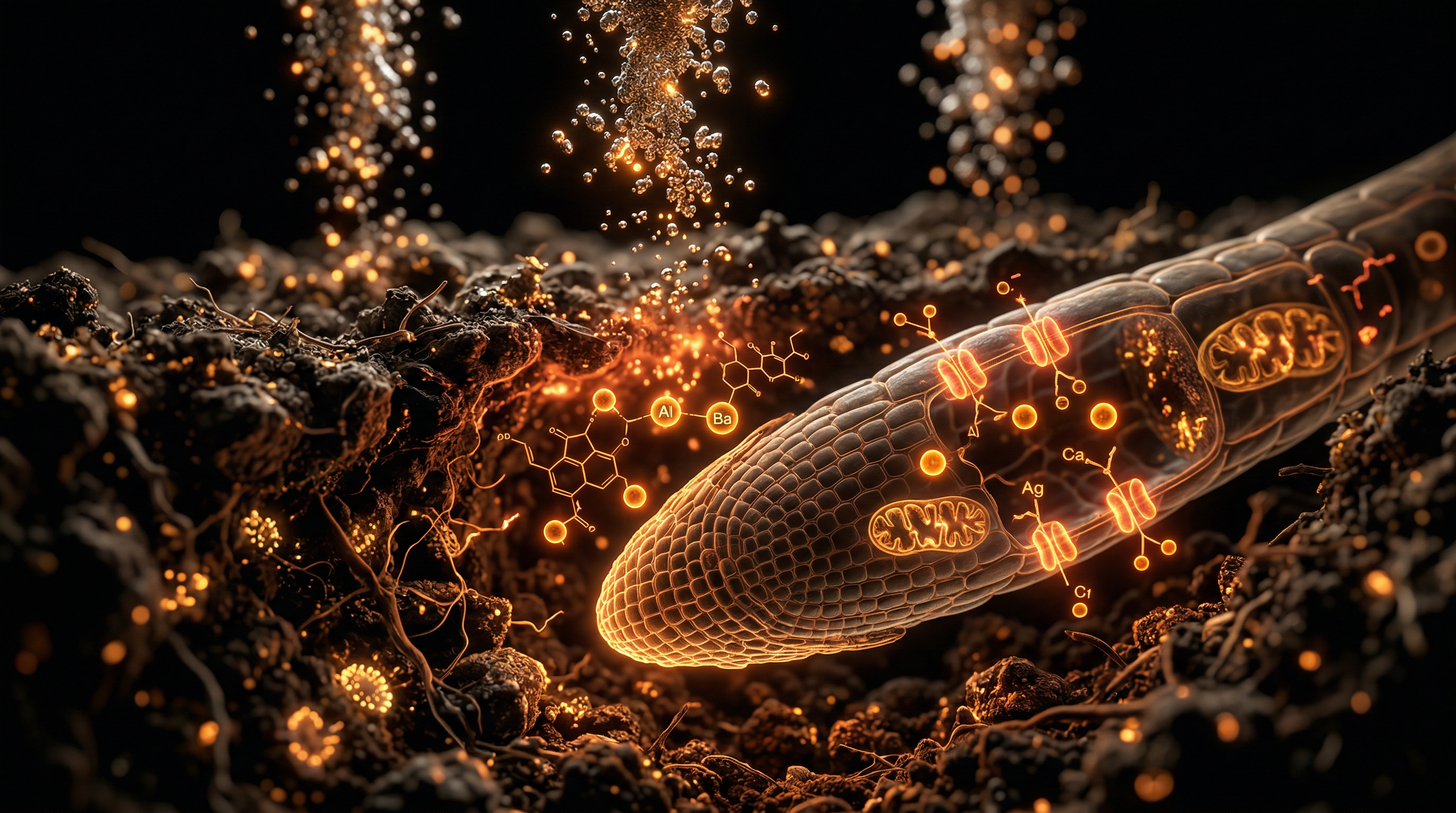
The primary site of aluminium toxicity is the root apex, specifically the transition zone where cell division and elongation occur. The Al3+ ion binds with high affinity to the pectin in the cell walls of root tips. This binding hardens the cell wall, preventing it from expanding.
- Inhibition of Plasma Membrane H+-ATPase: Aluminium inhibits the enzymes responsible for pumping protons out of the cell, which is essential for maintaining the electrochemical gradient required for nutrient uptake.
- Calmodulin Disruption: Aluminium interferes with calmodulin, a key calcium-binding messenger protein. By disrupting calcium signalling, aluminium prevents the plant from responding to environmental stresses like drought or heat.
- DNA Damage: Once inside the nucleus of a root cell, aluminium binds to the phosphate backbone of DNA, inhibiting replication and triggering programmed cell death (apoptosis) in the root system.
Barium and the Na+/K+-ATPase Pump
In both plants and the organisms that inhabit the soil, barium's primary mechanism of toxicity is the blockade of potassium channels.
In the soil's microbial community—including the essential mycorrhizal fungi—barium inhibits the sodium-potassium pump (Na+/K+-ATPase). This pump is the engine of cellular life, maintaining the salt balance and electrical potential across membranes. When barium blocks these channels, the microbial cells lose their ability to regulate internal pressure, leading to cell lysis (bursting). This effectively "mutes" the biological activity of the soil, turning a vibrant ecosystem into a sterile chemical wasteland.
Oxidative Stress and Reactive Oxygen Species (ROS)
Both metals induce the mass production of Reactive Oxygen Species (ROS) within plant tissues. Aluminium, in particular, triggers the Fenton reaction, which generates hydroxyl radicals. These radicals attack the lipid membranes of mitochondria and chloroplasts.
- Chlorophyll Degradation: Aluminium displaces Magnesium (Mg2+) from the centre of the chlorophyll molecule. Without magnesium, the chlorophyll can no longer capture light energy, leading to interveinal chlorosis—a yellowing of the leaves that is increasingly visible in UK forests and hedgerows.
##
Environmental Threats and Biological Disruptors
The shift in soil chemistry caused by SAI fallout creates a "cascade of failure" across the environment. This is not limited to agriculture; it extends to the very foundation of the British ecosystem.
Nutrient Lockout: The Phosphorus Trap
One of the most devastating impacts of aluminium accumulation is Nutrient Lockout. In acidic soils (low pH), aluminium reacts with Inorganic Phosphorus (Pi) to form insoluble aluminium phosphates.
- Phosphorus is essential for ATP (Adenosine Triphosphate) production—the energy currency of all life.
- Even if a UK farmer applies phosphate-rich fertiliser, the presence of SAI-derived aluminium "locks" that phosphorus into a form that the plant cannot absorb.
- This leads to stunted growth, purple-tinged foliage, and a total failure of the crop to reach maturity.
The Destruction of Mycorrhizal Networks
British soils are naturally reliant on Arbuscular Mycorrhizal Fungi (AMF). These fungi form a symbiotic relationship with plant roots, extending their reach to gather water and minerals in exchange for sugars.
Biological Alert: Studies have shown that nanoparticulate aluminium and barium are highly fungicidal. The loss of these fungal networks means that plants become entirely dependent on synthetic, chemical inputs to survive, further degrading the soil and enriching the pharmaceutical-chemical industrial complex.
Impact on Soil Macro-fauna: The Earthworm Crisis
Earthworms are the "engineers" of the soil. They are highly sensitive to changes in pH and the presence of heavy metals. Aluminium toxicity in earthworms leads to:
- Integumentary damage: The "skin" of the worm is corroded by acidic, metal-laden soil.
- Reproductive failure: High barium levels have been linked to reduced cocoon production in Lumbricus terrestris.
As earthworm populations decline, the soil loses its aeration and drainage capacity, leading to the waterlogging and compaction issues now plaguing many UK farms.
##
The Cascade: From Exposure to Disease
The metals do not stay in the soil. They enter the food chain, bioaccumulating in the tissues of plants, the livestock that graze on them, and ultimately, the human population.
From Soil to Plate
When plants are stressed by aluminium, they often produce higher levels of stress proteins and phytic acid, which can further bind minerals in the human gut, leading to deficiencies in Zinc and Iron. However, the more direct threat is the accumulation of the metals themselves.
- Aluminium Bioaccumulation: Leafy greens (kale, spinach) and cereal crops (wheat, barley) grown in SAI-affected soils show significantly elevated aluminium levels.
- Barium Bioaccumulation: Barium tends to concentrate in the stalks and leaves of plants, entering the dairy and meat supply through livestock fodder.
The Human Health Cost
The biological pathways of these metals in the human body are well-documented but often ignored by the MHRA and the NHS in the context of environmental geoengineering.
- Neurotoxicity: Aluminium is a potent neurotoxin capable of crossing the blood-brain barrier via transferrin receptors. It is a known factor in the development of amyloid plaques associated with Alzheimer's disease and has been implicated in the rising rates of autism and ADHD.
- Baritosis and Cardiovascular Stress: Inhaled barium particulates cause baritosis (a type of pneumoconiosis), but ingested barium is a potent potassium antagonist. This can lead to hypokalemia (low potassium levels), resulting in cardiac arrhythmias, muscle weakness, and hypertension.
- Bone Integrity: Aluminium mimics calcium and can be deposited in the bone matrix, leading to osteomalacia (softening of the bones) and an increase in fracture rates across the UK population.
Exposure Pathway: We are being hit from two directions: the inhalation of nanoparticulates directly from the air and the ingestion of bioaccumulated metals through the food chain. This "synergistic toxicity" is unprecedented in human history.
##
What the Mainstream Narrative Omits
The mainstream scientific and media consensus, often funded by the same billionaire-backed foundations that promote geoengineering, consistently omits several critical truths about SAI.
The "Trace Amount" Fallacy
The standard defence is that the amounts of aluminium and barium falling to earth are "negligible" compared to natural crustal levels. This is a scientific sleight of hand. Natural aluminium is locked in stable mineral structures. SAI aluminium is in a bioactive, nano-particulate form. Its surface-area-to-volume ratio is millions of times higher, making it exponentially more reactive and toxic.
The Absence of Environmental Impact Assessments (EIAs)
Under UK law, any major industrial project requires a rigorous EIA. Yet, SAI—an intervention that affects the entire atmosphere and every square inch of British soil—is being conducted under the guise of "stratospheric research" without a single comprehensive, publicly available EIA regarding its impact on soil pH and microbial biodiversity.
The Regulatory Blind Spot
The Environment Agency and DEFRA focus their monitoring on traditional pollutants like nitrates and pesticides. They do not routinely test for the specific nanoparticulate signatures of geoengineering. By not looking for the evidence, they can claim "no evidence" exists. This is regulatory capture in its purest form.
The Purposeful Shift to GMOs
There is a disturbing synergy between SAI and the biotechnology industry. As soil pH drops and aluminium toxicity rises, traditional "heirloom" seeds fail. This creates a market for "Aluminium-Resistant" GMO crops. Patents already exist for genes that allow plants to secrete organic acids to neutralise aluminium in the rhizosphere. We are witnessing the forced obsolescence of natural agriculture in favour of a patented, synthetic food system.
##
The UK Context
The United Kingdom is uniquely vulnerable to the chemical fallout of SAI for several geographical and geological reasons.
British Soil Chemistry
Much of the UK, particularly in the North, Scotland, and Wales, already has naturally acidic soil (peat and podsols). The addition of SAI fallout pushes these soils past the "tipping point" where they can no longer support forest or pasture life. In the South and East, the "breadbasket" of East Anglia relies on the delicate balance of its loam and clay soils. Aluminium-induced compaction is making these fields increasingly difficult to till and more prone to the devastating floods we have seen in recent years.
The East Anglian Breadbasket
The intensive wheat and barley production in East Anglia is under direct threat. Farmers are reporting unexplained "nutrient lockout" despite following rigorous fertilisation programmes. The Food Standards Agency (FSA) has yet to conduct a large-scale study on the aluminium content of British-grown grains in the context of SAI fallout patterns.
The Role of UK Research Institutions
Institutions like the University of Cambridge and the Met Office have been involved in "modelling" geoengineering. However, there is a distinct lack of "on-the-ground" empirical research into the fallout. The UK government's "Net Zero" strategy provides the perfect political cover for SAI, framing it as a "necessary evil" to meet international climate targets, while ignoring the destruction of the British countryside.
UK Statistic: Soil degradation is estimated to cost the UK economy £1.2 billion per year. What percentage of this is directly attributable to the alteration of soil chemistry by atmospheric metallic particulates? The data is being suppressed.
##
Protective Measures and Recovery Protocols
While the macro-problem requires a political and global solution, there are biological interventions that can be taken at the soil and human level to mitigate the impact of aluminium and barium.
Soil Remediation Strategies
- Biochar Application: High-quality biochar can increase the cation exchange capacity (CEC) of the soil and provide a "carbon sink" that binds heavy metals, making them less bioavailable.
- Humic and Fulvic Acids: These organic acids are powerful chelators. They can bind to Al3+ and Ba2+ ions, neutralising their charge and preventing them from entering the plant roots.
- Strategic Liming: Increasing soil pH through the application of calcium carbonate (lime) is essential to push the pH above 6.0, where aluminium reverts to its insoluble, non-toxic form.
- Silica Supplementation: Silica is the natural antagonist to aluminium. Applying diatomaceous earth or potassium silicate can help plants build stronger cell walls that are resistant to metallic penetration.
Human Detoxification Protocols
To combat the bioaccumulation of SAI particulates, individuals should focus on "silica-rich" and "chelating" protocols:
- Orthosilicic Acid: This is the most bioavailable form of silica and has been shown in clinical trials to facilitate the urinary excretion of aluminium.
- Zeolite (Clinoptilolite): A volcanic mineral with a "cage-like" structure that can trap heavy metals like barium and lead in the digestive tract and bloodstream.
- Selenium and Zinc: These essential minerals are necessary for the production of glutathione, the body’s master antioxidant, which is depleted by the oxidative stress caused by metallic nanoparticulates.
- Modified Citrus Pectin: Known to bind to heavy metals in the blood without depleting essential minerals.
##
Summary: Key Takeaways
- Stratospheric Aerosol Injection (SAI) is not a theoretical future; the chemical fallout of aluminium and barium is currently altering the fundamental chemistry of the UK’s soil.
- Aluminium induces a rapid drop in soil pH, leading to the release of toxic Al3+ ions which destroy root systems and cause nutrient lockout, specifically of phosphorus.
- Barium acts as a potassium mimic, disrupting the Na+/K+-ATPase pump in soil microbes and human cells, leading to systemic metabolic failure.
- The mainstream narrative ignores the nanoparticulate nature of these metals, which makes them exponentially more toxic than naturally occurring minerals.
- UK Agriculture is at a tipping point. Soil degradation and the loss of mycorrhizal networks are forcing a transition toward GMO-based, aluminium-resistant crops controlled by globalist corporations.
- Human health is being compromised through a pincer movement of inhalation and ingestion, leading to a rise in neurodegenerative diseases and cardiovascular stress.
- Remediation is possible through the use of biochar, silica, and organic chelators, but the only long-term solution is the immediate cessation of atmospheric geoengineering programmes.
The earth beneath our feet is being chemically re-coded. It is time to recognise that the "protection of the climate" must not come at the cost of the very soil that feeds us. The silence of regulatory bodies like DEFRA and the Environment Agency is a betrayal of the British public. We must demand transparency, rigorous soil testing for nanoparticulates, and a return to biological, rather than chemical, stewardship of our land.
This article is provided for informational and educational purposes only. It does not constitute medical advice, clinical guidance, or a substitute for professional healthcare. Information reflects cited research at time of publication. Always consult a qualified healthcare professional before acting on any health information.
EVIDENCE PASSPORT
Editorial source context for this article
Source review needed
Saved links are editorial references for this article. They may support specific claims rather than every sentence. Open and assess each source in context. This passport does not independently verify them.
Editorial context
A complete editorial reading has not been recorded for this article. Source links remain available for you to open and assess directly.
Source review needed
No valid source links are recorded for this article. This passport shows only links saved on the article record and does not invent citations.
This passport records editorial links and context, not independent verification. Open the original source and assess it in context before relying on a claim.
Medical Disclaimer
The information in this article is for educational purposes only and does not constitute medical advice, diagnosis, or treatment. Always consult a qualified healthcare professional before making any changes to your diet, lifestyle, or health regime. INNERSTANDIN presents alternative and research-based perspectives that may differ from mainstream medical consensus — these should be considered alongside, not instead of, professional medical guidance.
Read Full DisclaimerContinue the thread
Keep this question moving.
Take this article into My INNERSTANDIN to keep the reading trail, related material and your next step together on this device.