
Screening for ADHD in Toddlers
Updated May 2026
Identifying the earliest signs of hyperactivity and impulsivity in young children.
Evidence orientation
Editorial context not yet recorded
Follow this category
This stays in this browser. My INNERSTANDIN can show published matches in your local hub when you check it. It does not send email, push, or alert notifications.
Local learning review
A private browser aid for revisiting ideas. It is not an alert or a health recommendation.
Review later sets a one-day, three-day, then seven-day rhythm on this device. Choose it only when you want to revisit this article.
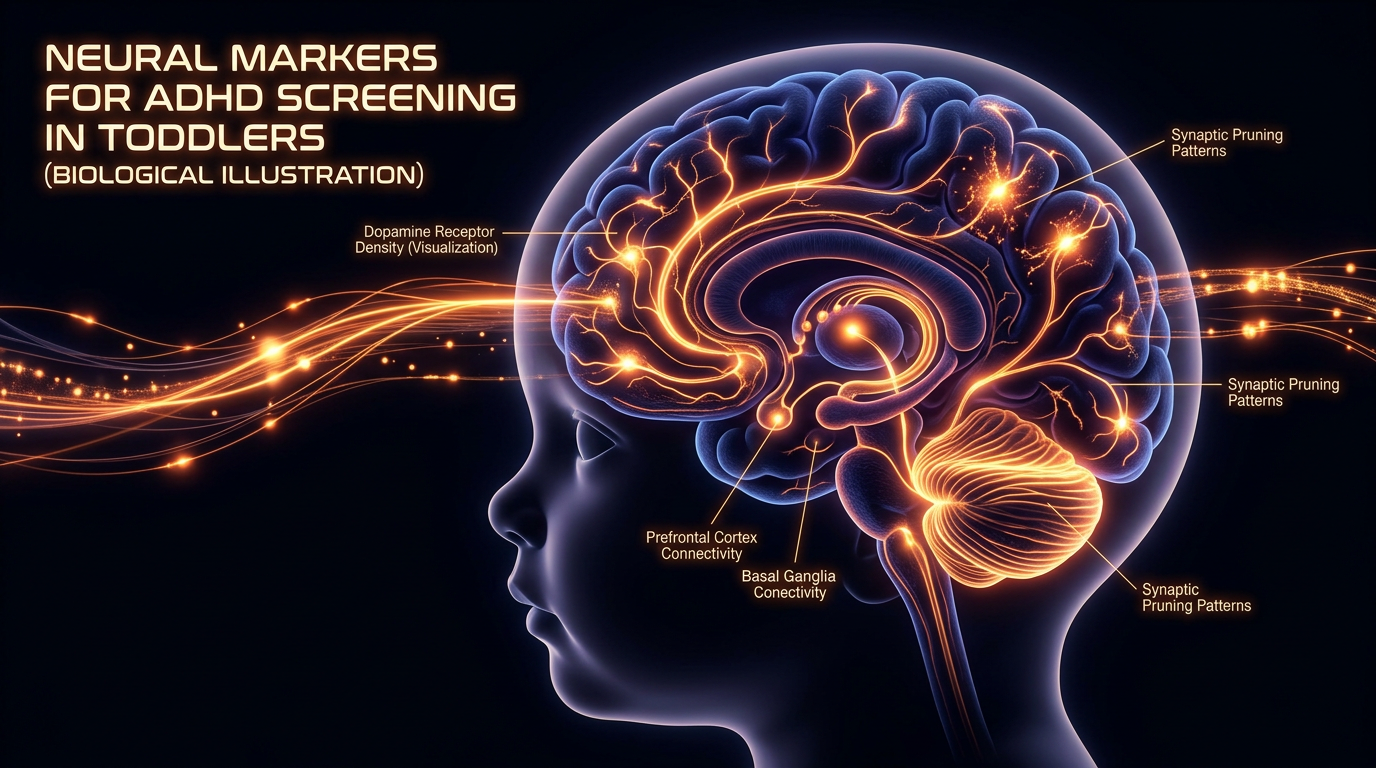
"Screening for ADHD in Toddlers: A Comprehensive Guide for Clinicians, Educators, and Parents in the UK"
"Category: ADHD & Neurodevelopmental Conditions"
Introduction
Attention Deficit Hyperactivity Disorder (ADHD) is one of the most prevalent neurodevelopmental conditions affecting children in the United Kingdom today. While traditionally associated with primary school-aged children—often identified when the structured demands of the classroom highlight difficulties with focus and impulsivity—evidence increasingly suggests that the precursors of ADHD are visible much earlier.
Screening for ADHD in toddlers (children aged 1 to 4) remains one of the most contentious and complex areas of British clinical practice. The challenge lies in the ‘developmental trap’: the hallmark symptoms of ADHD, such as high activity levels, short attention spans, and impulsivity, are also the defining characteristics of typical toddlerhood. Distinguishing between a "spirited" two-year-old and a child showing the first signs of a lifelong neurodevelopmental condition requires clinical precision, longitudinal observation, and a deep understanding of the UK’s specific diagnostic pathways.
This article provides an authoritative exploration of screening for ADHD in the early years, adhering to the National Institute for Health and Care Excellence (NICE) guidelines, and considering the unique socio-educational landscape of the UK.
The UK Context: NICE Guidelines and the Diagnostic Threshold
In the UK, the ‘gold standard’ for ADHD management is provided by the NICE guideline [NG87]. Unlike some international models that may favour early diagnosis and medication, the UK approach is historically more conservative, particularly for the under-fives.
NICE stipulates that a formal diagnosis of ADHD should not typically be made in children under the age of 5. However, this does not mean that screening and early identification should be delayed. On the contrary, the UK healthcare model emphasises a "watchful waiting" period combined with early intervention.
The rationale for this caution is neuroplasticity. A toddler’s prefrontal cortex—the area of the brain responsible for executive functions like impulse control and sustained attention—is in a state of rapid flux. Labeling a three-year-old with a permanent clinical diagnosis is seen as premature by many NHS trusts, as some children may simply be "late bloomers" in terms of self-regulation. Nevertheless, for those at the severe end of the spectrum, early screening is vital to prevent the secondary development of conduct disorders or family breakdown.
The Challenge of Differential Diagnosis: Is it ADHD or Just Being Three?
The primary hurdle in screening toddlers is the overlap between ADHD symptoms and typical developmental milestones. To screen effectively, clinicians and parents must look for the intensity, frequency, and pervasiveness of behaviours.
#### 1. Attention Span
- Typical: A two-year-old may shift activities every few minutes but can sit for 5–10 minutes for a highly engaging task, such as being read a favourite story or playing with water.
- Atypical (ADHD Indicator): The child cannot settle even for activities they enjoy. They appear to "flit" from one toy to another within seconds, rarely reaching a "play state."
#### 2. Activity Levels
- Typical: Toddlers are naturally energetic and may run or climb frequently.
- Atypical (ADHD Indicator): The child is described as being "driven by a motor." Their activity is often purposeless and persists even in settings where it is inappropriate or when the child is physically exhausted.
#### 3. Impulsivity and Safety
- Typical: Toddlers lack a full sense of danger but can be taught basic boundaries (e.g., "stop" at the kerb).
- Atypical (ADHD Indicator): A profound lack of inhibitory control. The child may repeatedly jump from heights, run into traffic, or grab objects regardless of previous accidents or instructions, showing an inability to learn from the immediate consequence.
Red Flags in the Early Years: What to Look For
Screening does not begin in a clinic; it begins at home and in the nursery. In the UK, Early Years Practitioners (EYPs) play a critical role in identifying children who deviate from the expected developmental trajectory.
"Key Indicators in Toddlers:"
- Extreme Emotional Dysregulation: While "temper tantrums" are standard, ADHD-related meltdowns are often more frequent, more intense, and triggered by minor transitions.
- Persistent Sleep Disturbances: Many toddlers with ADHD show early signs of circadian rhythm disruption, struggling to "switch off" even with rigorous sleep hygiene.
- Aggression and Social Difficulties: Difficulty sharing is normal, but persistent biting, hitting, or pushing without an obvious provocation can indicate an inability to inhibit first impulses.
- Sensory Seeking: While often associated with Autism (ASD), many ADHD toddlers are "sensory seekers," constantly needing high-impact physical input to regulate their arousal levels.
The UK Screening Pathway: From Health Visitor to Paediatrician
The journey toward identifying ADHD in a toddler within the NHS follows a structured multi-tier process.
#### Step 1: The Health Visitor and the Two-Year Check Every child in England is offered a developmental review between 2 and 2.5 years of age. This usually involves the Ages and Stages Questionnaire (ASQ-3). While the ASQ-3 is a general developmental tool, it acts as the first "filter." If a parent expresses concerns about "behavioural management," the Health Visitor is the first port of call.
#### Step 2: The General Practitioner (GP) If concerns persist, the family must consult their GP. In the UK, the GP acts as the gatekeeper to secondary care. For a toddler, a GP will rarely refer directly for an ADHD assessment. Instead, they will first look to rule out "mimics" (see below) and may suggest a parenting programme, such as Triple P or Incredible Years, as a first-line intervention.
#### Step 3: Referral to Community Paediatrics or CAMHS If the child’s behaviour is causing significant impairment (e.g., exclusion from nursery or danger to themselves), a referral is made to a Community Paediatrician or the Child and Adolescent Mental Health Services (CAMHS). In toddlers, Community Paediatrics is the more common route, as they can also assess for co-occurring physical or developmental delays.
Screening Tools and Assessment Methods
Since there is no blood test or brain scan for ADHD, screening relies on standardised questionnaires and observational data.
- SDQ (Strengths and Difficulties Questionnaire): Often used in the UK for children aged 3 to 16. It provides a "Total Difficulties" score and sub-scales for hyperactivity/inattention.
- Conners Early Childhood (Conners EC): A more specialised tool designed specifically for toddlers and preschoolers (ages 2–6). It assesses behavioural, emotional, and social issues.
- Vanderbilt Assessment Scales: While more common in the US, these are increasingly used by UK private practitioners to gather teacher/parent data.
- ADHD Rating Scale-IV (Preschool Version): Adapted specifically for younger children, focusing on age-appropriate manifestations of symptoms.
"The Importance of Multi-Setting Observation:"
A cardinal rule of ADHD screening in the UK is that symptoms must be present in at least two settings (usually home and nursery). If a child is hyperactive at home but calm and focused at nursery, the cause is likely environmental or relational rather than neurodevelopmental.
Differential Diagnosis: Ruling Out "The Mimics"
One of the reasons UK clinicians are hesitant to screen toddlers for ADHD is that many other conditions look identical to ADHD in the early years.
#### 1. Autism Spectrum Disorder (ASD) There is a high rate of comorbidity (around 30–50%) between ADHD and ASD. A toddler who does not respond to their name might be "inattentive" (ADHD) or might have "social communication difficulties" (ASD). The screening process must distinguish between the two.
#### 2. Language and Communication Delays A child who cannot express their needs often "acts out" physically. In the UK, a referral to Speech and Language Therapy (SLT) is often a prerequisite before an ADHD screening is completed. If the behaviour improves as language develops, ADHD may be ruled out.
#### 3. Hearing and Vision Issues Glue ear is incredibly common in British toddlers. A child who cannot hear instructions will appear inattentive. Routine hearing tests are a vital part of the screening "work-up."
#### 4. Attachment Disorders and Trauma Children who have experienced Adverse Childhood Experiences (ACEs) or have insecure attachment may exhibit hyper-vigilance and impulsivity. In the UK context, Social Services and Early Help teams work to ensure that the "behaviour" isn't a symptom of the child's environment.
#### 5. Sleep Apnoea and Diet Enlarged tonsils or adenoids can lead to poor sleep, which in toddlers manifests as hyperactivity rather than lethargy. Similarly, while the "sugar rush" theory is largely debunked for general ADHD, specific sensitivities to additives (common in some ultra-processed snacks) can exacerbate toddler behaviour.
The Role of the "Graduated Response" in Early Years Settings
Under the Special Educational Needs and Disability (SEND) Code of Practice (2015), UK nurseries and pre-schools are required to follow a "Graduated Response" (Assess, Plan, Do, Review).
When screening a toddler, the nursery’s Special Educational Needs Co-ordinator (SENCo) will:
- Assess: Observe the child during "Free Flow" and "Circle Time."
- Plan: Implement strategies like visual timetables or "Now and Next" boards.
- Do: Carry out these interventions for a term.
- Review: See if the child’s "ADHD-like" symptoms diminish.
If the child does not respond to these environmental supports, it provides strong evidence for a neurodevelopmental basis for the behaviour, which is essential for a later NHS referral.
The Impact of the "Postcode Lottery" on Early Screening
While the clinical guidelines are national, the reality of screening for ADHD in toddlers in the UK is heavily influenced by geography—a phenomenon often called the "postcode lottery."
In some NHS trusts, waiting lists for a neurodevelopmental assessment can exceed two or three years. For a toddler, this means they may not be seen until they are well into primary school. This delay is problematic because early intervention (specifically parent training and environmental modification) is most effective when the brain is most plastic.
Families in more affluent areas often opt for private assessments. However, it is important to note that many NHS trusts and local authorities will not automatically accept a private diagnosis for the purposes of an Education, Health and Care Plan (EHCP) or Disability Living Allowance (DLA) without their own internal review.
Interventions Following Screening: The UK Approach
If a toddler is "screened-in" (i.e., considered at high risk for ADHD), the UK clinical pathway focuses on non-pharmacological management.
#### Parent-Mediated Interventions The first line of support is not for the child, but for the parents. Programs like the New Forest ADHD Programme are specifically designed for parents of preschoolers. These teach "contingency management"—learning how to give clear instructions, use immediate rewards, and manage "the ADHD moment" without escalating conflict.
#### Environmental Modification Screening often leads to a "Support Plan" in the nursery. This might include:
- Reducing visual clutter.
- Providing "heavy work" activities (e.g., carrying a basket of blocks) to satisfy sensory needs.
- Allowing "fidget breaks" during structured activities.
#### Medication: The Exception, Not the Rule In the UK, medication (such as Methylphenidate) is strictly not recommended for children under 5. Only in the most extreme cases—where there is a significant risk of injury to the child or others, and where all other interventions have failed—would a specialist consultant consider off-label use of medication for a four-year-old, and even then, under intense monitoring.
Ethical Considerations: The "Label" vs. The "Support"
There is significant debate in the UK regarding the ethics of screening toddlers. Critics argue that we are "medicalising childhood" and that what we call ADHD is simply the younger end of a school year (the "relative age effect"). Indeed, UK studies have shown that the youngest children in a school year (born in August) are significantly more likely to be diagnosed with ADHD than their September-born peers.
However, advocates for early screening argue that a "label" is often the only way to unlock "support." In the UK’s cash-strapped SEND system, a child without a recognised condition often goes without the funding (via an EHCP) needed for extra 1-to-1 support in nursery. Screening, therefore, is not just a clinical act; it is an administrative necessity to ensure the child’s right to an education is met.
The Future of Early Screening: New Frontiers
The UK is at the forefront of research into early markers of ADHD. Studies at the Centre for Brain and Cognitive Development (the "BabyLab") at Birkbeck, University of London, are using EEG and eye-tracking technology to identify "at-risk" infants long before they reach toddlerhood.
Future screening may involve:
- Digital Phenotyping: Using apps to track a toddler’s movement and sleep patterns over weeks, providing more objective data than a parent’s memory.
- Genetic Risk Scores: While not currently used in the NHS, the emergence of Polygenic Risk Scores (PRS) may eventually allow clinicians to identify toddlers who are genetically predisposed to ADHD, allowing for "pre-emptive" parenting support.
Guidance for Parents: How to Navigate the UK System
If you are a parent in the UK concerned that your toddler might have ADHD, the following steps are recommended:
- Keep a Diary: For two weeks, record instances of "out of the ordinary" behaviour. Note the time of day, the trigger, and how long the episode lasted. This data is invaluable for a GP.
- Speak to the SENCo: If your child is in nursery, ask for a meeting with the Special Educational Needs Co-ordinator. Ask: "How does my child’s focus compare to their peers?"
- Check the "Red Flags": Is the behaviour dangerous? Is the family in crisis? If the answer is yes, the GP referral should be marked as "Urgent."
- Avoid the "Waiting List Trap": While waiting for an assessment, access "Early Help" from your local council. You do not need a diagnosis to access parenting courses or family support workers.
- Focus on the Child, Not the Label: Remember that screening is about understanding your child’s brain. Whether they eventually meet the criteria for ADHD or not, the strategies used for ADHD (structure, visual cues, positive reinforcement) are beneficial for all toddlers with self-regulation difficulties.
Conclusion
Screening for ADHD in toddlers is an exercise in clinical patience and developmental expertise. In the UK, the focus remains firmly on supporting the child’s environment and the parents’ capacity to manage challenging behaviour, rather than rushing to a clinical diagnosis.
While the "watchful waiting" approach of the NHS can be frustrating for parents in crisis, it serves as a safeguard against misdiagnosis during a period of rapid brain development. However, as our understanding of neurodevelopment evolves, the importance of early identification cannot be overstated. By spotting the "red flags" in the nursery and the home, we can provide toddlers with the scaffolding they need to thrive, ensuring that by the time they reach the school gates, they are ready to learn, engage, and succeed.
The goal of early screening is not to "fix" the toddler, but to change the world around them so that their high energy and divergent thinking are seen as assets rather than obstacles.
References & Further Reading (UK Context)
- NICE Guideline [NG87]: Attention deficit hyperactivity disorder: diagnosis and management.
- The ADHD Foundation (UK): The UK’s leading neurodiversity charity, providing resources for early years.
- YoungMinds: UK charity focusing on children's mental health and neurodiversity support.
- The SEND Code of Practice (2015): Statutory guidance for organisations which work with and support children and young people with special educational needs and disabilities.
- UKAAN (UK Adult ADHD Network): While focused on adults, their research on the developmental trajectory of ADHD is foundational for early years understanding.
This article is provided for informational and educational purposes only. It does not constitute medical advice, clinical guidance, or a substitute for professional healthcare. Information reflects cited research at time of publication. Always consult a qualified healthcare professional before acting on any health information.
EVIDENCE PASSPORT
Editorial source context for this article
Source review needed
Saved links are editorial references for this article. They may support specific claims rather than every sentence. Open and assess each source in context. This passport does not independently verify them.
Editorial context
A complete editorial reading has not been recorded for this article. Source links remain available for you to open and assess directly.
Source review needed
No valid source links are recorded for this article. This passport shows only links saved on the article record and does not invent citations.
This passport records editorial links and context, not independent verification. Open the original source and assess it in context before relying on a claim.
Medical Disclaimer
The information in this article is for educational purposes only and does not constitute medical advice, diagnosis, or treatment. Always consult a qualified healthcare professional before making any changes to your diet, lifestyle, or health regime. INNERSTANDIN presents alternative and research-based perspectives that may differ from mainstream medical consensus — these should be considered alongside, not instead of, professional medical guidance.
Read Full DisclaimerContinue the thread
Keep this question moving.
Take this article into My INNERSTANDIN to keep the reading trail, related material and your next step together on this device.
Explore this in the Body Map
See where this hits your biology. Interactive anatomy, threats, and protective protocols.
Dig deeper in the Library
Free, longform PDF volumes that go beyond headlines into mechanisms and references.