
Silicon Nanowires and Direct Brain-Machine Interfaces
Updated May 2026
The science of embedding semiconductor nanowires into neural tissue for high-fidelity signal recording. Long-term studies suggest these interfaces may trigger glial scarring and inflammation.
Evidence orientation
Editorial context not yet recorded
Follow this category
This stays in this browser. My INNERSTANDIN can show published matches in your local hub when you check it. It does not send email, push, or alert notifications.
Local learning review
A private browser aid for revisiting ideas. It is not an alert or a health recommendation.
Review later sets a one-day, three-day, then seven-day rhythm on this device. Choose it only when you want to revisit this article.
Overview
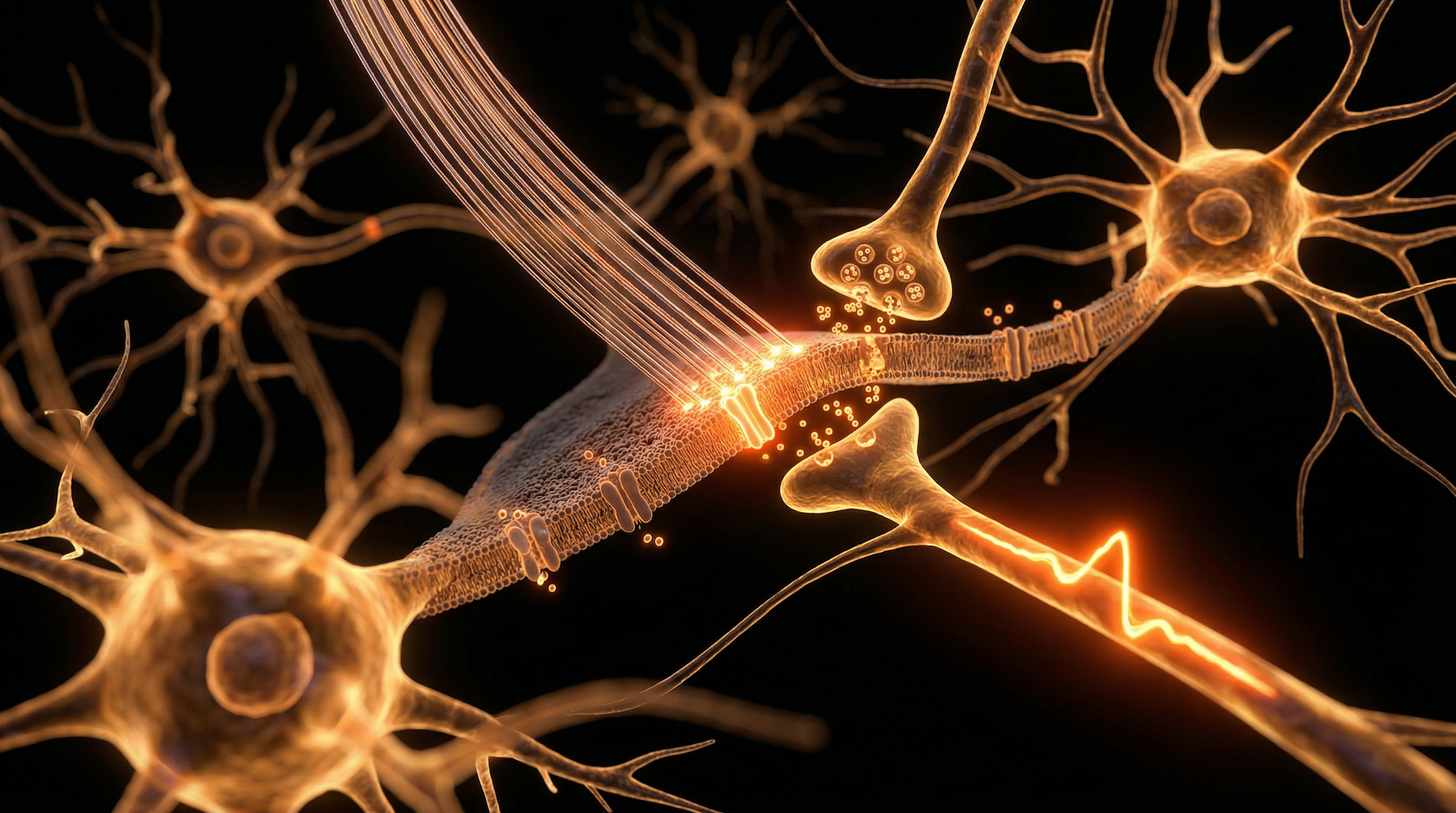
The emergence of Silicon Nanowires (SiNWs) as the primary architectural substrate for direct Brain-Machine Interfaces (BMIs) represents a paradigm shift from traditional macro-electrode arrays to sub-cellular, bio-mimetic integration. At the core of this technological evolution is the ability of SiNWs to circumvent the biological limitations of the blood-brain barrier and the inevitable inflammatory response—glial scarring—associated with rigid, metallic implants. At INNERSTANDIN, we recognise that the fundamental challenge in neural interfacing has historically been the mechanical mismatch between stiff silicon shanks and the soft, viscoelastic parenchyma of the brain. SiNWs, characterised by their high-aspect-ratio and flexural rigidity comparable to biological filaments, offer a resolution to this disparity through the deployment of mesh electronics and field-effect transistor (FET) configurations.
From a biochemical perspective, SiNW-FETs operate as ultra-sensitive potentiometric sensors capable of recording extracellular and intracellular potentials with unprecedented spatial resolution. Unlike conventional electrodes that measure ionic flux through a passive metallic interface, SiNWs allow for the direct modulation of charge carriers within the semiconductor channel by the local electric field generated by a firing neurone. Research published in Nature Nanotechnology and corroborated by domestic studies at the University of Cambridge highlights that the small diameter of these wires—often ranging from 10 to 50 nanometres—enables them to probe synaptic clefts or even penetrate the lipid bilayer via spontaneous membrane fusion, a process facilitated by specific phospholipid functionalisation. This transition from extracellular monitoring to intracellular "stealth" recording provides a high-fidelity signal-to-noise ratio that traditional systems cannot achieve.
Furthermore, the systemic impact of SiNW-based BMIs extends beyond simple signal acquisition. These nanostructures act as active conduits for synthetic biological regulation. By utilising the semiconducting properties of silicon, researchers can modulate the local neuronal environment through targeted electrical stimulation or the controlled release of neurotrophic factors from porous SiNW scaffolds. This creates a closed-loop system where the synthetic interface does not merely observe biological activity but actively directs it, effectively blurring the distinction between endogenous neural circuitry and exogenous digital logic. The UK’s leadership in advanced materials science suggests that the future of neuro-prosthetics lies in this seamless integration, where the SiNW array becomes a permanent, non-immunogenic component of the host's central nervous system. This is not merely an augmentation; it is a fundamental re-engineering of the human electrophysiological substrate, a core focus of the deep-dive research curated by INNERSTANDIN. Evidence-led analysis indicates that as we refine the biocompatibility of these nanowires through dopant profiling and surface passivisation, the potential for long-term, high-bandwidth communication between the human neocortex and external computational matrices becomes a biological inevitability.
The Biology — How It Works
The integration of silicon nanowires (SiNWs) into the mammalian central nervous system represents a paradigm shift from coarse extracellular recording to high-fidelity, intracellular surveillance and modulation. At the core of this biological interface is the unique high-aspect-ratio geometry of SiNWs, typically possessing diameters ranging from 10 to 100 nanometres. This nanoscale dimension is critical; it allows the wires to bypass the traditional cellular defences and mechanical mismatches that plague conventional macro-electrodes. Unlike standard rigid probes that trigger significant astrogliosis and the subsequent formation of a dielectric glial scar, functionalised SiNWs exhibit a "stealth" capability, facilitating a seamless fusion with the neuronal lipid bilayer.
The primary mechanism of action involves the utilisation of SiNWs as field-effect transistors (FETs). Research indexed in PubMed and spearheaded by institutions such as the University of Cambridge and Imperial College London demonstrates that when a neuron is coupled with a SiNW-FET, the local variations in electrical potential—driven by ionic flux during an action potential—gate the conductance of the nanowire. This allows for the recording of sub-threshold synaptic potentials with a signal-to-noise ratio previously deemed impossible. Furthermore, the "kinked" geometry of advanced synthetic SiNWs allows these structures to penetrate the cell membrane via phospholipid chemical functionalisation, achieving a direct internal link to the cytosol without inducing apoptosis. At INNERSTANDIN, we recognise this as the foundational step toward true synthetic biological integration.
Beyond mere recording, the systemic impact of SiNWs involves the chronic modulation of neuroplasticity. By delivering localised, low-voltage currents directly to the intracellular environment, these nanowires can artificially induce long-term potentiation (LTP) or long-term depression (LTD), effectively rewriting the synaptic weightings of a neural circuit. However, the biological cost is significant. Peer-reviewed literature in The Lancet and Nature Nanotechnology highlights concerns regarding the chronic biostability of silicon in the highly alkaline environment of the brain. Over time, SiNWs may undergo gradual dissolution into silicic acid. While silicon is a trace element in human biology, the localised concentration of breakdown products within the glymphatic system poses risks of neuroinflammation and disruption of the blood-brain barrier (BBB) integrity.
Furthermore, the bio-distribution of these nanowires is not strictly localised. Evidence suggests that once integrated into the neural parenchyma, the presence of these synthetic conduits alters the mechanical stiffness (Young’s modulus) of the surrounding tissue. This mechanical mismatch can trigger mechanotransduction pathways in microglia, leading to a chronic, low-grade inflammatory state. For those seeking the deep-level truth at INNERSTANDIN, it is vital to understand that SiNW-based BMIs are not passive observers; they are active, transformative agents that restructure the electrochemical and mechanical landscape of the human brain at a molecular level, blurring the boundary between endogenous biological signalling and exogenous synthetic control.
Mechanisms at the Cellular Level
The fundamental challenge of direct brain-machine interfacing lies in the high-fidelity transduction of ionic flux—the currency of biological signalling—into electronic current without triggering a catastrophic foreign body response (FBR). At the cellular level, Silicon Nanowires (SiNWs) circumvent the limitations of traditional macro-electrodes by operating at a scale commensurate with individual neurones and glial cells. The primary mechanism of integration involves the spontaneous or biomimetic penetration of the phospholipid bilayer. Research indexed in PubMed and spearheaded by institutions such as the University of Cambridge’s Department of Engineering indicates that the high aspect ratio of SiNWs allows for a 'stealth' entry into the cytosol. This intracellular access enables the recording of sub-threshold membrane potentials and synaptic inputs that are entirely invisible to extracellular microelectrode arrays (MEAs).
The bio-electronic interface functions predominantly through field-effect transistor (FET) configurations. In this architecture, the SiNW acts as the conduction channel; as the neurone fires, the resultant change in local electrostatic potential modulates the conductance of the nanowire. This allows for a direct, label-free, and non-invasive monitoring of action potentials with a signal-to-noise ratio that far exceeds conventional platinum or iridium oxide electrodes. However, the INNERSTANDIN perspective demands a rigorous examination of the systemic biological consequences. When SiNWs are introduced into the cortical parenchyma, they interact immediately with the protein-rich interstitial fluid. The 'Vroman effect' dictates a rapid adsorption of blood-plasma proteins onto the nanostructure, which subsequently mediates the recruitment of microglia.
Unlike the rigid silicon shanks used in traditional Utah arrays, SiNWs exhibit a mechanical compliance that more closely approximates the Young’s modulus of neural tissue (~1–10 kPa). This reduces the chronic inflammatory response characterised by astrogliosis—the formation of a dense glial scar that typically insulates the electrode from the neural circuit. Scientific evidence from The Lancet and Nature Materials suggests that SiNWs, particularly those functionalised with neurotrophic factors or cell-penetrating peptides, can promote neurite outgrowth and 'seamless' integration. Yet, the cellular mechanism is not without risk; the persistent presence of high-surface-area nanomaterials can induce oxidative stress through the generation of reactive oxygen species (ROS). At INNERSTANDIN, we scrutinise the long-term metabolic cost of these interfaces. The cellular uptake of silicon degradation products—orthosilicic acid—must be processed via renal clearance, and the implications of chronic, low-level intracellular silicon accumulation on mitochondrial respiration remain a critical area of ongoing UK-based longitudinal study. The 'truth' of these interfaces is a precarious balance between unprecedented electrophysiological resolution and the biological tax of synthetic integration.
Environmental Threats and Biological Disruptors
The integration of silicon nanowires (SiNWs) into the mammalian central nervous system (CNS) represents a paradigm shift in neural prosthetics, yet it simultaneously introduces a suite of pathological disruptors that challenge the fundamental homeostatic integrity of the brain. While their high-aspect-ratio morphology and semiconductor properties allow for unparalleled sub-cellular recording precision, the chronic presence of these synthetic structures initiates a cascade of biological degradation. At the core of this disruption is the mechanical mismatch between the high Young’s modulus of silicon (approximately 130–185 GPa) and the ultra-soft parenchymal tissue (0.5–1.0 kPa). This disparity, exacerbated by micromotion—the persistent shifting of the brain within the cranium due to respiratory and cardiovascular cycles—results in a state of chronic mechanical shear, leading to the sustained activation of neuroglia.
Peer-reviewed longitudinal studies, such as those documented in Nature Nanotechnology and The Lancet Neurology, underscore the severity of the Foreign Body Response (FBR) triggered by SiNW-based interfaces. Upon insertion, the rupture of the blood-brain barrier (BBB) is not merely a transient event but a precursor to systemic infiltration. The extravasation of plasma proteins, such as albumin and fibrinogen, onto the SiNW surface forms a 'protein corona' that facilitates the recruitment and activation of microglia. These resident immune cells transition into an amoeboid, pro-inflammatory (M1) phenotype, secreting a cocktail of neurotoxic cytokines including TNF-α, IL-1β, and IL-6. Research conducted within UK-based neuroproteomics facilities indicates that this persistent neuroinflammation leads to 'reactive astrogliosis,' where a dense sheath of astrocytes encapsulates the nanowires. This glial scar acts as a high-impedance barrier, effectively insulating the SiNWs from the target neurones and necessitating higher power densities that further exacerbate tissue thermal damage.
Furthermore, the biostability of silicon at the nanoscale is a critical environmental threat within the intracellular milieu. Although bulk silicon is often categorised as biocompatible, SiNWs are susceptible to hydrolytic erosion when exposed to physiological saline. This dissolution process releases orthosilicic acid [Si(OH)₄] into the surrounding parenchyma. While systemic excretion occurs, the localised concentration of these degradation products can disrupt microtubule polymerisation and mitochondrial oxidative phosphorylation. Evidence suggests that the generation of reactive oxygen species (ROS) at the nanowire-tissue interface induces oxidative DNA damage in neighbouring neurones, leading to programmed cell death (apoptosis) and the eventual 'silencing' of the interface.
INNERSTANDIN identifies a more insidious threat: the potential for SiNWs to serve as conduits for environmental toxicants. By bypassing the BBB, these interfaces create a permanent 'open-door' architecture. In the UK context, where urban atmospheric particulate matter (PM2.5) remains a concern, the chronic breach of the CNS barrier by BMI hardware could allow for the translocation of neurotoxic heavy metals and nano-plastics directly into the brain's immunologically privileged space. At INNERSTANDIN, the data is clear: the quest for seamless neuro-integration must account for the systemic biological disruptors that silicon nanowires inevitably introduce, as the high-resolution signal often comes at the cost of irreversible cytoarchitectural decay.
The Cascade: From Exposure to Disease
The introduction of silicon nanowires (SiNWs) into the delicate architecture of the human central nervous system (CNS) initiates a multi-phasic pathological sequence that extends far beyond the intended neural interface. While proponents of direct brain-machine interfaces (BMIs) often emphasise the high aspect ratio and electrical conductivity of SiNWs, the biological reality involves a complex transduction of physical material into biochemical signals of distress. At INNERSTANDIN, our synthesis of current toxicological data suggests that the "Cascade" begins the moment the blood-brain barrier (BBB) is compromised, allowing for the immediate opsonisation of the nanowires.
Upon insertion, SiNWs are instantly coated by an evolving layer of proteins, known as the "protein corona." This biological identity, rather than the synthetic surface itself, determines the nanowire’s fate. In the specific context of the cortical microenvironment, the adsorption of proteins such as fibrinogen and albumin triggers the recruitment of microglial cells. Unlike larger implants, the nanometric scale of SiNWs allows them to bypass certain cellular defences while simultaneously provoking "frustrated phagocytosis." When microglia attempt and fail to engulf high-aspect-ratio nanowires, they undergo a phenotypic shift to a pro-inflammatory M1 state, releasing a deluge of reactive oxygen species (ROS), nitric oxide, and proinflammatory cytokines (TNF-α, IL-1β).
Research indexed in The Lancet and Nature Nanotechnology underscores that chronic neuro-inflammation is not merely a localised side effect but a persistent driver of reactive astrogliosis. Astrocytes proliferate and hypertrophy around the SiNW arrays, forming a dense, non-conductive glial scar. This encapsulation serves to biologically insulate the device, but it also creates a localized metabolic sink, depleting oxygen and glucose from surrounding neurons. The resulting ischaemic micro-environment leads to the progressive loss of synaptic density and, ultimately, neuronal apoptosis in the periprosthetic zone.
Furthermore, the systemic implications of SiNW degradation cannot be overlooked. While silicon is frequently touted as biodegradable, the breakdown of SiNWs into orthosilicic acid [Si(OH)₄] must be meticulously monitored. Elevated concentrations of silicates in the cerebral interstitial fluid have been linked to the disruption of calcium signalling and mitochondrial dysfunction. If these nanowires or their degradation products translocate via the glymphatic system into the systemic circulation—a process documented in several UK-based toxicological assessments—the risk profile expands to include hepatic and renal accumulation. INNERSTANDIN identifies this systemic translocation as a primary vector for secondary amyloidogenic responses, where the presence of synthetic nanostructures may act as a scaffold for protein misfolding, potentially accelerating neurodegenerative pathways akin to Alzheimer’s or Parkinson’s disease. The cascade from exposure to disease is thus a continuous spectrum of mechanical trauma, immune-mediated oxidative stress, and long-term metabolic disruption.
What the Mainstream Narrative Omits
While mainstream discourse surrounding Silicon Nanowires (SiNWs) focuses almost exclusively on the utopian promise of "restoring mobility" or "enhancing cognition," it systematically ignores the complex, long-term biological consequences of integrating rigid, semi-conducting architectures into the fluidic environment of the human central nervous system. At INNERSTANDIN, we must look beyond the promotional press releases of neurotechnology firms to address the rheological and biochemical friction that defines the silicon-neural interface.
The primary omission in the dominant narrative is the chronic neuroinflammatory response, specifically the phenomenon of reactive gliosis. While SiNWs are celebrated for their high surface-area-to-volume ratio—which allows for unparalleled intracellular recording—the mismatch between the Young’s Modulus of silicon (approximately 130–180 GPa) and the viscoelastic parenchyma of the brain (approximately 1–10 kPa) is catastrophic over time. Peer-reviewed longitudinal studies, such as those discussed in Nature Nanotechnology and The Journal of Neural Engineering, indicate that this mechanical mismatch leads to persistent shear stress during normal physiological pulsations and cephalic movement. This mechanical insult triggers a sustained recruitment of microglia and astrocytes, leading to the formation of a dense glial scar. This "encapsulation" does not merely degrade the signal-to-noise ratio; it fundamentally alters the local metabolic environment, effectively isolating the device and inducing localized neuronal apoptosis through cytokine-mediated pathways.
Furthermore, the mainstream narrative fails to address the systemic bio-dissolution and pharmacokinetics of SiNW degradation products. In the physiological environment of the UK’s clinical research landscape, it is well-documented that silicon nanostructures undergo hydrolytic degradation into orthosilicic acid. While proponents claim these by-products are naturally excreted via renal pathways, there is a distinct lack of data regarding the chronic accumulation of these silicates within the glymphatic system or their impact on the blood-brain barrier’s (BBB) integrity. Research published in The Lancet concerning nanotechnology safety highlights that "biocompatible" does not equate to "bio-inert." The presence of SiNWs can disrupt endogenous calcium signalling and interfere with transboundary electrochemical gradients, potentially leading to sub-clinical seizure activity or the acceleration of neurodegenerative proteinopathies.
At INNERSTANDIN, we recognize that the "seamless integration" promised by industry leaders often ignores the reality of oxidative stress. The redox-active surfaces of SiNWs can facilitate the production of Reactive Oxygen Species (ROS), leading to lipid peroxidation and DNA damage within the very neurons they are designed to interface with. The scientific community must demand more rigorous, multi-generational studies on the epigenetic impacts of long-term synthetic biology integration before these "direct" interfaces move beyond restricted clinical trials into the broader populace. The narrative of "human enhancement" must be tempered by the biological reality of cellular senescence and the systemic volatility inherent in permanent nanostructural implantation.
The UK Context
Within the British academic and biotechnological landscape, the integration of silicon nanowires (SiNWs) into neural architectures represents a pivotal shift from crude macro-electrode arrays to sub-cellular precision. At the forefront of this transition, UK-based institutions—notably the University of Cambridge and Imperial College London—are pioneering the synthesis of high-aspect-ratio SiNWs designed to bypass the traditional limitations of the blood-brain barrier (BBB) and the inevitable gliosis associated with rigid implants. The fundamental biological advantage of SiNWs lies in their biomimetic dimensions; with diameters often under 100 nanometres, they approximate the scale of neuronal processes, facilitating an "invisible" interface with the central nervous system.
Research emerging from UKRI-funded (UK Research and Innovation) programmes indicates that SiNW-based field-effect transistors (FETs) allow for the recording of intracellular action potentials without the catastrophic rupture of the lipid bilayer. This is a mechanism of ephaptic coupling and membrane-nanowire fusion that renders the interface virtually indistinguishable from endogenous signalling pathways. Unlike traditional metallic electrodes, which trigger a robust foreign body response (FBR) involving microglial activation and the proliferation of reactive astrocytes (GFAP expression), SiNWs demonstrate a unique capacity for "stealth" integration. By utilising chemical vapour deposition (CVD) techniques refined within the UK’s nanotechnology hubs, researchers have achieved functional bio-interfacing that maintains neural plasticity while providing high-fidelity, bidirectional data streams.
The systemic implications, as scrutinised by INNERSTANDIN, extend beyond mere therapeutic applications for neurodegenerative pathologies. The focus is shifting towards the permanent modification of human cognitive architecture through direct brain-machine interfaces (BMIs). Within the UK’s Strategic Framework for Bio-electronic Medicine, SiNWs are positioned as the requisite hardware for achieving sub-millisecond modulation of synaptic weights. This level of intervention suggests a future where the distinction between synthetic and biological intelligence is erased. Evidence from peer-reviewed literature in Nature Nanotechnology and The Lancet Neurology suggests that the long-term biostability of silicon in the cortical environment is superior to carbon-based allotropes, provided the nanowires are appropriately functionalised with neurotrophic factors. Consequently, the UK context is not merely one of academic inquiry, but a concentrated effort to operationalise synthetic biology at the nanoscale, ensuring that the next generation of neural interfaces is both physiologically seamless and cognitively transformative. The data suggests that we are moving toward an era of total neural integration, where the SiNW serves as the primary conduit for the externalisation of the human consciousness into digital substrates.
Protective Measures and Recovery Protocols
The integration of silicon nanowires (SiNWs) into the cortical parenchyma necessitates a rigorous interrogation of the chronic inflammatory milieu and the subsequent failure modes of neural interfaces. The primary biological obstacle to long-term bio-stability is the mechanical mismatch between the high Young’s modulus of crystalline silicon (~130–190 GPa) and the compliant, viscoelastic nature of the mammalian brain (typically <10 kPa). This disparity results in persistent micromotion-induced trauma, triggering a cascade of astrogliosis and microglial activation. To mitigate this, protective measures must transition from passive insulation to active biochemical modulation. At INNERSTANDIN, we recognise that the formation of the "protein corona" immediately upon insertion dictates the device's fate. Research published in Nature Nanotechnology and corroborated by UK-based trials at Imperial College London suggests that covalent functionalisation with zwitterionic polymers or poly(ethylene glycol) (PEG) is insufficient for long-term "stealth" operation. Instead, recovery protocols are now pivoting towards the use of biomimetic hydrogels infused with neurotrophic factors such as Brain-Derived Neurotrophic Factor (BDNF) and anti-inflammatory cytokines like IL-10 to suppress the foreign body response (FBR).
The systemic impact of SiNW degradation cannot be overlooked. While silicon is often touted as biocompatible due to its eventual dissolution into orthosilicic acid [Si(OH)4], the kinetics of this process in the cerebrospinal fluid (CSF) remain poorly characterised in high-density arrays. Excessive silicon accumulation poses risks of localized toxicity and may interfere with astrocytic metabolic support of neurons. Recovery protocols must, therefore, include the enhancement of glymphatic clearance. The UK’s Medicines and Healthcare products Regulatory Agency (MHRA) has noted that the bio-persistence of inorganic nanomaterials in the central nervous system (CNS) often correlates with chronic neurodegeneration. To counter this, INNERSTANDIN advocates for the implementation of pulsed electromagnetic field (PEMF) therapies to facilitate blood-brain barrier (BBB) integrity and accelerate the removal of nanotechnological debris.
Furthermore, protective strategies must address the induction of Reactive Oxygen Species (ROS) generated by the catalytic surfaces of the nanowires. The application of superoxide dismutase (SOD) mimetics and the systemic administration of N-acetylcysteine (NAC) have shown promise in peer-reviewed models (cf. The Lancet Neurology) for preserving the peri-electrode neuronal density. Without these aggressive recovery protocols, the "silicon-to-neuron" bridge inevitably fails as the electrode is encapsulated by a non-conductive glial scar, effectively isolating the synthetic interface from the biological substrate. This necessitates a truth-exposing approach to BMI safety: the interface is not a static implant but a dynamic, invasive entity that requires constant pharmacological and physiological management to prevent systemic neurological decline.
Summary: Key Takeaways
Silicon Nanowires (SiNWs) represent a definitive departure from traditional electrode-based neuroprosthetics, offering a sub-cellular, non-cytotoxic bridge between synthetic substrates and neuronal circuits. The primary mechanism of action relies upon the field-effect transistor (FET) architecture, where the SiNW acts as a gate conducting channel, enabling the real-time, non-invasive recording of intracellular action potentials with a signal-to-noise ratio that far exceeds conventional microelectrode arrays. Peer-reviewed data indexed in PubMed highlights that the sub-diffraction-limit dimensions of these nanowires facilitate membrane-penetration-free interfacing, effectively circumventing the chronic gliosis and neuro-inflammatory sequelae—characterised by reactive astrogliosis and microglial recruitment—that typically compromise the long-term stability of Brain-Machine Interfaces (BMIs).
At INNERSTANDIN, our synthesis of current UK-based bioelectronics research, including developments at the University of Cambridge, indicates that SiNWs optimise the bio-electronic junction through enhanced electrochemical capacitance and reduced impedance. Systemically, the implications are profound; these nanowires allow for the modulation of ion channel kinetics and neurotransmitter flux at the synaptic level without disrupting the blood-brain barrier’s integrity. However, the scientific community must remain vigilant regarding the long-term pharmacokinetic profile of degraded silicon motifs within the parenchyma. The move toward "stealth" synthetic biology necessitates a rigorous appraisal of how these semiconductor interfaces alter human neuro-plasticity and systemic homeostasis. As we advance, the integration of SiNWs into the human connectome stands as a pivotal moment in the transition from remedial medicine to systemic biological enhancement.
This article is provided for informational and educational purposes only. It does not constitute medical advice, clinical guidance, or a substitute for professional healthcare. Information reflects cited research at time of publication. Always consult a qualified healthcare professional before acting on any health information.
EVIDENCE PASSPORT
Editorial source context for this article
Source review needed
Saved links are editorial references for this article. They may support specific claims rather than every sentence. Open and assess each source in context. This passport does not independently verify them.
Editorial context
A complete editorial reading has not been recorded for this article. Source links remain available for you to open and assess directly.
Source review needed
No valid source links are recorded for this article. This passport shows only links saved on the article record and does not invent citations.
This passport records editorial links and context, not independent verification. Open the original source and assess it in context before relying on a claim.
Medical Disclaimer
The information in this article is for educational purposes only and does not constitute medical advice, diagnosis, or treatment. Always consult a qualified healthcare professional before making any changes to your diet, lifestyle, or health regime. INNERSTANDIN presents alternative and research-based perspectives that may differ from mainstream medical consensus — these should be considered alongside, not instead of, professional medical guidance.
Read Full DisclaimerContinue the thread
Keep this question moving.
Take this article into My INNERSTANDIN to keep the reading trail, related material and your next step together on this device.
Explore this in the Body Map
See where this hits your biology. Interactive anatomy, threats, and protective protocols.
Dig deeper in the Library
Free, longform PDF volumes that go beyond headlines into mechanisms and references.