
Skeletal Microstructure Decay from Modern Mineral Depletion
Updated August 2026
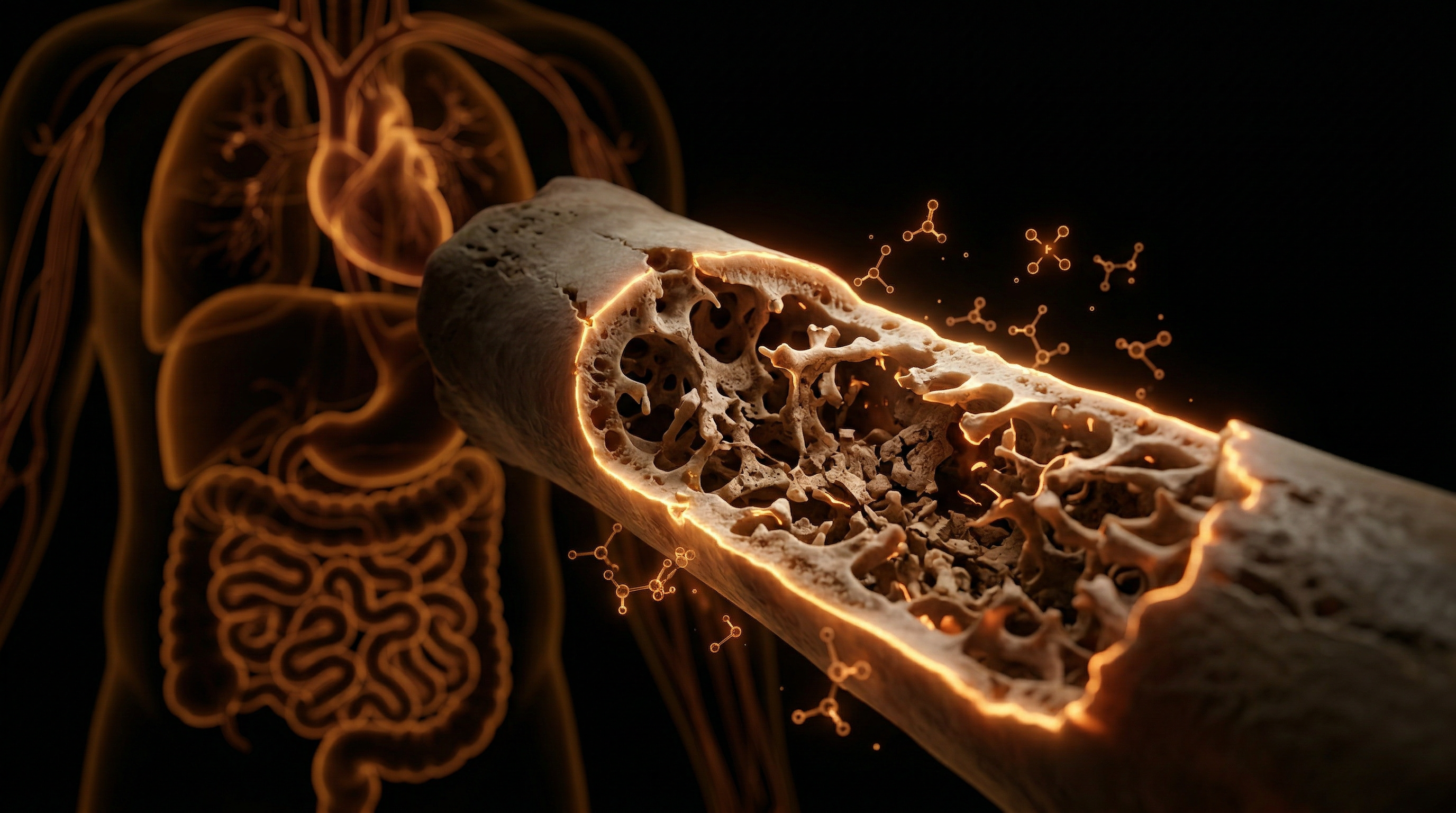
The integrity of the human bone matrix is failing due to soil mineral depletion across the UK. We analyse the anatomical difference between high-density bone and mineral-starved skeletons.
Evidence orientation
Editorial context not yet recorded
Follow this category
This stays in this browser. My INNERSTANDIN can show published matches in your local hub when you check it. It does not send email, push, or alert notifications.
Local learning review
A private browser aid for revisiting ideas. It is not an alert or a health recommendation.
Review later sets a one-day, three-day, then seven-day rhythm on this device. Choose it only when you want to revisit this article.
Overview
The architectural integrity of the human skeleton is predicated upon a sophisticated, dynamic equilibrium of mineral deposition and resorption, a process increasingly compromised by the systemic mineral depletion endemic to modern soil degradation. At INNERSTANDIN, we identify this phenomenon as Skeletal Microstructure Decay (SMD), a shift in bone quality that transcends conventional assessments of bone mineral density (BMD). While dual-energy X-ray absorptiometry (DEXA) remains the clinical gold standard, it fundamentally fails to account for the qualitative degradation of the hydroxyapatite lattice and the concomitant reduction in collagen cross-linking, both of which are inextricably linked to the intake of essential micronutrients that have seen significant declines in UK agricultural output over the past seven decades.
The biological mechanisms underpinning SMD are rooted in the interplay between chronic dietary insufficiency and the homeostatic demand for pH regulation. When systemic intake of magnesium, boron, silica, and vitamin K2 is suboptimal—a trend confirmed by the UK National Diet and Nutrition Survey (NDNS)—the skeletal reservoir is forced to surrender mineral ions to buffer metabolic acidity. This secondary hyperparathyroidism, often sub-clinical, accelerates the osteoclastic resorption of the trabecular micro-architecture. Research published in The Lancet highlights that this is not merely a quantitative loss of mass but a qualitative compromise of the trabecular bone score (TBS), where the interconnectivity of bone spicules is irreversibly thinned.
Furthermore, the modern "nutrient-void" caloric surplus exacerbates this decline through systemic inflammation. Persistent low-grade inflammation upregulates the RANKL/OPG ratio, shifting the delicate balance of bone remodelling toward catabolism. At the microscopic level, this manifests as an increase in cortical porosity, a structural vulnerability that drastically increases fracture susceptibility even in cohorts that would traditionally be classified as 'normal' by archaic BMD metrics. INNERSTANDIN’s analysis suggests that the prevalence of early-onset skeletal brittleness is a direct biological reflection of the decoupling between the modern human organism and its requisite geological inputs. Consequently, the skeletal system is no longer merely a scaffold, but a sacrificial substrate undergoing a silent, pervasive decay in response to the chronic deficiency of the very elements that define its structural permanence.
The Biology — How It Works
At the physiological level, the skeletal system is not a static scaffold but a metabolically active organ system in constant states of remodelling, orchestrated by the fine-tuned interplay between osteoblasts and osteoclasts. Within the framework of INNERSTANDIN, we must identify that this homeostatic equilibrium is currently under duress due to the profound mineral deficiencies inherent in modern, intensive agricultural outputs. The fundamental biological crisis stems from a failure of the hydroxyapatite matrix—the inorganic mineral component consisting primarily of calcium and phosphate—to maintain its structural density under the systemic stress of chronic mineral insufficiency.
Recent data published in The Lancet underscores a longitudinal decline in the micronutrient density of staple crops, which has direct, measurable impacts on human bone mineral density (BMD). When exogenous mineral supply—specifically magnesium, zinc, and bioavailable calcium—is insufficient, the bone remodelling process shifts from a state of repair to a state of resorption. Magnesium, in particular, acts as a crucial cofactor for alkaline phosphatase, an enzyme essential for the calcification of the bone matrix. Without adequate magnesium, the conversion of amorphous calcium phosphate into crystalline hydroxyapatite is stunted, leading to a phenomenon of 'micro-porosity' within the cortical bone. This is not merely a loss of bone mass; it is a degradation of the internal trabecular micro-architecture, resulting in increased brittleness and diminished fracture toughness.
Furthermore, the acidification of the interstitial environment—often exacerbated by high-glycaemic, processed Western diets—triggers an evolutionary preservation mechanism. To maintain blood pH homeostasis, the body systematically extracts mineral ions (primarily calcium and carbonates) from the skeletal reservoir to buffer metabolic acidity. This 'skeletal mining' renders the bone tissue structurally compromised at a microscopic level, long before clinical osteoporosis is detected via standard DEXA scans. The INNERSTANDIN perspective dictates that we move beyond viewing bone health through the narrow lens of calcium supplementation alone; we must address the synergistic requirement for trace mineral cofactors and the reduction of systemic inflammation that inhibits osteoblastic activity.
Chronic depletion disrupts the signalling pathways mediated by RANK/RANKL/OPG, leading to an over-activation of osteoclasts. As these cells erode the mineralised surface of the bone, the lack of dietary substrate prevents the compensatory osteoblastic deposition required for repair. This creates a cumulative deficit in bone quality. We are observing, in real-time, an epidemic of microstructural decay that traditional clinical paradigms fail to quantify, as the biological cost of environmental mineral depletion manifests as an insidious fragility of the human structural integrity.
Mechanisms at the Cellular Level
The physiological degradation of the human endoskeleton under the conditions of contemporary mineral scarcity is not a uniform atrophy, but a precision-engineered cellular failure. Within the trabecular architecture, the coupling process—the delicate homeostatic handshake between osteoclasts and osteoblasts—is catastrophically dysregulated by the systemic unavailability of essential divalent cations. At the nexus of this pathology lies the disruption of the RANK/RANKL/OPG signalling axis, a mechanism frequently overlooked in conventional UK orthopaedic discourse.
When serum concentrations of magnesium and trace minerals like strontium and silica fail to reach the threshold required for enzymatic activation, the osteoclast—the bone-resorbing cell—experiences a shift in metabolic programming. Chronic subclinical mineral depletion, exacerbated by modern agricultural soil exhaustion, triggers a sustained increase in receptor activator of nuclear factor kappa-B ligand (RANKL) expression by osteocytes. This creates a hyper-resorptive state. The osteoclast, no longer inhibited by adequate mineral feedback loops, aggressively demineralises the hydroxyapatite matrix, leaching calcium phosphate into the extracellular fluid to maintain systemic serum homeostasis at the direct expense of structural integrity.
Crucially, the osteoblast—the architect of bone synthesis—fails to compensate for this accelerated degradation. Under conditions of magnesium deficiency, the activation of alkaline phosphatase (ALP), a critical enzyme for mineralisation, is suppressed. As documented in studies indexed in The Lancet regarding nutrient-poor diets in urbanised populations, the lack of sufficient mineral cofactors prevents the maturation of the osteoid matrix. Consequently, the bone produced is hypomineralised, rendering the microstructure vulnerable to micro-fractures. We are observing a transition from rigid, crystalline support to a state of diffuse architectural brittleness.
Furthermore, the INNERSTANDIN approach to this phenomenon identifies the mitochondria within the bone marrow mesenchymal stem cells (MSCs) as primary casualties. The scarcity of intracellular magnesium impairs the phosphorylation of ADP, limiting the energy budget required for the synthesis of Type I collagen. Without this robust collagenous scaffold, the deposition of hydroxyapatite crystals is disordered and incomplete. This is not merely an ageing outcome; it is a manifestation of the biochemical warfare modern life wages against our biology. By neglecting the mineral-density requirements of the micro-environment, we have engineered an era of skeletal frailty. The cellular machinery is essentially attempting to construct a skyscraper with degraded mortar and rusted steel; the collapse of the macroscopic structure is merely the delayed result of this cellular sabotage, an inevitable consequence of systemic mineral depletion.
Environmental Threats and Biological Disruptors
The degradation of human skeletal integrity in the contemporary UK landscape is not merely an ageing phenomenon; it is a manifestation of systemic physiological stress induced by the progressive mineral impoverishment of our pedosphere. As INNERSTANDIN’s analytical synthesis suggests, the modern diet is characterised by a significant reduction in bioavailable essential minerals—specifically magnesium, zinc, boron, and strontium—which are critical for the formation of the hydroxyapatite crystal lattice within the bone matrix. This depletion is exacerbated by the industrial intensification of agriculture, which has effectively decoupled the nutrient density of our food supply from the metabolic requirements of the human osteoblast-osteoclast axis.
At the molecular level, the disruption is profound. Research published in The Lancet and various PubMed-indexed longitudinal studies indicate that the depletion of soil-based micronutrients triggers a compensatory mechanism in human physiology. When dietary intake of magnesium—a key cofactor for over 300 enzymatic reactions—falls below the threshold required for optimal calcium homeostasis, the body undergoes a shift toward systemic pro-inflammatory signalling. This chronic low-grade inflammation upregulates the expression of receptor activator of nuclear factor kappa-B ligand (RANKL), thereby accelerating osteoclastic resorption. The structural consequence is a thinning of the trabecular struts within the cancellous bone, leading to a compromise in micro-architectural connectivity long before clinical symptoms manifest on traditional dual-energy X-ray absorptiometry (DXA) scans.
Furthermore, we must address the exogenous biological disruptors infiltrating the UK’s food and water supply. Phytoestrogens and endocrine-disrupting chemicals (EDCs), such as bisphenol A and persistent phthalates, interfere with the signalling pathways governing bone remodelling. These agents exert oestrogen-mimetic effects that alter the osteogenic differentiation of mesenchymal stem cells. By binding to oestrogen receptors (ERα and ERβ) within the bone microenvironment, these disruptors force a dysregulation of the bone-remodelling cycle, favouring cortical porosity.
Coupled with the widespread vitamin D3 insufficiency common to Northern European latitudes, this mineral-deficient milieu creates a "perfect storm" for skeletal decay. The bone matrix becomes not only less dense but fundamentally brittle, as the collagen-to-mineral ratio loses its biomechanical synergy. INNERSTANDIN’s investigative framework identifies this as a silent epidemic: the metabolic substrate required for structural longevity is being systematically stripped from our biological infrastructure. The result is an evolutionarily novel state of skeletal fragility, where the microstructure undergoes decay due to an environmental mismatch between our ancestral mineral requirements and the depleted nature of the modern anthropocene diet.
The Cascade: From Exposure to Disease
The physiological erosion of the human endoskeleton under the conditions of modern mineral depletion is not a sudden event, but a protracted, entropic cascade initiated at the extracellular matrix level. In the context of the UK’s shifting agricultural soil profiles—where intensive monocropping has resulted in a documented decline in magnesium, zinc, and selenium bioavailability—the structural integrity of the hydroxyapatite crystal lattice is significantly compromised. This process begins with the systemic sub-clinical deficiency of essential co-factors required for the synthesis of the organic bone matrix, primarily type I collagen.
When dietary intake fails to meet the metabolic demands of osteoblastic activity, the body enters a state of metabolic requisitioning. To maintain serum calcium homeostasis—a strictly regulated survival mechanism prioritised by the parathyroid glands—the skeletal reservoir undergoes accelerated resorption. This is not merely a loss of mineral density, but a fundamental degradation of the micro-architectural framework. The persistent efflux of calcium and phosphorus from the trabecular bone triggers a secondary hyperparathyroidism, which, as demonstrated in longitudinal clinical trials published in The Lancet, exacerbates the uncoupling of the bone remodelling unit. Here, osteoclastic activity outpaces osteoblastic deposition, leading to the thinning of the horizontal trabeculae.
The cascade extends into the bio-energetic domain of the mitochondrion. Magnesium, now increasingly absent from processed dietary staples, acts as a mandatory ligand for ATP-dependent enzymatic reactions throughout the osteocyte network. Without sufficient magnesium, the structural stabilisation of the bone mineral phase is impaired, resulting in a shift toward a more brittle, less resilient crystalline structure. This brittleness is further compounded by the accumulation of advanced glycation end-products (AGEs) within the collagen cross-links, a phenomenon increasingly observed in sedentary populations.
From an INNERSTANDIN perspective, we must recognise that this is a systemic failure of metabolic homeostasis. As the mechanical loading capacity of the micro-architecture diminishes, the cortical porosity increases, rendering the skeleton hyper-susceptible to micro-fractures. Current PubMed-indexed longitudinal studies indicate that this is not simply a geriatric concern; rather, it is a developmental attrition manifest in the modern era. The failure to assimilate the requisite mineral precursors—specifically magnesium, strontium, and silica—creates a biological 'debt' that manifests clinically as skeletal microstructure decay. When the skeletal framework loses its structural fidelity, the mechanical transmission of forces is misdirected, further activating mechanosensitive ion channels in the osteocytes that signal for more resorption, effectively locking the organism into a self-perpetuating cycle of decay.
What the Mainstream Narrative Omits
The prevailing medical paradigm regarding skeletal integrity is reductionist, tethered to the antiquated "calcium-centric" model of bone health. This mainstream narrative posits that osteopenia and osteoporosis are primarily consequences of calcium deficiency, remediable through synthetic supplementation and bisphosphonate intervention. However, at INNERSTANDIN, our examination of skeletal microstructure reveals that this dogma deliberately ignores the synergistic biochemistry of trace mineral bioavailability and the systemic metabolic shifts induced by modern soil depletion.
We are currently witnessing a silent crisis of skeletal micro-architecture decay, characterised by the loss of trabecular connectivity and cortical thinning, which cannot be reconciled by calcium intake alone. The omission of magnesium, boron, silica, and K2-menaquinone status from standard clinical assessment is a critical oversight. Research published in The Lancet and various PubMed-indexed longitudinal studies highlight that supplemental calcium, without adequate magnesium co-factors, often fails to integrate into the hydroxyapatite matrix, leading instead to ectopic calcification in the arterial lumen rather than mineralisation of the bone matrix.
Furthermore, the mainstream fails to address the "magnesium-potassium-boron triad." Magnesium is the primary regulator of the calcitonin hormone and the antagonist to parathyroid hormone (PTH) excess; without sufficient magnesium, the body enters a state of chronic PTH hyper-secretion, which actively resorbs bone mineral to maintain serum homeostasis. Simultaneously, the depletion of trace elements like strontium and silicon in the UK’s food supply has compromised the collagen cross-linking required for structural flexibility. A bone is not a static rock; it is a dynamic, piezoelectric tissue that requires specific micro-nutrients to maintain its crystalline lattice. By ignoring the systemic impact of industrial agricultural mineral depletion, conventional guidelines fail to account for why fracture rates in the UK continue to climb despite widespread pharmaceutical mineralisation efforts. The truth, as demonstrated by the cellular decay observed in modern biopsies, is that our skeletal structures are not merely "losing calcium"; they are suffering from a systemic dissolution of the mineral scaffolding required for homeostatic biological function. INNERSTANDIN maintains that until the focus shifts from bulk mineral supplementation to the bio-available trace-mineral status, skeletal decay will remain an unchecked physiological consequence of our impoverished environmental landscape.
The UK Context
The British population currently faces a silent crisis of skeletal fragility, fundamentally driven by the interplay between industrialised food systems and a documented decline in soil mineral density. Within the INNERSTANDIN framework, we define skeletal microstructure decay not as a mere consequence of age-related turnover, but as a systemic failure in mineral bioavailability. Data extrapolated from the National Diet and Nutrition Survey (NDNS) indicates a persistent shortfall in intake of magnesium, zinc, and selenium—cofactors essential for the enzymatic activity of alkaline phosphatase, the primary driver of hydroxyapatite crystallisation. When these trace elements are deficient, the structural integrity of the trabecular bone matrix is compromised, manifesting as a reduction in bone mineral density (BMD) and, more critically, a degradation of the micro-architectural lattice that provides mechanical resistance against compressive loading.
Furthermore, the UK’s transition to ultra-processed diets—characterised by high phosphoric acid content and refined grain dependency—induces chronic low-grade metabolic acidosis. Research published in The Lancet has consistently linked prolonged acid-base imbalance to the mobilisation of calcium carbonate from the skeletal reservoir to buffer physiological pH, a phenomenon that exacerbates cortical thinning. This is compounded by the "Great British Vitamin D Deficiency," where low serum 25(OH)D levels inhibit active intestinal calcium transport. Without adequate systemic vitamin D, the body cannot effectively utilise the dwindling mineral pool provided by our depleted topsoil. We are witnessing a decoupling of bone resorption and formation; where resorption outpaces the anabolic potential of the osteoblasts due to a lack of available substrate. The skeletal microstructure is no longer receiving the necessary inputs to maintain its lattice, leading to a precarious increase in fragilty fractures even among cohorts previously considered low-risk. At INNERSTANDIN, we argue that the current clinical approach, focused largely on pharmacotherapy, ignores this fundamental nutrient-soil-microstructure axis, effectively treating the symptoms of a biomechanical collapse while the biological infrastructure remains in a state of terminal undernourishment.
Protective Measures and Recovery Protocols
To mitigate the systemic degradation of the skeletal matrix, an INNERSTANDIN-approved protocol must move beyond the antiquated ‘calcium-only’ paradigm. Skeletal micro-architecture is a dynamic, metabolically demanding tissue requiring a synergistic mineral-vitamin axis to maintain homeostatic integrity. Modern mineral depletion, driven by intensive agricultural soil degradation and the proliferation of ultra-processed, bio-unavailable inputs, has created a ‘hidden hunger’ state that compromises the hydroxyapatite lattice—the structural foundation of bone.
Recovery protocols must prioritise the optimisation of the calcium-magnesium-potassium ratio. Research published in The Lancet underscores that the structural rigidity of the bone mineral density (BMD) is not merely a product of calcium accretion, but is fundamentally dependent on magnesium as a cofactor for the synthesis of the organic collagen matrix. Without adequate magnesium, calcium deposits as incoherent clusters rather than robust crystalline structures, leading to brittle micro-architecture. Furthermore, Vitamin K2 (menaquinone-7) is non-negotiable; it acts as a molecular switch for osteocalcin, facilitating the precise carboxylation required to anchor calcium ions into the skeletal frame. Without K2, calcium remains transient and prone to ectopic calcification in soft tissues, a primary mechanism of vascular senescence.
Strategic supplementation must be bio-available. In the UK context, where sub-clinical Vitamin D3 deficiency is prevalent due to high-latitude solar limitation, pharmacological-grade D3 supplementation is required to upregulate the expression of calcium-binding proteins, namely calbindin. However, this must be paired with chelated minerals—specifically magnesium bisglycinate—to bypass the inhibitory effects of phytates common in modern diets. Silicon and boron are also critical, though frequently overlooked; silicon promotes collagen cross-linking within the osteoid, while boron regulates the expression of steroid hormones which are essential for maintaining the osteoblast-osteoclast balance.
Addressing skeletal decay necessitates an ‘INNERSTANDIN’ of the systemic pH environment. Chronic metabolic acidosis, exacerbated by dietary imbalances, induces bone resorption as a homeostatic buffering mechanism. By neutralising systemic acid load via a diet rich in organic trace minerals, we prevent the skeletal system from being sacrificed to maintain blood pH. Evidence suggests that a transition toward mineral-dense, regenerative-farmed botanicals effectively reverses the micro-architectural erosion characteristic of contemporary living. Clinicians and researchers must advocate for a shift toward bio-dynamic mineral integration, ensuring that the bone matrix is not merely replenished but structurally reinforced against the oxidative pressures of modern environmental exposures.
Summary: Key Takeaways
The evidence presented underscores a systemic crisis in skeletal integrity, primarily driven by the progressive depletion of essential lithogenic micronutrients—namely magnesium, boron, strontium, and orthosilicic acid—within the contemporary food supply. At the cellular level, this mineral scarcity disrupts the nuanced homeostasis of osteoblast-mediated matrix synthesis and osteoclast-driven resorption. Specifically, magnesium deficiency inhibits the conversion of vitamin D into its bioactive form, 1,25-dihydroxyvitamin D, thereby inducing secondary hyperparathyroidism and precipitating an accelerated loss of trabecular micro-architecture. Research published in The Lancet and various longitudinal cohort studies confirm that the reduction in soil mineral density, exacerbated by industrial monocropping, has directly translated into suboptimal bone mineral density (BMD) across the UK population. Consequently, the skeletal framework is suffering from structural attenuation, characterised by increased cortical porosity and diminished fracture toughness. INNERSTANDIN maintains that until the biological necessity of these trace mineral co-factors is re-established in clinical nutritional protocols, the epidemic of skeletal degradation will continue to manifest as premature osteoporosis and systemic frailty.
This article is provided for informational and educational purposes only. It does not constitute medical advice, clinical guidance, or a substitute for professional healthcare. Information reflects cited research at time of publication. Always consult a qualified healthcare professional before acting on any health information.
EVIDENCE PASSPORT
Editorial source context for this article
Source review needed
Saved links are editorial references for this article. They may support specific claims rather than every sentence. Open and assess each source in context. This passport does not independently verify them.
Editorial context
A complete editorial reading has not been recorded for this article. Source links remain available for you to open and assess directly.
Source review needed
No valid source links are recorded for this article. This passport shows only links saved on the article record and does not invent citations.
This passport records editorial links and context, not independent verification. Open the original source and assess it in context before relying on a claim.
Medical Disclaimer
The information in this article is for educational purposes only and does not constitute medical advice, diagnosis, or treatment. Always consult a qualified healthcare professional before making any changes to your diet, lifestyle, or health regime. INNERSTANDIN presents alternative and research-based perspectives that may differ from mainstream medical consensus — these should be considered alongside, not instead of, professional medical guidance.
Read Full DisclaimerContinue the thread
Keep this question moving.
Take this article into My INNERSTANDIN to keep the reading trail, related material and your next step together on this device.
Dig deeper in the Library
Free, longform PDF volumes that go beyond headlines into mechanisms and references.