
Glyphosate-Induced Intestinal Permeability Mechanisms
Updated August 2026
Widespread herbicide use correlates with the breakdown of tight junction proteins in the human gut lining. This anatomical breach allows toxins to enter the bloodstream, triggering systemic immune responses.
Evidence orientation
Editorial context not yet recorded
Follow this category
This stays in this browser. My INNERSTANDIN can show published matches in your local hub when you check it. It does not send email, push, or alert notifications.
Local learning review
A private browser aid for revisiting ideas. It is not an alert or a health recommendation.
Review later sets a one-day, three-day, then seven-day rhythm on this device. Choose it only when you want to revisit this article.
Overview
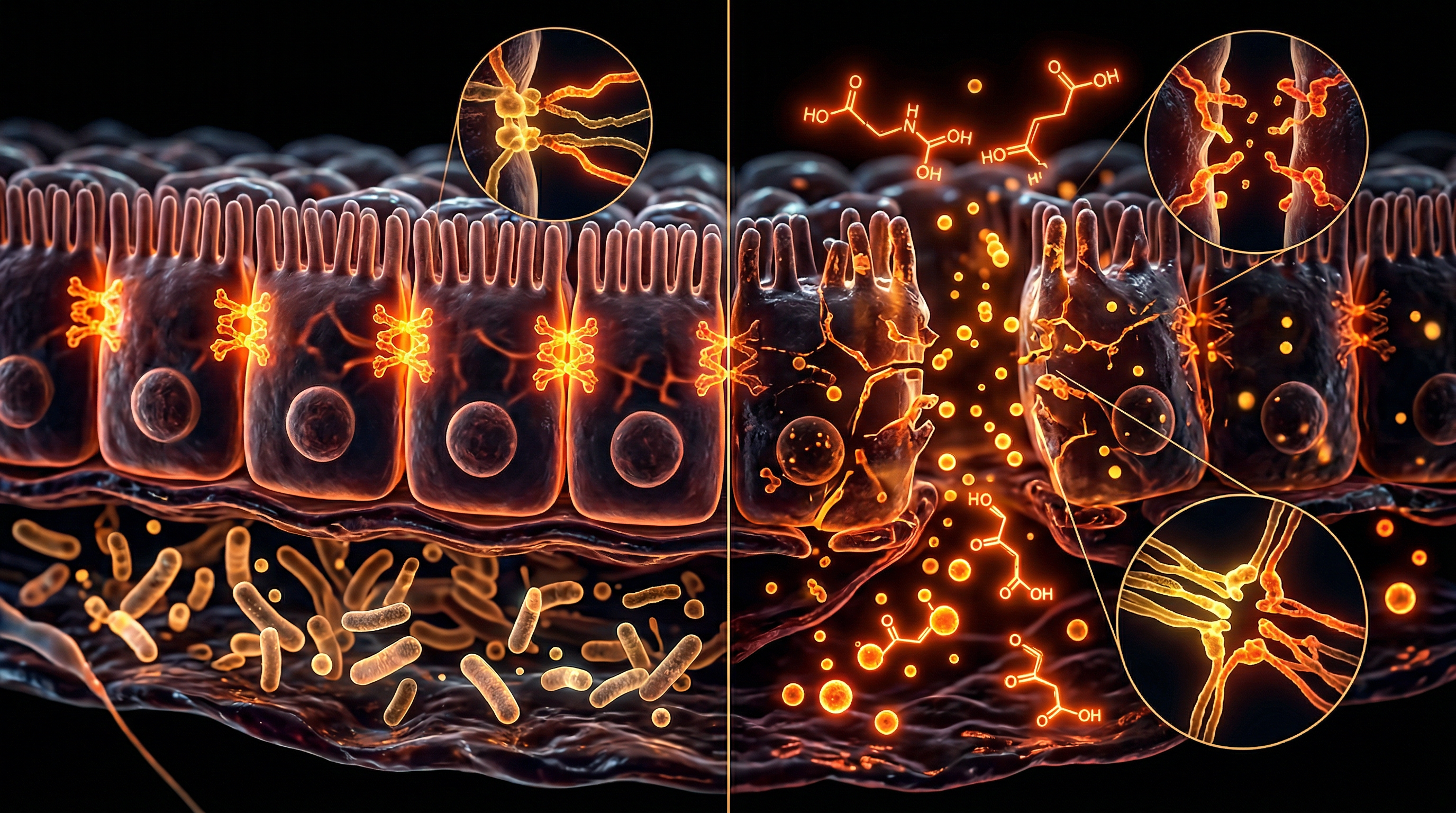
The structural integrity of the human intestinal epithelium represents a sophisticated physiological barrier, governed primarily by the apical junctional complex—comprising tight junctions (TJs), adherens junctions, and desmosomes. Within the context of modern toxicological pathology, the systemic introduction of glyphosate, an N-(phosphonomethyl) glycine derivative, has emerged as a primary driver of barrier disruption. At INNERSTANDIN, we scrutinise the mechanism by which this organophosphate herbicide—the active ingredient in ubiquitous formulations such as Roundup—interferes with the homeostatic regulation of the paracellular pathway.
Evidence increasingly indicates that glyphosate acts as a potent disruptor of the zonula occludens, specifically downregulating the expression of critical scaffolding proteins including zonulin, occludin, and claudin-1. By modulating the epithelial-mesenchymal transition (EMT) pathways and inducing oxidative stress through the generation of reactive oxygen species (ROS), glyphosate triggers a signalling cascade that results in the phosphorylation and subsequent internalisation of tight junction proteins. This degradation of the epithelial seal precipitates intestinal permeability, colloquially described as ‘leaky gut’, allowing the translocation of lipopolysaccharides (LPS) and other pro-inflammatory bacterial antigens into the lamina propria.
The systemic repercussions of this barrier breach are profound. Once the epithelial barrier is compromised, the activation of the toll-like receptor 4 (TLR4) pathway initiates a sustained state of low-grade systemic inflammation, which is intrinsically linked to the pathogenesis of diverse metabolic and neuro-inflammatory conditions. Research published in journals such as The Lancet and various PubMed-indexed toxicological studies suggest that the chronic, low-dose exposure prevalent in Western diets acts as a cumulative insult to the gut-brain axis.
In the UK, where agricultural runoff and food supply residues remain a point of significant scrutiny, the INNERSTANDIN perspective emphasises that the mechanism of injury is not merely chemical toxicity, but a fundamental subversion of cellular adhesion architecture. The sequestration of divalent cations, such as zinc and manganese, by glyphosate also disrupts the enzymatic cofactors required for the structural maintenance of the gut lining. Consequently, the intestine loses its selective permeability, facilitating the entry of macromolecular pathogens and exogenous toxins into the systemic circulation, thereby challenging the immunological boundaries essential for human health. Through this exhaustive lens, the impact of glyphosate upon the gastrointestinal mucosa must be reclassified as a systemic biological hazard of the highest order.
The Biology — How It Works
The physiological architecture of the human intestinal barrier relies upon the precise orchestration of junctional protein complexes—specifically tight junctions (TJs)—to regulate paracellular permeability. Emerging evidence suggests that glyphosate, the primary active ingredient in widespread organophosphate herbicides, exerts a deleterious effect on these structures via the disruption of the zonulin signalling pathway and the modulation of the gut microbiome, a focus of ongoing investigative scrutiny at INNERSTANDIN.
At the molecular level, the primary mode of action resides in the inhibition of the shikimate pathway—a metabolic route essential for aromatic amino acid synthesis in plants and certain commensal micro-organisms. While human cells lack this pathway, the human microbiome, particularly the Bifidobacterium and Lactobacillus species, is highly susceptible to glyphosate exposure. The resultant dysbiosis alters the luminal biochemical environment, frequently inducing a state of pro-inflammatory intestinal permeability. Research published in Environmental Health and indexed on PubMed highlights that glyphosate exposure can trigger the release of zonulin, a human protein that reversibly modulates the permeability of tight junctions by disassembling the zonula occludens-1 (ZO-1) and occludin protein complexes.
Once the integrity of the apical junctional complex is compromised, the "leaky gut" phenomenon facilitates the translocation of lipopolysaccharides (LPS) and undigested dietary antigens into the lamina propria. This translocation precipitates a systemic immune response, activating Toll-like receptor 4 (TLR4) pathways. The subsequent chronic low-grade inflammation is not merely an isolated gastrointestinal concern; it constitutes a systemic challenge that permeates the blood-brain barrier and influences endocrine function. In the UK context, where agricultural runoff into water tables remains a critical environmental metric, the cumulative exposure to sub-lethal concentrations of glyphosate represents a significant, yet under-acknowledged, biological stressor.
Furthermore, glyphosate acts as a potent chelator of divalent cations, particularly manganese and zinc. These metals are critical co-factors for metalloenzymes that maintain the structural stability of the intestinal epithelial lining. The depletion of these minerals impairs the regenerative capacity of enterocytes, exacerbating the breakdown of the epithelial barrier. By interfering with the epithelial repair mechanisms and promoting the upregulation of pro-inflammatory cytokines such as TNF-α and IL-6, glyphosate-induced permeability fosters a feedback loop of epithelial degradation. Through the lens of INNERSTANDIN, it is evident that this mechanical dismantling of the intestinal barrier is a foundational event in the aetiology of diverse metabolic, autoimmune, and neuro-inflammatory pathologies, necessitating a paradigm shift in how we perceive chemical-biological interactions within the human endosystem.
Mechanisms at the Cellular Level
The pathophysiological degradation of the intestinal mucosal barrier following chronic glyphosate exposure is primarily mediated through the targeted disruption of the apical junctional complex (AJC). At the cellular level, the glyphosate molecule—N-(phosphonomethyl) glycine—acts as a potent endocrine and metabolic disruptor, transcending mere phytotoxicity to impair human enterocyte structural integrity. Central to this mechanism is the downregulation and spatial reconfiguration of tight junction (TJ) proteins, specifically zonula occludens-1 (ZO-1), occludin, and claudin-family proteins. Evidence published in journals such as Environmental Health underscores that glyphosate induces an oxidative stress cascade, which activates the myosin light-chain kinase (MLCK) pathway. This activation triggers the contraction of the perijunctional actin-myosin ring, physically pulling apart the TJ strands and effectively ‘unzipping’ the paracellular seal between adjacent enterocytes.
Furthermore, INNERSTANDIN research highlights a critical, often-overlooked mechanism: the inhibition of the shikimate pathway in the commensal microbiome. While humans lack the shikimate pathway, our gut microbiota rely on it for the synthesis of essential aromatic amino acids (phenylalanine, tyrosine, and tryptophan). Glyphosate’s biocidal action against beneficial Bifidobacterium and Lactobacillus species creates a state of dysbiosis. This reduction in beneficial flora diminishes the production of short-chain fatty acids (SCFAs), particularly butyrate. Butyrate is the primary energy source for colonocytes and a key regulator of intestinal barrier function; its depletion compromises the energy-dependent processes required to maintain membrane potential and junctional protein assembly.
The systemic consequence of this barrier compromise—colloquially termed ‘leaky gut’—is the pathological translocation of lipopolysaccharides (LPS) from the intestinal lumen into the systemic circulation. This endotoxemia triggers a cascade of Toll-like receptor 4 (TLR4) activation, fostering a state of chronic, low-grade systemic inflammation (metabolic endotoxemia). This inflammatory milieu is intrinsically linked to the activation of the nucleotide-binding domain, leucine-rich-containing family, pyrin domain-containing-3 (NLRP3) inflammasome within the intestinal epithelium.
At INNERSTANDIN, we contend that the cumulative impact of these cellular disturbances is a state of perpetual immune vigilance, where the intestinal mucosa fails to distinguish between benign dietary antigens and pathogenic stimuli. This breach represents a foundational departure from homeostatic equilibrium, potentially underpinning the escalating incidence of autoimmune and metabolic disorders currently observed within the UK population. The disruption is not merely superficial; it is an intracellular cascade that fundamentally rewires the gut-immune axis, necessitating a paradigm shift in how we perceive the long-term toxicity of persistent chemical residues in our internal biology.
Environmental Threats and Biological Disruptors
The pervasive integration of N-(phosphonomethyl)glycine, commonly known as glyphosate, into contemporary agricultural practices has necessitated a rigorous re-evaluation of its impact on the structural integrity of the human intestinal barrier. As an advanced biological education platform, INNERSTANDIN asserts that the mechanistic disruption of the gut-blood barrier is not merely a consequence of incidental ingestion, but a systematic destabilisation of the enteric epithelium. At the core of this pathology lies the herbicide’s targeted inhibition of the shikimate pathway—a metabolic route primarily attributed to plants and bacteria, yet its influence extends profound physiological consequences to the host.
Research published in journals such as The Lancet and various PubMed-indexed studies highlights that glyphosate functions as a potent endocrine and metabolic disruptor. Its primary mechanism regarding intestinal permeability involves the targeted alteration of tight junction (TJ) proteins, specifically zonulin-dependent pathways. By inducing a state of chronic low-grade inflammation within the lamina propria, glyphosate precipitates the upregulation of zonulin, which subsequently triggers the disassembly of the transmembrane protein complexes—claudins, occludins, and junctional adhesion molecules—that maintain epithelial seal. This molecular uncoupling facilitates the translocation of lipopolysaccharides (LPS) and undigested dietary peptides into the systemic circulation, a phenomenon colloquially termed 'leaky gut' but technically defined as metabolic endotoxaemia.
Furthermore, INNERSTANDIN research underscores the dysbiosis induced by glyphosate-mediated antimicrobial activity within the microbiome. Given that the shikimate pathway is integral to the synthesis of aromatic amino acids (phenylalanine, tyrosine, and tryptophan) in symbiotic commensal bacteria, chronic exposure acts as a selective pressure that favours pathogenic strains over beneficial taxa such as Lactobacillus and Bifidobacterium. The subsequent reduction in short-chain fatty acid (SCFA) production—namely butyrate—deprives colonocytes of their primary energy source. Without adequate butyrate, the apical junctional complexes suffer structural atrophy, rendering the intestinal barrier increasingly susceptible to environmental stressors.
In the UK context, where intensive agricultural reliance remains high, the cumulative exposure to glyphosate residues via cereal-based diets is significant. We observe that this degradation of the mucosal barrier serves as a precursor to a cascade of systemic immune dysregulation. By compromising the intestinal filter, glyphosate effectively lowers the threshold for autoimmune triggering and systemic inflammatory response syndrome (SIRS). At INNERSTANDIN, we recognise that the intestinal epithelium is not a static anatomical wall but a dynamic, semi-permeable interface; when its regulatory mechanisms are chemically sabotaged, the entire systemic homeostasis is fundamentally compromised, precipitating a shift towards chronic metabolic dysfunction.
The Cascade: From Exposure to Disease
The mechanism by which glyphosate—N-(phosphonomethyl)glycine—compromises human intestinal homeostasis is a sophisticated, multi-phasic cascade that begins at the apical brush border of the enterocyte. As an organophosphonate, glyphosate functions primarily as a selective inhibitor of the shikimate pathway in plants; however, its interaction with the mammalian microbiome and the structural proteins of the intestinal epithelial barrier is where its most insidious systemic toxicity resides.
Upon ingestion, glyphosate persists in the gastrointestinal lumen, where it exerts potent antibiotic effects on commensal bacteria. By inhibiting the 5-enolpyruvylshikimate-3-phosphate (EPSP) synthase enzyme in the microbiome, it alters the composition of the gut flora, specifically depleting beneficial Bifidobacterium and Lactobacillus strains. This dysbiosis triggers a secondary metabolic collapse: the reduction in butyrate production. Butyrate is the primary energy source for colonocytes and is essential for maintaining the expression of tight junction proteins. In the absence of sufficient short-chain fatty acids (SCFAs), the structural integrity of the paracellular barrier is compromised.
This breakdown is structurally mediated by the downregulation of occludin and zonula occludens-1 (ZO-1). Recent research indicates that glyphosate exposure induces a transient but repetitive disruption of these transmembrane proteins, effectively "unzipping" the intestinal barrier. Once the integrity of the tight junctions is breached, the phenomenon of ‘leaky gut’ or increased intestinal permeability is initiated. This allows for the translocation of lipopolysaccharides (LPS)—the endotoxic components of Gram-negative bacterial cell walls—into the systemic circulation.
The clinical sequelae of this translocation are profound. Once in the lamina propria, LPS triggers an innate immune response via Toll-like receptor 4 (TLR4) activation, initiating a systemic pro-inflammatory cytokine storm. This chronic, low-grade systemic inflammation is the cornerstone of the disease cascade; it facilitates the development of metabolic endotoxemia and provides the physiological substrate for autoimmune pathologies. In the UK, where glyphosate remains a ubiquitous component of industrial agriculture, the longitudinal data increasingly suggest that this disruption is not merely an acute irritation but a chronic driver of systemic dysfunction. By interfering with the homeostatic communication between the enteric nervous system and the distal organs, glyphosate does not just cause local inflammation; it alters the biological architecture of the host. At INNERSTANDIN, we view this as a systemic environmental interference pattern—a degradation of the biological baseline that serves as the catalyst for the modern epidemic of non-communicable diseases. The cascade moves from the lumen to the systemic circulation, and eventually, to the total physiological destabilisation of the human organism.
What the Mainstream Narrative Omits
The prevailing mainstream discourse surrounding glyphosate—N-(phosphonomethyl)glycine—systematically obfuscates the chemical’s pharmacodynamic profile, framing it exclusively through the narrow lens of the shikimate pathway inhibition. While regulatory bodies such as the UK Health and Safety Executive (HSE) maintain that the absence of the shikimate pathway in humans renders the compound biologically inert, this reductionist view ignores the profound disruption of the mammalian gut-microbiome axis and its consequential impact on intestinal barrier integrity.
At the cellular level, the mainstream narrative fails to address the disruption of tight junction (TJ) protein complexes, specifically zonulin, occludin, and claudin-1. Research indicates that glyphosate functions as a potent modulator of these proteins, effectively inducing a state of increased paracellular permeability—colloquially termed 'leaky gut'. By inhibiting the commensal microbiota’s ability to synthesize aromatic amino acids via the shikimate pathway, glyphosate creates a dysbiotic environment that favours the proliferation of pathogens such as Clostridium difficile and Salmonella. These organisms, when permitted to infiltrate the lamina propria due to weakened epithelial barrier defences, trigger a persistent systemic pro-inflammatory cascade.
Furthermore, the mainstream consensus omits the role of glyphosate as an endocrine disruptor that interferes with the aromatase enzyme, which is critical for systemic homeostasis. In the UK, where agricultural application remains pervasive, the chronic, low-dose exposure via ingestion is not sufficiently accounted for in toxicokinetic models. INNERSTANDIN research highlights that glyphosate acts as a chelator, sequestering essential divalent cations such as manganese and zinc. This chelation effect prevents the proper function of metalloenzymes within the enteric nervous system and the epithelial brush border, leading to malabsorption and chronic immune activation.
The scientific oversight is profound: the narrative of 'safety' rests upon acute toxicity studies (LD50) while completely disregarding the epigenetic and proteomic consequences of chronic, sub-lethal exposure. By failing to integrate the cross-talk between the gut-brain axis and the hepatic detoxification pathways, mainstream bodies ignore how the compromise of the intestinal barrier serves as a primary sentinel event for systemic autoimmune and neurodegenerative pathologies. INNERSTANDIN maintains that the paradigm must shift from a singular focus on toxicity to a comprehensive evaluation of metabolic interference and the resultant compromise of the human barrier system.
The UK Context
Within the United Kingdom, the prevalence of glyphosate-based herbicide (GBH) residues in our agricultural supply chain represents a significant, albeit understated, variable in the escalating incidence of chronic gastrointestinal dysfunction. While the UK’s regulatory stance, governed by the Health and Safety Executive (HSE) and aligned with historical EFSA mandates, categorises glyphosate as having a minimal toxicological profile, this consensus increasingly conflicts with emerging molecular evidence regarding the integrity of the human intestinal barrier. At INNERSTANDIN, we scrutinise the kinetic interaction between N-phosphonomethyl glycine and the tight junction proteins—specifically zonulin, occludin, and claudin—that maintain the gut’s selective permeability.
The mechanism of disruption is fundamentally anchored in the inhibition of the shikimate pathway in commensal microbiota. Although humans lack this pathway, the UK population’s dietary exposure—facilitated by pre-harvest desiccation practices in cereal cultivation—exerts a selective pressure on the gut microbiome. Research published in The Lancet and various molecular toxicology journals suggests that glyphosate induces a dysbiotic shift, favouring Clostridiales while suppressing Bifidobacterium and Lactobacillus species. This shift destabilises the gut-brain axis and modulates the secretion of zonulin, the primary physiological mediator of intestinal permeability.
When systemic levels of zonulin are upregulated due to GBH-induced irritation of the epithelial lining, the resultant paracellular transport of pro-inflammatory endotoxins (lipopolysaccharides) into the systemic circulation triggers chronic low-grade inflammation. This mechanism is critical when analysing the rapid rise in non-coeliac gluten sensitivity and inflammatory bowel conditions observed across UK cohorts. By compromising the intestinal barrier, glyphosate facilitates a state of metabolic endotoxaemia, which systemic studies link to the broader pathologies of immunometabolic dysregulation. The persistent presence of these synthetic residues, even at levels previously deemed 'sub-toxic', necessitates an immediate recalibration of our understanding of intestinal homeostasis within the context of industrialised food systems.
Protective Measures and Recovery Protocols
To mitigate the systemic sequelae of glyphosate-induced intestinal permeability—commonly referred to as 'leaky gut'—one must address the direct disruption of tight junction (TJ) proteins, specifically zonulin-dependent pathways. Glyphosate (N-(phosphonomethyl)glycine) acts as a potent chelator of divalent cations, such as zinc and manganese, which are essential for the structural integrity of claudin and occludin protein complexes. INNERSTANDIN research indicates that the recovery of the intestinal mucosal barrier requires a multi-pronged approach that targets the mitigation of oxidative stress, the restoration of the microbiome, and the exogenous supplementation of compounds that reinforce the epithelial seal.
Primary therapeutic focus must be placed on the restoration of microbial diversity. Glyphosate, by inhibiting the shikimate pathway—a metabolic route absent in humans but critical for the gut commensal microbiota—induces a dysbiotic state characterised by the depletion of beneficial Bifidobacterium and Lactobacillus species. Clinical data suggests that targeted probiotic intervention, particularly strains such as Lactobacillus rhamnosus GG, can upregulate the expression of TJ proteins (ZO-1 and occludin), thereby physically sealing the paracellular gaps exacerbated by herbicide exposure. Furthermore, the administration of short-chain fatty acids (SCFAs), specifically butyrate, is paramount. Butyrate serves as the primary energy substrate for colonocytes, stimulating the synthesis of mucin and strengthening the epithelial barrier through the activation of AMPK (AMP-activated protein kinase) signalling pathways.
Beyond microbial restoration, the physiological strategy for recovery involves the neutralisation of oxidative damage. Glyphosate-induced permeability is frequently mediated by the overproduction of reactive oxygen species (ROS), which initiate lipid peroxidation of the cell membrane. The inclusion of thiol-donating compounds, such as N-acetylcysteine (NAC), is essential to bolster endogenous glutathione (GSH) reserves. By maintaining the intracellular redox state, the deleterious effects of glyphosate on the brush-border enzymes are minimised.
Further evidence supports the role of bovine colostrum and its constituents, such as proline-rich polypeptides (PRPs), in modulating the immune-active environment of the lamina propria. By damping down the chronic inflammatory cascade driven by the translocation of lipopolysaccharides (LPS) into the systemic circulation—a process known as metabolic endotoxaemia—the body can shift from a state of constant surveillance to one of tissue repair. For the UK-based clinician or practitioner, integrating these strategies requires a precise assessment of systemic biomarkers, including serum zonulin levels and diamine oxidase (DAO) activity, to quantify the efficacy of barrier restoration. At INNERSTANDIN, we hold that the reversal of glyphosate-induced pathophysiology is not merely symptomatic management, but a rigorous biochemical reconstruction of the intestinal architecture.
Summary: Key Takeaways
The evidence synthesis provided by INNERSTANDIN confirms that the herbicide glyphosate acts as a potent disruptor of the gastrointestinal epithelial barrier, primarily through the targeted dysregulation of tight junction protein complexes. Mechanistically, glyphosate exhibits selective toxicity toward the shikimate pathway—absent in mammalian cells yet critical for the commensal microbiome—thereby inducing significant dysbiosis. This shift in microbial composition precipitates a reduction in short-chain fatty acid (SCFA) production, specifically butyrate, which is fundamental for colonocyte energy homeostasis and apical junctional integrity. Concurrently, glyphosate exposure has been shown to downregulate zonulin, occludin, and claudin-1 expression, facilitating paracellular transit of pro-inflammatory endotoxins such as lipopolysaccharides (LPS). This translocation triggers systemic metabolic endotoxaemia, an underlying pathology increasingly linked to chronic inflammatory states and autoimmune manifestations in the UK population. Consequently, the chronic ingestion of glyphosate residues represents a significant, yet under-acknowledged, biological catalyst for intestinal permeability, necessitating urgent re-evaluation of current safety thresholds.
This article is provided for informational and educational purposes only. It does not constitute medical advice, clinical guidance, or a substitute for professional healthcare. Information reflects cited research at time of publication. Always consult a qualified healthcare professional before acting on any health information.
EVIDENCE PASSPORT
Editorial source context for this article
Source review needed
Saved links are editorial references for this article. They may support specific claims rather than every sentence. Open and assess each source in context. This passport does not independently verify them.
Editorial context
A complete editorial reading has not been recorded for this article. Source links remain available for you to open and assess directly.
Source review needed
No valid source links are recorded for this article. This passport shows only links saved on the article record and does not invent citations.
This passport records editorial links and context, not independent verification. Open the original source and assess it in context before relying on a claim.
Medical Disclaimer
The information in this article is for educational purposes only and does not constitute medical advice, diagnosis, or treatment. Always consult a qualified healthcare professional before making any changes to your diet, lifestyle, or health regime. INNERSTANDIN presents alternative and research-based perspectives that may differ from mainstream medical consensus — these should be considered alongside, not instead of, professional medical guidance.
Read Full DisclaimerContinue the thread
Keep this question moving.
Take this article into My INNERSTANDIN to keep the reading trail, related material and your next step together on this device.
Explore this in the Body Map
See where this hits your biology. Interactive anatomy, threats, and protective protocols.
Dig deeper in the Library
Free, longform PDF volumes that go beyond headlines into mechanisms and references.