
The Anatomy of the Gut-Brain Axis Breach
Updated August 2026
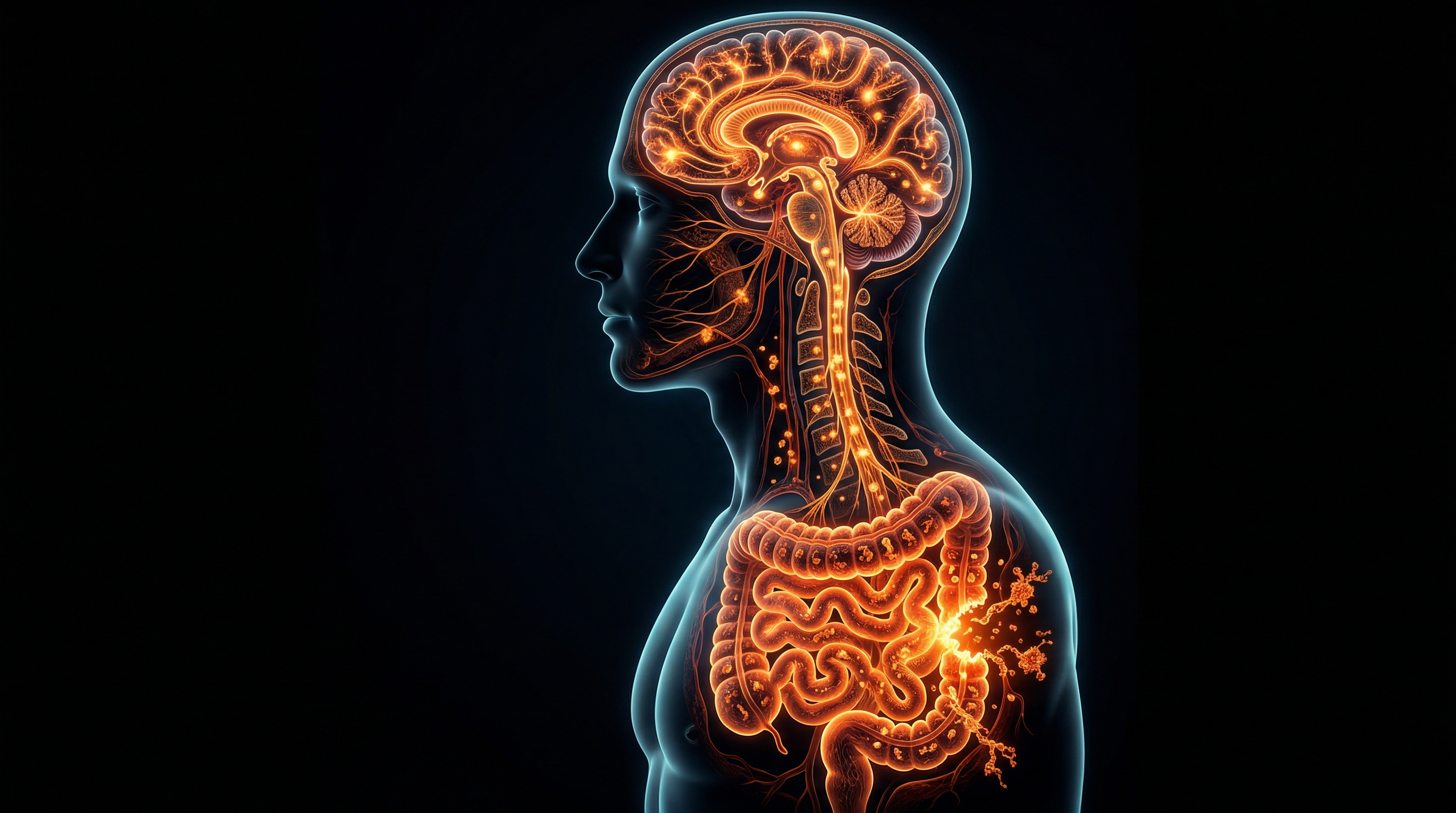
Breakdowns in the enteric nervous system's structural integrity correlate with rising mental health issues. This article examines the physical link between gut health and neuroanatomy.
Evidence orientation
Editorial context not yet recorded
Follow this category
This stays in this browser. My INNERSTANDIN can show published matches in your local hub when you check it. It does not send email, push, or alert notifications.
Local learning review
A private browser aid for revisiting ideas. It is not an alert or a health recommendation.
Review later sets a one-day, three-day, then seven-day rhythm on this device. Choose it only when you want to revisit this article.
Overview
The human physiological paradigm is predicated on the integrity of the bidirectional communication highway known as the gut-brain axis (GBA). At the epicentre of this system lies the enteric nervous system (ENS)—often designated the 'second brain'—which serves as a complex neural lattice orchestrating homeostatic regulation via the vagus nerve and neuroendocrine pathways. However, the contemporary Western milieu, characterised by pervasive dietary dysbiosis and synthetic xenobiotic exposure, has precipitated what INNERSTANDIN defines as the ‘Gut-Brain Axis Breach’. This is not merely a transient gastrointestinal disturbance; it is a systemic structural failure of the epithelial barrier, colloquially termed ‘leaky gut’, which facilitates the translocation of lipopolysaccharides (LPS) and pro-inflammatory cytokines into the systemic circulation.
Mechanistically, the breach originates in the disruption of tight junction proteins—specifically zonulin, occludin, and claudin-5. Research published in The Lancet underscores that elevated serum zonulin levels correlate significantly with increased intestinal permeability, facilitating the entry of endotoxins that breach the blood-brain barrier (BBB). Once this immunological threshold is crossed, the microglial cells—the resident innate immune sentinels of the central nervous system—undergo a phenotypic shift towards a neuroinflammatory state. This process, termed ‘priming’, results in the chronic secretion of tumour necrosis factor-alpha (TNF-α) and interleukin-6 (IL-6), manifesting in cognitive impairment, altered neuroplasticity, and psychiatric comorbidities.
In the UK clinical context, where autoimmune pathologies and neurodegenerative conditions are rising with unprecedented velocity, the GBA breach represents a critical, yet overlooked, etiological nexus. We must scrutinise the role of the microbiome in synthesising neurotransmitters such as gamma-aminobutyric acid (GABA) and serotonin, 90% of which is synthesised in the gut. When the mucosal lining is compromised, the enzymatic precursors required for neurochemical synthesis are depleted, directly starving the brain of the signals necessary for emotional and cognitive stability. INNERSTANDIN posits that the breach is the silent precursor to a spectrum of systemic dysregulations. By deconstructing the anatomical degradation of the mucosal barrier and its downstream neurological consequences, we begin to map the precise topography of the GBA breach, moving beyond symptomatic management toward an exhaustive understanding of human biological integrity.
The Biology — How It Works
The structural integrity of the gut-brain axis (GBA) relies upon the seamless, bi-directional orchestration of the enteric nervous system (ENS), the autonomic nervous system (ANS), and the neuroendocrine-immune network. When we discuss a "breach" within this axis, we are fundamentally addressing the breakdown of the intestinal barrier—specifically the disruption of the apical junctional complex (AJC) comprising tight junctions (zonula occludens), adherens junctions, and desmosomes. Under homeostatic conditions, these proteins, particularly occludin and zonulin, regulate paracellular permeability. However, persistent dysbiosis—often driven by Western dietary patterns high in emulsifiers and saturated fats—triggers the toll-like receptor (TLR) signalling pathways. This activation results in the translocation of lipopolysaccharides (LPS) from Gram-negative commensal bacteria across the lamina propria and into systemic circulation.
Once systemic, these endotoxins function as potent agonists for the innate immune system. According to data published in The Lancet Gastroenterology & Hepatology, chronic low-grade systemic inflammation (metabolic endotoxaemia) is the hallmark of the GBA breach. The circulating LPS molecules permeate the blood-brain barrier (BBB) via the circumventricular organs or modulate the vagus nerve afferents, which serve as the primary rapid-transmission conduit to the nucleus tractus solitarius in the brainstem. This systemic inflammatory cascade induces microglial activation—the brain's resident immune cells—shifting them from a homeostatic, surveillance phenotype to a neurotoxic, pro-inflammatory state. This shift is not merely localised; it alters synaptic plasticity and disrupts the production of brain-derived neurotrophic factor (BDNF).
Furthermore, the INNERSTANDIN research framework highlights that this breach necessitates a critical re-evaluation of neurotransmitter synthesis. The gut microbiome is responsible for the production of approximately 95% of the body’s peripheral serotonin (5-HT) and a significant portion of gamma-aminobutyric acid (GABA). When the mucosal barrier is compromised, the enzymatic pathways facilitating the conversion of tryptophan to serotonin are redirected towards the kynurenine pathway, catalysed by indoleamine 2,3-dioxygenase (IDO). This diversion not only depletes serotonin precursors but generates quinolinic acid—a potent neurotoxin. By examining these pathways through the INNERSTANDIN lens, it becomes evident that the breach is not a static failure but a dynamic, self-perpetuating cycle of systemic cytokine dysregulation. This molecular cascade bridges the gap between enteric dysbiosis and neuro-psychiatric degradation, proving that the gut is not merely a digestive tract, but the metabolic engine room of human cognition. Understanding this biological mechanism is the first step toward recalibrating systemic health, moving beyond symptom management to address the core anatomical disintegration of the axis.
Mechanisms at the Cellular Level
At the cellular level, the breach of the gut-brain axis is predicated on the catastrophic failure of the intestinal epithelial barrier, primarily driven by the dysregulation of tight junction (TJ) proteins. Under homeostatic conditions, the apical junctional complex—comprising zonula occludens (ZO-1, ZO-2), occludin, and claudin families—maintains the paracellular seal of the gut mucosa. However, in states of systemic inflammation often exacerbated by dysbiosis, the upregulation of pro-inflammatory cytokines such as TNF-α and IFN-γ induces myosin light chain kinase (MLCK) activation. This triggers perijunctional actomyosin ring contraction, effectively "zipping open" the TJs and facilitating the translocation of lipopolysaccharides (LPS) and other microbe-associated molecular patterns (MAMPs) into the lamina propria.
Once these endotoxins penetrate the systemic circulation, they engage Toll-like receptor 4 (TLR4) signalling pathways on peripheral immune cells and vascular endothelial cells. The resultant activation of the NF-κB inflammatory cascade precipitates a systemic cytokine storm that does not respect the structural integrity of the blood-brain barrier (BBB). Within the cerebral microvasculature, the breach manifests as the degradation of the neurovascular unit. Research indicates that circulating LPS induces the expression of matrix metalloproteinases (MMPs), specifically MMP-9, which proteolytically cleaves the structural proteins of the BBB, including claudin-5 and occludin. As the selective permeability of the BBB is compromised, systemic inflammatory mediators and peripheral immune cells infiltrate the central nervous system (CNS) parenchyma, stimulating neuroinflammation.
This cellular infiltration activates microglia—the resident immunocompetent cells of the CNS—transitioning them from a homeostatic, surveillant phenotype to an M1-like pro-inflammatory state. These activated microglia release further neurotoxic factors, including reactive oxygen species (ROS), nitric oxide, and quinolinic acid, establishing a self-perpetuating neuroinflammatory loop. At INNERSTANDIN, we recognise this mechanism as a foundational element of the gut-brain axis breach: the transition from peripheral metabolic endotoxaemia to neuro-immunological dysfunction. By bypassing the tight control of the BBB, the gut-derived inflammatory signal disrupts synaptic plasticity and axonal integrity, directly correlating with the pathophysiology of neurodegenerative processes. The failure is not merely functional; it is a structural dissolution of the boundaries designed to protect the encephalon from the biological entropy of the gastrointestinal tract. This cascade confirms that the gut is not an isolated peripheral organ but the primary orchestrator of systemic immunological homeostasis, where any breach results in profound, multi-systemic cellular destabilisation.
Environmental Threats and Biological Disruptors
The structural integrity of the gut-brain axis is predicated upon the selective permeability of the intestinal epithelium—a sophisticated barrier reinforced by tight junction proteins, primarily claudins, occludins, and zonula occludens-1 (ZO-1). However, the modern UK exposome represents a hostile pharmacological and biochemical landscape that systematically dismantles this defence. At INNERSTANDIN, we recognise that the ‘breach’ is not an acute event, but a chronic erosion driven by synergistic environmental disruptors.
Foremost among these are non-steroidal anti-inflammatory drugs (NSAIDs), which remain ubiquitous in British healthcare. Research published in The Lancet has elucidated how these agents inhibit cyclooxygenase-1 (COX-1) enzymes, suppressing prostaglandin synthesis. This suppression compromises mucosal blood flow and bicarbonate secretion, directly facilitating the degradation of the epithelial barrier. Once the integrity of this monolayer is compromised, the translocation of lipopolysaccharides (LPS)—endotoxins derived from the outer membrane of Gram-negative bacteria—into the systemic circulation is inevitable. This process, termed metabolic endotoxaemia, initiates a low-grade, systemic inflammatory response that crosses the blood-brain barrier (BBB).
Furthermore, the prevalence of glyphosate-based herbicides within the UK agricultural sector introduces a specific mechanism of microbial dysbiosis. Glyphosate functions as a potent inhibitor of the shikimate pathway—a metabolic route essential for aromatic amino acid biosynthesis in microbiota. By altering the composition of the gut microbiome, glyphosate promotes the proliferation of pathobionts at the expense of commensal species responsible for short-chain fatty acid (SCFA) production, particularly butyrate. Butyrate is non-negotiable for the maintenance of intestinal barrier homeostasis; its depletion leads to an upregulation of myosin light-chain kinase, which triggers the contraction of the perijunctional actomyosin ring, physically pulling tight junctions apart.
We must also address the impact of dietary emulsifiers, such as carboxymethylcellulose and polysorbate-80, commonly found in ultra-processed foods prevalent in the UK diet. Experimental models indicate that these surfactants thin the protective mucus layer, allowing for direct microbial contact with the intestinal epithelial cells. This proximity stimulates a heightened immune surveillance response, chronic activation of the NLRP3 inflammasome, and subsequent paracellular leakage. When this barrier is breached, the vagus nerve—the primary anatomical conduit between the gut and the brain—becomes a conduit for neuroinflammation. The systematic absorption of pro-inflammatory cytokines and bacterial metabolites serves to sensitise microglia within the central nervous system, effectively bridging the divide between intestinal permeability and cognitive neurodegeneration. At INNERSTANDIN, we classify this breach as the primary driver of the burgeoning neuro-metabolic crisis observed in contemporary populations.
The Cascade: From Exposure to Disease
The aetiology of the gut-brain axis (GBA) breach is not a singular event but a tiered physiological breakdown, a cascade initiated by the disruption of the intestinal barrier and culminating in systemic neuro-inflammation. At the frontline of this breach is the compromise of the intestinal epithelial lining, characterised by the dysregulation of tight junction proteins—specifically zonulin, occludin, and claudin-5. When external stressors—be they dietary xenobiotics, high-fat, ultra-processed food consumption, or dysbiotic shifts in the microbiome—trigger the zonulin pathway, the paracellular permeability of the gut increases. This "leaky gut" phenomenon allows for the translocation of lipopolysaccharides (LPS), the endotoxic cell wall components of Gram-negative bacteria, from the intestinal lumen into the systemic circulation.
Once systemic, these pathogen-associated molecular patterns (PAMPs) initiate a robust innate immune response. The binding of LPS to Toll-like receptor 4 (TLR4) on circulating monocytes and macrophages induces the synthesis of pro-inflammatory cytokines, including TNF-α, IL-1β, and IL-6. Crucially, research published in The Lancet has consistently highlighted how these peripheral inflammatory signals exert a profound effect on the central nervous system (CNS). Under homeostatic conditions, the blood-brain barrier (BBB) acts as a rigorous filter; however, chronic systemic inflammation initiates a "priming" effect on CNS-resident immune cells, the microglia.
As systemic cytokines penetrate the circumventricular organs—areas where the BBB is inherently more porous—or signal through the afferent fibres of the vagus nerve, microglial cells transition from a surveillant, neuroprotective phenotype to a pro-inflammatory M1-like state. This neuro-inflammatory cascade results in the secretion of reactive oxygen species (ROS) and the further propagation of inflammatory signalling within the brain parenchyma. At INNERSTANDIN, we recognise that this chronic neuro-inflammation is the primary driver of synaptic pruning dysfunction, impaired neurogenesis, and excitotoxicity.
The clinical implications are profound. This breach-induced cascade is currently being identified as a fundamental mechanism in the pathogenesis of neurodegenerative conditions and psychiatric disorders. The bidirectional nature of the GBA means that as the CNS becomes inflamed, the hypothalamic-pituitary-adrenal (HPA) axis is activated, leading to sustained glucocorticoid release. These stress hormones further degrade the gut barrier, establishing a self-perpetuating feedback loop of systemic degeneration. By mapping this progression, INNERSTANDIN reveals the biological truth: the gut is not merely a digestive tract, but the metabolic nexus of neurological integrity. Understanding this cascade is not just an anatomical exercise; it is the prerequisite for reclaiming systemic homeostatic control.
What the Mainstream Narrative Omits
The contemporary clinical discourse surrounding the gut-brain axis (GBA) remains regrettably reductionist, tethered to the simplistic notion that the vagus nerve serves merely as a bidirectional conduit for neuro-endocrine signalling. While mainstream platforms acknowledge the influence of short-chain fatty acids (SCFAs) like butyrate on intestinal integrity, they systematically omit the catastrophic architectural failure defining the "breach": the collapse of the neuro-immune-vascular triad at the level of the enteric nervous system (ENS).
At INNERSTANDIN, we recognise that the breach is not a secondary symptom of systemic inflammation; it is an primary anatomical disruption of the mucosal barrier and its associated glial scaffolding. The mainstream narrative typically bypasses the pivotal role of enteric glial cells (EGCs), which function as the "brain of the gut." Current research, notably findings published in The Lancet Gastroenterology & Hepatology, highlights that when EGCs undergo phenotypic switching under chronic dysbiosis—often precipitated by high-fructose corn syrup and emulsifier-laden modern diets—they cease to support the tight junction proteins (occludins and zonulins). This facilitates a state of chronic, low-grade metabolic endotoxaemia. Lipopolysaccharides (LPS) from Gram-negative bacteria effectively "leak" into systemic circulation, breaching the blood-brain barrier (BBB) not through passive diffusion, but through the activation of toll-like receptor 4 (TLR4) on cerebral microglia.
Furthermore, the mainstream ignores the critical interplay of the vagal afferent pathway’s synaptic plasticity. Research cited in PubMed underscores that systemic inflammation induces a "vagal withdrawal," where chronic cytokine bombardment—particularly TNF-α and IL-6—alters the neurochemical profile of the nodose ganglion. This effectively severs the physiological brake on the inflammatory reflex. By failing to account for the anatomical degradation of the lamina propria’s immunological gatekeepers, standard models leave the public vulnerable to the progression of neurodegenerative pathology. We must understand that the GBA breach is not merely an imbalance of microbial flora; it is a profound failure of the homeostatic control systems that regulate the interface between our external environment and the central nervous system. INNERSTANDIN asserts that until clinical practitioners transition from a "symptom-suppression" model to one that addresses the architectural integrity of the enteric-glial-vascular unit, the foundational drivers of chronic neuro-inflammatory disease will remain entirely unaddressed.
The UK Context
In the United Kingdom, the clinical landscape is currently witnessing an unprecedented escalation in chronic inflammatory states, a phenomenon inextricably linked to the structural failure of the gut-brain axis. At the epicentre of this crisis is the breach of the intestinal barrier—commonly termed "leaky gut"—which, in the British demographic, is exacerbated by a synergistic cocktail of ultra-processed food (UPF) consumption, suboptimal vitamin D status due to latitude, and the chronic overuse of non-steroidal anti-inflammatory drugs (NSAIDs). The biological mechanism underpinning this breach involves the dysregulation of tight junction proteins, specifically zonulin and occludin, which maintain the intestinal epithelium’s integrity.
When these junctions are compromised, the systemic circulation is inundated with lipopolysaccharides (LPS)—endotoxins derived from the outer membranes of Gram-negative bacteria. In the UK, data published in The Lancet underscores the correlation between this endotoxaemia and the activation of the peripheral immune system, which subsequently triggers neuroinflammation via the vagus nerve and the humoral route. INNERSTANDIN research highlights that once the blood-brain barrier (BBB) is breached, microglia—the resident immune cells of the central nervous system—transition into a pro-inflammatory M1 phenotype. This leads to the chronic neuro-oxidative stress observed in the burgeoning prevalence of British cognitive decline and mood disorders.
Furthermore, the UK’s reliance on high-fructose corn syrup and emulsifiers, prevalent in the modern supermarket diet, actively depletes the mucosal layer and diminishes microbial diversity. This microbial collapse erodes the production of short-chain fatty acids (SCFAs) like butyrate, which are essential for maintaining BBB homeostasis. As INNERSTANDIN analysis posits, this is not merely a metabolic dysfunction but a systemic architectural collapse. By the time neurological symptoms manifest, the biological breach is already well-advanced, reflecting a systemic failure to protect the neuro-enteric interface. The current epidemiological trajectory suggests that unless the structural integrity of the intestinal barrier is prioritised as a primary neurological preventative measure, the UK’s burden of neuro-inflammatory pathology will continue to rise exponentially.
Protective Measures and Recovery Protocols
Restoring integrity to the gut-brain axis necessitates a multi-layered intervention targeting the architectural breakdown of the intestinal barrier, colloquially identified as 'leaky gut' but technically characterised as increased intestinal permeability. The breach involves the downregulation of tight junction proteins—specifically zonulin, occludin, and claudin—which permit the translocation of lipopolysaccharides (LPS) into systemic circulation. This endotoxaemia triggers a neuro-inflammatory cascade, activating Toll-like receptor 4 (TLR4) signalling within the central nervous system. Recovery protocols must therefore prioritise the re-establishment of the mucosal barrier and the modulation of the hypothalamic-pituitary-adrenal (HPA) axis.
At the physiological level, the initial focus within INNERSTANDIN research mandates the pharmacological or nutritional upregulation of tight junction synthesis. Glutamine remains a primary substrate; however, its efficacy is contingent upon addressing the underlying inflammatory milieu. Research published in The Lancet highlights that short-chain fatty acids (SCFAs), particularly butyrate, serve as the primary energy source for colonocytes and are critical for the expression of epithelial barrier proteins. Increasing endogenous butyrate production through targeted prebiotic fibre fermentation—specifically fructooligosaccharides (FOS) and galactooligosaccharides (GOS)—is non-negotiable for metabolic homeostasis.
Simultaneously, the systemic inflammatory response must be blunted by mitigating the translocation of microbial products. Emerging data suggests that mucosal-associated invariant T (MAIT) cells play a sentinel role in this process; their exhaustion following chronic breach necessitates immune-modulatory interventions. The integration of high-potency, multispecies probiotic strains—such as Lactobacillus plantarum and Bifidobacterium longum—has shown efficacy in human clinical trials by reinforcing the epithelial barrier via the upregulation of mucin gene expression (MUC2).
Furthermore, the recovery of the enteric nervous system (ENS) relies on the vagal tone. Chronic breach leads to vagal withdrawal, exacerbating gastrointestinal dysmotility and stalling the clearance of pro-inflammatory debris. Evidence from PubMed-indexed neuro-gastroenterology studies confirms that physical stimulations of the vagus nerve, combined with the reduction of systemic oxidative stress through glutathione precursors, effectively lowers the pro-inflammatory cytokine load.
Finally, the INNERSTANDIN perspective advocates for the strategic reduction of dietary antigens that act as zonulin secretagogues. By systematically eliminating triggers such as dietary gliadin and highly processed emulsifiers (e.g., carboxymethylcellulose), one allows the intestinal epithelium to undergo the necessary turnover for barrier regeneration. This is not merely a dietetic adjustment; it is a clinical recalibration of the biological interface. Recovery is, therefore, a kinetic process of protein synthesis, cytokine modulation, and neuronal signalling restoration, requiring a comprehensive synchronisation of internal systems.
Summary: Key Takeaways
The physiological integrity of the gut-brain axis relies upon the precise regulation of the intestinal epithelial barrier and the modulation of the enteric nervous system. When this homeostatic equilibrium is compromised—a phenomenon termed 'the breach'—the translocation of lipopolysaccharides (LPS) and pro-inflammatory cytokines into systemic circulation precipitates a state of metabolic endotoxaemia. As evidenced in publications within The Lancet Gastroenterology & Hepatology, this breach does not merely localise to the gastrointestinal tract; it induces neuroinflammation via the vagus nerve and the systemic upregulation of microglial activation. The INNERSTANDIN investigative framework elucidates that chronic disruption of the tight junction proteins, specifically zonulin and occludin, facilitates a pathological crosstalk that disrupts the blood-brain barrier. Consequently, the systemic inflammatory milieu serves as a primary driver in the aetiology of neurodegenerative conditions and affective disorders. Current clinical data underscores that systemic homeostasis is inextricably linked to the structural resilience of the intestinal mucosa.
This article is provided for informational and educational purposes only. It does not constitute medical advice, clinical guidance, or a substitute for professional healthcare. Information reflects cited research at time of publication. Always consult a qualified healthcare professional before acting on any health information.
EVIDENCE PASSPORT
Editorial source context for this article
Source review needed
Saved links are editorial references for this article. They may support specific claims rather than every sentence. Open and assess each source in context. This passport does not independently verify them.
Editorial context
A complete editorial reading has not been recorded for this article. Source links remain available for you to open and assess directly.
Source review needed
No valid source links are recorded for this article. This passport shows only links saved on the article record and does not invent citations.
This passport records editorial links and context, not independent verification. Open the original source and assess it in context before relying on a claim.
Medical Disclaimer
The information in this article is for educational purposes only and does not constitute medical advice, diagnosis, or treatment. Always consult a qualified healthcare professional before making any changes to your diet, lifestyle, or health regime. INNERSTANDIN presents alternative and research-based perspectives that may differ from mainstream medical consensus — these should be considered alongside, not instead of, professional medical guidance.
Read Full DisclaimerContinue the thread
Keep this question moving.
Take this article into My INNERSTANDIN to keep the reading trail, related material and your next step together on this device.
Explore this in the Body Map
See where this hits your biology. Interactive anatomy, threats, and protective protocols.
Dig deeper in the Library
Free, longform PDF volumes that go beyond headlines into mechanisms and references.