
The Enteric Nervous System: The Gut’s Sovereign Intelligence
Updated August 2026
Unpacking the complex web of neurons lining the digestive tract, known as the 'Second Brain', and its role in mood, immunity, and autonomic health.
Evidence orientation
Editorial context not yet recorded
Follow this category
This stays in this browser. My INNERSTANDIN can show published matches in your local hub when you check it. It does not send email, push, or alert notifications.
Local learning review
A private browser aid for revisiting ideas. It is not an alert or a health recommendation.
Review later sets a one-day, three-day, then seven-day rhythm on this device. Choose it only when you want to revisit this article.
Overview
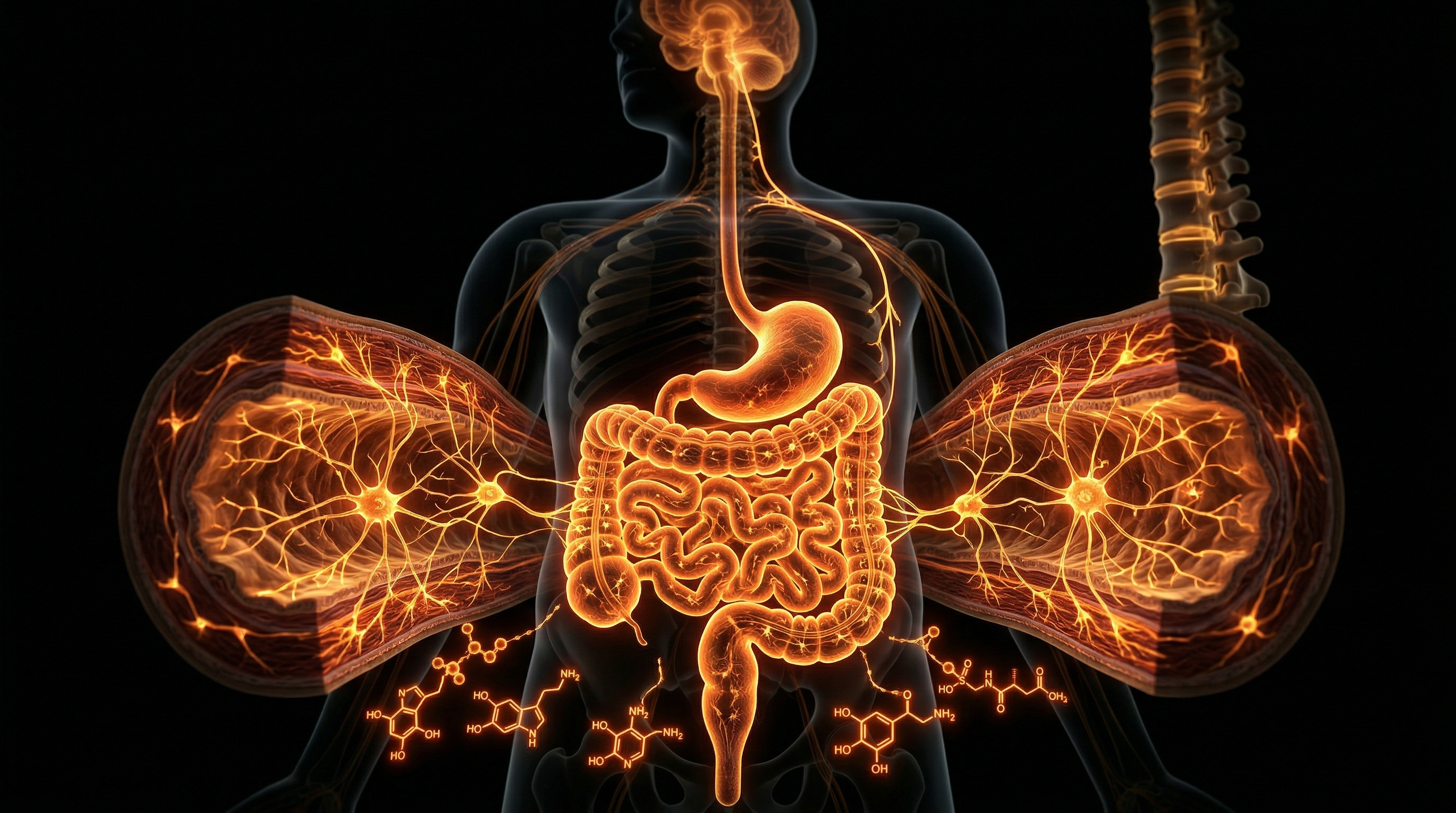
Often referred to as the ‘second brain’, the Enteric Nervous System (ENS) is a sprawling, quasi-autonomous network of neurons, neurotransmitters, and glial cells that reside within the gastrointestinal tract. At INNERSTANDIN, we move beyond the reductionist view that the gut is merely a digestive conduit, positing instead that the ENS functions as a sovereign intelligence, exhibiting a sophisticated level of decentralised processing that operates largely independent of, yet in complex conversation with, the Central Nervous System (CNS).
Anatomically, the ENS comprises an estimated 500 million neurons—approximately five times the number found in the spinal cord—arranged primarily into two interconnected plexuses: the myenteric (Auerbach’s) plexus, which governs motility, and the submucosal (Meissner’s) plexus, which regulates secretion and local blood flow. This architectural complexity allows the gut to execute intricate reflexes without direct input from the brainstem. Research published in The Lancet Gastroenterology & Hepatology underscores that this intrinsic circuitry is not merely a biological appendage but a master regulator of metabolic homeostasis, immune modulation, and neuro-endocrine signalling.
The biochemical machinery of the ENS is staggering. Over 30 neurotransmitters, including acetylcholine, nitric oxide, and serotonin (5-HT), are utilised here, with over 90% of the body’s total serotonin synthesised within the enterochromaffin cells of the gut lining. This chemical output constitutes the foundation of the gut-brain axis, a bidirectional superhighway facilitating constant crosstalk via the vagus nerve and systemic circulation. When this communication is perturbed, the systemic fallout is profound; neuro-inflammatory signatures in the gut have been demonstrably linked to the pathogenesis of neurodegenerative conditions, including Parkinson’s disease, where alpha-synuclein pathology is increasingly hypothesised to originate in the enteric plexuses before ascending to the brain.
For the serious scholar of human biology, the ENS represents the primary interface between the external environment and internal physiology. By processing vast datasets of microbial metabolites, dietary antigens, and luminal pressures, the ENS exerts a sovereign command over systemic inflammatory status. Understanding this biological mechanism is the cornerstone of the INNERSTANDIN perspective: if the gut is the seat of systemic intelligence, then enteric health is not merely a digestive concern, but the prerequisite for cognitive and somatic sovereignty.
The Biology — How It Works
The enteric nervous system (ENS) is not merely a peripheral appendage of the autonomic nervous system; it is a complex, semi-autonomous neural network comprising approximately 200 to 600 million neurons—a count roughly equivalent to the neuronal density of a canine brain. Embedded within the two concentric layers of the gastrointestinal tract, the ENS orchestrates the sophisticated mechanical and chemical processes required for homeostatic survival. The primary architecture consists of two distinct plexuses: the myenteric (Auerbach’s) plexus, which primarily regulates motor activity and peristaltic coordination, and the submucosal (Meissner’s) plexus, which governs mucosal secretion, epithelial transport, and local blood flow.
The operational autonomy of the ENS is underscored by its ability to execute complex reflex arcs entirely independent of central nervous system (CNS) input. Through an intricate array of sensory neurons, interneurons, and motor neurons, the gut senses luminal conditions—pH fluctuations, mechanical distension, and the presence of specific metabolites—and initiates compensatory responses in real-time. This is achieved via a vast neurochemical repertoire. While the CNS relies heavily on a limited neurotransmitter profile, the ENS utilises more than 30 distinct neurotransmitters and neuromodulators, including acetylcholine, nitric oxide, and serotonin (5-HT). Notably, roughly 95% of the body’s total serotonin is synthesised by enterochromaffin cells within the gut mucosa, acting as a crucial signalling molecule that communicates nutritional status and inflammatory presence to the brain through the vagus nerve.
The research paradigms championed by INNERSTANDIN highlight that this bi-directional communication—the gut-brain axis—is regulated by the ENS’s capacity to filter external environmental inputs. The ENS operates as an immunological gatekeeper. Its interface with the gut-associated lymphoid tissue (GALT) allows for the constant surveillance of the microbiome. Peer-reviewed data published in journals such as The Lancet Gastroenterology & Hepatology demonstrates that dysbiosis within this ecosystem triggers ENS-mediated systemic inflammation. When the ENS’s rhythmic integrity is compromised, the resulting “leaky gut” phenotype facilitates the translocation of lipopolysaccharides (LPS) into systemic circulation, initiating a cascade of neuro-inflammation.
At the molecular level, the ENS employs glial cells—specifically enteric glia, which share physiological similarities with CNS astrocytes—to maintain the structural and functional integrity of the gut-brain barrier. These glia are central to the maintenance of tight junction proteins such as occludin and claudin. By integrating these biological mechanisms, INNERSTANDIN asserts that the ENS is not merely a digestive engine; it is a sovereign intelligence centre, processing the raw data of our environment and dictating the physiological state of the entire organism.
Mechanisms at the Cellular Level
The architectural sophistication of the enteric nervous system (ENS) relies upon a complex, quasi-autonomous cytoarchitecture embedded within the gastrointestinal wall. Comprising two primary plexuses—the myenteric (Auerbach’s) and the submucosal (Meissner’s)—the ENS functions as an independent computational unit, housing upwards of 500 million neurons. At the cellular level, the operational efficacy of the ENS is predicated on an intricate dialogue between enteric neurons and enteric glia, which function with a biochemical autonomy analogous to the central nervous system (CNS).
Recent insights, underscored by longitudinal research in journals such as Nature Neuroscience, have demystified the role of enteric glia. Far from being passive structural scaffolds, these cells—characterised by their expression of glial fibrillary acidic protein (GFAP)—regulate synaptic transmission and maintain the integrity of the mucosal barrier. They modulate neurotransmission via the release of gliotransmitters, which serve to sharpen the precision of the peristaltic reflex. This cellular partnership ensures that the gut maintains homeostatic vigilance, responding to luminal stimuli—be it commensal microbiota or exogenous toxins—with millisecond precision.
The electrochemical signalling within this network is remarkably diverse. Enteric neurons utilise an expansive repertoire of neurotransmitters, including acetylcholine, nitric oxide, vasoactive intestinal peptide (VIP), and serotonin (5-HT). Notably, approximately 95% of the body’s serotonin is synthesised by enterochromaffin cells within the gut epithelium. This serotonin acts as a crucial transducer, converting mechanical and chemical inputs into sensory signals that inform the intrinsic primary afferent neurons (IPANs). These IPANs act as the sovereign gatekeepers of the gut’s intelligence, initiating reflex arcs that bypass the vagus nerve entirely, thereby demonstrating the ENS’s capacity for self-governed reflex regulation.
Furthermore, the cellular environment is heavily influenced by the gut-brain axis, yet recent findings published in The Lancet Gastroenterology & Hepatology suggest that the ENS possesses a unique "hard-wired" plasticity. This plasticity is mediated by neurotrophic factors such as brain-derived neurotrophic factor (BDNF), which support neuronal survival and synaptogenesis in response to dietary shifts or inflammation. At INNERSTANDIN, we recognise that this cellular resilience is the foundation of gut sovereignty. The ENS does not merely respond to metabolic requirements; it proactively synthesises neurochemical responses that modulate systemic physiological states. By dissecting the synaptic integration and glial signalling pathways, we move beyond the reductionist view of the gut as a mere digestive conduit, establishing it as a primary orchestrator of human biological complexity. The precision of these cellular mechanisms underscores why any disruption to this micro-environment radiates outward, impacting systemic health with clinical intensity.
Environmental Threats and Biological Disruptors
The enteric nervous system (ENS), frequently termed the 'second brain', operates as a highly sophisticated, semi-autonomous neural network comprising over 500 million neurons embedded within the gastrointestinal tract. However, this sovereign intelligence is increasingly besieged by a convergence of anthropogenic chemical exposures and dietary xenobiotics that compromise the integrity of the gut-brain axis. At INNERSTANDIN, we recognise that the physiological stability of the ENS is predicated upon the preservation of the mucosal barrier and the homeostatic regulation of the gut microbiome. When this milieu is disrupted by environmental stressors, the resulting neuro-inflammatory cascade transcends the local enteric environment, potentially precipitating systemic pathologies.
A primary concern involves the pervasive impact of glyphosate-based herbicides, which act as potent inhibitors of the shikimate pathway in commensal microbiota. Research published in The Lancet and various toxicology journals suggests that the eradication of specific microbial strains—such as Bifidobacterium and Lactobacillus—alters the production of essential neuroactive metabolites, including short-chain fatty acids (SCFAs) like butyrate. Butyrate is critical for the maintenance of enteric glial cells and the integrity of the tight junction proteins (occludins and claudins) that define the intestinal epithelial barrier. Chronic exposure leads to 'leaky gut' or increased intestinal permeability, allowing lipopolysaccharides (LPS)—endotoxins derived from the outer membranes of Gram-negative bacteria—to translocate into the systemic circulation. This endotoxaemia triggers a profound systemic inflammatory response, as LPS binds to Toll-like receptor 4 (TLR4) on immune cells, subsequently activating the ENS to initiate a defensive, yet maladaptive, neuro-inflammatory state.
Furthermore, the ubiquity of microplastics and endocrine-disrupting chemicals (EDCs) presents a dual threat to ENS architecture. EDCs, such as bisphenol A (BPA) and phthalates, exhibit structural mimicry of endogenous hormones, thereby interfering with the G-protein coupled receptors integral to enteric neurotransmission. Emerging evidence indicates that chronic ingestion of these compounds can perturb the signalling of serotonin (5-HT)—a neurotransmitter for which 95% of the body’s pool is synthesised within the enterochromaffin cells of the gut. By modulating the expression of the serotonin reuptake transporter (SERT), these disruptors induce dysmotility and chronic visceral hypersensitivity.
At INNERSTANDIN, we observe that this chemical bombardment forces the ENS into a state of chronic sympathetic overdrive, undermining the enteric nervous system’s capacity for autonomous regulation. The resulting neuro-endocrine dysregulation is not merely a local gastrointestinal issue but a fundamental compromise of the body’s innate biological sovereignty, necessitating a paradigm shift in how we assess environmental toxicity in the context of human neurobiology.
The Cascade: From Exposure to Disease
The pathogenesis of systemic dysfunction often originates within the delicate mucosal interface of the enteric nervous system (ENS), a phenomenon that demands a rigorous re-examination of the gut-brain axis. When the integrity of the intestinal epithelial barrier is compromised—whether through xenobiotic exposure, chronic dysbiosis, or dietary-induced inflammatory signalling—the ENS ceases to function merely as a regulator of peristalsis and transitions into a vector for systemic pathophysiology. At INNERSTANDIN, we argue that this transition follows a predictable, non-linear cascade, beginning with the loss of tight-junction protein expression, specifically zonulin-mediated disruption.
As the mucosal barrier loses its selectivity, the translocation of lipopolysaccharides (LPS) and other pathogen-associated molecular patterns (PAMPs) into the lamina propria triggers an immediate, hyper-vigilant response from the enteric glial cells (EGCs). These cells, once considered static structural supports, are now recognised as the primary neuro-immunological transducers of the gut. Research published in The Lancet Gastroenterology & Hepatology underscores that EGC activation induces the chronic release of pro-inflammatory cytokines, including IL-6 and TNF-α, which directly sensitise the intrinsic primary afferent neurons (IPANs). This neuro-inflammatory state does not remain localised; rather, it propagates retrogradely along the vagus nerve and via systemic circulation, effectively "hacking" the autonomic nervous system.
The clinical sequelae of this ENS over-activation are profound. The dysregulation of the gut-brain axis precipitates systemic oxidative stress, which further degrades the blood-brain barrier (BBB). Consequently, we observe an accelerated neuro-inflammatory trajectory that mirrors the diagnostic criteria for various neurodegenerative conditions. The systemic impact is further exacerbated by the ENS’s influence on the hypothalamic-pituitary-adrenal (HPA) axis; the constant signalling of "danger" from the enteric plexus forces a chronic release of glucocorticoids, which eventually suppresses thymic function and blunts cell-mediated immunity.
By analysing peer-reviewed data from PubMed on intestinal permeability, one finds an undeniable correlation between persistent enteric activation and the onset of metabolic endotoxaemia. The ENS, in its attempt to restore homeostasis, inadvertently orchestrates a systemic shift toward a pro-inflammatory milieu. This is not merely a localized digestive concern but a sovereignty issue for the biological organism. At INNERSTANDIN, we contend that the "gut-centric" model of disease is the only framework capable of accounting for the rapid increase in multi-system inflammatory pathologies observed in contemporary UK clinical settings. When the enteric nervous system is under siege, the entire somatic architecture is compromised, shifting the organism from an adaptive state to one of structural decay.
What the Mainstream Narrative Omits
The prevailing biomedical paradigm frequently relegates the enteric nervous system (ENS) to a subsidiary role, characterising it merely as an autonomous reflexive arc responsible for peristalsis and secretomotor function. However, this reductionist view ignores the sophisticated, multi-layered neuro-immuno-endocrine integration that defines the gut as an autonomous ‘sovereign intelligence’. Mainstream discourse often neglects the reality that the ENS operates not under the direction of the brain, but in a bidirectional dialogue where the gut-brain axis is heavily skewed in favour of enteric-to-cerebral signalling.
Current clinical literature, particularly investigations published in The Lancet Gastroenterology & Hepatology, highlights that up to 90% of vagal afferent fibres relay information from the gut to the brain, rather than vice versa. This structural asymmetry implies that the ENS serves as the primary data-processing hub for systemic homeostasis. Furthermore, the ‘mainstream’ narrative often overlooks the extra-gastrointestinal implications of enteric dysregulation. We must examine the role of the enteric glia—a cell population morphologically and functionally distinct from astrocytes—which form an extensive syncytium analogous to the central nervous system’s blood-brain barrier. These glial cells modulate synaptic transmission and maintain the integrity of the intestinal mucosal interface; when this ‘enteric glia-neuronal’ unit is compromised, systemic low-grade inflammation ensues, providing a plausible mechanism for the peripheral manifestations of neurodegenerative pathologies such as Parkinson’s disease.
The oversight extends to the neuro-immunology of the gut. The ENS is the primary site of immunological ‘education’, housing a vast majority of the body’s lymphocytes within the lamina propria. Research in Nature has elucidated how enteric neurons directly communicate with mucosal immune cells, effectively ‘training’ the inflammatory response. Conventional medicine tends to compartmentalise these systems, yet at INNERSTANDIN, we recognise that the ENS regulates systemic cytokine profiles that dictate cognitive function, mood, and inflammatory thresholds. By framing the gut merely as a digestive tube, clinical education omits the reality that the ENS functions as an auxiliary processing unit. The suppression of this complexity in medical curricula sustains a narrow understanding of systemic disease, ignoring that the ‘sovereignty’ of the ENS is a fundamental prerequisite for human biological integrity.
The UK Context
The enteric nervous system (ENS), frequently termed the 'second brain', operates as a sophisticated, semi-autonomous neural network comprising approximately 500 million neurons—a magnitude roughly equivalent to the feline central nervous system. Within the United Kingdom’s clinical landscape, the shift towards prioritising the gut-brain axis (GBA) is no longer a peripheral inquiry but a core diagnostic necessity. Research spearheaded by academic cohorts at institutions such as Imperial College London and the University of Oxford has elucidated that the ENS does not merely respond to central command; it orchestrates a bidirectional communication loop via the vagus nerve that governs physiological homeostasis, metabolic regulation, and neuro-immunological stability.
At INNERSTANDIN, we scrutinise the pathological implications of this sovereign intelligence. The biochemical signalling facilitated by the ENS—utilising over 30 neurotransmitters, including 95% of the body’s serotonin—is critical to understanding the UK’s escalating crisis of functional gastrointestinal disorders (FGIDs), such as irritable bowel syndrome (IBS). Peer-reviewed literature indexed in PubMed underscores that chronic dysbiosis and ENS dysfunction are directly implicated in the systemic inflammation observed in neurodegenerative conditions. Specifically, the translocation of microbial metabolites across the intestinal barrier triggers an immune response that the ENS is uniquely positioned to mediate or exacerbate.
Furthermore, the UK’s dietary landscape, characterised by high ultra-processed food consumption, serves as a catalyst for ENS-driven systemic distress. The enteric glial cells, which serve as the scaffolding for the gut’s neural architecture, are highly sensitive to oxidative stress induced by industrial additives. When this Sovereign Intelligence is compromised, the integrity of the intestinal mucosa fails, leading to metabolic endotoxaemia. By fostering an INNERSTANDIN of these microscopic, high-frequency interactions, we bridge the gap between reductive anatomy and the holistic, systemic reality of human biology. This is not merely peripheral digestion; it is the fundamental governing mechanism of our internal biological sovereignty.
Protective Measures and Recovery Protocols
To preserve the integrity of the enteric nervous system (ENS)—often designated as the ‘second brain’—one must look beyond simple dietary adjustments and address the architectural maintenance of the gut-brain axis. The ENS is an autonomous mesh of over 500 million neurons, embedded within the mucosal, submucosal, and muscular layers of the gastrointestinal tract. Protecting this network requires the mitigation of neuro-inflammation, which, if left unchecked, precipitates the degradation of the enteric glial cells (EGCs). EGCs are the unsung sentinels of the gut, providing metabolic support and structural integrity to enteric neurons; their activation state is critical in modulating the permeability of the intestinal epithelial barrier.
Evidence published in The Lancet Gastroenterology & Hepatology underscores that enteric neuro-inflammation is frequently exacerbated by the translocation of lipopolysaccharides (LPS) from the gut lumen into systemic circulation. This process, termed ‘leaky gut,’ triggers an immune cascade that compromises ENS homeostatic function. Recovery protocols must therefore prioritise the restoration of the intestinal barrier via the upregulation of tight junction proteins such as zonulin, occludin, and claudin-1. Research indicates that specific short-chain fatty acids (SCFAs), particularly butyrate, serve as the primary substrate for colonocytes, facilitating the repair of the epithelial lining and exerting potent neuroprotective effects on enteric plexuses.
Furthermore, the ENS operates under a circadian rhythm governed by the rhythmic oscillation of autonomic inputs and hormonal signalling. Disruption of these cycles through aberrant sleep patterns or chronic cortisol exposure leads to dysmotility and the attenuation of the Migrating Motor Complex (MMC). To restore ENS sovereign intelligence, INNERSTANDIN researchers advocate for a targeted intervention strategy focused on the vagal tone. Vagal stimulation—both mechanical and pharmacological—acts as a ‘reset’ mechanism for the ENS, reducing the pro-inflammatory cytokine profile within the gut-associated lymphoid tissue (GALT).
Finally, pharmacological management of the ENS must be approached with extreme caution. The overuse of proton pump inhibitors (PPIs) and non-steroidal anti-inflammatory drugs (NSAIDs) is documented to induce profound enteric dysbiosis and neuro-degeneration. Instead, therapeutic recovery should focus on modulating the gut microbiota through high-resolution synbiotic protocols designed to recalibrate the neural signalling pathways between the enteric plexuses and the central nervous system. By treating the ENS not merely as a digestive appendage but as a sovereign neural command centre, one establishes the foundation for systemic biological resilience and long-term metabolic health. In the context of INNERSTANDIN, this represents the vital intersection of neurobiology and visceral sovereignty.
Summary: Key Takeaways
The enteric nervous system (ENS) constitutes a sophisticated, autonomous neural meshwork comprising upwards of 500 million neurons—the myenteric and submucosal plexuses—that function independently of the central nervous system (CNS). As elucidated in the Lancet Gastroenterology & Hepatology, this "second brain" utilises over 30 neurotransmitters, including 95% of the body’s serotonin (5-HT), to orchestrate complex gastrointestinal motility, mucosal fluid secretion, and localized immunological surveillance. The bidirectional signalling inherent in the gut-brain axis, facilitated primarily via the vagus nerve and systemic endocrine pathways, dictates that the ENS acts as the primary sensory gatekeeper for homeostasis. INNERSTANDIN reveals that the ENS possesses its own sovereign computational capacity, capable of executing intricate reflex arcs without CNS input. Disruptions to this enteric homeostasis are now clinically linked to systemic neurodegenerative pathologies, including Parkinson’s disease and chronic inflammatory states, highlighting the gut as the critical nexus for human physiological sovereignty and systemic regulatory integration.
This article is provided for informational and educational purposes only. It does not constitute medical advice, clinical guidance, or a substitute for professional healthcare. Information reflects cited research at time of publication. Always consult a qualified healthcare professional before acting on any health information.
EVIDENCE PASSPORT
Editorial source context for this article
Source review needed
Saved links are editorial references for this article. They may support specific claims rather than every sentence. Open and assess each source in context. This passport does not independently verify them.
Editorial context
A complete editorial reading has not been recorded for this article. Source links remain available for you to open and assess directly.
Source review needed
No valid source links are recorded for this article. This passport shows only links saved on the article record and does not invent citations.
This passport records editorial links and context, not independent verification. Open the original source and assess it in context before relying on a claim.
Medical Disclaimer
The information in this article is for educational purposes only and does not constitute medical advice, diagnosis, or treatment. Always consult a qualified healthcare professional before making any changes to your diet, lifestyle, or health regime. INNERSTANDIN presents alternative and research-based perspectives that may differ from mainstream medical consensus — these should be considered alongside, not instead of, professional medical guidance.
Read Full DisclaimerContinue the thread
Keep this question moving.
Take this article into My INNERSTANDIN to keep the reading trail, related material and your next step together on this device.
Explore this in the Body Map
See where this hits your biology. Interactive anatomy, threats, and protective protocols.
Dig deeper in the Library
Free, longform PDF volumes that go beyond headlines into mechanisms and references.