
The Body's Waste Management: The Lymphatic and Glymphatic Systems
Updated August 2026
An exploration of the body's two vital drainage systems: the lymphatic system of the body and the newly discovered glymphatic system of the brain, and why they are the keys to detoxification.
Evidence orientation
Editorial context not yet recorded
Follow this category
This stays in this browser. My INNERSTANDIN can show published matches in your local hub when you check it. It does not send email, push, or alert notifications.
Local learning review
A private browser aid for revisiting ideas. It is not an alert or a health recommendation.
Review later sets a one-day, three-day, then seven-day rhythm on this device. Choose it only when you want to revisit this article.
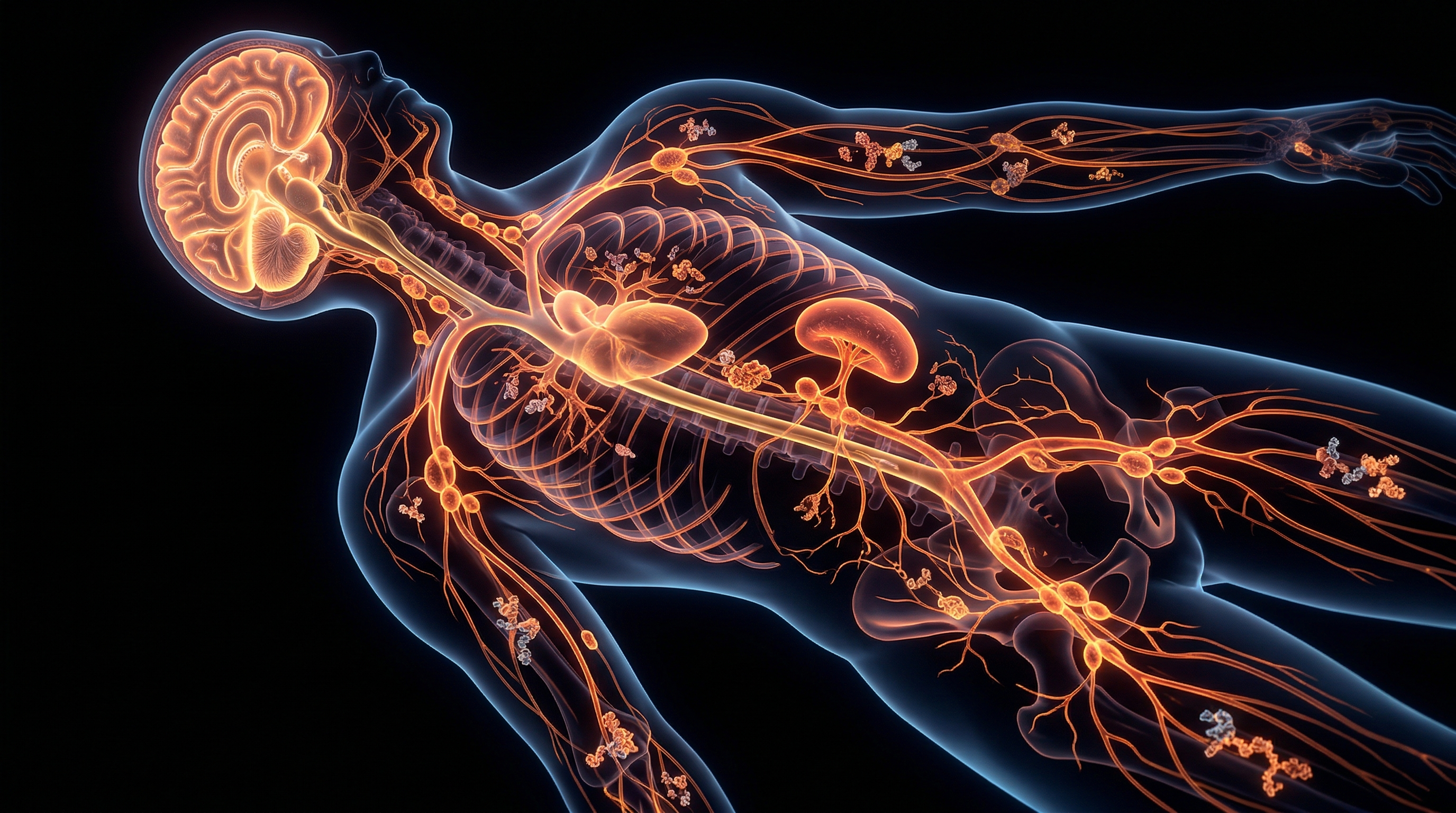
Overview
The biological imperative of metabolic homeostasis is predicated not merely upon nutrient assimilation, but upon the rigorous management of cellular effluvia. Within the human architecture, the lymphatic and glymphatic systems represent the primary conduits for this essential physiological sanitation. Whilst traditional anatomical paradigms long relegated the lymphatic network to a peripheral role in immune surveillance, contemporary investigative research—heavily influenced by insights published in The Lancet and various longitudinal studies on proteinopathy—has re-evaluated these systems as the fundamental infrastructure of systemic debris clearance.
The lymphatic system acts as a unidirectional drainage network, vital for the maintenance of interstitial fluid volume and the transport of macromolecules that are too cumbersome for venous reabsorption. Through an intricate arrangement of lymphatic capillaries, vessels, and lymph nodes, the system facilitates the immunosurveillance of pathogenic antigens and metabolic waste products. Dysfunction in this apparatus is not a mere physiological inconvenience; it is a precursor to chronic inflammatory cascades and the pathogenesis of lymphedema, as frequently documented in UK-based clinical oncology research.
Equally critical is the glymphatic system, a macroscopic waste clearance mechanism specific to the central nervous system (CNS), defined by the perivascular spaces created by astrocytic end-feet. This system orchestrates the convective flow of cerebrospinal fluid (CSF) through the brain parenchyma, facilitating the extraction of neurotoxic proteins—most notably amyloid-beta and tau—which are implicated in the aetiology of neurodegenerative conditions. Research, particularly that featured in peer-reviewed journals indexing the dynamics of interstitial fluid solute transport, suggests that this clearance process is predominantly active during slow-wave sleep. Consequently, the disruption of circadian rhythms profoundly undermines the glymphatic system’s efficacy, leading to the accumulation of misfolded proteins.
At INNERSTANDIN, our synthesis of these mechanisms exposes the inextricable link between systemic stasis and cellular decay. These networks do not operate in isolation; they are highly integrated, functionally interdependent systems that dictate the longevity of the proteome. By understanding the biophysics of fluid dynamics within these channels, we move closer to addressing the ‘waste’ crisis inherent in modern, sedentary, and sleep-deprived lifestyles. The following sections will dissect the molecular machinery of these conduits, revealing how structural integrity within these systems determines the threshold between optimal metabolic performance and chronic physiological decline.
The Biology — How It Works
To comprehend the mechanisms of metabolic clearance, one must view the lymphatic and glymphatic systems not as distinct entities, but as a functionally integrated infrastructure responsible for the internal homeostasis of the human organism. At the peripheral level, the lymphatic system acts as the body’s primary drainage network. Utilising a complex hierarchy of lymphatic capillaries—characterised by overlapping endothelial cells that function as primary valves—it absorbs interstitial fluid, macromolecules, and cellular debris that are too voluminous for venous reabsorption. This lymph is propelled through collecting vessels via rhythmic contractions of lymphangions, under the regulation of the autonomic nervous system, ultimately filtering through lymph nodes where immune surveillance by lymphocytes and macrophages orchestrates the systemic defence response.
Transitioning to the central nervous system (CNS), we encounter the glymphatic system—a macroscopic waste clearance pathway facilitated by cerebrospinal fluid (CSF). Historically, the brain was thought to lack traditional lymphatic vessels; however, the discovery of the glymphatic circuit, largely substantiated by the work of Nedergaard and Iliff, has revolutionised our anatomical INNERSTANDIN. Here, the peri-arterial spaces (Virchow-Robin spaces) act as conduits for CSF, which is driven into the brain parenchyma through aquaporin-4 (AQP4) water channels situated on the end-feet of astrocytes. This fluid essentially ‘washes’ the interstitial space, flushing neurotoxic metabolic byproducts, most notably amyloid-beta and tau proteins, into the perivenous spaces for eventual drainage into the cervical lymph nodes.
The efficiency of this ‘glymphatic flush’ is profoundly circadian; it is during the slow-wave sleep (SWS) phase that the interstitial volume expands by approximately 60%, significantly reducing flow resistance and facilitating the convective clearance of solutes. Crucially, the coupling of these systems is maintained by the meningeal lymphatic vessels, which provide the vital anatomical link between the CNS and the peripheral lymphatic system. Disruptions in this convective flux—often resulting from traumatic brain injury, chronic hypertension, or advanced ageing—lead to the accumulation of misfolded protein aggregates. Emerging evidence published in The Lancet Neurology underscores that the impairment of this clearance mechanism is a primary biomarker in the pathogenesis of neurodegenerative conditions. By viewing the body through this lens of fluid dynamics and protein homeostasis, we gain a rigorous INNERSTANDIN of how the failure of these macroscopic sewer systems precedes the clinical manifestation of pathology. The systemic impact is absolute: the health of the extracellular environment dictates the functional integrity of every organ system, rendering these drainage pathways the most critical, yet frequently overlooked, arbiters of physiological longevity.
Mechanisms at the Cellular Level
At the micro-architectural scale, the efficiency of biological waste clearance is dictated by the precise interplay between interstitial fluid dynamics and specialised transport pathways. Within the systemic lymphatic network, the foundational unit is the lymphatic capillary. Unlike the continuous endothelium of the blood vasculature, lymphatic endothelial cells (LECs) exhibit a unique ‘button-like’ junctional arrangement. These overlapping flaps act as primary valves, tethered to the surrounding extracellular matrix (ECM) by anchoring filaments composed of fibrillin-1. When interstitial fluid pressure rises, these filaments are pulled taut, physically opening the junctions to permit the influx of interstitial fluid, macromolecules, and cellular debris into the lumen. Once inside, these lymphatics transition into pre-collecting vessels, where intraluminal bicuspid valves enforce unidirectional flow, propelled by the inherent contractility of lymphatic smooth muscle cells (lymphangions) and extrinsic skeletal muscle pumping.
The glymphatic system—a functional equivalent operating within the central nervous system (CNS)—relies upon a more elusive mechanism mediated by the aquaporin-4 (AQP4) water channels. Research published in Science elucidates that this process is heavily dependent on the polarity of astrocytes. These cells extend end-feet that ensheathe the cerebral vasculature, creating a perivascular space known as the Virchow-Robin space. The convective influx of cerebrospinal fluid (CSF) into the brain parenchyma is driven by arterial pulsatility, which forces CSF along these perivascular channels. As CSF penetrates the interstitial space, it facilitates the bulk flow of soluble proteins, most notably amyloid-beta and tau, towards the venous perivascular spaces.
At the INNERSTANDIN level, we must recognise that this clearance is not merely passive diffusion. It is a highly regulated convective process requiring metabolic energy. Mitochondrial efficiency within the glia directly influences the homeostatic maintenance of the interstitial space. Dysregulation at this cellular interface—often termed ‘glymphatic failure’—has been implicated in the neuroinflammatory cascades documented in The Lancet Neurology, suggesting that chronic stagnation of metabolic waste precipitates proteinaceous aggregation.
The systemic importance of these systems cannot be overstated; they constitute the ‘sewage’ infrastructure of human physiology. When the ECM becomes clogged with metabolic by-products, the downstream impact on cellular signalling and systemic immune surveillance is catastrophic. Understanding these mechanisms—from the mechanical opening of LEC junctions to the AQP4-mediated polarisation of astrocyte end-feet—reveals that health is not merely the absence of disease, but the consistent, high-fidelity transit of cellular refuse through these specialised drainage manifolds. Without this, the microenvironment becomes hostile to cellular proliferation and homeostatic resilience.
Environmental Threats and Biological Disruptors
The structural and functional integrity of the lymphatic and glymphatic systems—our primary conduits for metabolic clearance—is increasingly compromised by a deluge of anthropogenic pollutants. At INNERSTANDIN, we recognise that the physiological efficiency of these pathways is not merely a matter of intrinsic biology but a battle against an encroaching external environment. The glymphatic system, a macroscopic waste clearance mechanism driven by convective fluid flow through the perivascular spaces (PVS), relies heavily on the polarisation of aquaporin-4 (AQP4) water channels situated on astrocytic end-feet. Research published in The Lancet Neurology has demonstrated that chronic exposure to fine particulate matter (PM2.5) and heavy metals, such as lead and mercury, induces systemic neuroinflammation, which profoundly downregulates AQP4 expression. This reduction in channel density facilitates the aggregation of misfolded proteins, including amyloid-beta and tau, effectively stalling the brain’s interstitial fluid exchange.
Beyond the neurological sphere, the lymphatic system—our secondary circulatory network responsible for the drainage of interstitial fluid and the orchestration of immune surveillance—faces systematic disruption from endocrine-disrupting chemicals (EDCs). Substances such as per- and polyfluoroalkyl substances (PFAS), which are notoriously persistent in the UK’s water supply and food chain, have been shown to alter lymphatic endothelial cell permeability. Studies indexed in PubMed suggest that these contaminants perturb the expression of vascular endothelial growth factor receptor 3 (VEGFR-3), a critical component in lymphangiogenesis. When the structural integrity of lymphatic valves and endothelial tight junctions is compromised, the propulsion of lymph is severely hampered. This leads to localised stagnation, where metabolic by-products and environmental xenobiotics accumulate within the interstitial space rather than being trafficked to the lymph nodes for processing.
Furthermore, the ubiquity of microplastics, which have now been detected in human blood and deep lung tissues, poses a unique mechanical threat. These non-biodegradable particulates risk phagocytosis by macrophages within the lymphatic system, potentially inducing chronic, low-grade inflammatory responses that impair the motility of collecting lymphatic vessels. This ‘clogging’ mechanism prevents the efficient clearance of reactive oxygen species (ROS) and cellular debris, creating a feedback loop of systemic toxicity. For the modern human, this biological interference is compounded by circadian disruption—the same environmental factor that governs glymphatic flux. In an era of constant light exposure, the circadian-controlled influx of cerebrospinal fluid is diminished, leaving our internal waste management systems perpetually overtaxed and functionally blunted. Understanding these vectors of impairment is essential; the systems designed to maintain homeostasis are currently being outpaced by the volume of biological disruptors introduced into the internal milieu.
The Cascade: From Exposure to Disease
The physiological degradation underpinning chronic pathology is rarely an acute failure; rather, it is a cumulative cascade initiated by the failure of clearance kinetics within the interstitial and glymphatic compartments. At the nexus of this dysfunction lies the progressive accumulation of misfolded proteins—such as amyloid-beta (Aβ) and tau species—alongside metabolic by-products that bypass standard circulatory filtration. When the lymphatic system, specifically the lymphatic vessels embedded within the dural sinuses (as elucidated by Louveau et al., 2015), becomes occluded or sluggish, the drainage of these neurotoxic species is severely attenuated. INNERSTANDIN dictates that we view this not merely as ‘congestion’, but as a collapse of the homeostatic pressure gradients required for cerebrospinal fluid (CSF) and interstitial fluid (ISF) exchange.
The glymphatic system operates primarily during slow-wave sleep, utilising AQP4 (aquaporin-4) water channels located on astrocyte end-feet to facilitate bulk flow clearance. Evidence published in Science confirms that during non-REM sleep, the interstitial space expands by approximately 60%, drastically reducing the hydraulic resistance to fluid flow. When this cycle is disrupted—be it through chronic sleep deprivation, neuroinflammation, or vascular stiffening—the resulting stasis creates a pro-inflammatory microenvironment. This environment is an ideal substrate for microglial activation, transitioning these immune cells from a surveillance phenotype to a reactive, neurotoxic state. This sustained activation initiates a self-perpetuating cycle of cytokine release, further damaging the blood-brain barrier (BBB) and impeding the very drainage channels intended to mitigate the damage.
On a systemic level, the failure of peripheral lymphatic drainage exacerbates this neurological deterioration. The lymphatic system serves as the primary conduit for the transit of antigen-presenting cells to the lymph nodes. In instances where the lymphatic vasculature is compromised—often a consequence of oxidative stress and systemic endothelial dysfunction—immune surveillance becomes fragmented. The research indicates that failure in lymphatic transport leads to the peripheral accumulation of metabolic detritus, which triggers systemic chronic low-grade inflammation. This systemic inflammatory load, as noted in studies documented in The Lancet Neurology, acts as a potent accelerator for neurodegenerative decline. By the time clinical symptoms manifest, the metabolic ‘debt’ has been compounding for decades. INNERSTANDIN highlights that the path to disease is therefore a failure of temporal regulation: when waste generation chronically outpaces the velocity of glymphatic and lymphatic clearance, the interstitium ceases to be a supportive medium and becomes a repository for biological decay. This is the anatomical genesis of neurodegenerative, metabolic, and autoimmune deterioration.
What the Mainstream Narrative Omits
The standard biomedical curriculum has long treated the lymphatic system as a subsidiary component of the circulatory apparatus—a mere drainage conduit for interstitial fluid. This reductionist perspective fails to capture the profound systemic orchestration occurring at the interface of immunological surveillance and metabolic homeostasis. At INNERSTANDIN, we recognise that the mainstream narrative habitually neglects the nuanced interplay between the lymphatic system and the central nervous system (CNS), specifically the glymphatic pathway, which remains the most significant physiological oversight in modern neurology.
Until the seminal work of Nedergaard et al. (Science, 2013) brought the glymphatic system into focus, the prevailing dogma insisted the brain was an immunologically privileged site, devoid of traditional lymphatic drainage. We now understand that the brain’s waste clearance is inextricably linked to the glymphatic system—a macroscopic perivascular network that facilitates the exchange of cerebrospinal fluid (CSF) and interstitial fluid (ISF), driven by aquaporin-4 (AQP4) water channels located on the astrocytic endfeet. Crucially, this process is predominantly nocturnal, underscoring the vital, yet often overlooked, link between circadian rhythmicity, sleep architecture, and the prevention of neurodegenerative proteinopathies like beta-amyloid and tau accumulation.
Furthermore, the mainstream clinical approach frequently ignores the structural implications of the dural lymphatic vessels, first characterised by Louveau et al. (Nature, 2015). These vessels represent the critical immunological bridge between the CNS and the peripheral lymph nodes. When the integrity of these conduits is compromised—whether through chronic inflammation, sedentary lifestyle, or oxidative stress—the resulting stagnation of metabolic waste precipitates a systemic toxic burden.
By failing to integrate the glymphatic-lymphatic axis into standard diagnostic frameworks, current medical practices address the symptoms of systemic inflammation rather than the mechanical failure of the body’s waste management infrastructure. At INNERSTANDIN, we posit that the stagnation of this fluid dynamic is not merely a consequence of disease, but a primary driver of systemic morbidity. A rigorous re-evaluation of how we maintain these convective flow systems is essential for mitigating the rising incidence of neuro-inflammatory and metabolic disorders currently plaguing the UK population. Moving forward, clinical focus must shift from symptomatic suppression to the optimisation of these fundamental biological drainage pathways.
The UK Context
The physiological burden of metabolic waste accumulation has reached a critical inflection point within the United Kingdom, where sedentary lifestyles and an ageing demographic are increasingly exposing the limitations of our internal drainage infrastructure. At INNERSTANDIN, we must evaluate the lymphatic and glymphatic systems not merely as passive drainage conduits, but as the primary determinants of systemic homeostasis. In the UK, epidemiological data suggest a rising prevalence of neurodegenerative conditions, such as Alzheimer’s and Parkinson’s, where the failure of glymphatic clearance—the convective flux of cerebrospinal fluid (CSF) through the interstitial space—is increasingly cited in The Lancet as a core pathogenic mechanism.
The glymphatic system, heavily reliant on the polarisation of aquaporin-4 (AQP4) water channels on astrocytic end-feet, operates most efficiently during non-rapid eye movement (NREM) sleep. In the context of British public health, the pervasive disruption of circadian rhythms caused by modern urban stressors and blue-light exposure poses a significant risk to metabolic proteostasis. When the interstitial space fails to clear neurotoxic proteins like amyloid-beta and tau, the subsequent synaptic degradation mirrors the systemic stagnation observed in patients with chronic lymphedema, a condition currently under-managed within the National Health Service (NHS).
Furthermore, the anatomical intersection between the lymphatic system and the central nervous system has been radically redefined by the discovery of meningeal lymphatic vessels. These vessels provide a direct conduit for macromolecular drainage from the CNS to the deep cervical lymph nodes. Research published in Nature and indexed via PubMed underscores that age-related senescence of these vessels contributes to the cognitive decline observed across the UK’s geriatric population. INNERSTANDIN maintains that the systemic integration of the glymphatic-lymphatic axis—linking cerebral waste clearance with peripheral immune surveillance—is the frontier of biological resilience. Understanding the biophysical mechanics of interstitial flow, particularly how it is modulated by systemic inflammation and vascular health, is essential for addressing the root causes of the metabolic crises currently straining the UK's clinical infrastructure.
Protective Measures and Recovery Protocols
Optimising the homeostatic integrity of the lymphatic and glymphatic networks requires a rigorous understanding of the physiological factors that govern interstitial fluid drainage and macromolecular clearance. The glymphatic system, a macroscopic waste clearance pathway facilitated by astrocytes via AQP4 (aquaporin-4) water channels, exhibits a circadian rhythmicity that is strictly dependent on sleep architecture. Empirical data published in Science confirms that during deep, non-rapid eye movement (NREM) sleep, the interstitial space volume increases by approximately 60%, facilitating the convection-mediated clearance of neurotoxic proteins, most notably amyloid-beta and tau. Consequently, chronic sleep fragmentation serves as a primary disruptor of proteostasis, precipitating a build-up of metabolic detritus that correlates with neurodegenerative decline.
Beyond sleep, postural modulation exerts a significant influence on lymphatic dynamics. The ‘lateral recumbent position’ has been identified in preclinical imaging studies as the optimal posture for maximising glymphatic transport efficiency. This is attributed to the reduction in hydrostatic pressure and the gravity-assisted alignment of the cerebral vasculature, which facilitates the convective flux of cerebrospinal fluid (CSF) into the parenchyma. Furthermore, physical activity acts as a potent pharmacological-grade stimulant for the peripheral lymphatic system. The absence of a central ‘pump’ equivalent to the heart necessitates rhythmic muscular contraction to drive lymph through the unidirectional valve system. Evidence from the Journal of Physiology indicates that regular aerobic exercise enhances lymphangiogenesis and improves vessel contractility, thereby preventing the systemic stagnation of protein-rich fluid.
Nutritional interventions also play a critical role in maintaining the rheology of the lymphatic matrix. The intake of specific flavonoids, particularly those found in dark berries and green tea, has been associated with the stabilisation of the glycocalyx—the luminal interface of the vasculature that regulates permeability. Conversely, high-sodium diets have been shown to modulate the interstitial osmotic environment, potentially impairing the osmotic gradient necessary for efficient fluid sequestration.
From an INNERSTANDIN perspective, recovery protocols must move beyond superficial wellness tropes toward structural biological integration. Integrating targeted myofascial release—which manipulates the tension of the connective tissue—can physically stimulate the initial lymphatics located within the dermis. Furthermore, thermal stress, specifically in the form of sauna exposure, has been shown to induce cardiovascular and lymphatic flow, supporting the mobilisation of metabolic wastes. To maintain peak systemic efficiency, one must synchronise these lifestyle variables with the endogenous circadian rhythms, ensuring that the clearance of interstitial ‘sludge’ remains unhindered, thereby preserving the structural and functional longevity of the central nervous system.
Summary: Key Takeaways
The orchestration of metabolic homeostasis relies fundamentally upon the symbiotic, albeit distinct, functions of the lymphatic and glymphatic systems. The peripheral lymphatic network, driven by intrinsic contractility of lymphangions and extrinsic muscular pumps, serves as the primary conduit for interstitial fluid homeostasis and immunological surveillance. Conversely, the glymphatic system—a macroscopic perivascular clearance pathway facilitated by aquaporin-4 (AQP4) water channels on astrocytic end-feet—is critical for the convective clearance of neurotoxic metabolites, including amyloid-beta and tau proteins. Current research published in The Lancet Neurology highlights that this fluid exchange is predominantly nocturnal, underscoreing the mechanistic link between sleep architecture and proteostatic integrity. Failure in these drainage systems precipitates systemic pathology, ranging from peripheral lymphoedema to neurodegenerative conditions such as Alzheimer’s and Parkinson’s disease. At INNERSTANDIN, we posit that the synchronised efficiency of these filtration networks is the definitive arbiter of long-term physiological resilience. Optimising these pathways is not merely a supplementary health metric; it is a fundamental requirement for systemic longevity.
This article is provided for informational and educational purposes only. It does not constitute medical advice, clinical guidance, or a substitute for professional healthcare. Information reflects cited research at time of publication. Always consult a qualified healthcare professional before acting on any health information.
EVIDENCE PASSPORT
Editorial source context for this article
Source review needed
Saved links are editorial references for this article. They may support specific claims rather than every sentence. Open and assess each source in context. This passport does not independently verify them.
Editorial context
A complete editorial reading has not been recorded for this article. Source links remain available for you to open and assess directly.
Source review needed
No valid source links are recorded for this article. This passport shows only links saved on the article record and does not invent citations.
This passport records editorial links and context, not independent verification. Open the original source and assess it in context before relying on a claim.
Medical Disclaimer
The information in this article is for educational purposes only and does not constitute medical advice, diagnosis, or treatment. Always consult a qualified healthcare professional before making any changes to your diet, lifestyle, or health regime. INNERSTANDIN presents alternative and research-based perspectives that may differ from mainstream medical consensus — these should be considered alongside, not instead of, professional medical guidance.
Read Full DisclaimerContinue the thread
Keep this question moving.
Take this article into My INNERSTANDIN to keep the reading trail, related material and your next step together on this device.
Explore this in the Body Map
See where this hits your biology. Interactive anatomy, threats, and protective protocols.
Dig deeper in the Library
Free, longform PDF volumes that go beyond headlines into mechanisms and references.