
Small Dense LDL: Size Matters in Heart Disease
Updated May 2026
Small, dense LDL particles are significantly more likely to penetrate the arterial wall than large, buoyant ones. Discover why size is a more critical metric than total mass in lipid science.
Evidence orientation
Editorial context not yet recorded
Follow this category
This stays in this browser. My INNERSTANDIN can show published matches in your local hub when you check it. It does not send email, push, or alert notifications.
Local learning review
A private browser aid for revisiting ideas. It is not an alert or a health recommendation.
Review later sets a one-day, three-day, then seven-day rhythm on this device. Choose it only when you want to revisit this article.
Overview
For over half a century, the medical establishment has operated under a reductionist paradigm regarding cardiovascular health: the "Lipid Hypothesis". This doctrine posits that the primary driver of atherosclerosis is the total concentration of Low-Density Lipoprotein (LDL) cholesterol in the blood. However, as we delve deeper into the molecular architecture of lipid transport, it is becoming increasingly evident that the gross quantity of cholesterol—measured as LDL-C—is a remarkably blunt instrument for predicting risk.
The emerging scientific consensus, often sidelined in favour of pharmaceutical-friendly metrics, reveals that the quality and physical properties of LDL particles are far more predictive of cardiovascular events than their total mass. Central to this understanding is the distinction between large, buoyant LDL (Pattern A) and Small Dense LDL (sdLDL) (Pattern B).
While large LDL particles tend to circulate and return to the liver for recycling, sdLDL particles are uniquely pathological. They are small enough to penetrate the arterial endothelium, prone to oxidative modification, and possess a reduced affinity for the standard LDL receptors that should clear them from the blood. This article serves as an exhaustive investigation into why size matters, exposing the biological mechanisms that make sdLDL the "silent assassin" of the modern era and why the mainstream obsession with total LDL-C may be one of the most significant oversights in contemporary clinical medicine.
Key Statistic: Individuals with a predominance of small, dense LDL particles (Pattern B) have a three-fold increase in the risk of myocardial infarction compared to those with large, buoyant particles, even when total LDL levels are identical.
The Biology — How It Works
To understand why sdLDL is so dangerous, one must first understand the life cycle of a lipoprotein. Lipoproteins are essentially "cargo ships" designed to transport hydrophobic lipids—cholesterol and triglycerides—through the aqueous environment of the bloodstream.
The Lipoprotein Life Cycle
The process begins in the liver with the secretion of Very Low-Density Lipoprotein (VLDL). These large, triglyceride-rich particles circulate through the body, delivering energy to muscles and adipose tissue. As VLDL particles lose their triglycerides via the action of the enzyme lipoprotein lipase (LPL), they shrink and become Intermediate-Density Lipoproteins (IDL), eventually transforming into LDL.
Pattern A vs. Pattern B
In a healthy metabolic state, these LDL particles remain relatively large and "fluffy". This is known as Pattern A. These particles are rich in cholesterol esters and have a significant diameter (typically >25.5 nm). Because of their size and surface charge, they are easily recognised by LDL receptors in the liver and cleared efficiently.
However, in the presence of metabolic dysfunction—specifically hypertriglyceridaemia—a secondary process occurs. An enzyme called Cholesteryl Ester Transfer Protein (CETP) facilitates an exchange: it swaps cholesterol from the LDL particle for triglycerides from VLDL. This creates a triglyceride-rich LDL particle. Subsequently, hepatic lipase removes these triglycerides, leaving behind a shrunken, depleted, and highly dense particle: the Small Dense LDL (sdLDL). This is Pattern B.
The ApoB Factor
Every LDL particle, regardless of its size, carries a single molecule of Apolipoprotein B-100 (ApoB). This is the structural protein that allows the particle to be identified by receptors. Because sdLDL particles are smaller, a person can have a "normal" total LDL-C (the weight of the cholesterol) but a massive number of individual sdLDL particles. Each of these particles represents an independent "bullet" capable of hitting the arterial wall.
Mechanisms at the Cellular Level
The pathogenicity of sdLDL is not merely a matter of quantity; it is a matter of biochemistry. There are four primary reasons why these particles are more atherogenic than their larger counterparts.
1. Endothelial Penetration
The lining of our arteries, the endothelium, acts as a semi-permeable barrier. Large, buoyant LDL particles are generally too bulky to pass through the tight junctions of a healthy endothelial layer. In contrast, sdLDL particles, due to their diminished radius, can easily filter into the subendothelial space. Once trapped within the arterial wall, they begin the process of plaque formation.
2. Reduced Receptor Affinity
The LDL Receptor (LDLR) in the liver is responsible for clearing LDL from circulation. Large Pattern A particles have a high affinity for this receptor. However, the structural changes that occur when an LDL particle becomes small and dense—including the conformation of the ApoB-100 protein—make it less "visible" to the receptor.
Callout: sdLDL particles have a circulating half-life that is up to 50% longer than large LDL particles, providing a much wider window for them to undergo malicious modifications.
3. Increased Proteoglycan Binding
Once inside the arterial wall, sdLDL particles exhibit a high affinity for proteoglycans—the structural molecules of the arterial matrix. The "stickiness" of sdLDL is significantly higher than that of large LDL. They bind to the arterial wall like Velcro, making them much harder to remove and more likely to become the foundation of a necrotic core.
4. Susceptibility to Oxidation and Glycation
Perhaps the most critical factor is the chemical stability of the particle. sdLDL particles are depleted of antioxidants like Vitamin E and CoQ10. They are also highly susceptible to oxidation. When an LDL particle oxidises, it becomes "non-self" to the immune system. Furthermore, in the presence of high blood sugar, sdLDL undergoes glycation—the bonding of sugar molecules to the protein structure. Glycated and oxidised sdLDL are the primary triggers for the inflammatory cascade that leads to a heart attack.
Environmental Threats and Biological Disruptors
The prevalence of sdLDL is not a genetic inevitability for the vast majority of the population. It is a biological response to environmental stressors and dietary inputs that have become ubiquitous in the 21st century.
The Fructose and Insulin Connection
The primary driver of the shift from Pattern A to Pattern B is hyperinsulinaemia (chronically high insulin levels), usually resulting from excessive consumption of refined carbohydrates and High-Fructose Corn Syrup (HFCS).
Fructose is particularly insidious because it is metabolised exclusively in the liver. Excessive fructose intake drives De Novo Lipogenesis (DNL), creating an abundance of liver fat and VLDL particles. As VLDL levels rise, the CETP-mediated exchange mentioned earlier accelerates, churning out sdLDL particles at an industrial rate. This is the "Triad of Death": high triglycerides, low HDL, and high sdLDL.
The Role of Seed Oils
Mainstream dietary advice has long advocated for the replacement of saturated fats with Polyunsaturated Fatty Acids (PUFAs), specifically Omega-6 seed oils (soybean, sunflower, rapeseed). However, from a biological standpoint, this has been a catastrophe. Seed oils are highly unstable and prone to oxidation even before they are consumed. When these unstable fats are incorporated into the phospholipid membrane of the LDL particle, they make the particle exponentially more likely to oxidise.
Glyphosate and the Gut Microbiome
Emerging research suggests that environmental toxins like glyphosate may play a role in lipid dysfunction. By disrupting the gut microbiome and the shikimate pathway in bacteria, glyphosate can lead to systemic inflammation and impaired liver detoxification. A compromised liver is less efficient at regulating lipid metabolism, further pushing the body toward a Pattern B profile.
Chronic Stress and Cortisol
Chronic psychological stress leads to elevated cortisol, which in turn raises blood glucose and insulin. This hormonal milieu creates the perfect storm for the production of sdLDL, explaining why individuals in high-stress professions often suffer from "unexplained" cardiovascular events despite having seemingly healthy lifestyles.
The Cascade: From Exposure to Disease
The journey from the appearance of sdLDL in the blood to a ruptured plaque is a complex, multi-stage cascade. Understanding this process exposes why focusing on total cholesterol is a failure of logic.
Stage 1: The "Insult"
The process begins with an insult to the endothelium. This could be high blood pressure, toxins from cigarette smoke, or high glucose. This damage makes the arterial wall more permeable, allowing the "sieving" of sdLDL into the intima.
Stage 2: Sequestration and Modification
Once sdLDL is trapped by proteoglycans, it undergoes oxidative modification. This is the point of no return. The body’s immune system no longer recognises the particle as a nutrient-carrying vessel; it perceives it as a foreign invader or a piece of cellular debris.
Stage 3: Macrophage Recruitment and Foam Cells
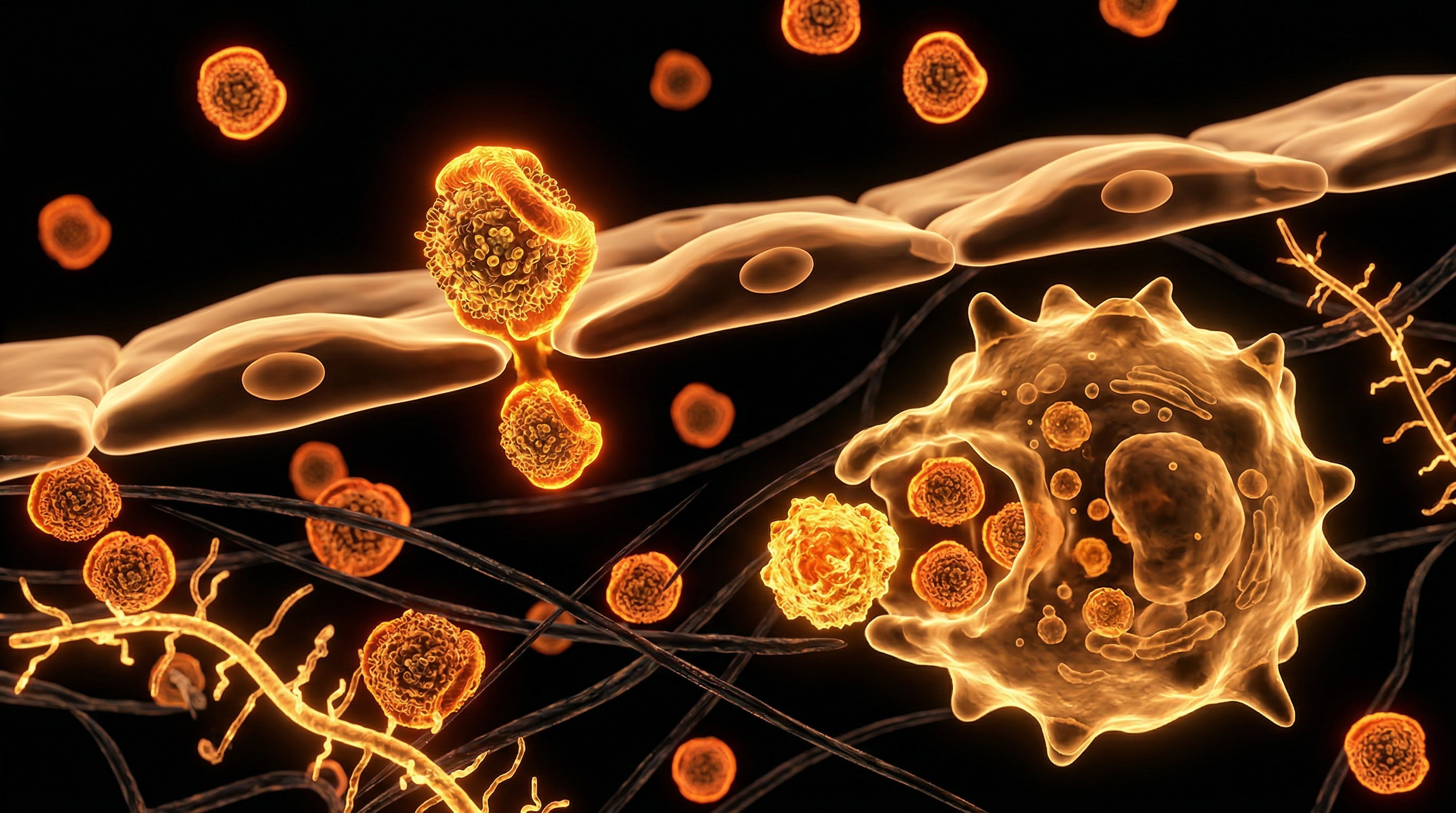
The immune system dispatches monocytes, which transform into macrophages to clean up the "invaders". These macrophages express "scavenger receptors" that uncontrollably engorge themselves with oxidised sdLDL. Eventually, the macrophages become so bloated with lipids that they turn into Foam Cells.
Stage 4: The Fatty Streak and Fibrous Cap
As foam cells accumulate, they form a "fatty streak"—the earliest visible sign of atherosclerosis. The body attempts to heal this area by growing a fibrous cap of smooth muscle cells over the lipid core.
Stage 5: Rupture
The danger arises when the core continues to grow, and the fibrous cap becomes thin and unstable. sdLDL-driven inflammation produces enzymes called Matrix Metalloproteinases (MMPs) that "eat" the fibrous cap. When the cap ruptures, the internal contents spill into the blood, causing an immediate clot (thrombus).
Important Fact: Most heart attacks are caused by "vulnerable" plaques that occupy less than 50% of the artery's lumen. These are often driven by sdLDL-induced inflammation rather than a slow "clogging" of the pipes.
What the Mainstream Narrative Omits
The refusal of the medical establishment to pivot toward sdLDL testing is a subject of intense controversy. Why do we continue to use LDL-C, a metric developed in the 1960s, when advanced lipidology offers far superior tools?
The Statin-Industrial Complex
Statins are the most prescribed drugs in history. They work by inhibiting the HMG-CoA Reductase enzyme, which effectively lowers the total amount of cholesterol produced by the liver. Consequently, they lower LDL-C. However, statins are remarkably inefficient at changing the size of the particles.
A patient can take a statin and see their LDL-C drop from 160 mg/dL to 80 mg/dL, yet remain in a Pattern B state. Their risk remains high because they still have a high number of sdLDL particles, yet they are told they are "safe". This creates a false sense of security while the underlying metabolic engine of the disease—insulin resistance—remains unaddressed.
The "Good" vs. "Bad" Cholesterol Myth
The mainstream narrative labels HDL as "good" and LDL as "bad". This is a gross oversimplification. Small, dense HDL particles can also be dysfunctional, and large, buoyant LDL particles are essential for health, delivering fat-soluble vitamins and antioxidants to cells. By focusing on the "total" numbers, the industry avoids the more complex conversation about metabolic health and dietary quality.
The Suppressed Role of Triglycerides
The medical community often ignores Triglycerides (TG) unless they are sky-high (over 150 mg/dL). However, the TG/HDL ratio is one of the most accurate proxies for sdLDL size. A ratio (in mg/dL) of over 2.0 is a strong indicator of Pattern B. Because this ratio can be calculated from a standard £10 blood test, there is no financial incentive for the pharmaceutical industry to promote it over proprietary risk-scoring models.
The UK Context
In the United Kingdom, the approach to cardiovascular health is governed largely by NICE (National Institute for Health and Care Excellence) guidelines. While the UK has a robust healthcare system in the form of the NHS, it is often lagging behind in its adoption of advanced lipidology.
The QRISK3 Problem
The standard tool for assessing heart disease risk in the UK is the QRISK3 calculator. This algorithm takes into account age, BMI, smoking status, and total cholesterol/HDL ratio. Noticeably absent is any mention of LDL particle size, ApoB, or insulin levels.
For the average Briton, a visit to the GP regarding "high cholesterol" will result in a standard lipid panel. If the LDL-C is high, the immediate recommendation is usually a statin and a "low-fat" diet. This advice is often counterproductive, as low-fat diets (high in grains and sugars) are the primary drivers of sdLDL production.
Access to Advanced Testing
In the UK, it is notoriously difficult to obtain an NMR (Nuclear Magnetic Resonance) LipoProfile or a direct sdLDL-C test through the NHS. These tests, which provide an actual count of particles and their sizes, are often dismissed as "unnecessary" by general practitioners who are bound by cost-saving protocols.
Consequently, a two-tier system has emerged. Those with the means to go private (consulting clinics in London or using mail-in labs) can access their ApoB and sdLDL numbers, allowing for precision intervention. The rest of the population remains stuck with the "Cholesterol 101" model, treated with a "one-size-fits-all" pharmaceutical approach.
Protective Measures and Recovery Protocols
If sdLDL is the primary driver of arterial damage, then the goal of any recovery protocol must be to shift the body from Pattern B to Pattern A. This is entirely possible through targeted lifestyle and nutritional interventions.
1. Dietary Reconfiguration: The "Size" Protocol
To eliminate sdLDL, one must address the underlying hypertriglyceridaemia.
- Eliminate Fructose and Refined Sugars: This is non-negotiable. Reducing the liver’s substrate for DNL will immediately lower VLDL production and, by extension, sdLDL.
- Strict Reduction of Seed Oils: Replace linoleic acid-rich oils with stable fats like extra virgin olive oil, avocado oil, and (in moderation) grass-fed butter or tallow. This increases the oxidative stability of your LDL particles.
- Increase Omega-3 Intake: High-dose EPA and DHA (from fatty fish or high-quality supplements) have been shown to lower triglycerides and increase LDL particle size.
2. Metabolic Flexibility and Intermittent Fasting
Since insulin is the "master switch" for lipid remodeling, lowering insulin levels is paramount. Intermittent Fasting (16:8 or 18:6) allows the liver to clear its glycogen stores and reduces the constant pressure on VLDL secretion. Over time, this shifts the lipid profile toward a healthy Pattern A.
3. Targeted Supplementation
While diet is the foundation, certain compounds can accelerate the shift:
- Bergamot: Research suggests that Citrus Bergamot can specifically reduce sdLDL particles and increase large, buoyant ones.
- Niacin (Vitamin B3): Though controversial in mainstream circles due to the "flush" effect, Niacin is one of the few substances that consistently increases LDL particle size and lowers ApoB.
- Magnesium: Essential for the proper function of LPL, the enzyme that clears triglycerides from the blood.
4. High-Intensity Interval Training (HIIT)
While all exercise is beneficial, HIIT has a unique effect on lipid metabolism. It enhances insulin sensitivity and stimulates the clearance of triglyceride-rich lipoproteins more effectively than steady-state cardio.
5. Monitoring What Matters
Stop focusing on LDL-C. Instead, demand or pay for tests that measure:
- ApoB: The total count of atherogenic particles.
- Triglyceride/HDL Ratio: Aim for <1.0 (mmol/L) or <1.5 (mg/dL).
- HbA1c: To monitor long-term glycation risk.
- Fasting Insulin: The most overlooked marker in cardiovascular health.
Summary: Key Takeaways
The narrative that "all LDL is bad" is a biological falsehood that has stalled progress in the fight against heart disease for decades. The reality is far more nuanced and resides in the realm of particle physics and molecular stability.
- Size is the Primary Determinant: Small, dense LDL (sdLDL) is inherently atherogenic due to its ability to penetrate the arterial wall and its susceptibility to oxidation. Large, buoyant LDL is generally benign and essential for health.
- Metabolic Health Drives Pattern B: High triglycerides and high insulin—driven by sugar, fructose, and refined carbohydrates—are the factory for sdLDL.
- Mainstream Metrics are Flawed: LDL-C (the weight of the cholesterol) often hides the true risk. A person can have low LDL-C but a high count of sdLDL (Pattern B), leaving them at extreme risk of a heart attack.
- The UK System is Lagging: Standard NHS protocols (QRISK3) do not account for particle size, meaning many "at-risk" individuals are being missed, while "low-risk" individuals are being over-medicated.
- Action is Possible: Through carbohydrate restriction, the elimination of seed oils, and the prioritisation of metabolic health, individuals can physically transform their LDL particles from dangerous "bullets" into harmless "fluffy" carriers.
In the pursuit of cardiovascular longevity, we must move beyond the "lipid hypothesis" and embrace the "quality hypothesis". Size matters. It is time the medical establishment caught up with the science.
This article is provided for informational and educational purposes only. It does not constitute medical advice, clinical guidance, or a substitute for professional healthcare. Information reflects cited research at time of publication. Always consult a qualified healthcare professional before acting on any health information.
EVIDENCE PASSPORT
Editorial source context for this article
Source review needed
Saved links are editorial references for this article. They may support specific claims rather than every sentence. Open and assess each source in context. This passport does not independently verify them.
Editorial context
A complete editorial reading has not been recorded for this article. Source links remain available for you to open and assess directly.
Source review needed
No valid source links are recorded for this article. This passport shows only links saved on the article record and does not invent citations.
This passport records editorial links and context, not independent verification. Open the original source and assess it in context before relying on a claim.
Medical Disclaimer
The information in this article is for educational purposes only and does not constitute medical advice, diagnosis, or treatment. Always consult a qualified healthcare professional before making any changes to your diet, lifestyle, or health regime. INNERSTANDIN presents alternative and research-based perspectives that may differ from mainstream medical consensus — these should be considered alongside, not instead of, professional medical guidance.
Read Full DisclaimerContinue the thread
Keep this question moving.
Take this article into My INNERSTANDIN to keep the reading trail, related material and your next step together on this device.