
Soil Depletion and the UK Mineral Crisis
Updated May 2026
A look at how intensive farming in Britain has stripped the soil of essential minerals. Without these building blocks, the biological terrain cannot maintain homeostasis.
Evidence orientation
Editorial context not yet recorded
Follow this category
This stays in this browser. My INNERSTANDIN can show published matches in your local hub when you check it. It does not send email, push, or alert notifications.
Local learning review
A private browser aid for revisiting ideas. It is not an alert or a health recommendation.
Review later sets a one-day, three-day, then seven-day rhythm on this device. Choose it only when you want to revisit this article.
Overview
In the realm of biological medicine, there is a foundational principle often ignored by the reductionist paradigms of modern allopathy: the organism is an extension of its environment. For decades, the focus of mainstream healthcare has remained fixated on the "germ"—the external pathogen—while entirely neglecting the "terrain"—the internal biological environment that determines whether a seed of disease can take root. At the heart of this internal terrain lies a complex matrix of elements, minerals, and trace metals that act as the foundational architecture of life.
However, we are currently facing a silent, subterranean catastrophe. The British Isles, once home to some of the most nutrient-dense topsoils in the world, have been subjected to over a century of aggressive, industrialised extraction. We are witnessing a UK Mineral Crisis—a systemic stripping of the soil’s vital elements that has led to a direct and measurable decline in human health.
According to data from the UK’s Department for Environment, Food & Rural Affairs (Defra) and historic studies comparing nutrient density from 1940 to the present, the levels of essential minerals in British produce have plummeted by as much as 75% in some categories.
This article serves as an urgent inquiry into the degradation of the British soil and the subsequent collapse of the human biological terrain. As a senior researcher at INNERSTANDING, I contend that the chronic disease epidemic currently crippling the NHS is not a failure of genetics or a lack of pharmaceutical intervention, but a direct consequence of a mineral-depleted landscape. We are living in a state of "hidden hunger," where the caloric intake is high, but the cellular substrate is barren.
The Biology — How It Works
To understand why soil depletion is a death knell for human health, we must first understand the symbiotic relationship between the lithosphere (the earth) and the biosphere (life). Humans are, in a very literal sense, "animated clay." Every heartbeat, every neural impulse, and every strand of DNA repair is dependent on minerals that we cannot synthesise ourselves; they must be ingested.
The Mycorrhizal Bridge
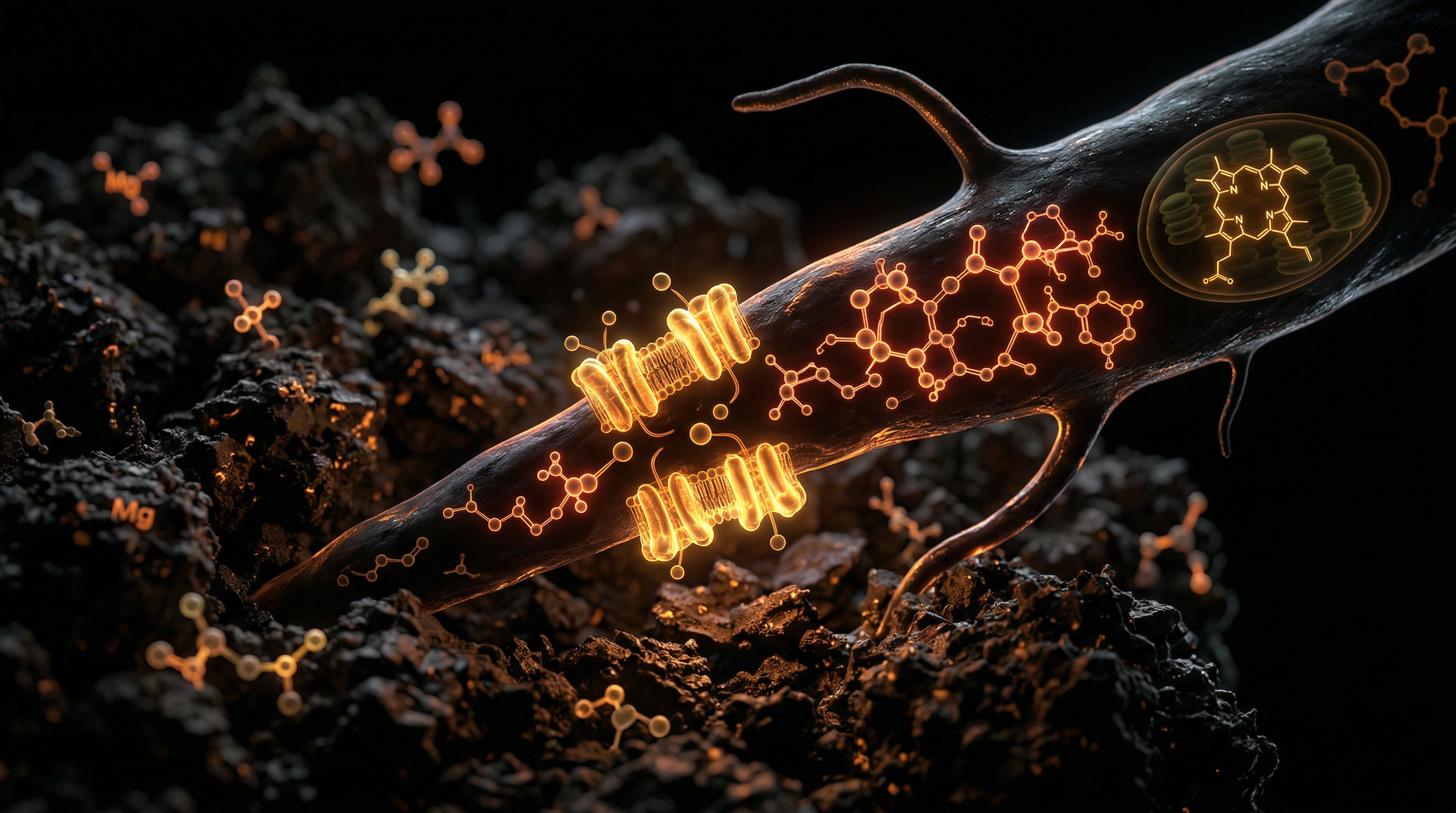
The process of mineralisation begins not in the plant, but in the soil’s microbiome. Healthy soil is a living, breathing ecosystem. Central to this are mycorrhizal fungi, which form symbiotic relationships with plant roots. These fungi extend the reach of root systems by hundreds of times, secreting enzymes that dissolve rock and organic matter, fetching minerals like phosphorus, zinc, and magnesium in exchange for plant sugars.
The Biological Terrain
In Terrain Theory, popularized by Claude Bernard and later Antoine Béchamp, the "milieu intérieur" (internal environment) must maintain a specific pH, electrical conductivity, and mineral balance to remain resilient against disease. Minerals are the primary buffers of this terrain.
- Cations (positively charged ions) like Calcium, Magnesium, and Potassium maintain the alkalinity of the blood and extracellular fluid.
- Trace elements act as the "keys" that unlock hormonal and enzymatic pathways.
Without these minerals, the terrain becomes acidic, hypoxic, and electrically stagnant—the perfect breeding ground for opportunistic pathogens and cellular malfunction.
Mechanisms at the Cellular Level
The depletion of minerals from the UK soil manifests as a breakdown at the most fundamental level of human existence: the cell. Minerals are not merely "supplements"; they are structural components and catalytic igniters.
Enzymatic Cofactors
Enzymes are the workhorses of the body, responsible for over 100,000 biochemical reactions. Most enzymes are metalloenzymes, meaning they require a specific mineral ion to function.
- Zinc is a cofactor for over 300 enzymes, including those involved in DNA synthesis and immune response.
- Magnesium is required for over 600 enzymatic reactions, most notably the production and stability of ATP (Adenosine Triphosphate), the body’s primary energy currency.
When the soil lacks these elements, the plants are deficient; when the plants are deficient, the human enzymatic "machinery" grinds to a halt. We see this as "fatigue," "brain fog," and "metabolic syndrome"—the early warning signs of a failing terrain.
Mitochondrial Energetics
The mitochondria are the power plants of our cells. The process of oxidative phosphorylation (creating energy) requires a precise flow of electrons across the inner mitochondrial membrane. This electrical gradient is maintained by minerals. Magnesium acts as the "spark plug" for the mitochondria. Without it, the cell cannot produce energy efficiently, leading to oxidative stress and cellular ageing. In the UK, where magnesium levels in wheat have dropped significantly since the 1940s, we see a direct correlation with the rise in mitochondrial dysfunction and chronic fatigue.
Ion Channels and Signalling
Cellular communication relies on electrolytes. The movement of Sodium, Potassium, and Calcium across cell membranes creates the electrical potential necessary for nerves to fire and muscles to contract. A mineral-depleted terrain leads to "leaky" cells and "misfiring" neurons. This is a primary driver of the UK's burgeoning crisis in neurological disorders and cardiovascular disease.
Environmental Threats and Biological Disruptors
The UK mineral crisis is not merely a result of "taking things out" of the soil; it is exacerbated by "putting things in" that disrupt the biological uptake of what little nutrition remains.
The NPK Fallacy
Since the "Green Revolution," British agriculture has relied almost exclusively on NPK fertilizers (Nitrogen, Phosphorus, and Potassium). While NPK makes plants look large and green, it is the equivalent of "steroid farming."
- Nitrogen forces rapid growth.
- Phosphorus and Potassium stimulate plant size.
However, NPK fertilizers ignore the other 70+ trace minerals (Boron, Chromium, Vanadium, Molybdenum, etc.) required for human health. Furthermore, high levels of synthetic Potassium inhibit the plant's ability to absorb Magnesium and Manganese, a phenomenon known as "antagonism."
Glyphosate: The Mineral Chelator
The widespread use of glyphosate-based herbicides (like Roundup) in UK grain and oilseed rape production is a primary biological disruptor. Glyphosate was originally patented as a chelator—a chemical designed to strip minerals from pipes.
Glyphosate binds to minerals in the soil, such as Zinc, Manganese, and Iron, making them unavailable to the plant and, subsequently, the human who eats the plant.
Moreover, glyphosate destroys the Shikimate pathway in the soil’s bacteria and the human gut microbiome, further hindering the synthesis of essential amino acids and the absorption of minerals.
Heavy Metal Competition
In a mineral-deficient terrain, the body becomes desperate. It begins to substitute essential minerals with toxic heavy metals that have a similar atomic radius.
- If the body lacks Zinc, it may sequester Cadmium in its place.
- If it lacks Calcium, it may uptake Lead into the bone matrix.
- If it lacks Selenium, it cannot produce glutathione, leaving it vulnerable to Mercury toxicity.
The Cascade: From Exposure to Disease
The transition from a depleted soil to a systemic disease state is a predictable cascade. In the UK, we are seeing the clinical manifestation of this "Mineral Drought" across all demographics.
The Magnesium-Stress Loop
The UK population is chronically deficient in Magnesium. Because Magnesium is required to regulate the stress response (downregulating cortisol), a deficiency leads to increased anxiety and physiological stress. Stress, in turn, causes the kidneys to excrete Magnesium. This "vicious cycle" is a major contributor to the UK’s mental health crisis and the prevalence of hypertension.
Iodine and Selenium: The Thyroid Crisis
The UK soil is notoriously low in Selenium. Selenium is required to convert the thyroid hormone T4 into its active form, T3. Simultaneously, Iodine—essential for thyroid structure—is often lacking in the modern British diet due to the decline in traditional dairy farming practices and soil leaching. The result? An epidemic of hypothyroidism, weight gain, and cognitive decline.
The Copper-Zinc Imbalance
Modern intensive farming and the use of copper-based fungicides have skewed the delicate Copper-to-Zinc ratio. An excess of unbound copper, coupled with a deficiency in bioavailable zinc, is linked to inflammatory conditions, skin disorders, and hormonal imbalances (such as oestrogen dominance) in the British population.
What the Mainstream Narrative Omits
The UK’s health authorities and mainstream nutritional science often operate on outdated RDA (Recommended Dietary Allowance) models that were established to prevent acute deficiency diseases like scurvy or rickets. They fail to address subclinical deficiency—a state where the body is not "dead" but is unable to maintain optimal homoeostasis.
The "Balanced Diet" Delusion
The public is told that a "balanced diet" of supermarket fruits and vegetables provides all necessary nutrients. This is a scientific falsehood.
A 2003 study published in the British Food Journal compared nutritional data from 1940 and 1991. It found that the iron content in 15 different varieties of vegetables fell by 22%, and copper plummeted by 76%.
To get the same amount of nutrition found in one bowl of spinach in 1940, a person today would need to consume nearly fifty bowls. The "balanced diet" narrative ignores the fact that the substrate is empty.
The Pharmaceutical Dependency
There is a profound economic incentive to ignore soil depletion. A mineral-sufficient population is a resilient population. Conversely, a mineral-deficient population requires a lifetime of pharmaceutical "management." Statin drugs, for instance, further deplete the body of CoQ10 and certain minerals, creating a secondary market for more drugs. The mainstream narrative focuses on "managing" the cascade of symptoms rather than remediating the terrain with the elemental building blocks of life.
The UK Context
Britain faces a unique set of challenges regarding soil health and mineral availability.
Post-War Extraction
Following World War II, the UK’s "Dig for Victory" campaign transitioned into a policy of maximum yield at any cost. The Agriculture Act of 1947 incentivised the removal of hedgerows and the use of intensive chemical inputs. Decades of this "extractive" model have left the UK with some of the most degraded soils in Europe.
The Brexit Factor and Agricultural Standards
With the UK's departure from the European Union, there is a burgeoning debate regarding agricultural standards. While some advocate for a return to regenerative practices, the pressure to compete in a global market often leads to further intensification and the potential introduction of even more aggressive pesticides and "techno-fertilisers" that further bypass the natural mineralisation process.
The Geography of Leaching
The UK's temperate, high-rainfall climate contributes to mineral leaching. In areas of high rainfall, soluble minerals are washed out of the topsoil into the subsoil or waterways. Without active remineralisation (the addition of rock dust or sea minerals), British soils naturally tend toward acidity and depletion, a process accelerated ten-fold by chemical farming.
Protective Measures and Recovery Protocols
Restoring the biological terrain requires a two-pronged approach: the restoration of the soil and the targeted remineralisation of the individual.
Soil Remineralisation: The Macro Solution
We must move beyond "organic" (which simply means "without pesticides") to Regenerative Agriculture.
- Rock Dust Application: Applying crushed volcanic rock (basalt) to farmland introduces over 70 trace minerals, mimicking the natural process of glacial "flour" deposition.
- Cover Cropping and No-Till: These practices protect the mycorrhizal fungi that facilitate mineral uptake.
- Sea Mineral Irrigation: Utilising diluted seawater or concentrated marine plasma can reintroduce the full spectrum of primordial elements to the soil.
The "Innerstanding" Protocol: Individual Recovery
To bypass the "empty calories" of the modern food system, individuals must take proactive steps to fortify their internal terrain.
- Bioavailable Supplementation: Avoid synthetic, inorganic mineral salts (like Magnesium Oxide), which have poor absorption rates. Opt for chelated minerals (bisglycinates) or ionic minerals that the body can readily recognise.
- Quinton Marine Plasma: Derived from plankton blooms, this "cold-filtered seawater" contains every element of the periodic table in the exact proportions found in human blood plasma—a direct hit for terrain restoration.
- Fulvic and Humic Acids: These organic compounds are the "shuttles" that transport minerals across the cell membrane. In an NPK world, we are starved of these acids. Supplementing with high-quality shilajit or fulvic complexes can restore cellular conductivity.
- Ancestral Foods: Incorporate mineral-dense "superfoods" that have concentrated what little is left in the environment: seaweed (iodine/trace minerals), organ meats (copper/zinc/iron), and bone broths (calcium/phosphorus).
- Water Filtration: British tap water is often treated with fluoride and chlorine, both of which are halogen antagonists to iodine. Using high-level filtration and then "re-structuring" or "re-mineralising" your water is essential.
Summary: Key Takeaways
The UK Mineral Crisis is the silent foundation of our modern health collapse. By stripping the soil of its elemental intelligence, we have created a society of biologically fragile individuals.
- The Soil is the Substrate: Human health is an emergent property of soil health. Terrain Theory dictates that a mineral-deficient body cannot maintain homoeostasis.
- The UK is Depleted: Historic data confirms a drastic decline in the mineral content of British produce since 1940, driven by NPK-heavy intensive farming.
- Glyphosate as a Weapon: This herbicide acts as a mineral chelator, effectively "starving" both the plant and the consumer of essential trace elements.
- Hidden Hunger: Caloric abundance masks a systemic cellular famine. The rise in "modern" diseases (fatigue, thyroid issues, neurodegeneration) is the clinical symptom of this famine.
- Remediation is Possible: Through regenerative farming, rock dust application, and the use of ionic/marine-based minerals, we can rebuild the terrain and reclaim our biological sovereignty.
The path forward for the British people is not through more "healthcare" in the pharmaceutical sense, but through a radical return to remineralisation. We must heal the earth to heal ourselves. The terrain is everything.
This article is provided for informational and educational purposes only. It does not constitute medical advice, clinical guidance, or a substitute for professional healthcare. Information reflects cited research at time of publication. Always consult a qualified healthcare professional before acting on any health information.
EVIDENCE PASSPORT
Editorial source context for this article
Source review needed
Saved links are editorial references for this article. They may support specific claims rather than every sentence. Open and assess each source in context. This passport does not independently verify them.
Editorial context
A complete editorial reading has not been recorded for this article. Source links remain available for you to open and assess directly.
Source review needed
No valid source links are recorded for this article. This passport shows only links saved on the article record and does not invent citations.
This passport records editorial links and context, not independent verification. Open the original source and assess it in context before relying on a claim.
Medical Disclaimer
The information in this article is for educational purposes only and does not constitute medical advice, diagnosis, or treatment. Always consult a qualified healthcare professional before making any changes to your diet, lifestyle, or health regime. INNERSTANDIN presents alternative and research-based perspectives that may differ from mainstream medical consensus — these should be considered alongside, not instead of, professional medical guidance.
Read Full DisclaimerContinue the thread
Keep this question moving.
Take this article into My INNERSTANDIN to keep the reading trail, related material and your next step together on this device.
Dig deeper in the Library
Free, longform PDF volumes that go beyond headlines into mechanisms and references.