
Soil Microbiome vs. Synthetic Fertilizers: The Case for Animal-Integrated Farming
Updated May 2026
Compares the nutrient density of meat from pasture-raised vs. grain-fed UK livestock. It links soil biology directly to the nutritional quality of the final product.
Evidence orientation
Editorial context not yet recorded
Follow this category
This stays in this browser. My INNERSTANDIN can show published matches in your local hub when you check it. It does not send email, push, or alert notifications.
Local learning review
A private browser aid for revisiting ideas. It is not an alert or a health recommendation.
Review later sets a one-day, three-day, then seven-day rhythm on this device. Choose it only when you want to revisit this article.
Overview
For decades, the agricultural paradigm of the West has been dictated by a reductionist philosophy that views soil as little more than an inert medium for holding plants upright. This "chemical-industrial" model, accelerated by the post-war Green Revolution, replaced the complex, self-regulating biological systems of the earth with a linear, input-output mechanism. Central to this shift was the abandonment of animal integration in favour of synthetic fertilizers—specifically the NPK (Nitrogen, Phosphorus, Potassium) triad.
However, as we stand at the precipice of a global health crisis characterized by soaring rates of chronic inflammatory diseases and metabolic dysfunction, the biological researcher must look toward the ground. The nutritional integrity of the food we consume is inextricably linked to the biological vitality of the soil from which it springs. In the United Kingdom, where "green and pleasant lands" often mask biologically dormant monocultures, the distinction between regenerative, pasture-raised livestock and industrial, grain-fed counterparts is not merely an ethical or environmental debate; it is a fundamental matter of human biochemistry.
The following analysis exposes the suppressed truth: that by severing the link between the ruminant animal and the soil microbiome, we have essentially "de-natured" our food supply. Synthetic fertilizers act as a biological disruptor, bypassing the intricate microbial exchange systems that concentrate essential micronutrients, phytonutrients, and fatty acids into the meat and organs of livestock. To understand why a modern supermarket steak is nutritionally inferior to one from a pasture-raised British Hereford, we must first descend into the dark, teeming world of the rhizosphere.
The Biology — How It Works
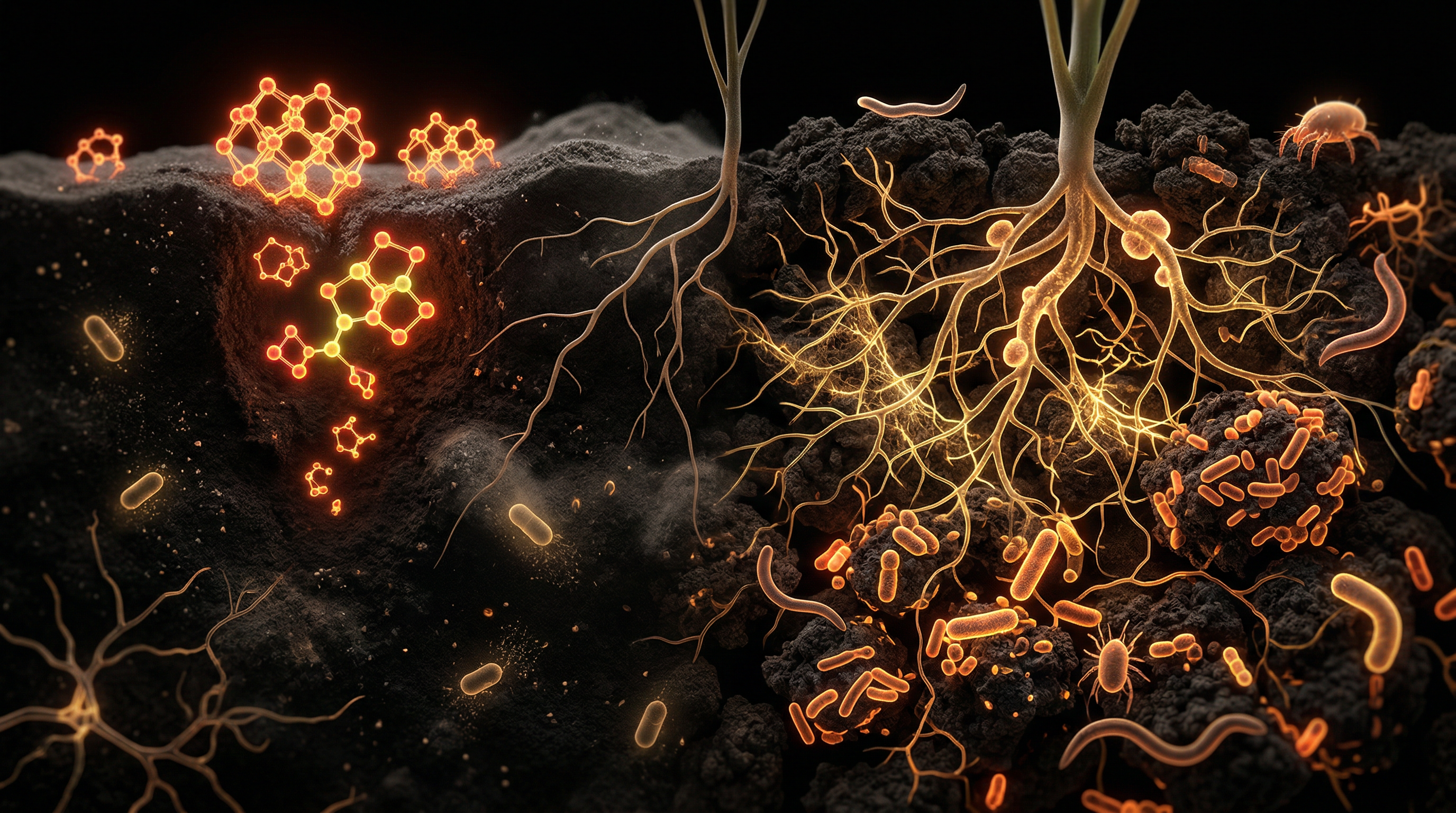
To the naked eye, soil appears static. At the microscopic level, it is a hyper-active marketplace of biological trade. The fundamental unit of this system is the Soil Microbiome, a vast network of bacteria, fungi, archaea, and protozoa that coexist in a symbiotic relationship with plant roots.
The Liquid Carbon Pathway
Plants do not simply "grow" in soil; they actively engineer it. Through photosynthesis, plants convert atmospheric CO2 into carbon-rich sugars. Up to 40% of these sugars are not used for the plant’s own structural growth but are instead pumped out through the roots as exudates. This is known as the Liquid Carbon Pathway.
- Exudates act as a "bribe" to attract specific soil microbes.
- Mycorrhizal Fungi extend the root system's reach by hundreds of times, mining for deep-earth minerals like zinc, copper, and magnesium.
- In exchange for sugar, these fungi and bacteria deliver bioavailable minerals and nitrogen to the plant.
The Ruminant as a Biological Catalyst
In a natural, integrated ecosystem, the ruminant animal (cattle, sheep, goats) is the primary driver of this microbial marketplace. When a cow grazes on a diverse pasture (a herbal ley), several biological triggers occur:
- Defoliation Stimulus: As the animal grazes, the plant receives a signal to shed a portion of its root mass to balance its underground "body" with its now-smaller "above-ground" body. This pulse of sloughed-off root material provides a massive feast for soil microbes, accelerating the carbon cycle.
- Inoculation: Ruminants are walking fermentation vats. Their saliva, dung, and urine are rich in enzymes and microbes that inoculate the soil, diversifying the bacterial population.
- Mechanical Impact: The "hoof effect" breaks the soil crust, allowing oxygen and water to reach the microbiome without the destructive inversion of mechanical ploughing.
The Synthetic Sabotage
When synthetic fertilizers (NPK) are applied, this entire system collapses. The plant, suddenly flooded with easy-to-access, inorganic nitrogen, stops producing root exudates. Why "pay" the microbes in sugar if the nutrients are being provided for free?
Callout Fact: Research indicates that high applications of synthetic nitrogen can reduce mycorrhizal fungal colonisation by up to 75%, effectively "blinding" the plant to the deep-soil mineral reserves it actually needs for nutrient density.
Mechanisms at the Cellular Level
The difference between a plant raised on synthetic nitrogen and one raised in a biologically active soil is reflected in the secondary metabolites it produces. This, in turn, dictates the nutrient profile of the animal that eats that plant.
Primary vs. Secondary Metabolites
- Primary Metabolites are the building blocks of growth: carbohydrates, proteins, and fats. Synthetic fertilizers excel at producing these, resulting in large, fast-growing crops and animals that look healthy but are "biochemically hollow."
- Secondary Metabolites (Phytochemicals) are the plant's "immune system." These include polyphenols, terpenoids, and alkaloids. They are only produced in high concentrations when the plant must interact with soil microbes to defend itself and scavenge for nutrients.
The Shikimate Pathway and Nutrient Accumulation
The Shikimate pathway is a seven-step metabolic route used by bacteria, fungi, and plants for the biosynthesis of aromatic amino acids (phenylalanine, tyrosine, and tryptophan). These amino acids are precursors to essential human neurotransmitters like serotonin and dopamine, and critical antioxidants like anthocyanins.
When cattle graze on "diverse swards"—pastures containing up to 20 or 30 different species of grasses, herbs, and legumes—they ingest a pharmacopoeia of these secondary metabolites. These compounds are then sequestered into the animal's tissues, particularly the fat and the liver.
Fatty Acid Profiles: The Omega Balance
At the cellular level, the membrane of a pasture-raised animal is vastly different from that of a grain-fed one.
- Pasture-raised meat typically maintains an Omega-6 to Omega-3 ratio of approximately 1.5:1 or 2:1.
- Grain-fed meat, raised on corn and soy grown with heavy synthetic inputs, can reach ratios as high as 20:1.
This discrepancy is driven by the chloroplasts in green leaves, which are rich in Alpha-Linolenic Acid (an Omega-3). When animals are removed from the pasture and placed on a "concentrate" diet, their cellular membranes become saturated with pro-inflammatory linoleic acid (Omega-6), a process that is mirrored in the humans who eventually consume them.
Environmental Threats and Biological Disruptors
The modern agricultural landscape is saturated with compounds that act as "biological erasers," wiping out the complexity of the soil-plant-animal axis.
Glyphosate: The Mineral Chelator
While often discussed as a herbicide, Glyphosate was originally patented as a mineral chelator. It binds to minerals like Manganese, Zinc, and Magnesium, making them unavailable to the plant. Furthermore, it specifically targets the Shikimate pathway in soil microbes. Since the industrial grain fed to UK livestock is often treated with or grown in soils saturated with glyphosate residues, the animal's own gut microbiome is compromised before it even reaches the slaughterhouse.
The Haber-Bosch Legacy
The Haber-Bosch process, which creates synthetic nitrogen from atmospheric gas, is perhaps the most significant biological disruptor in history. While it allowed the human population to explode, it did so by decoupling food production from biological cycles.
- Synthetic nitrogen is highly volatile; much of it leaches into waterways as nitrates or enters the atmosphere as nitrous oxide (a greenhouse gas 300 times more potent than CO2).
- In the soil, it creates an "acidification" effect, killing off the earthworms and protozoa that act as the soil's digestive system.
Soil Compaction and Anaerobic Decay
Industrial farming relies on heavy machinery. Compaction squeezes the oxygen out of the soil, shifting the microbiome from aerobic (oxygen-breathing) to anaerobic (fermenting). Anaerobic soils produce alcohols and formaldehydes that are toxic to plant roots, further reducing the plant’s ability to synthesise the nutrients required for high-quality meat production.
Statistic: It is estimated that 30% to 40% of the world's topsoil has been degraded, largely due to the loss of soil organic matter (carbon) caused by synthetic chemical use and the removal of grazing animals.
The Cascade: From Exposure to Disease
The "chemical-industrial" shortcut in farming creates a cascade of nutrient depletion that flows directly into the human population. This is the "hidden hunger"—the phenomenon of being overfed in calories but undernourished in micronutrients.
The Zinc and Selenium Void
UK soils are naturally prone to selenium deficiency, but the soil microbiome used to mitigate this by concentrating what little was available. Synthetic fertilizers inhibit this process.
- Zinc and Selenium are critical co-factors for human antioxidant enzymes like Glutathione Peroxidase.
- Without these from animal sources (the most bioavailable form), the human "antioxidant shield" is weakened, leading to increased oxidative stress and DNA damage.
The Vitamin K2 Connection
Vitamin K2 (menaquinone) is essential for directing calcium into the bones and teeth and keeping it out of the arteries. It is produced by bacteria in the rumens of cattle grazing on green grass (rich in K1).
- Grain-fed animals, lacking the K1 precursor and having a compromised rumen microbiome due to the acidic nature of grain, produce almost no K2.
- The mainstream obsession with "lean meat" further exacerbates this, as K2 is a fat-soluble vitamin. By discarding the fat and organs, we lose the very compounds that protect us from cardiovascular disease.
Bioaccumulation of Toxins
In a degraded system, the animal's fat serves as a "sink" for the environmental toxins it consumes. Pesticide residues and heavy metals are sequestered in the adipose tissue. Conversely, in a regenerative system, the fat is a storehouse of Carotenoids, Tocopherols (Vitamin E), and Conjugated Linoleic Acid (CLA).
Important Callout: CLA is a potent anti-carcinogen and metabolic regulator found in levels 300-500% higher in pasture-raised British beef compared to grain-fed alternatives.
What the Mainstream Narrative Omits
The current global push toward "Plant-Based" diets and "Lab-Grown Meat" is often framed as a necessity for the planet. However, from a biological perspective, this narrative omits the most crucial factor: the Metabolic Necessity of the Ruminant.
The Carbon Sequestration Myth
Mainstream climate models often treat the methane produced by cattle in the same way they treat CO2 from fossil fuels. This is scientifically dishonest.
- Biogenic Methane from cattle is part of a 12-year cycle. It is broken down into CO2 and water, which are then used by the very grass the cow eats.
- Fossil fuel CO2 is "new" carbon being introduced into the atmosphere from deep underground.
- More importantly, well-managed grazing animals sequester more carbon into the soil (via the liquid carbon pathway) than they emit in methane.
The Nutrient Density Gap
The mainstream narrative ignores the "Bioavailability" of nutrients. Plant-based proteins often come with anti-nutrients (lectins, phytates, oxalates) that inhibit mineral absorption. Lab-grown meat, cultured in a "fetal bovine serum" or synthetic medium, lacks the thousands of secondary metabolites that a grazing animal gathers from a biodiverse pasture. You cannot "fortify" your way out of a biological void.
The Profit Motive
Synthetic fertilizers, patented seeds, and pharmaceutical interventions for sick, grain-fed livestock are high-margin products for global corporations. A farmer who uses the soil microbiome and native pastures to finish their cattle is largely independent of these "inputs." The "suppressed truth" is that industrial agriculture is an extractive industry that profits from the destruction of the soil's innate fertility.
The UK Context
The United Kingdom is uniquely positioned—both geographically and historically—to lead the return to animal-integrated farming.
The British Grassland Advantage
Approximately 65% of UK farmland is only suitable for growing grass. It is too steep, too rocky, or too wet for arable cropping. When activists suggest we should "stop farming animals" and grow plants instead, they ignore the geological reality of Britain.
- Without ruminants, these lands would either become overgrown scrubland (increasing fire risk and reducing biodiversity) or would require massive amounts of synthetic inputs to produce low-quality crops.
- British "Permanent Pasture" is a massive carbon sink, often holding more carbon per hectare than ancient forests, provided it is managed with grazing animals.
Heritage Breeds vs. Industrial Hybrids
The UK is home to some of the world's finest beef genetics—Hereford, Aberdeen Angus, Belted Galloway, and Highland cattle. These breeds were developed to thrive on forage alone.
- Industrial "Continental" breeds (like Charolais or Limousin) were often bred for rapid growth on grain.
- The UK's heritage breeds have a unique ability to "marble" (place fat within the muscle) on a diet of pure grass, creating the nutrient-dense, phytochemical-rich meat that is the hallmark of nose-to-tail nutrition.
Post-Brexit Agricultural Policy
With the move away from the EU's Common Agricultural Policy (CAP), the UK has introduced the Environmental Land Management scheme (ELMs). While controversial, it provides an opening for farmers to be rewarded for "Soil Health" rather than just production volume. However, the pressure to "re-wild" large swathes of land without animals threatens the very soil biology we need to preserve. True re-wilding must include the Apex Herbivore.
Protective Measures and Recovery Protocols
For the consumer and the "sovereign health seeker," navigating this degraded landscape requires a proactive strategy. We must "vote with our fork" to rebuild the soil microbiome.
1. Sourcing Protocols: The "Golden Standard"
To ensure you are consuming the biological output of a healthy soil microbiome, your meat must be:
- 100% Grass-Fed and Finished: Look for certifications like "Pasture for Life" (PFLA) in the UK. Many "grass-fed" labels allow for grain finishing in the last 90 days, which destroys the Omega-3 profile.
- Biodiverse Forage: Ask your butcher or farmer if the cattle graze on "herbal leys." The more plant species the animal eats, the more phytochemicals in your steak.
- Nose-to-Tail: The soil’s most concentrated nutrients (Vitamin A, D, K2, B12, and Minerals) are found in the liver, heart, and kidneys.
2. The Soil-Gut Axis: Personal Recovery
If you have been consuming a diet of industrial, grain-fed products and synthetic-heavy vegetables, your own microbiome may be "biochemically hollow."
- Bone Broth: Sourced from pasture-raised animals, rich in glycine and collagen to repair the gut lining damaged by glyphosate residues.
- Diverse Fibres: Consuming plants grown in healthy soils (organic/regenerative) provides the "prebiotics" to restock your internal microbiome.
- Avoid Seed Oils: Industrial "vegetable" oils (canola, sunflower, soybean) are the ultimate product of synthetic NPK agriculture. They are the molecular antithesis of the healthy fats found in pasture-raised tallow.
3. Supporting the Transition
- Direct Trade: Buy "meat boxes" directly from regenerative farms (e.g., Pipers Farm, Gazegill Organics, or local PFLA members). This ensures the "green premium" goes to the farmer, not the middleman.
- Brix Testing: For the dedicated, you can use a Refractometer to measure the Brix levels (sugar and mineral content) of fruits and vegetables. High Brix levels are a direct proxy for soil microbial activity.
Summary: Key Takeaways
The war for human health is being fought in the top six inches of the earth’s crust. The "Synthetic Paradigm" has attempted to bypass billions of years of biological evolution, and the results—soil desertification, nutrient dilution, and chronic disease—are now undeniable.
- The Soil is Alive: It is not a container for chemicals but a biological marketplace driven by the Liquid Carbon Pathway.
- Animals are Essential: Ruminants are the "biological engines" that drive the soil microbiome. Their removal leads to the collapse of the ecosystem and the de-naturing of food.
- NPK is a Shortcut to Sickness: Synthetic fertilizers produce "empty" plants that lack the secondary metabolites (phytochemicals) essential for human immune function.
- Nutrient Density is the Goal: Pasture-raised meat, particularly from the UK’s heritage breeds, is a complex "bio-packet" of vitamins, minerals, and fatty acids that cannot be replicated in a lab or a grain-lot.
- The UK's Unique Role: Our climate and geography make us the natural home for regenerative, animal-integrated farming. Protecting this system is a matter of national health security.
To reclaim our health, we must return to an INNERSTANDING of the earth. We must reject the reductionist, chemical-led narrative and embrace the complex, beautiful, and deeply nourishing synergy of the soil, the animal, and the human. The case for animal-integrated farming is not just an environmental one—it is a biological imperative for the survival of our species.
This article is provided for informational and educational purposes only. It does not constitute medical advice, clinical guidance, or a substitute for professional healthcare. Information reflects cited research at time of publication. Always consult a qualified healthcare professional before acting on any health information.
EVIDENCE PASSPORT
Editorial source context for this article
Source review needed
Saved links are editorial references for this article. They may support specific claims rather than every sentence. Open and assess each source in context. This passport does not independently verify them.
Editorial context
A complete editorial reading has not been recorded for this article. Source links remain available for you to open and assess directly.
Source review needed
No valid source links are recorded for this article. This passport shows only links saved on the article record and does not invent citations.
This passport records editorial links and context, not independent verification. Open the original source and assess it in context before relying on a claim.
Medical Disclaimer
The information in this article is for educational purposes only and does not constitute medical advice, diagnosis, or treatment. Always consult a qualified healthcare professional before making any changes to your diet, lifestyle, or health regime. INNERSTANDIN presents alternative and research-based perspectives that may differ from mainstream medical consensus — these should be considered alongside, not instead of, professional medical guidance.
Read Full DisclaimerContinue the thread
Keep this question moving.
Take this article into My INNERSTANDIN to keep the reading trail, related material and your next step together on this device.
Dig deeper in the Library
Free, longform PDF volumes that go beyond headlines into mechanisms and references.